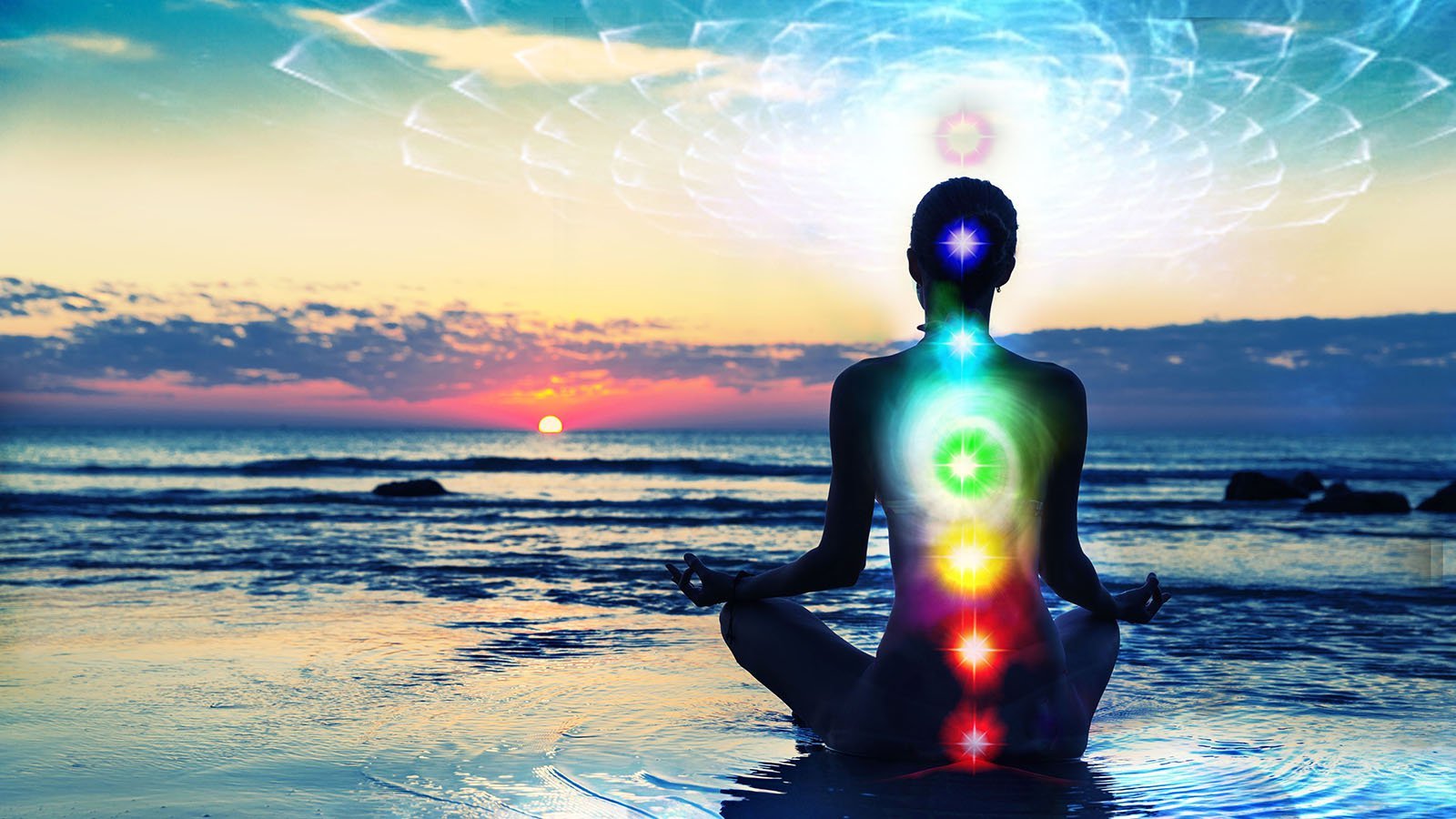

You have heard the term kundalini, maybe alongside kundalini yoga or kundalini awakening, and you are curious what it actually means and why people approach it with such reverence. The truth is that kundalini is not mystical mumbo-jumbo, is not dangerous when properly understood, and is not reserved for spiritual elites. It represents a dormant potential within every human being — discovered by ancient yogis thousands of years ago, and still experienced by practitioners today.
01What Kundalini Is: The Coiled Energy Explained
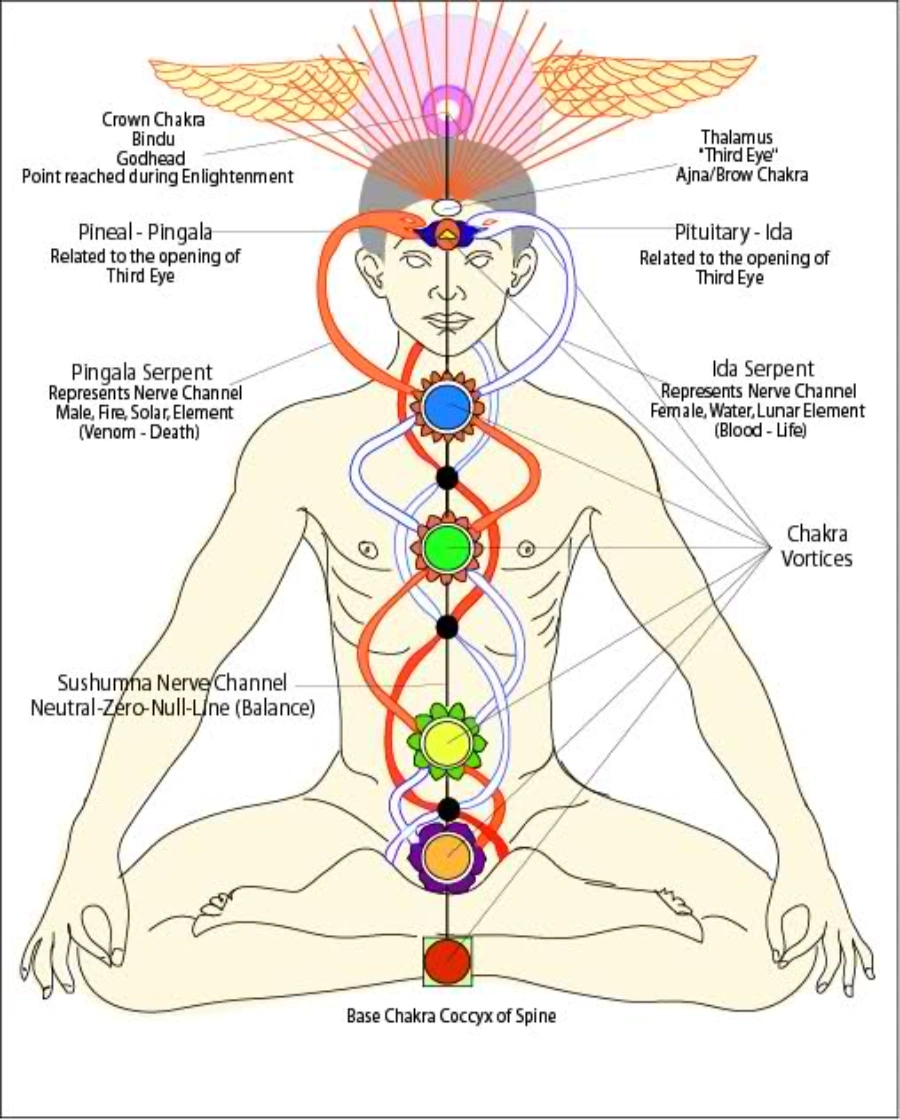
In the simplest terms, kundalini is dormant energy resting at the base of the spine. Ancient yogis described it as a coiled serpent — not literally a snake, but energy wound tightly, waiting for activation. This is not poetic metaphor so much as an experiential description. When conditions align, through practice, breath, awareness, or occasionally spontaneously, this energy activates and begins moving upward through the spine, transforming consciousness as it rises.
Think of it as untapped capacity already present in your nervous system, simply not currently in use. Dr David Frawley, the renowned Vedic scholar and Padma Bhushan recipient, explains in Yoga and Ayurveda that “the practices of pranayama, pratyahara and dharana have the greatest effect on the subtle body. These practices help to balance our prana and apana so that kundalini, the root energy of the soul, rises and transformation can occur.”
02Kundalini Meaning: Etymology and Origins
The word kundalini comes from the Sanskrit root kundal, meaning ‘coiled’ or ‘spiral’, with the feminine suffix ‘-ini’ attached — so kundalini translates literally as ‘the coiled one’, or ‘she who is coiled’. It is also called kundalini shakti, shakti meaning power, creative force, or divine feminine energy.
References appear across thousands of years of text: the Upanishads (800–200 BCE) describe subtle energy channels and spiritual transformation, the Yoga Sutras of Patanjali (roughly 400 CE) discuss energy control through yogic practice, and the Hatha Yoga Pradipika (fifteenth century) provides detailed kundalini technique. The Yoga Kundalini Upanishad states plainly that “the Kundalini Shakti sleeps above the Kanda. She gives liberation to yogis and bondage to fools” — ancient wisdom that has always emphasised respect, preparation and proper guidance over enthusiasm alone.
03Not Mystical, But Subtle
Kundalini energy confuses people largely because it is not physical — you cannot measure it with an instrument or see it directly, yet experienced practitioners feel its unmistakable effect. It is subtle energy, operating at a level finer than physical matter but more tangible than pure abstraction — much like electricity, invisible but unmistakably felt through heightened awareness, spontaneous insight, deep inner peace, enhanced vitality and genuine shifts in perception.
The likely mechanism runs through the nervous system, affecting brain chemistry, hormonal balance and neurological pattern together. Ancient yogis understood this experientially, long before modern neuroscience began finding correlation between meditation and measurable brain change — today’s science is, in a real sense, simply catching up.
04Kundalini Shakti: The Divine Feminine Power
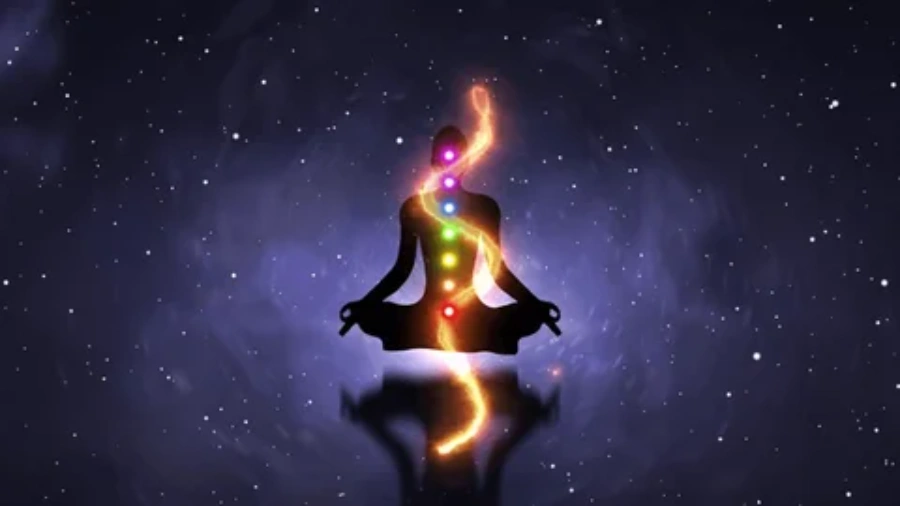
Kundalini is specifically called kundalini shakti to emphasise its feminine nature. In yogic philosophy, Shakti represents creative power, dynamism and manifestation, while Shiva represents consciousness, stillness and awareness — kundalini shakti is the creative force that, once awakened, rises to unite with pure consciousness at the crown. This is polarity rather than gender in any literal sense: active and receptive, dynamic and stable, energy and awareness together. The Devi Mahatmya, an ancient text celebrating the divine feminine, describes Shakti as “the power of Brahman itself, through which all creation comes into being.” Understanding this helps you relate to kundalini appropriately — as power to respect and consciously invite, not something to force or dominate.
05The Subtle Body, Beyond Physical Anatomy
Where Western anatomy describes organs, muscles, bones and nerves, yogic anatomy describes the subtle body — the energetic template underlying physical form, including the chakras, the nadis, the koshas or layers of being, and the pranic body itself. Is this real, or symbolic? Experientially real, though not physically measurable — much as thought and emotion are real without being physical objects.
You cannot really work with kundalini without understanding this subtle body, any more than you could understand electricity without knowing about circuits and conductors. Swami Satyananda Saraswati, founder of the Bihar School of Yoga and author of the authoritative Kundalini Tantra, describes his own book as providing “a detailed account of kundalini awakening, including the signs and effects of such experiences and ways to both elicit and manage them.” The subtle body is, quite simply, the framework kundalini energy moves through.
06The Seven Energy Centres
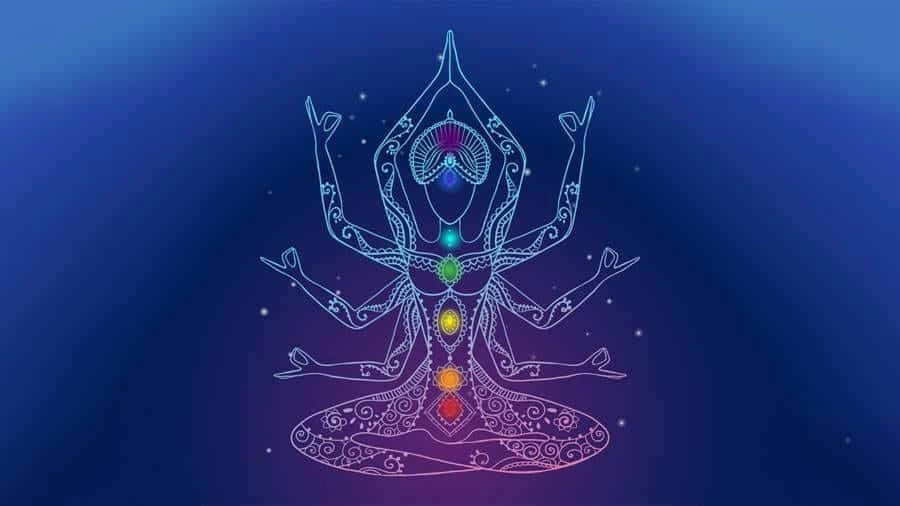
Chakras are focal points where energy concentrates along the spine — the Sanskrit word means ‘wheel’ or ‘disk’, and they function rather like transformers in an electrical system, stepping energy up or down into a form the body can actually use.
- Muladhara, Root Chakra — base of the spine, element earth, governing survival, grounding and stability; where kundalini rests dormant
- Svadhisthana, Sacral Chakra — lower abdomen, element water, governing creativity, sexuality and emotion
- Manipura, Solar Plexus Chakra — upper abdomen, element fire, governing personal power, will and confidence
- Anahata, Heart Chakra — centre of the chest, element air, governing love, compassion and connection
- Vishuddha, Throat Chakra — the throat, element ether, governing communication, truth and expression
- Ajna, Third Eye Chakra — between the eyebrows, element light, governing intuition, insight and wisdom
- Sahasrara, Crown Chakra — the crown of the head, element consciousness itself, governing spiritual connection and unity
As kundalini rises, it activates and purifies each of these in sequence — gradually, not instantaneously. The Shat-Chakra-Nirupana, written in 1577, remains one of the most detailed traditional descriptions of each centre and its particular character.
07Nadis: The Energy Channels
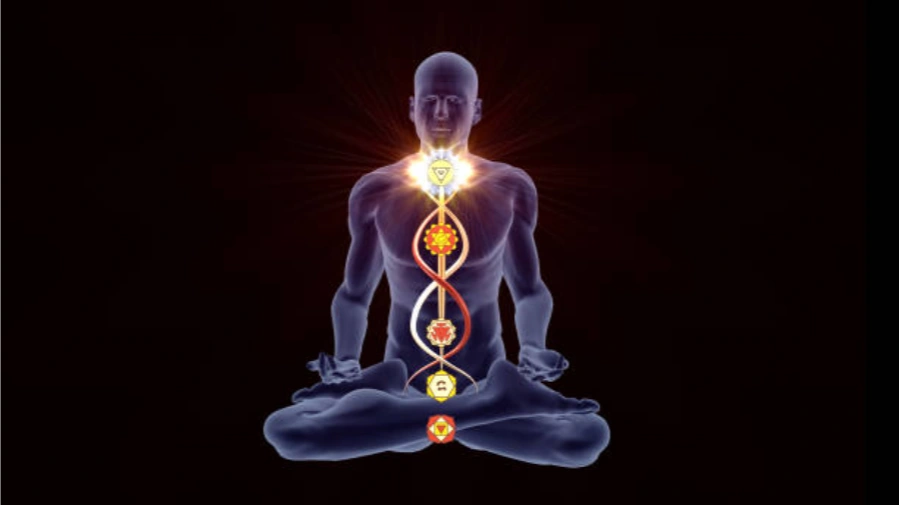
Chakras do not exist in isolation; they connect through nadis, subtle energy channels that yogic texts describe numbering seventy-two thousand throughout the body. Three matter most for kundalini: sushumna, the central channel running along the spine through which kundalini itself travels; ida, the left channel, associated with lunar, cooling energy and the parasympathetic nervous system; and pingala, the right channel, associated with solar, heating energy and the sympathetic nervous system.
In most people, energy flows mainly through ida and pingala, creating ordinary mental and physical activity without deeper spiritual transformation. Activation occurs specifically when energy enters the sushumna — a shift from peripheral to central that creates a genuinely profound change in consciousness. Practices like alternate nostril breathing, which you can build through structured morning meditation sessions, help balance ida and pingala first, preparing the sushumna for kundalini’s ascent.
08Prana: The Life Force Behind It All
Before understanding how kundalini moves, it helps to understand prana — the life force that animates all living things, known elsewhere as chi in Chinese medicine, ki in Japanese martial arts, pneuma in ancient Greek thought, or ruach in Hebrew. Prana enters the body primarily through breath, but also through food, water, sunlight and environment more broadly.
Kundalini is best understood as concentrated, primordial prana. Where ordinary prana sustains daily function, kundalini represents evolutionary potential — the capacity for genuine consciousness expansion. When it awakens, it does not operate separately from prana; it intensifies and refines the entire pranic system at once.
09Pranayama: Directing Energy Through Breath
If prana is life force, pranayama — from prana, life force, and ayama, extension or control — is the art of directing it through breath. These techniques do more than oxygenate the blood; they influence the subtle energy system directly. Nadi Shodhana, alternate nostril breathing, balances the left and right channels and calms the mind. Kapalabhati, skull-shining breath, is rapid abdominal breathing that energises and purifies. Bhastrika, bellows breath, generates heat and activates the energy centres forcefully. Ujjayi, victorious breath, builds internal heat and focus through the throat, and is common across many practices including Ashtanga open practice. These are tools for working with kundalini intentionally, not simply breathing exercises, and structured morning meditation programmes teach this progression safely, building capacity gradually rather than forcing anything prematurely.
10What the Ancient Texts Say
Kundalini is not a New Age invention; it is rooted in thousands of years of yogic tradition. The Yoga Kundalini Upanishad describes its location and method of awakening, stating that “when the sleeping Kundalini awakens by favor of Guru, then all the lotuses and knots are pierced through.” The Hatha Yoga Pradipika, from the fifteenth century, offers a practical manual of physical practice, breath control and energy work, warning that “the Kundalini sleeps above the Kanda; it is the means of salvation for yogis and bondage for the foolish.” The Shiva Samhita describes kundalini as “the great goddess sleeping in the Muladhara,” and the Gheranda Samhita details specific practice and its effect on consciousness.
Across all of them runs the same consistent thread: proper preparation, qualified guidance, an ethical foundation, and gradual progression — and a clear warning against forcing awakening without adequate groundwork first, advice that remains exactly as relevant today.
11How Kundalini Relates to Yoga Practice
Kundalini and yoga are intimately connected, though not every yoga practice works with kundalini directly. Yoga itself means union — the path of integrating body, mind and spirit — and kundalini is the energy that, once awakened, actually facilitates that union. Hatha yoga prepares the physical and energetic body through posture and purification, creating conditions where kundalini can awaken naturally. Raja yoga works through mind and meditation, refining consciousness to receive its transformative power. Kundalini yoga itself focuses directly on awakening this energy through kriyas, breathwork, mantra and meditation together. Tantra yoga views kundalini shakti as the divine feminine force that must rise to unite with Shiva consciousness. Even a style like a Yin yoga class supports kundalini indirectly, releasing fascial restriction and calming the nervous system in a way that simply creates more space for energy to flow.
“Kundalini isn’t reserved for spiritual elites. It is dormant potential within every human being.”
The heart of it
- Kundalini is dormant energy at the base of the spine, not mystical invention.
- It rises through the sushumna nadi, activating each of the seven chakras in turn.
- Ancient texts consistently emphasise preparation and guidance over force.
- Different yoga styles relate to kundalini differently — from indirect support to direct activation.
Build a genuine, grounded understanding of this energy with experienced teachers in Rishikesh.
Reserve Your Seat