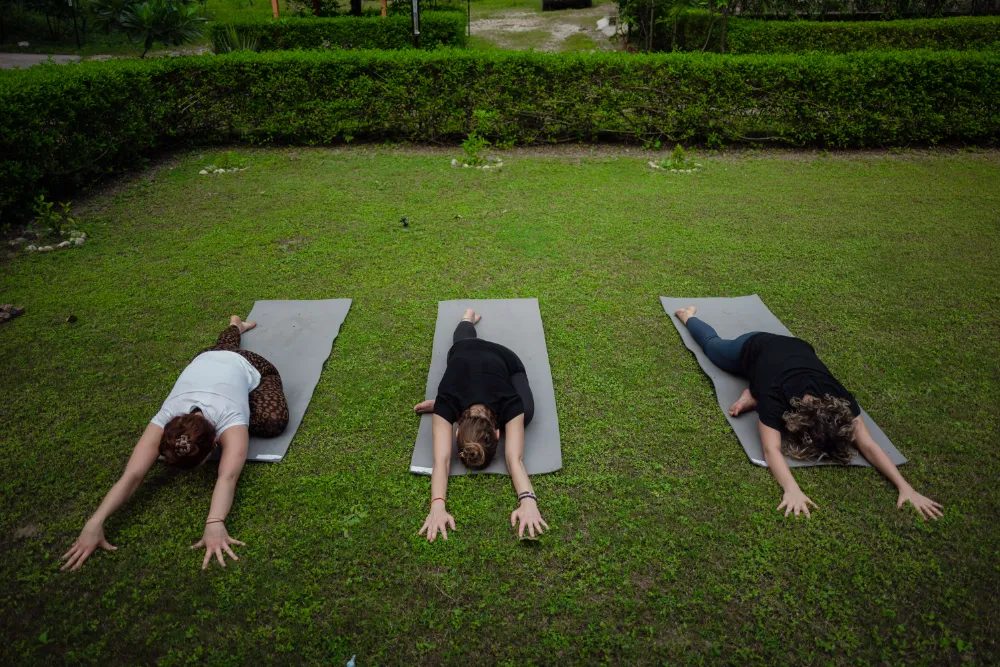
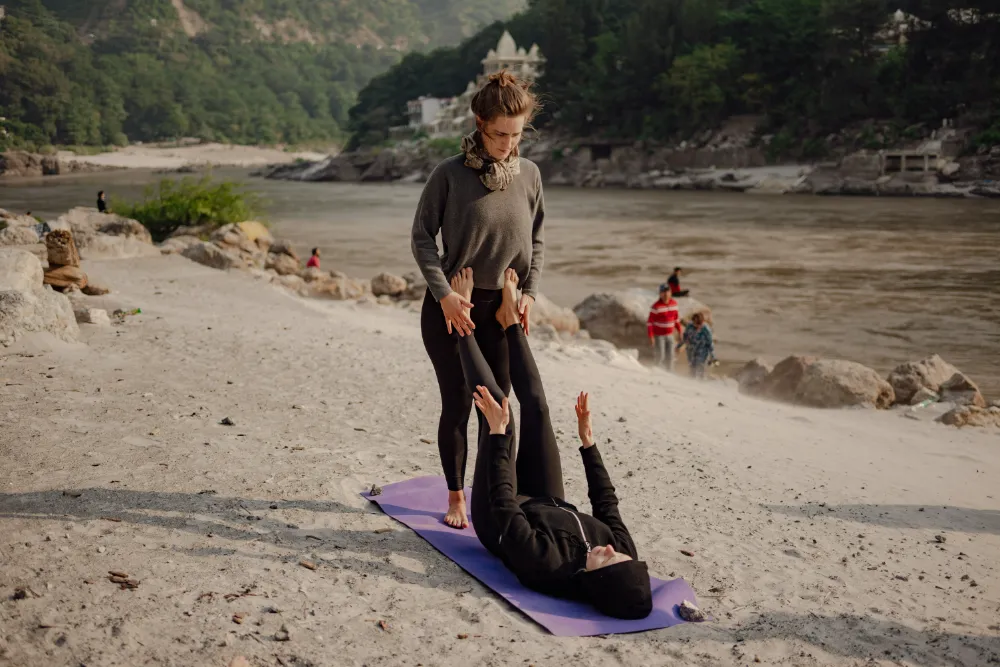
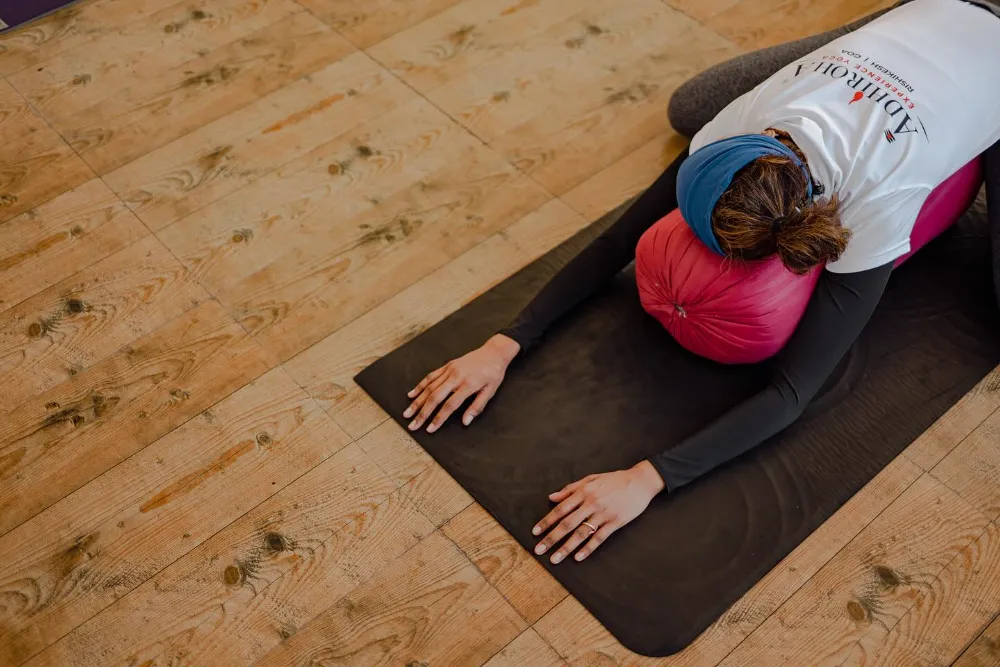
You have done the foundation. Now comes the part that turns a certified teacher into a confident one. Over thirty days on the banks of the Ganga Ji, in the quiet of Upper Tapovan, you refine the advanced postures, go deeper into breath, anatomy and philosophy, and sharpen the craft of teaching, and you leave certified at the 300 level, an RYT 500 within reach.
Thirty days on the banks of the Ganga Ji, deepen your practice, refine your teaching, and leave certified at the RYT 300 level.
We call this our Heart of Yoga course, and the name is not decoration. The foundation gave you the shape of the practice; these thirty days are where it gains depth, advanced asana, subtler breath, real teaching craft, and the philosophy underneath it all. It builds directly on your 200 hours, and it takes you the rest of the way toward RYT 500.
01
Built on your 200 hours
This course is for those who have already completed a 200 hour training (with us or elsewhere) and felt the pull to go further. We assume you know the fundamentals, so from the first morning we can move into the advanced postures, the finer alignment, and the parts of the practice a foundation simply cannot reach.
02
Residential, on purpose
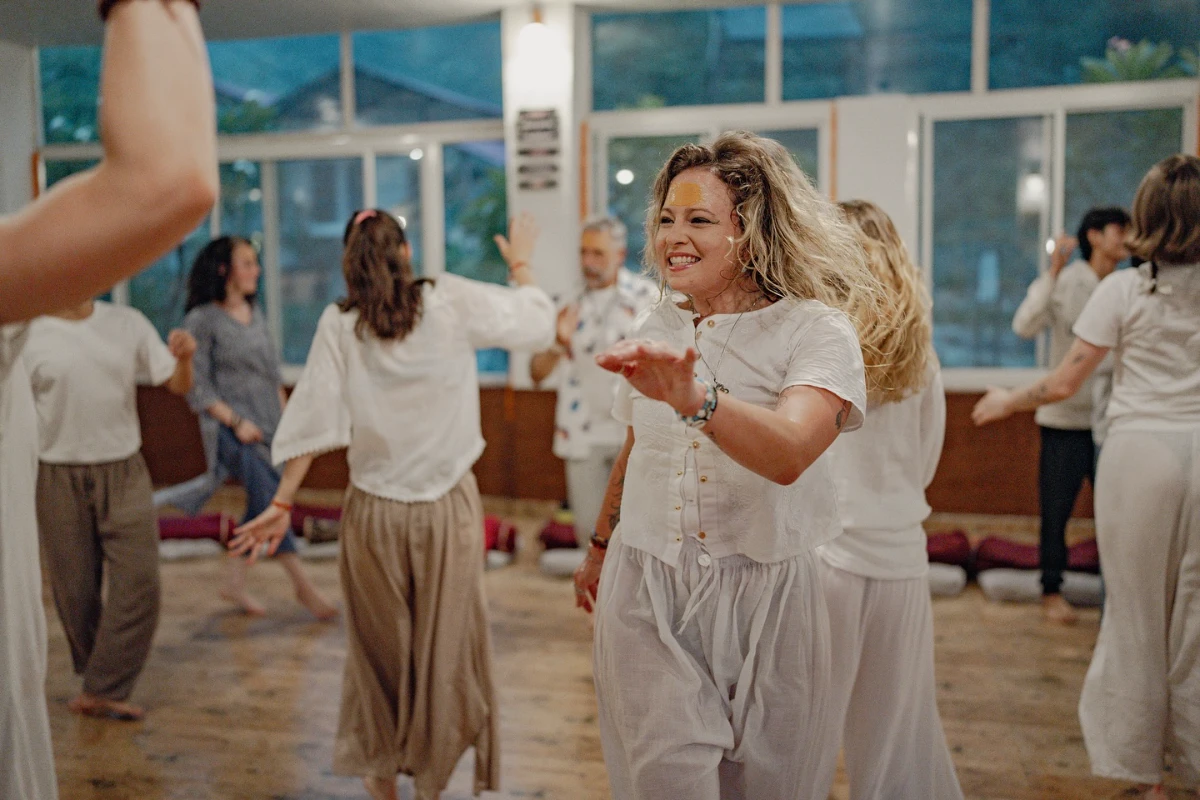
You live on ashram for the full thirty days, the same simple food, the same early hours, the same small group of no more than twelve from the first morning to the last. Somewhere in the middle of all that, the practice stops being something you do for an hour and becomes something closer to how you live.
03
A teacher, not just a practitioner
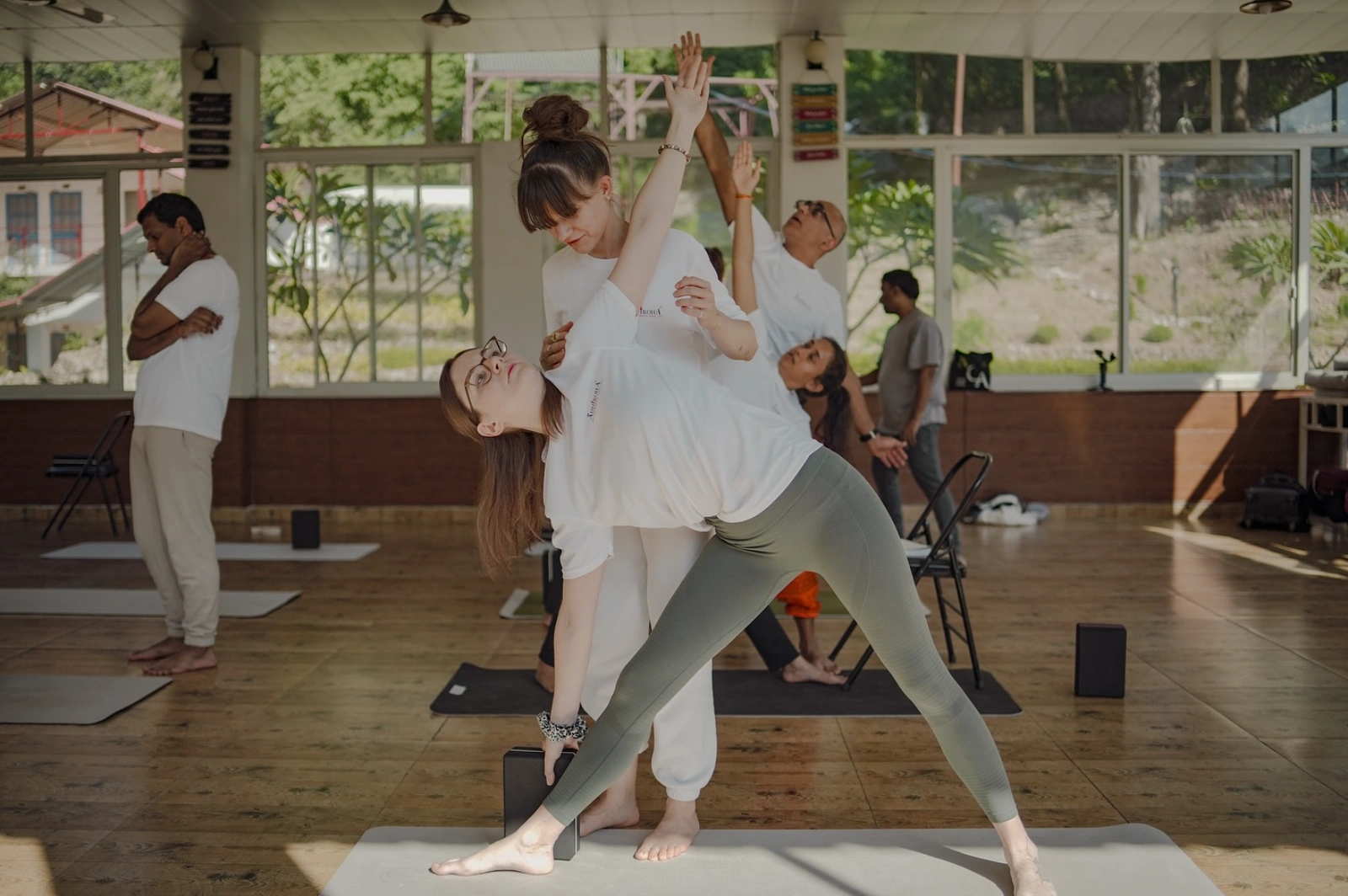
What you walk away with is the confidence to lead an advanced room, cleaner cueing, honest hands-on adjustments, thoughtful sequencing, and a deeper well of philosophy and anatomy to teach from. This is the step that turns a certificate into a craft.
“The foundation teaches you the postures. The next three hundred hours teach you how to hold a room, and how to keep growing long after the course ends.”
More Than a Certificate
Living at Adhiroha in Rishikesh
There is something worth saying plainly, right at the start: these thirty days will ask something of you. This is not a resort with a little stretching bolted onto the side, and we would rather you knew that before you booked than felt misled once you arrived. It is a fair trade, though. Here is both sides of it.
What the month asks of you
A deeper commitment
You already know the early mornings, now the practice asks for your full, undivided focus.
A beginner's mind, again
The hardest part of going deeper is being willing to be corrected on things you thought you knew.
Coming open
Ready to be stretched past the plateau the foundation left you on.
An ashram, not a resort
What it quietly gives back
A practice past its plateau
The postures and breath finally move to a level a 200-hour simply cannot reach.
The confidence to lead
Cleaner cueing, honest adjustments, and a deeper well to teach from.
A circle of fellow teachers
A month among people who already teach, and want, like you, to go further.
The month is never really about becoming someone new. It is about finding your way back to the person you quietly already were.
The Course at a Glance
300 Hour Yoga Teacher Training in Rishikesh: Dates & Fees
300 Hour Yoga TTC, the Heart of Yoga course. Everything you genuinely need for the thirty days is already inside these numbers, from your room to your meals to your certificate.
Triple Sharing Most Chosen€1500All-Inclusive
Double Sharing€2000All-Inclusive
Registration €500, part of the total, never an extra
Begins on the 1st of every month. There is almost always a batch coming up soon.
Upcoming Batches, Next 12 Months
Course runs the 1st to the 29th · arrive on the 30th or 31st
Batch
Course Dates
Triple Sharing
Double Sharing
Seats
The Foundation
Why the Next 300 Hours Go So Deep
It is tempting, once you can hold a class together, to feel the learning is mostly done. We would gently disagree. The 300-hour is where the real depth lives. The advanced asana your body is finally ready for, the subtler breath and philosophy, and the teaching skills that only begin to make sense once you have already stood in front of a room.
That is why we still refuse to rush. Advanced postures drilled slowly and safely. Pranayama and meditation taken further. Philosophy and anatomy read and actually discussed rather than skimmed. Done carefully, these three hundred hours give you the range and confidence to teach well beyond the basics, and set you cleanly on the path toward RYT 500.
The Path of Certification
500 HoursThe Complete Path
You are here300 Hours, Going DeeperHeart of Yoga
200 Hours, The FoundationRoot of Yoga
You have the foundation. This is the climb that builds on it. Three hundred hours that carry you from a capable teacher toward a complete one.
Is This for You?
Who Should Join a 300 Hour Yoga Teacher Training in Rishikesh
This is an advanced course, so there is one honest requirement: a completed 200 hour training, with us or anywhere else. Beyond that, it is built for people who have felt the foundation settle in and want to go further, whether you teach already, plan to soon, or simply refuse to let the practice stop growing.
01
200-Hour Graduates
200-Hour Graduates
Who have finished the foundation, with us or elsewhere, and feel ready for more. We begin where the 200 hour left off, moving straight into the advanced asana, subtler breath and finer alignment your body is now ready for.
02
Working Teachers
Working Teachers
Already leading classes and wanting to refine the craft, cleaner cueing, honest hands-on adjustments, thoughtful sequencing, and a deeper well of philosophy and anatomy to teach from when a room asks the hard questions.
03
Toward RYT 500
Toward RYT 500
On the path to the full Registered Yoga Teacher 500 credential. The 300 hour is the second half of that journey, complete it, and RYT 500 is finally within reach, opening advanced workshops and retreats worldwide.
04
Returning Practitioners
Returning Practitioners
Who trained a while ago and want to come back to the mat with fresh depth. A month to reconnect with the practice, sharpen what has gone rusty, and remember exactly why you began.
What it asks for is not perfection, only a foundation already laid and the willingness to build on it. Turn up open, do the work, and the course takes you further than you expect.
Why Train Here
Why Join the Best 300 Hour Yoga Teacher Training in Rishikesh
There is no shortage of schools, and choosing well from the other side of the world is genuinely hard. So here, without the marketing gloss, are the things that actually set this course apart.
Teachers Who Have Lived It
01
Teachers Who Have Lived It
Every subject is led by a Yoga Acharya with somewhere between nine and twenty years behind them, not a recent graduate reading from notes. They know their material in their bones, and share it without a trace of ego. More than anything else on this page, they are the reason people travel across the world to train with us, and the reason so many come back.
02
A Genuinely Holistic Course
This is not thirty days of postures and nothing else. The course weaves together advanced Hatha, Ashtanga Vinyasa and adjustment-alignment work, and sets them alongside deeper pranayama, meditation, philosophy, anatomy and refined teaching methodology. You leave with command of the whole tradition, exactly what separates a seasoned teacher from someone repeating a memorised sequence.
03
The Spirit of Rishikesh
Wrapped in rivers and forest, Rishikesh gives you a setting no city studio can borrow. Two guided excursions each batch, the evening Ganga aarti in Rishikesh by the Ganga Ji, kirtan, and a sound healing session are all part of the course, so the culture you are training inside becomes part of the training itself.
04
A Certificate That Travels
You finish with two credentials, the Adhiroha certificate, accredited under the Ministry of Ayush, and a Yoga Alliance RYT 300. Together they turn your 300 hour yoga teacher training in India into an advanced qualification recognised in studios and retreats almost anywhere you might want to teach.
Twelve subjects, taught across thirty days, each carried by a teacher who has genuinely lived it. They sort naturally into four pillars, and together they take your practice deeper and your teaching further than the foundation ever could.
12subjects, four pillars, taught one class at a time, over thirty days
Pillar 01
The Practice
Refining the body
Advanced Asana & Inversions, headstands, arm balances and deep backbends, approached safely.
Ashtanga Intermediate Series, the next series, opening the body further.
Vinyasa Krama & Sequencing, building intelligent, creative flows of your own.
Pillar 02
The Subtle Body
Working with energy
Advanced Pranayama & Bandhas, the energetic locks that deepen every breath.
Mudras & Kriyas, refined gestures and cleansing for a subtler practice.
Chakras & the Koshas, mapping the subtle body behind the postures.
Pillar 03
The Knowledge
Going to the source
Patanjali's Yoga Sutras, the source text, studied line by line.
Yoga Therapy & Injury Care, working safely with real bodies and old injuries.
Applied Anatomy, the deeper mechanics behind advanced postures.
Hands-on Adjustments, the art of the safe, confident assist.
Mentored Practicum, teaching advanced classes with honest feedback.
By the last week the pillars stop feeling like separate subjects at all, the advanced practice, the subtle body, the source texts and the craft settle into one thing, and that one thing is you, teaching with authority.
Hour by Hour
How the 300 Hours Are Divided
Yoga Alliance sets the categories; how a school fills them is what makes the difference. This is exactly how the 300 contact hours of our 300 hour yoga teacher training in Rishikesh are allocated.
150hours
Techniques, Training & Practice
Advanced asana, deeper pranayama and bandha, mudra and kriya. The 300 hour yoga teacher training in Rishikesh assumes you already hold a class and pushes what you can offer in it.
40hours
Teaching Methodology
Reading a room, adjusting on the spot, and designing courses rather than single classes.
30hours
Anatomy & Physiology
Subtle anatomy, the koshas and the energy body, alongside injury-aware sequencing.
40hours
Yoga Philosophy & Ethics
Living with the texts rather than quoting them, and teaching from them honestly.
40hours
Practicum
You teach, the faculty watches, you adjust, you teach again the same week.
A Day in the Life
Daily Schedule of Our 300 Hour Yoga Teacher Training in Rishikesh
People always want to know what the days really feel like, so here is the honest shape of one, full, deliberate, and pitched a notch higher than the foundation. It looks like a lot written down. By the second day, for a returning practitioner, it simply feels like home.
Morning
5:45 – 8:45
5:45
Shatkarma, gentle cleansing practices as the light comes up
6:00
Pranayama and breathwork, while the air is still cool
7:15
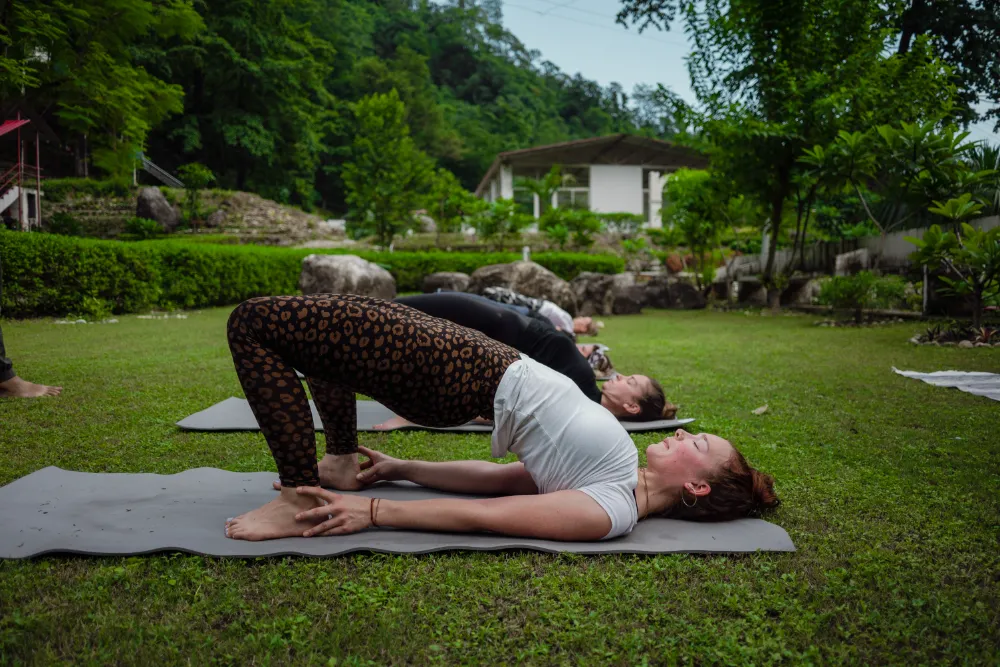
A strong Ashtanga and Vinyasa practice to wake the body properly
8:45
Breakfast, warm and simple, eaten without hurry
Mid-Day
9:30 – 13:00
9:30
Yoga anatomy, the science behind everything you practise
11:00
A restorative Yin session to open and release
13:00
Lunch, then a real rest through the warm part of the day
Afternoon
14:45 – 16:15
14:45
Philosophy and ethics, discussion more than lecture
16:15
Hatha asana, refined for alignment, as the afternoon softens
Evening
18:00 – 19:30
18:00
Bhakti chanting, then meditation as the day winds down
19:30
Dinner, and lights out early, because dawn comes early too
By the end of the first week, the rhythm carries you rather than the other way round.
This steady repetition, day after day in clean mountain air, is the real teacher, far more than any single clever class.
The Arc of the Month
Week by Week: Your 300 Hour Yoga Teacher Training Month
The thirty days are not a flat stretch of identical mornings. They have a shape, and knowing it ahead of time helps. Most people move through roughly the same arc, whatever level they arrive at.
Day 1, you arriveDay 30, you teach
The First Few Days
Arriving
You land, shake off the travel, and meet a group who, like you, already practise and teach. The first few sessions revisit the fundamentals, so everyone settles back into their body before the advanced work begins.
The First Week
Past the Basics
The body remembers quickly. Within days you move past what the foundation covered and into the advanced work, deeper backbends, inversions, the subtle body, the parts a 200-hour only ever hinted at.
The Middle Weeks
The Shift
Almost without warning, something turns. You stop practising like a student and start seeing like a teacher, reading alignment in the room, understanding why a sequence is built the way it is, teaching from the inside out.
The Final Days
Teaching & Farewells
You plan and lead advanced classes to your peers, take mentored feedback with good grace, and sit your final assessment. Then the RYT 300 certificate comes, RYT 500 now within reach, and the goodbyes, always harder than anyone expects.
Finish the course and you leave with one certificate, issued by Adhiroha and carrying both recognitions on it. Because the school is a Registered Yoga School with Yoga Alliance and accredited by the Yoga Certification Board under the Ministry of Ayush, that single certificate is all a studio in Berlin, a gym in Melbourne or a retreat in Costa Rica needs to see. You will not have to explain yourself. The certificate does that for you.
To receive it, you simply need to be present and take part, a minimum of 90% attendance and a genuine effort through the final assessment. Meet that, and you leave with a qualification that never expires and a title, Registered Yoga Teacher, that stays with you for good.
Adhiroha Yoga School · Rishikesh
Adhiroha 300-Hour Certificate
One document, both recognitions, and it never expires. Meet the attendance requirement and you may register with Yoga Alliance as an RYT 300.
“A resume that reads ‘trained in Rishikesh’ carries a weight the very same hours elsewhere simply do not.”
Why Rishikesh
Why Rishikesh
The Setting Does Half the Work
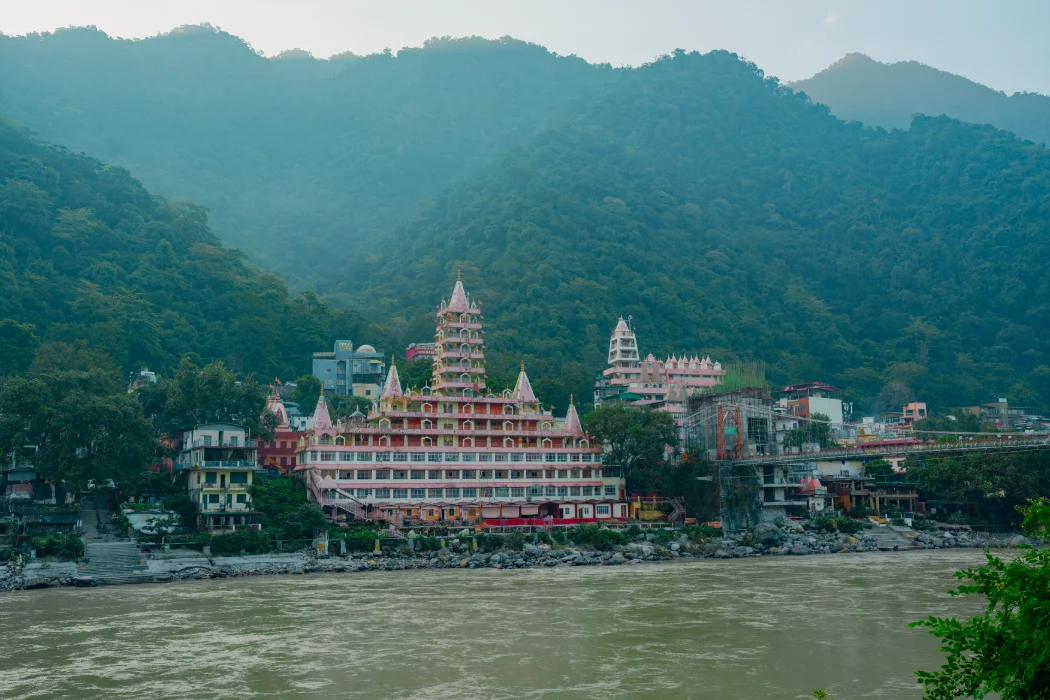
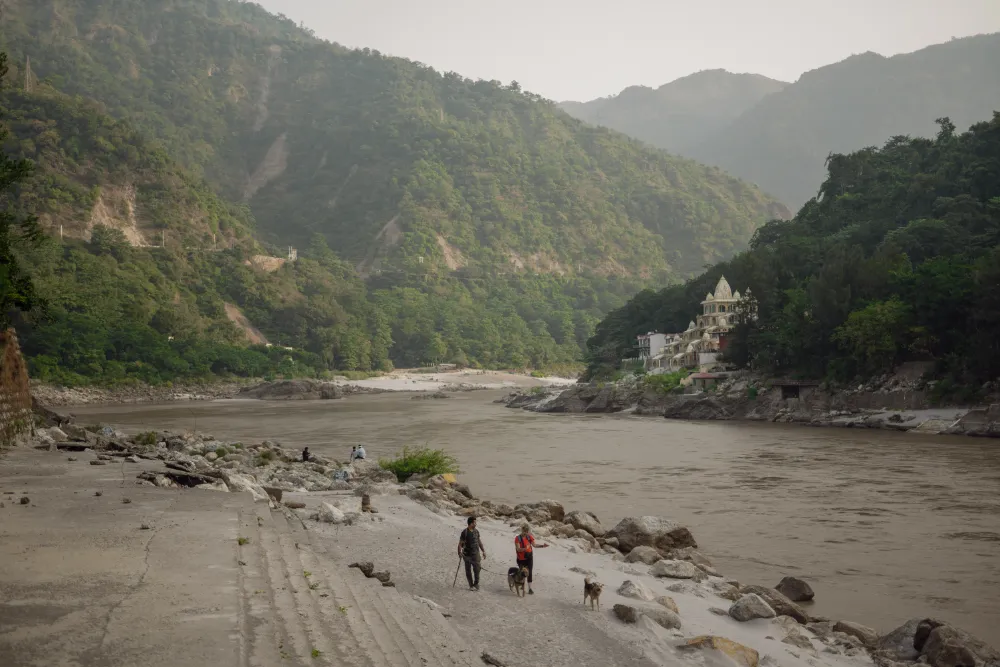
You have already trained once, most likely closer to home. What no studio back there can offer is this ground. Rishikesh sits exactly where the Ganga Ji leaves the mountains and meets the plains. A threshold place that has drawn masters and seekers for thousands of years. The air feels cleaner and somehow more awake; temple bells carry across the water at first light.
Choosing to deepen your practice here means choosing all of that as your backdrop, not as scenery but as part of the teaching. You refine your craft where the tradition has been kept alive across centuries, and the advanced work tends to land deeper, faster, simply because the place keeps drawing you quietly inward.
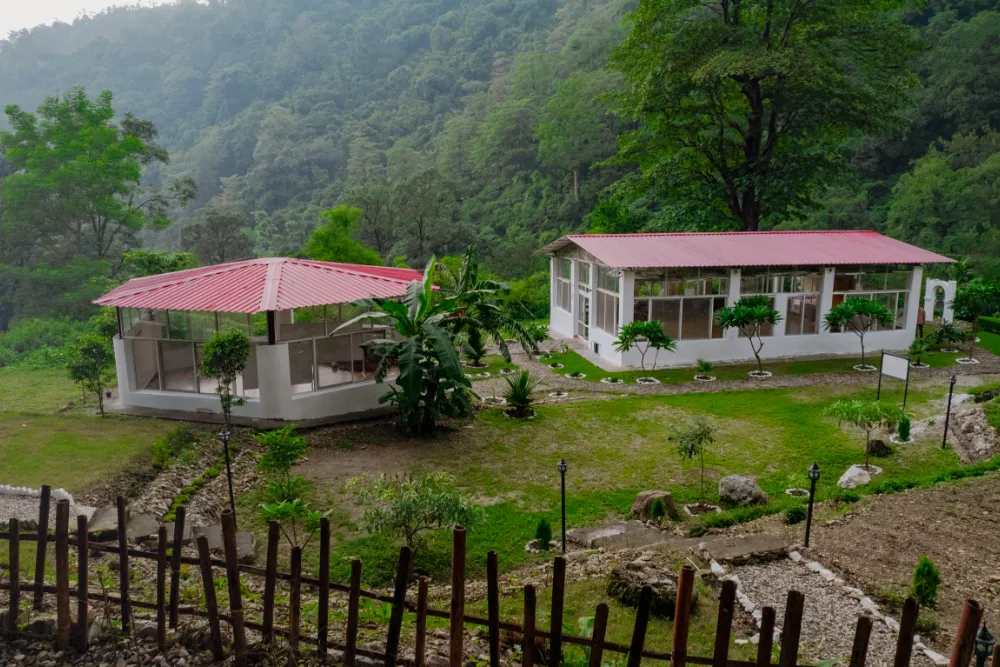
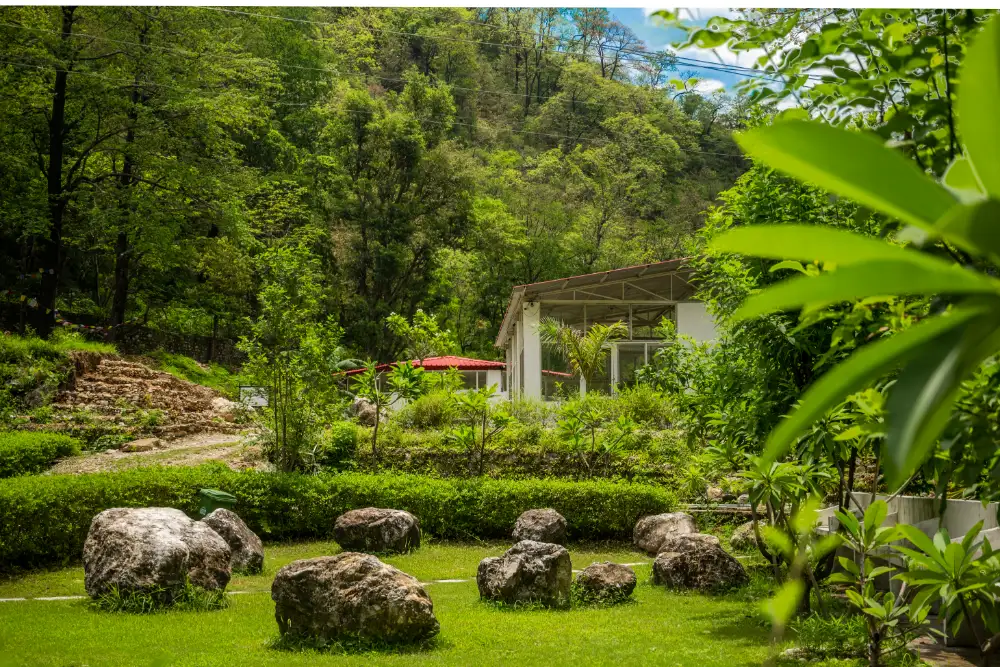
Set a little above the busy riverbank, up in the calm of Upper Tapovan, our ashram gives you that rare pairing, real spiritual weight and genuine peace, in the same breath.
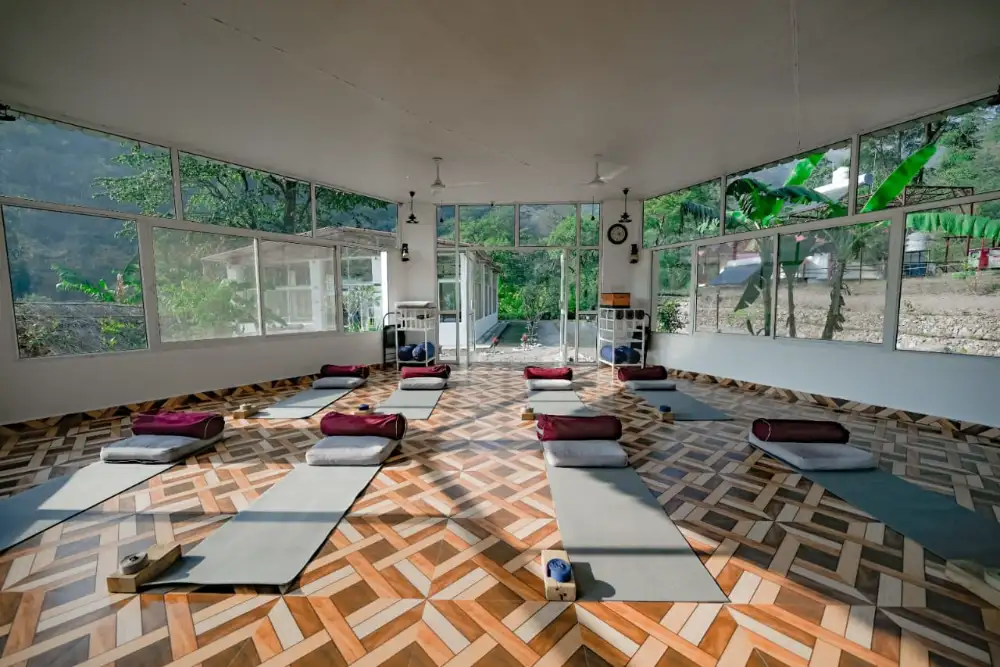
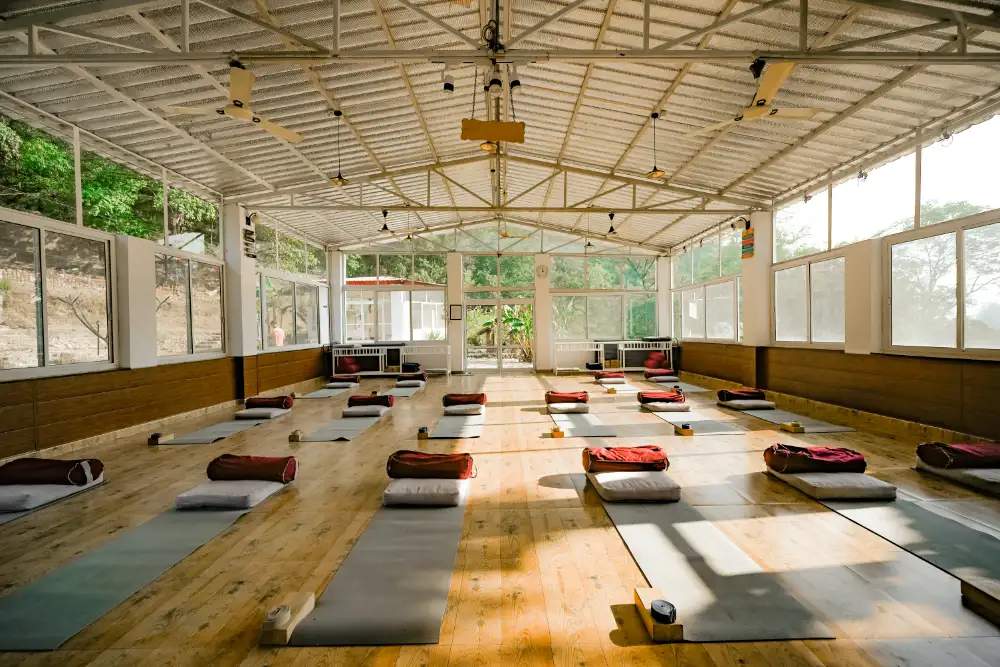
By the time you reach an advanced course you know how much the room matters. The 300 hour group is smaller, so the shala is used differently: more space per person for adjustment practice, and the smaller hall free for the teaching practicums that run through the second half. Every facility on the ashram.
A 360-Degree Forest-View Shala
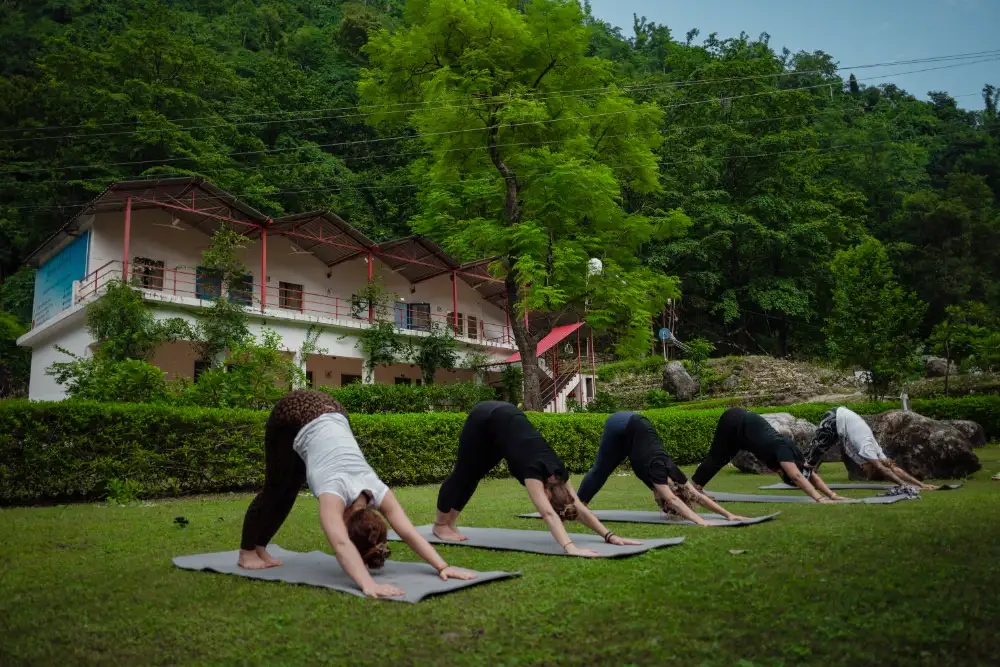
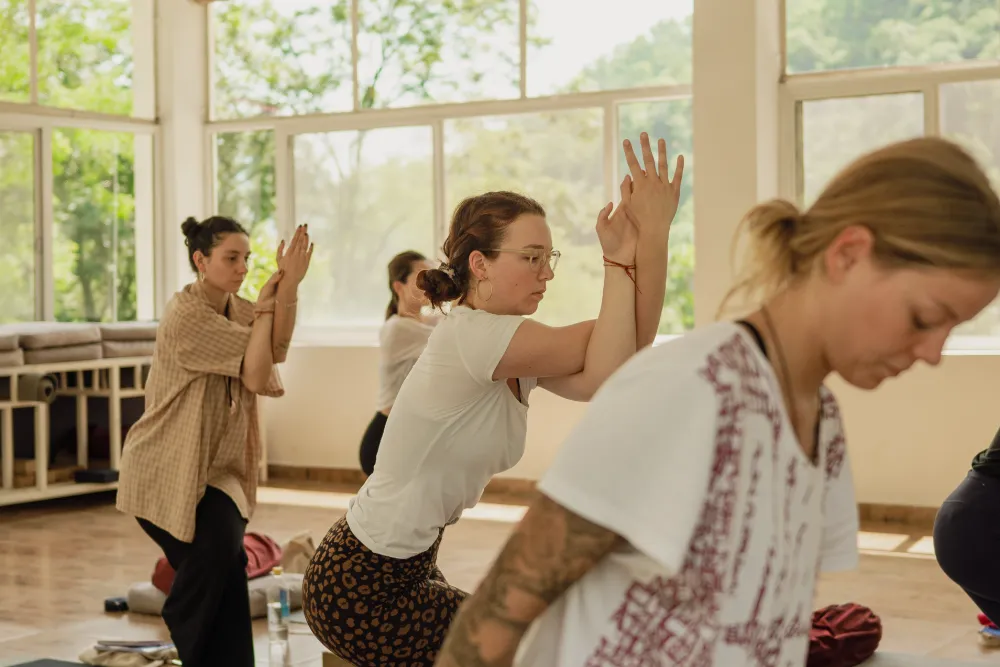
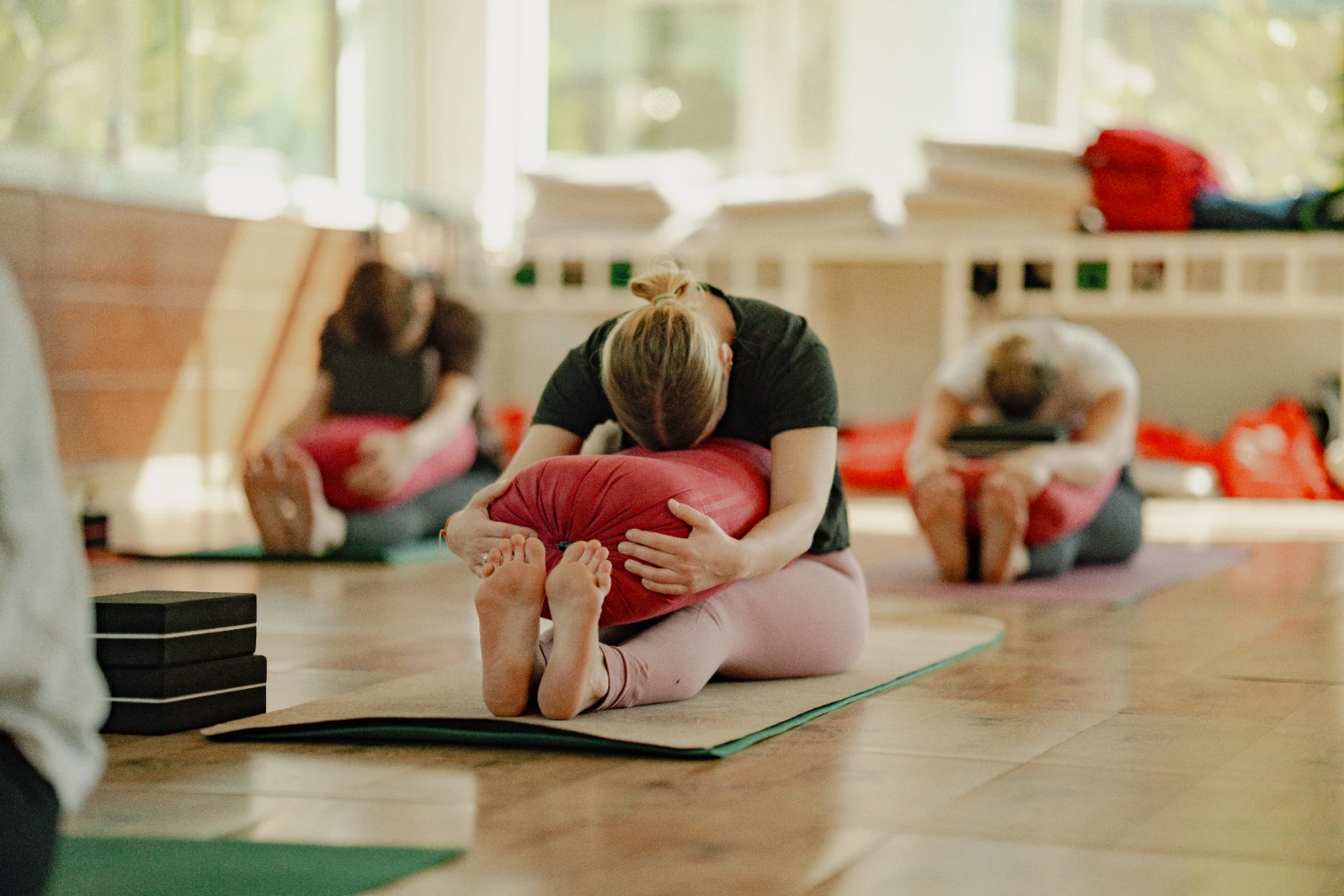
A bright, purpose-built shala that opens onto forest and mountains on every side, props, a small library, and space enough that a class never feels crowded. Practising with green and sky all around you does something four studio walls simply cannot.
All props providedSmall libraryNever crowded
A Peaceful Three-Acre Ashram
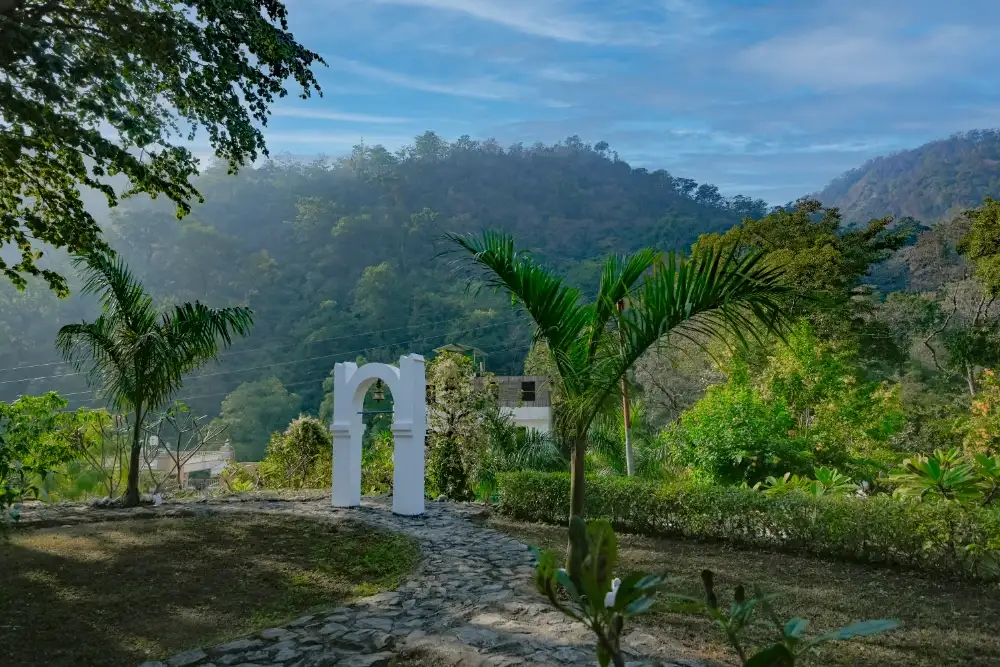
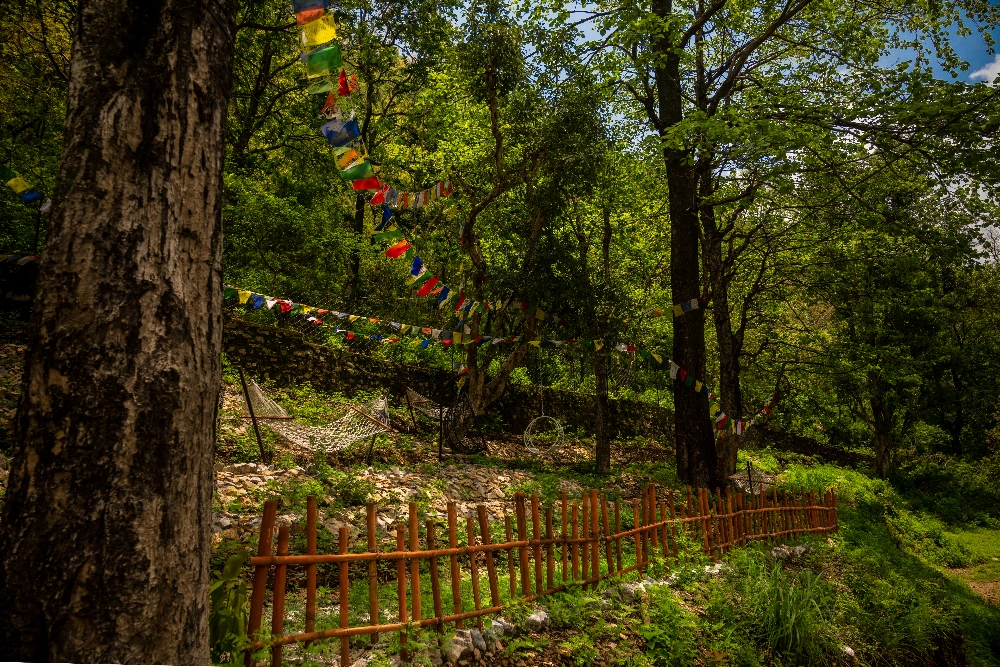
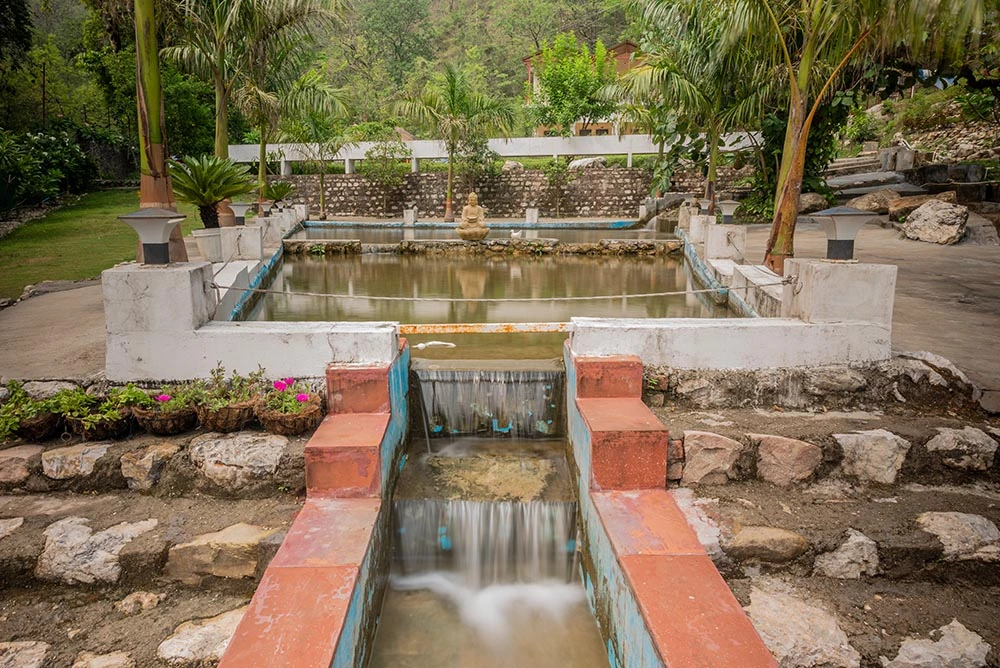
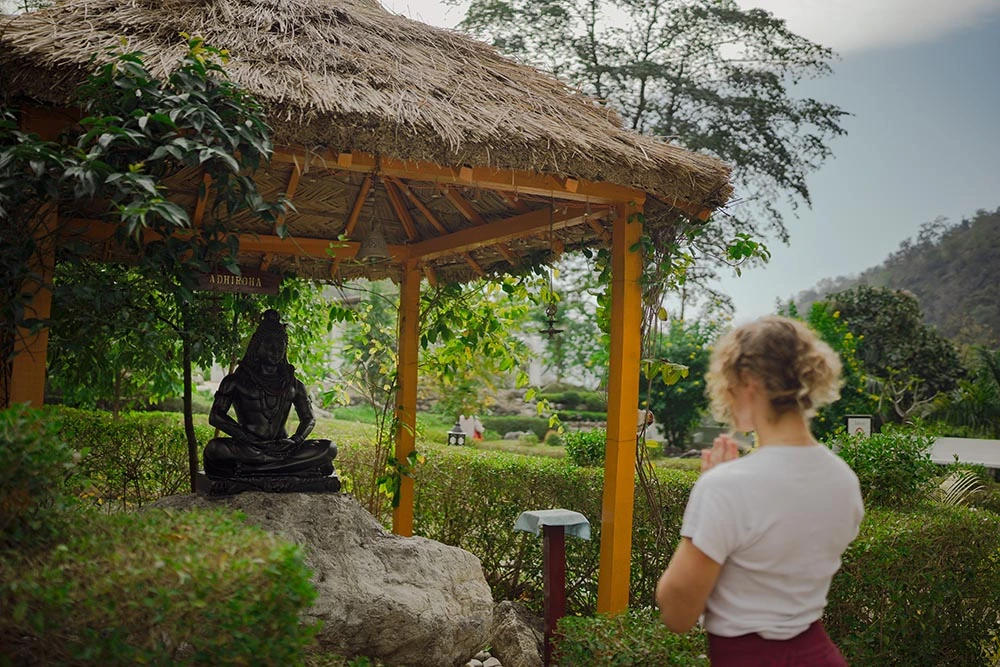
Set on three acres beside the brook, the grounds stay calm even when a full batch is in residence, a small Shiva temple for quiet sitting, shaded corners for reading, and the soft sound of running water that slows everyone down within a day or two.
Shiva templeFlowing brookHills & forest all around
A Hall for Sound Healing and Meditation
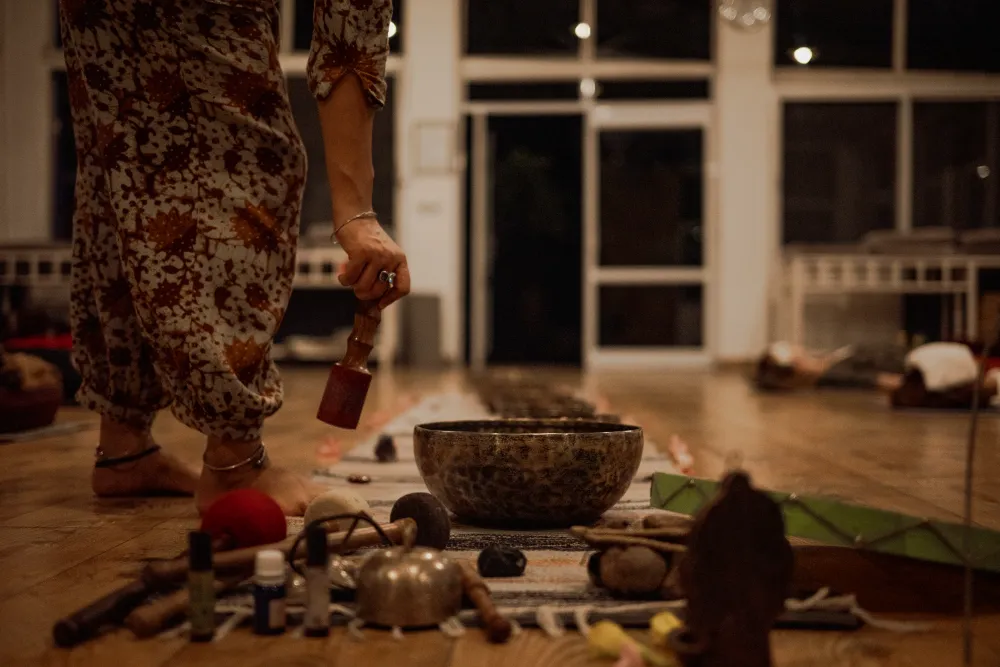
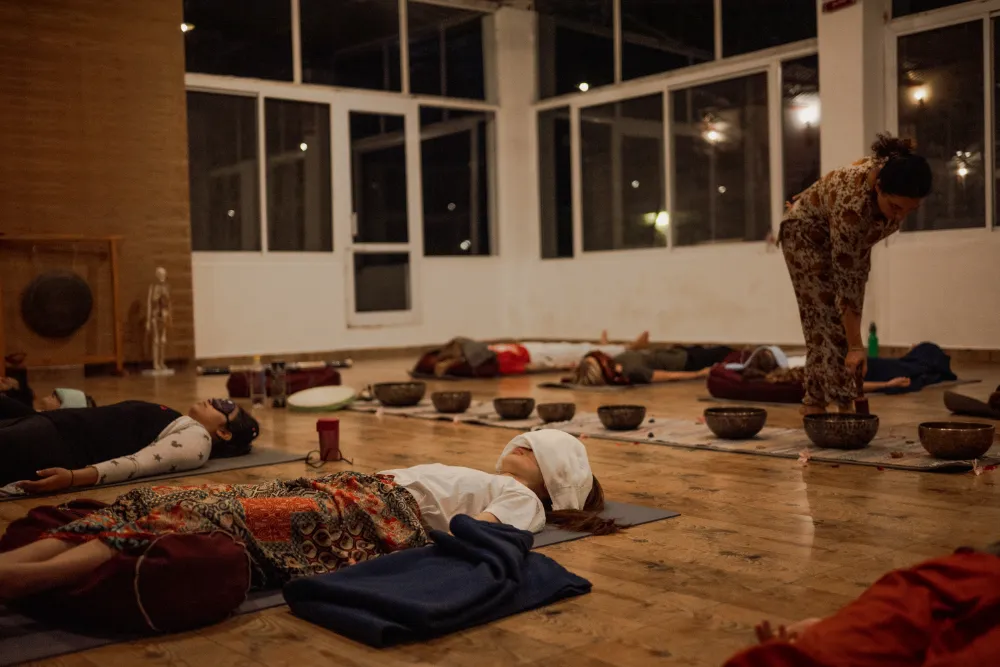
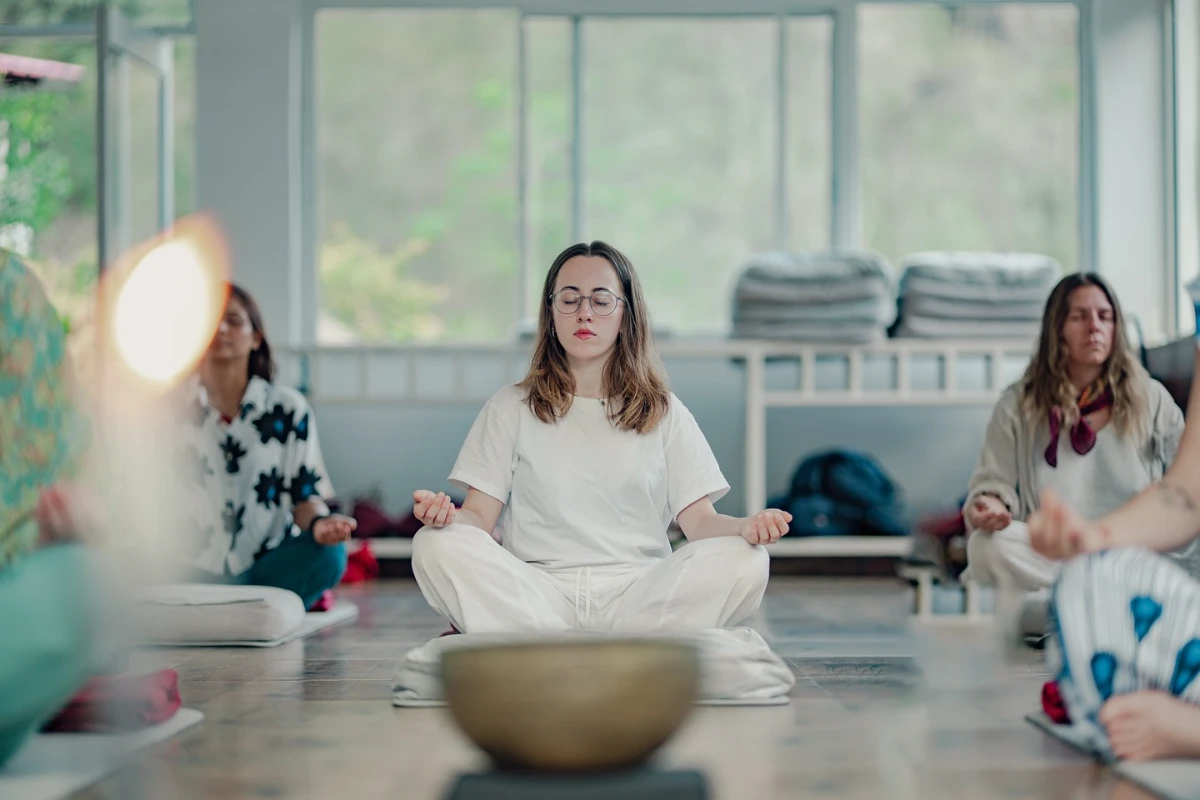
A dedicated space for the evening sittings: sound healing with singing bowls and gongs, mantra, and the guided meditation that closes each day. It is where a lot of people find the part of the course they did not expect to matter most.
Singing bowls & gongsEvening meditation
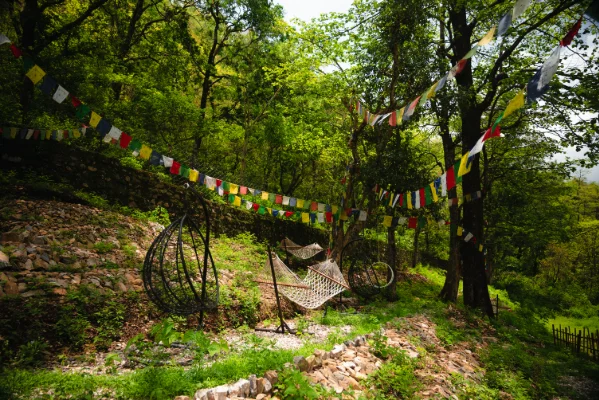
Cozy Sitting Areas Everywhere
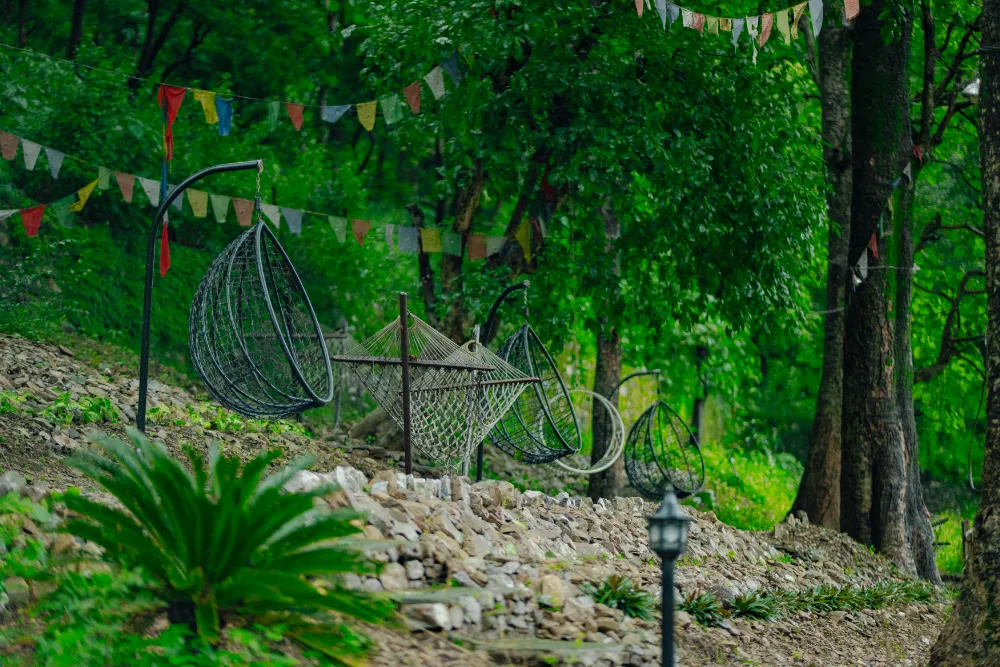
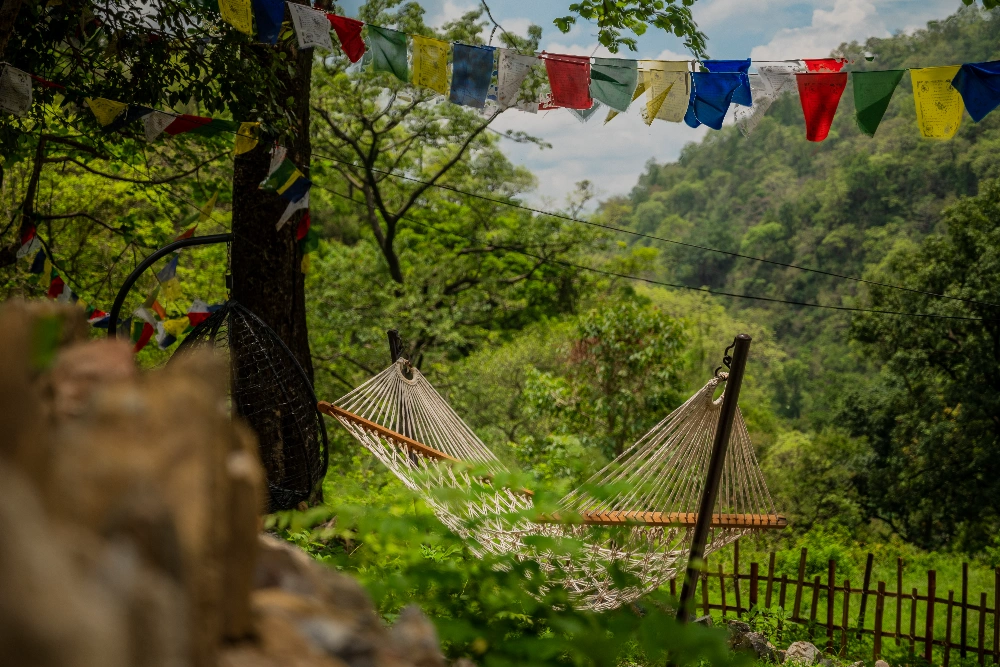
Quiet spaces dotted around the ashram in Rishikesh, made simply for unwinding, reading, journalling, or easy conversation with people who stop being strangers within weeks. A surprising amount of the real learning happens in these unhurried in-between moments.
Reading cornersGarden hammocksEasy conversation
Your Home for the Month
Where You Will Stay
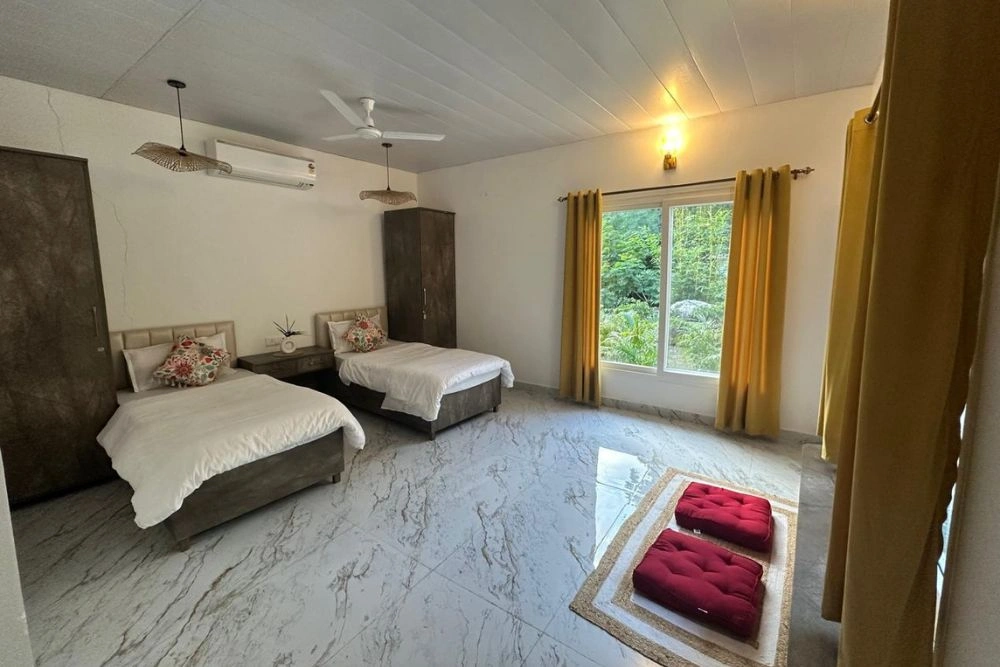
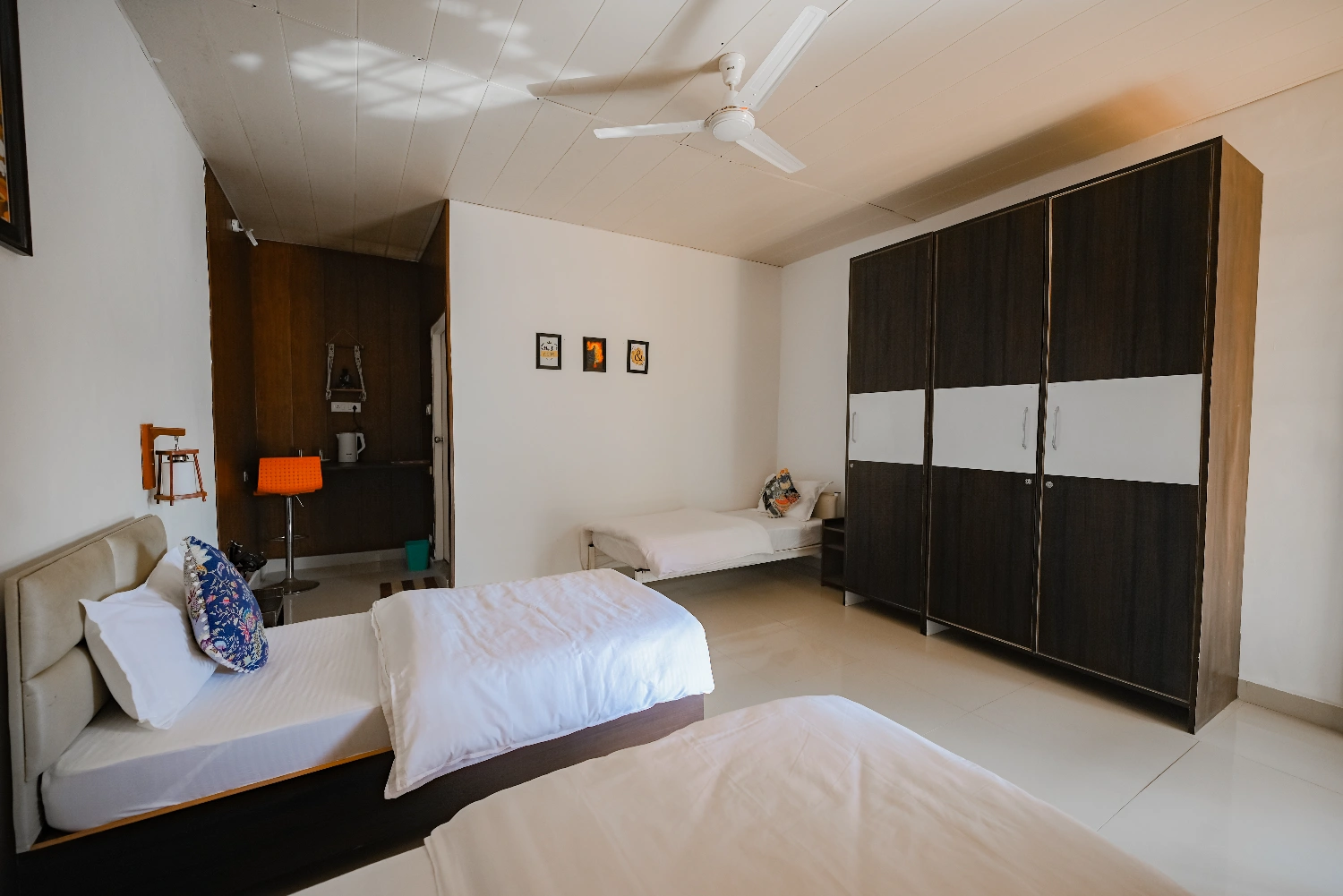
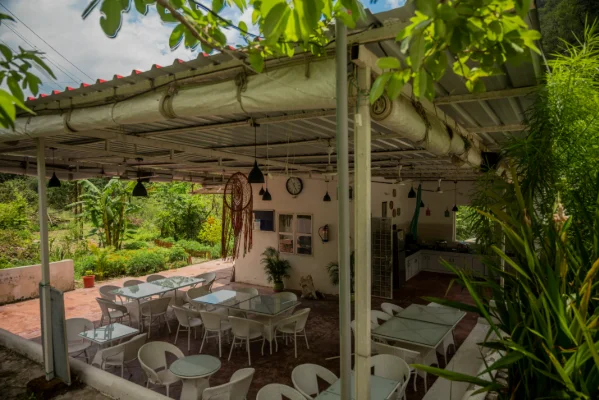
Thirty nights on site. By 300 hour level you already know what a teaching day costs you, so the room matters differently: ensuite twin or triple, hot water, and a desk that gets used, because this syllabus asks for more written work and lesson planning than the foundation did. See the rooms and grounds in detail.
Clean, airy rooms full of natural light, most looking straight out at the mountains
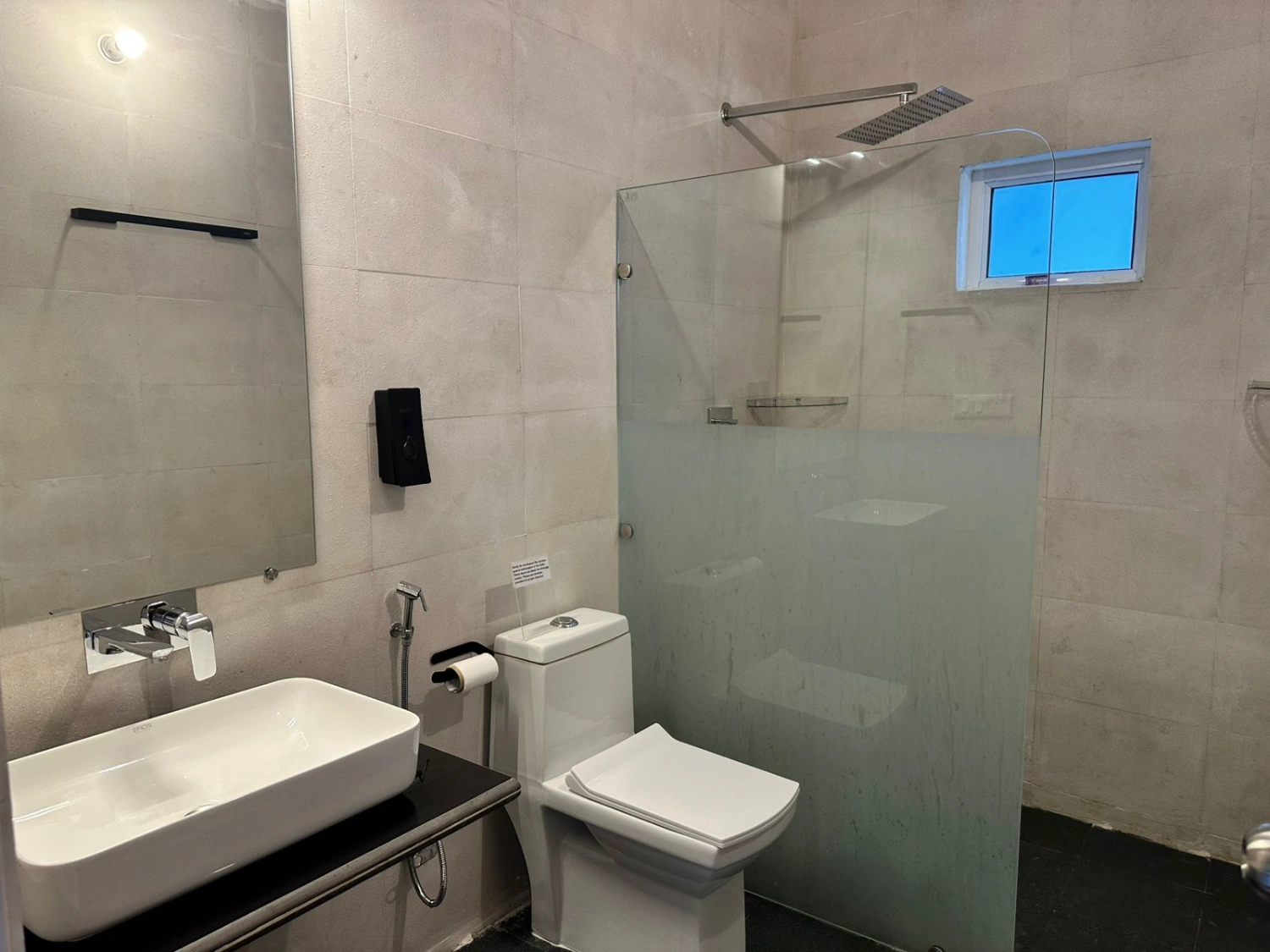
Ensuite washrooms with dependable hot water, around the clock
Simple, peaceful interiors that make it easy to rest deeply and sit quietly
Reliable high-speed WiFi and safe RO drinking water throughout the ashram
Twin or triple sharing for the full thirty days. You are never quite alone
Students often say it was the best they had slept in years, and that the mornings, for once, felt like something to look forward to.
What the 300 Hour Yoga Teacher Training Fee Includes
We keep the pricing clear so you can plan without second-guessing. The fee for the thirty days covers far more than the classes themselves. It is put together so that from the moment you land, every practical worry is already handled.
What’s Included in Fees
Airport pickup from Dehradun, so your arrival is simple
A welcome kit and all your study materials
Thirty days of twin or triple accommodation on ashram
Three nutritious vegetarian meals a day, plus detox water, safe RO drinking water and herbal tea
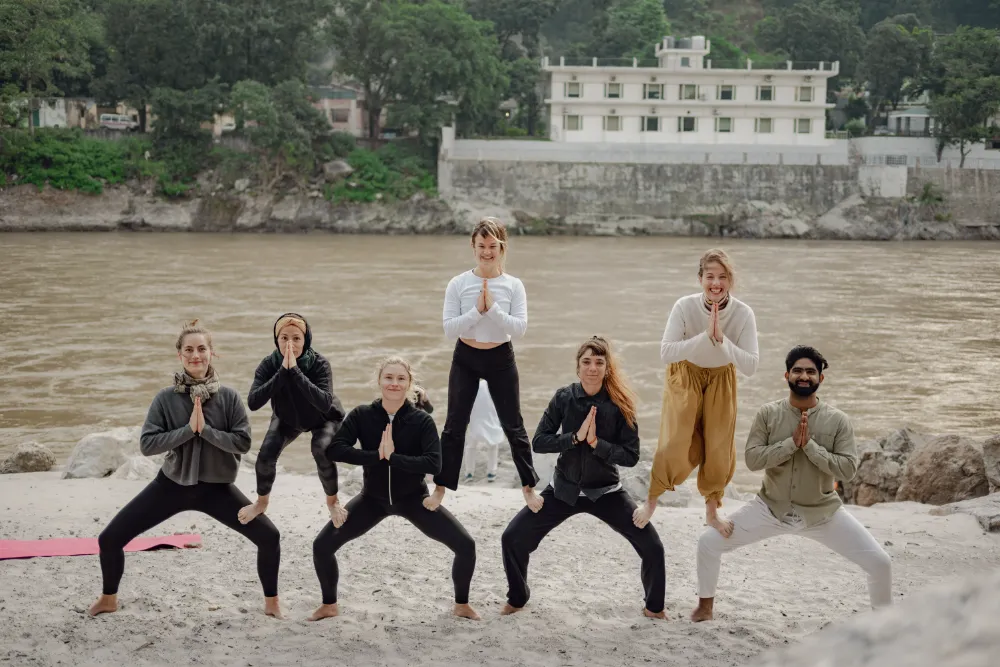
A special outdoor practice on the Ganga Ji ghat, and a sound healing session
Two guided excursions and Kirtan Ceremony each week into the hills and Rishikesh
Unlimited high-speed WiFi across the ashram
Said plainly
What’s Not Included in Fees
Laundry, available for a small charge
Extra nights beyond the course dates, arranged for a little more
Anything not listed on the left
We would rather say so plainly than bury it. Beyond this, what you see is what you pay.
A Little Extra
An Add-On Scholarship
When you enrol on the 300 hour yoga teacher training in Rishikesh, add any one of these short programs to your stay and a €90 scholarship comes off it automatically. A gentle nudge to keep going while you are in the right place and the right frame of mind.
€90off any second program when you book it together with the 300 hour course
Plenty of students take us up on it, very few regret the extra days.
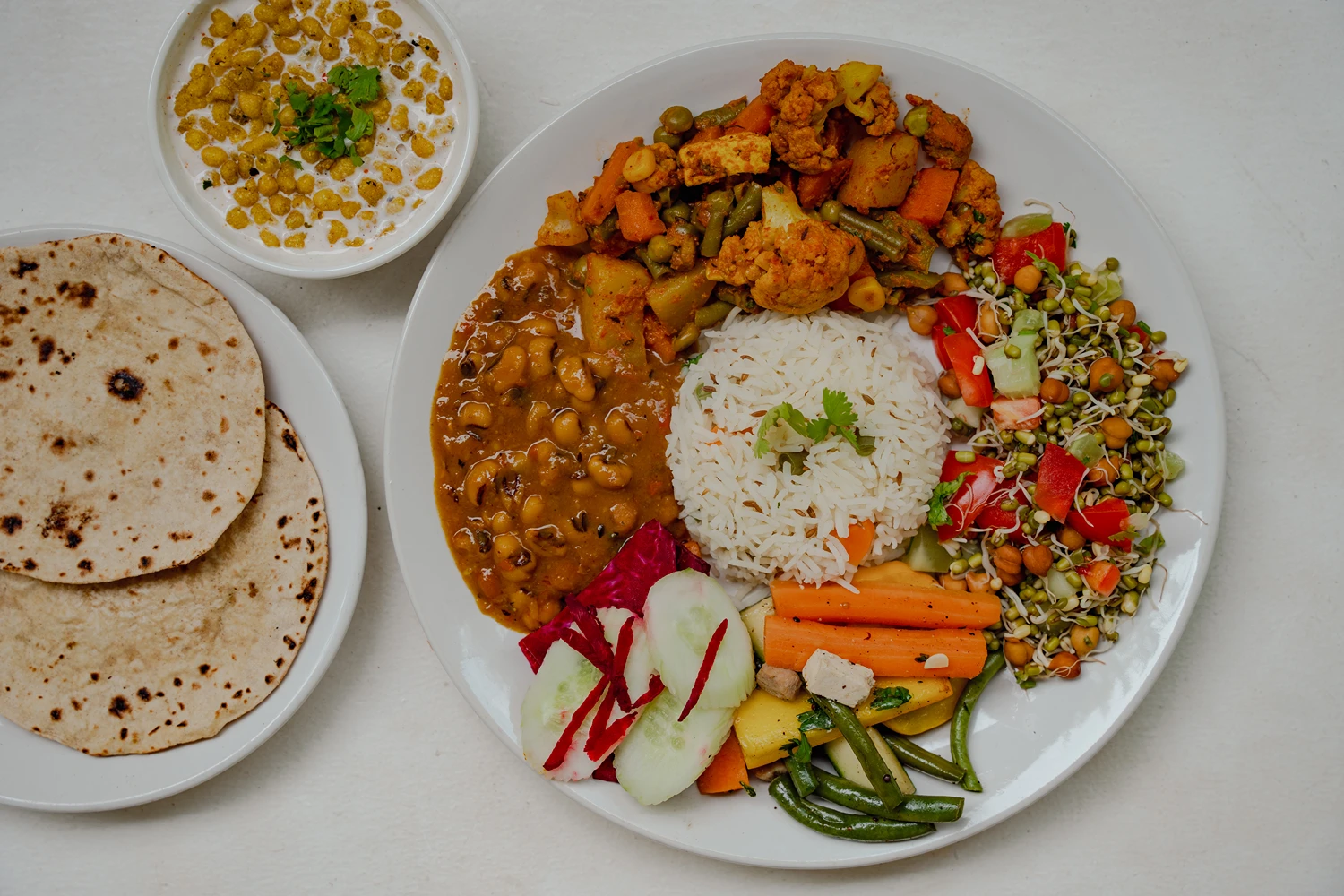
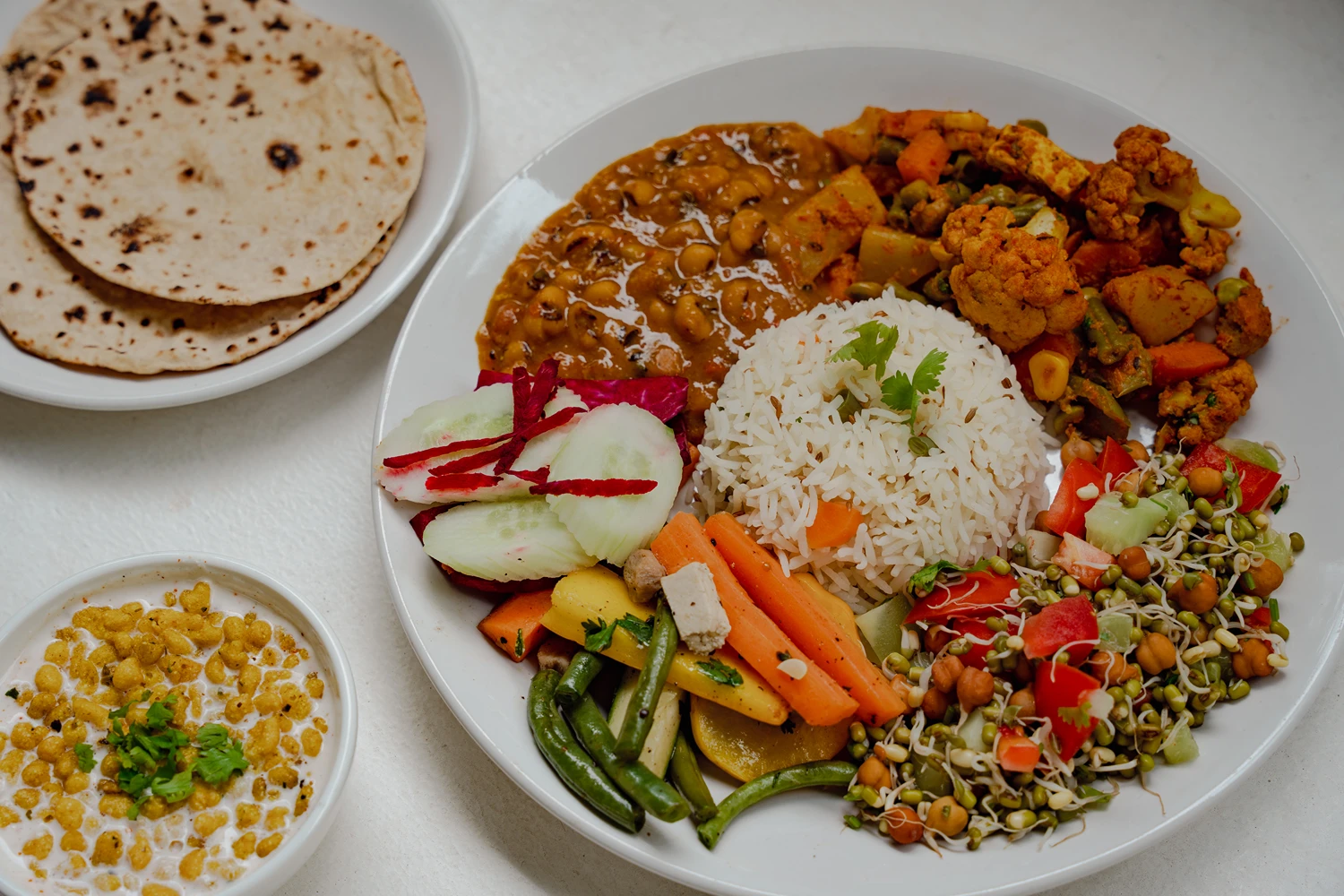
Three sattvic meals a day, thirty days. Teachers arriving for the advanced course usually come with a clear sense of what their own practice needs to eat, and the kitchen is happy to work with it rather than around it. What the kitchen serves, and how dietary needs are handled.
Do not mistake simple for plain, though. Most students are quietly surprised by how good the food is. Eating this way for thirty days does something you notice slowly: lighter mornings, steadier energy, a clearer head on the mat.
Much of what you learn here about living well is not taught in a classroom at all. It is absorbed from the rhythm of simple meals, early nights and unhurried mornings.
Beyond the Mat
Excursions and Cultural Life
Four rest days across the thirty. Teachers tend to use them differently from first-timers, and the excursions are optional for exactly that reason: some people want the aarti and the waterfall, others want a silent morning and a notebook. Where the excursions go and what they involve.
A real education never stops at the edge of the shala, so woven through the course are two excursions a week and a handful of small rituals that tie you to the living culture all around you. For many students, these turn out to be the memories they hold onto longest.
01 · At Dusk
The Evening Ganga Ji Aarti
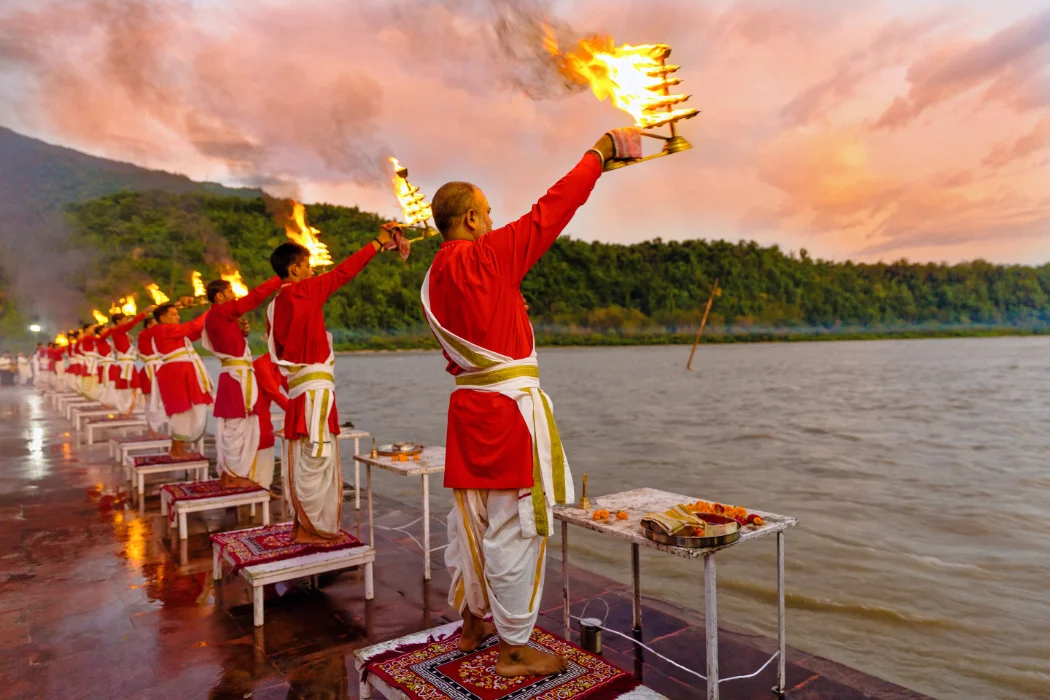
As dusk falls you walk down to the Ganga in Rishikesh for the aarti at Parmarth Niketan, where priests circle great brass lamps and the whole bank glows amber against the dark. A lot of people describe it as the first time in years they felt completely still.
02 · On Rest Days
Waterfall Treks
On rest days a short trek climbs to the waterfalls hidden in the hills above Rishikesh, cold water, green shade, and the best kind of tired.
03 · Some Mornings
Yoga on the Ganga Ji Ghat
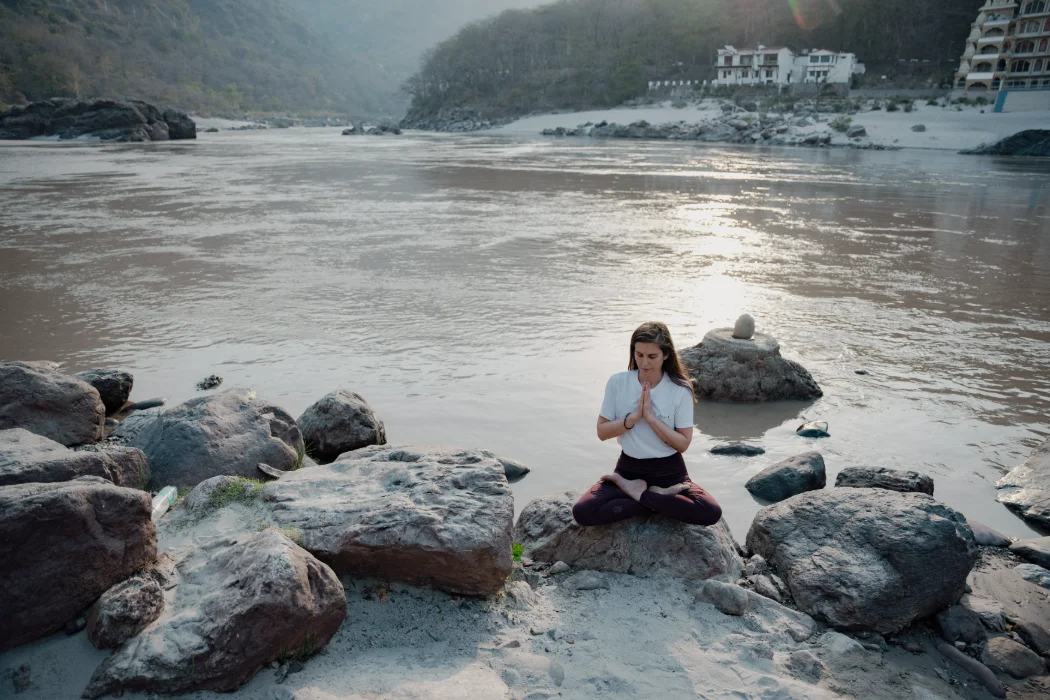
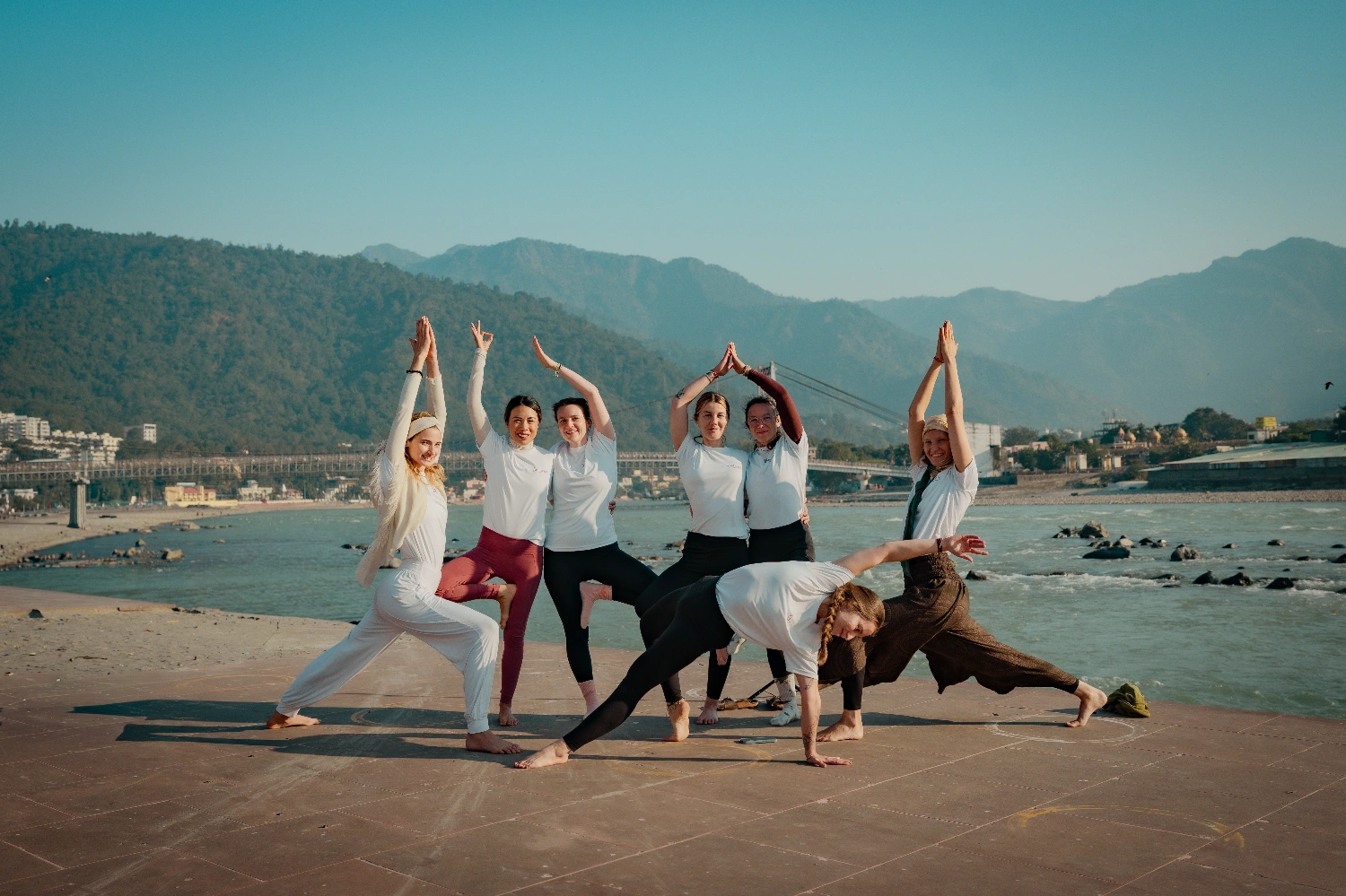
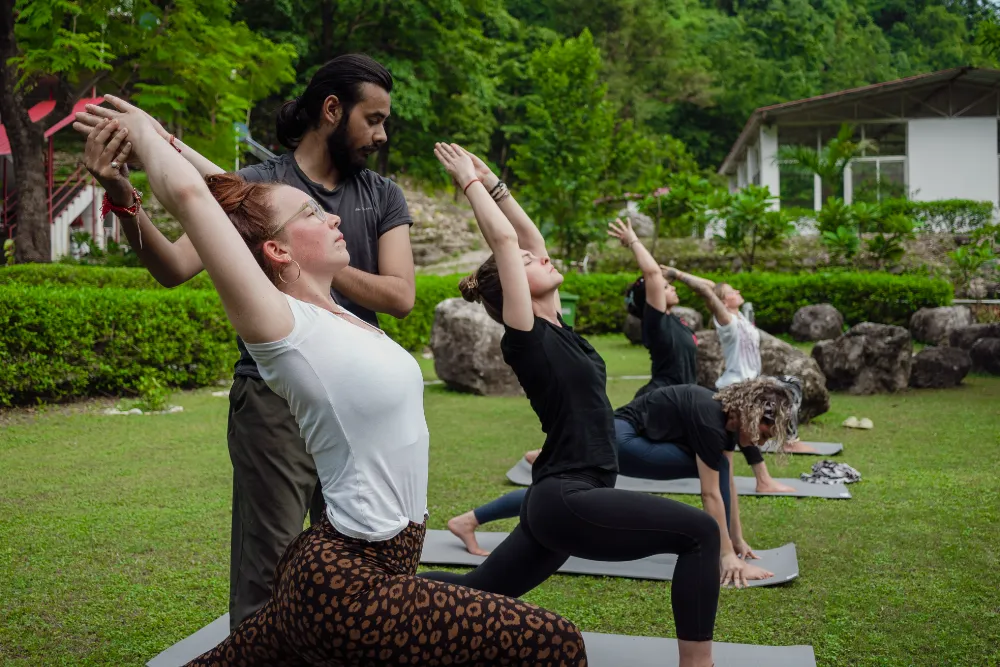
Some sessions leave the shala entirely, asana and meditation right on the ghat, with the Ganga Ji moving past as your soundtrack.
04 · In Silence
The Vasishta Caves
A short trip takes you to the ancient Vasishta caves, where sages have sat in silence for centuries. Meditating inside, in the cool and the dark, is the kind of quiet that stays with you long after you have left.
05 · Living History
Historic Temples
Guided visits to the old temples of Rishikesh, thirteen storeys of Trayambakeshwar, riverside shrines, places where the tradition you study in class has been practised without pause for centuries.
06 · Between Practice Days
Nature Walks & Sacred Sites
Gentle walks into the hills and slow time by the sacred river, none of it compulsory, none of it rushed.
You already have a 200-hour behind you, so none of this is new. Still, after a busy stretch back home, five easy things in the weeks before you travel make the return to a full practice much smoother.
Step 01
Sit quietly
A few minutes of stillness and simple breathing most days, just enough to build a little focus.
Step 02
Move a little
Move in whatever way you enjoy, so the early mornings feel less of a shock.
Step 03
Eat & hydrate
Look after yourself in the final week before you fly, future you will be grateful.
Step 04
Sort your travel
Tell us your arrival time, and the airport pickup will be waiting for you.
Step 05
Pack an open mind
Leave your expectations loose. The only item on this list that really matters.
Think of it as easing yourself toward the door, not training for a marathon, and if you can only manage one of these, make it the last one.
Your Teachers
The People at the Front of the Room
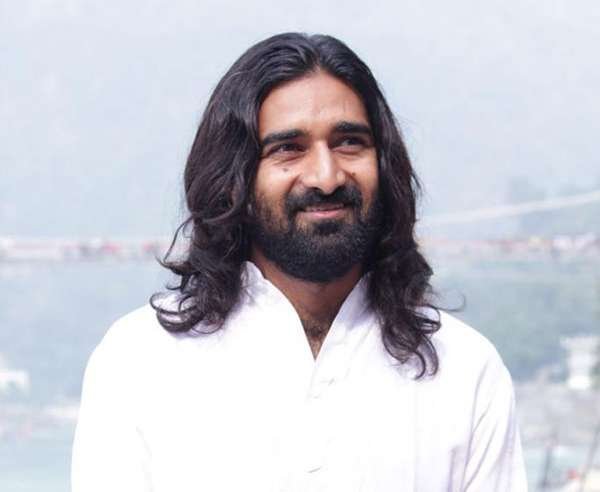
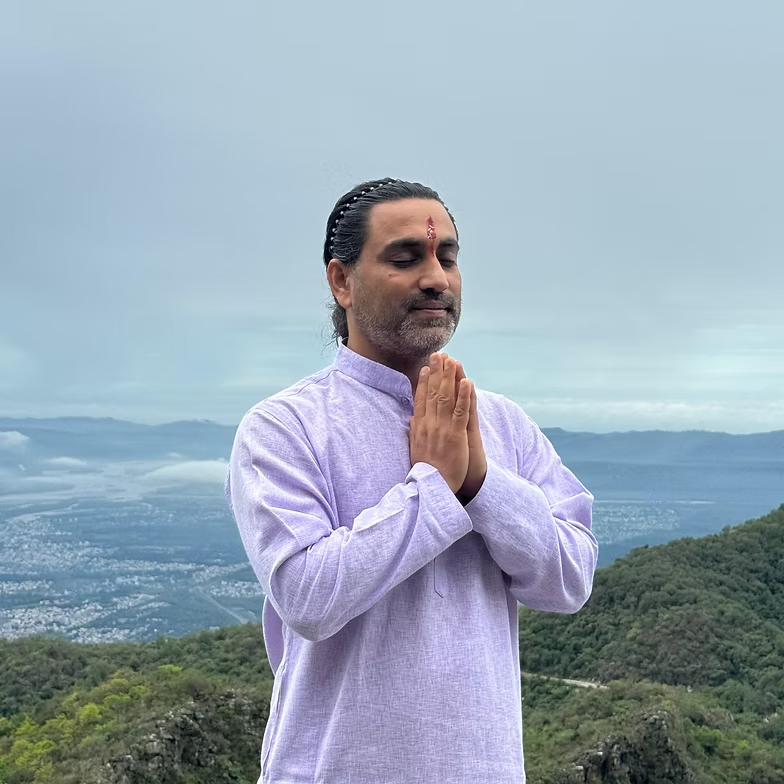
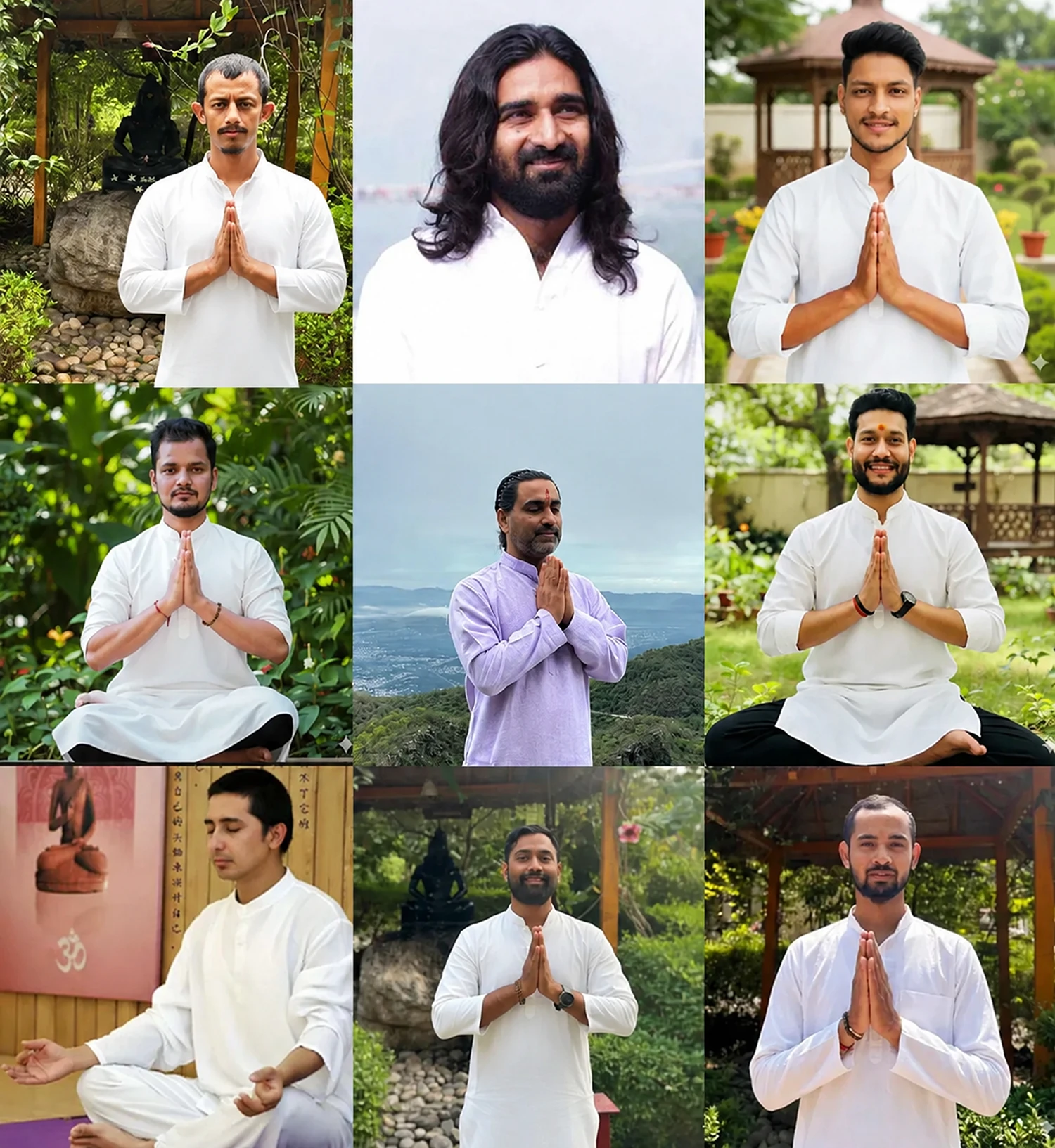
Your advanced modules are led by Yogacharya Jagjeet Singh on advanced asana and adjustment, Yogacharya Pratap Rawat on pranayama and the subtle body, and Yogacharya Sunil Bisht on philosophy. At this level the teaching is correction-heavy: you teach, they watch, you adjust, you teach it again the same week. Full profiles for all eleven teachers.
In the end, a school is only ever as good as the people teaching in it, and ours are the reason students come back. Each is a Yoga Acharya with years of dedicated teaching behind them.
01 / 10
These texts are not old. You are simply the newest person to read them.
Yogacharya Jagjeet Singh
Philosophy & Anatomy
20+ years of practiceMaster’s in Yoga ScienceTrained in the Himalayas
Born in Haridwar, Jaggi learned yoga from his yogi grandfather, took a Master’s in Yoga Science, and mastered Hatha in the Himalayas. He teaches anatomy and philosophy with rare compassion and energy. His are the sessions students quote months after they leave.
02 / 10
Discipline is not punishment. It is the structure that finally lets you move freely.
Yogacharya Pratap Rawat
Ashtanga & Vinyasa
14+ years of practiceMaster’s in Yoga & Vedic SciencesTeaches 200, 300 & 500 Hour
A seasoned yogi who began practising at an early age, Pratap holds a Master’s in Yoga & Vedic Sciences and is recognised as one of the region’s top Ashtanga teachers, leading the disciplined, sequence-driven practice across our 200, 300 and 500 hour programs.
03 / 10
You don’t need to travel far to find stillness. Sometimes it was always right where you were born.
Yogacharya Sunil Bisht
Hatha, Pranayama & Meditation
20+ years of practiceTrained in Kriya, Sivananda & KaivalyadhamBorn & raised in Rishikesh
Born and raised in Rishikesh, Sunil was drawn to the local yoga culture from an early age. He studied at renowned institutions, Kriya Yoga, Sivananda Yoga and Kaivalyadham, and now teaches Hatha Yoga, Pranayama, Meditation, Mantras, Philosophy and Ayurveda with a calm, kind and balanced presence students and fellow teachers deeply respect.
04 / 10
Breath is the one thing you carry into every posture, and the one thing most people forget to practise.
Yogacharya Jitendra Bhandari
Pranayama & Shatkarma
20+ years of practiceTrained at Sivananda AshramMaster’s in Yogic Science
Jitendra’s path began at the Sivananda Ashram, immersed in traditional yoga, spiritual living and the study of Vedanta. A master’s degree in Yogic Science later deepened a practice already decades old, and it shows in the calm, unhurried way he teaches breathwork.
05 / 10
Strength follows breath. Get the breathing honest, and the practice builds itself.
Yogacharya Ajay Pundir
Ashtanga & Vinyasa
8+ years teachingM.A. in YogaTeaches 200, 300 & 500 Hour
Ajay embarked on his yoga journey at seventeen and went on to earn an M.A. in Yoga. Today he is one of our most sought-after Ashtanga teachers, running the sunrise practice with the kind of energy that makes six a.m. feel like a gift.
06 / 10
Hatha is not about force. It is a steady conversation between effort and ease.
Yogacharya Ashish Bangwal
Hatha Yoga
8+ years of practiceTraditional & Iyengar-rooted HathaYoga Acharya
Ashish began his journey in 2017, studying traditional Hatha Yoga alongside Hatha rooted in the Iyengar approach, under the close guidance of experienced gurus. He leads the grounding morning Hatha classes, and stays back until the last question is answered.
07 / 10
Every body in the room is different. Teach the one in front of you, not the one in the book.
Yogacharya Anil Rayal
Anatomy & Physiology
9+ years of practiceTherapeutic yogic scienceAcupressure therapy
Anil brings the science. With in-depth knowledge of anatomy and physiology, a background in therapeutic applications of yogic science and expertise in acupressure therapy, his quiet, precise adjustments are the moment when everything suddenly clicks.
08 / 10
Yin doesn’t ask you to do more. It asks you to stay a little longer than feels comfortable.
Yogacharya Sudhanshu Rayal
Restorative & Yin Yoga
7+ years of practiceBody mechanics specialistRestorative & Yin focus
Sudhanshu specialises in adjustment and alignment, bringing a deep understanding of body mechanics and quiet precision to his restorative and Yin yoga classes, the slow, held postures that undo what the rest of the day tightens up.
09 / 10
Alignment is not about a perfect posture. It is about a body that finally listens to itself.
Yogacharya Anil Singh
Adjustment & Alignment
9+ years of practiceStudied Yogic SciencesHands-on adjustment specialist
Anil’s journey began in Rishikesh with a deep curiosity that soon became a way of life. He studied Yogic Sciences and now guides students through hands-on adjustment and alignment work. The quiet corrections that keep a practice safe as it deepens.
10 / 10
Progress in yoga is quiet. You will not always feel it happening, but one day you will notice you have arrived.
Yogacharya Prashant
Hatha & Ashtanga Yoga
5+ years of practiceHatha & Ashtanga trainedPatient, practical teaching
Prashant found his way to yoga through the Hatha and Ashtanga traditions, and has spent years refining a teaching style that balances strength with stillness. Known among students for his patience and clear, practical instruction, he brings steady energy and encouraging guidance to every class he leads.
We never hand a whole course to one person, and we never put an intern at the front, every subject is led by someone who has genuinely lived it for years.
Anyone can learn to call out a sequence of postures. The teachers people remember are made of something quieter, and this course is built to grow exactly that.
You leave able to hold a room
to sequence an advanced class with real intention
to lay hands on a posture and adjust it with confidence
and to teach the why beneath the shapes, not just the shapes.
When you have sat with your own restless mind and learned to breathe through it, you can see the same struggle in a student across the room and meet it with patience instead of judgement. But you also leave gentler with yourself, which, oddly enough, is what makes you a good teacher for anyone else. That blend of depth and humanity is what these thirty advanced days are quietly designed to produce.
The Fine Print, Honestly
300 Hour Yoga Teacher Training Prerequisites & Assessment
A few practical things worth knowing before you enrol, laid out plainly, no surprises hiding in small letters.
90%attendance is all we ask
§ 01
A completed 200-hour training
This is an advanced course, so you need a 200 hour certification first, earned with us or at any Yoga Alliance school. It builds directly on that foundation.
§ 02
Every class counts
This is an immersive course, and all classes and sessions are mandatory. It only works if everyone is genuinely in it, together.
§ 03
Show up, and finish
Keep at least ninety percent attendance and take part in the final assessment. Meet that, and you receive the Adhiroha 300-hour certificate, accredited by the Yoga Certification Board, Ministry of Ayush, plus Yoga Alliance RYT 300. Together with your 200, that makes you eligible for RYT 500.
§ 04
Ashram etiquette
We ask every student to read and follow a simple code of conduct, a handful of ashram etiquettes that keep the space calm, focused and kind for everyone in it.
None of it is heavy. It is just the frame that lets the real work happen.
The Adhiroha TeamUpper Tapovan · Rishikesh
The Path Ahead
What Comes After the 300-Hour
We will be honest with you: even at the 300 level, a certificate is a milestone, not a finish line. The confidence to teach advanced work keeps growing with every hour logged under good guidance, which is exactly why this course gives so much time to real teaching practice rather than theory alone.
There is no pressure to rush. Many teach happily for years at the 300 level. But when you are ready to complete the journey, the 500-hour is waiting, and a great many of our graduates return a year or two on to take that final step.
Once you have trained in these hills with us, you remain part of the Adhiroha family for good, questions answered long after you leave, and a warm welcome whenever you return.
Behind you
200hrs
The Foundation
Where it began, the training that made you a Registered Yoga Teacher.
You are here
300hrs
The Deepening
Advanced practice, refined teaching and the art of sequencing. The course you are looking at now.
The next step
500hrs
The Complete Training
The whole path, walked end to end, RYT 500, the qualification senior teachers carry.
Almost everyone hesitates a little before booking a month away, and that hesitation is completely normal. It is usually one of a handful of quiet worries, so let us meet them head on.
“It has been years since my 200-hour.”
A
You are far from alone. The first few days revisit the fundamentals gently, so everyone finds their feet again before the advanced work begins.
“Will this just repeat what I already know?”
A
No. This is where the practice goes past the foundation, advanced asana, the subtle body, therapy, and real teaching craft.
“Am I strong or experienced enough for the advanced postures?”
A
Everything is taught in careful progressions. Nobody is pushed past what their body is ready for. The depth comes from patience, not force.
“I did my 200-hour elsewhere, will I fit in?”
A
Most of our 300-hour students trained somewhere else for their foundation. You will fit in from the first morning, a shared love of the practice is all it takes.
If a different worry is sitting on your mind, write to us and ask. There is no script waiting at the other end, only people who once stood exactly where you are standing now.
A kilometre uphill from Tapovan market. On the advanced course the location earns its keep in the evenings, when the walk down to the river is where most of the thinking about your own teaching actually happens. More about the ashram and its surroundings.
Delhi Airport is about 250 km away, most students fly into Dehradun, where our pickup is waiting.
Hear It From Them
Student Stories, On Camera
People arriving at 300 hour level have usually taught for a year or two and want to know whether the course will genuinely move them on. These graduates are the right people to answer that. Read what students wrote after they went home.
Unscripted and unedited, students talking about the course in their own words, straight from the Adhiroha YouTube channel. Tap any card to play.
You have done this journey before, but the logistics are worth re-checking. Here is the route almost everyone takes to reach the ashram in Upper Tapovan.
Apply for a tourist visa
An Indian e-Tourist visa covers a thirty-day course comfortably. Apply two to four weeks ahead; you do not need a student visa to train in Rishikesh.
Fly into Delhi or Dehradun
Delhi (DEL) has the widest international choice for reaching Rishikesh. Dehradun (DED) is forty minutes from Rishikesh and worth the connecting flight if the timings work.
Reach Rishikesh
From Dehradun the transfer is about an hour. From Delhi it is a six-hour drive or an overnight train to Haridwar, then thirty minutes on to Rishikesh.
Arrive the day before
Courses begin on the 1st, so plan to be at our Rishikesh ashram on the last day of the previous month. Arriving rested matters more than people expect.
Airport pickup
Pickup from Dehradun to Rishikesh is included. From Delhi we can arrange a car for an additional charge; tell us your flight number when you register.
Season by Season
When to Come, and What to Pack
Rishikesh sits where the Ganga leaves the Himalayas, so the weather changes more than the plains do. Every season here is practisable; they simply ask for different clothes.
Months
Temperature
What to bring
February to April
12–30°C
The most popular season in Rishikesh. Layers for early mornings, light cotton for the day.
May to June
20–40°C
Hot and bright in Rishikesh. Loose cotton, a sun hat and a refillable bottle; the shala stays cool.
July to September
22–33°C
Monsoon, and the greenest Rishikesh gets. Quick-dry clothes, sandals and a light rain layer for the Rishikesh monsoon.
October to November
14–28°C
Clear skies after the rain. Many students call this the best month to train in Rishikesh.
December to January
5–20°C
Cold mornings in Rishikesh, warm afternoons. A fleece, socks for meditation and a shawl for evening chanting.
Assessment
How You Are Assessed on the 300 Hour Course
Nobody fails a course at Adhiroha for being inflexible. What we mark on the 300 hour yoga teacher training in Rishikesh is whether you can teach safely and honestly at this level.
Adjustment skill
The main assessment at this level. Consent, placement, pressure, and knowing when to leave someone alone.
Sequencing logic
Whether your class has a reason for its order, and whether you can explain that reason when asked mid-session.
Attendance
A minimum of 90% across the 30 days, with the practicum blocks weighted more heavily than the lectures.
Written paper
Deeper philosophy and subtle anatomy, marked on how you would teach it rather than how you would recite it.
Your certificate
Issued on the final day, Ministry of Ayush recognised and Yoga Alliance registered, taking you to RYT 300.
Practicum
The Class You Will Design on the 300 Hour Course
At this level you design a themed sequence built around a peak posture, and you teach it to a room that is not all at the same ability. That last part is what separates the advanced practicum from a foundation one.
Choose the peak · planning
In the Rishikesh shala you pick the posture the class is built towards and work backwards, which is the opposite of how most teachers plan in their first year.
Preparation · 20 minutes
Everything that opens what the peak needs. Marked on whether the preparation is genuinely specific or just a general warm-up with a new name.
Peak posture · 15 minutes
Taught to a mixed room: one version for the student who can, another for the student who cannot, offered without singling anyone out.
Hands-on adjustment · throughout
Consent asked, refusal accepted, contact that supports rather than pushes. This is the single most assessed skill on the 300 hour course.
Counter and pranayama · 20 minutes
Undoing the peak properly, then integrating breath work that suits what the body has just done.
Afterwards
What Graduates Do With an RYT 300
A certificate is a beginning rather than a destination. These are the paths our graduates from Rishikesh most often take once they are home.
Studio teaching
An RYT 300 moves you from the cover list to workshops and your own course blocks.
Your own classes
Community halls, gardens, offices, the same way most teachers here began in Rishikesh. Small and local is where most teachers genuinely start, and it is where you find out what kind of teacher you are.
Online teaching
A certificate registered from Rishikesh is what most platforms verify. Several of our graduates teach entirely online to students in their own language.
Retreats
Co-teaching a retreat with a more experienced teacher is the usual way in, and a good one.
Keep studying
The natural next step is the 500 hour course, which many graduates return to Rishikesh for within a year or two.
Common Questions
300 Hour Yoga Teacher Training FAQs
The practical questions we hear most about the 300-hour course, answered plainly. If yours is not here, just write to us, a real person replies, both before you come and long after you have gone home.
The 300 hour yoga teacher training in Rishikesh runs for thirty immersive days. You arrive on the 30th or 31st, the course runs from the 1st to the 29th, and the days move from early-morning cleansing and pranayama through advanced asana, anatomy, philosophy, meditation and refined teaching methodology, a complete, residential advanced training from start to finish.
Do I need a 200-hour certificate before this course?
Yes. The 300-hour is an advanced course, so it assumes you have already completed a 200-hour training, with us or any other Yoga Alliance school. If you are still at the very beginning, start with our 200-hour first and come back for this once the foundation has settled in.
What certificates do I actually receive?
Two. An Adhiroha certificate accredited by the Yoga Certification Board under the Ministry of Ayush, and a globally recognised Yoga Alliance RYT 300. Together they let you register and teach almost anywhere in the world, and neither of them expires.
What does the course cost, and what is included?
A shared-triple place starts from €1500, and that already covers your accommodation, three meals a day, all training and certification, a welcome kit, excursions and airport pickup from Dehradun. A €500 registration holds your seat and forms part of that total, with the balance paid on arrival.
How is the 300-hour different from the 200-hour?
The 200-hour teaches the fundamentals; the 300-hour is where they gain depth. Expect more advanced asana, subtler pranayama and meditation, deeper philosophy and anatomy, and far more refined teaching methodology, sequencing, cueing and hands-on adjustments. Complete both and you reach the full RYT 500 level.
Is there an age limit?
You need to be eighteen or older, and there is no upper limit at all. Our students range from their late teens well into their sixties and beyond. What matters here is readiness and willingness, not age.
Does the certification ever expire?
No. Your Adhiroha certification is a permanent qualification and does not expire. The only thing that renews is optional Yoga Alliance membership, which you keep active by logging teaching hours, useful if you want to stay on their public register, but never something that invalidates your training.
What is the difference between YTT and RYT?
YTT, Yoga Teacher Training, is the course itself. RYT, Registered Yoga Teacher, is the professional title you can register for through Yoga Alliance once you have completed it. Finish this course and you are eligible to register as an RYT 300.
Which yoga certification is most recognised worldwide?
A Yoga Alliance certification is the one studios and gyms recognise most readily across the world, and this course carries exactly that, alongside the Ministry of Ayush accreditation. Between the two, your training is recognised both in India and internationally.
What are the real benefits of completing the 300-hour?
Beyond the certificate and the ability to teach, most people leave with clearer minds, healthier habits, steadier emotions and a genuine sense of direction. It is as much a personal turning point as a professional one. That is simply the nature of living the practice for thirty days.
How do I choose the right course and school?
Look for authentic teaching, experienced instructors and honest reviews from real students rather than glossy promises. A good school will be transparent about its teachers, its schedule and its fees. If a school is happy to answer your awkward questions plainly, that tells you most of what you need to know.
Choosing Between Them
200, 300 or 500 Hours in Rishikesh
All three run at the same ashram, with the same teachers and the same food. What changes is how long you stay, what you need before you arrive, and what the certificate lets you do afterwards.
200hours
For your first teaching qualification
Length24 days
You needNone, complete beginners welcome
You leave withRYT 200
Triple sharing€1275
Double sharing€1650
Everything a first course should be: the postures, the breath, and enough supervised teaching that you have already stood in front of a room before you leave.
Begin Your 300 Hour Yoga Teacher Training in Rishikesh
Do not let distance, or doubt, or a crowded calendar stand between you and the deeper practice you have been circling for a while now. The course begins on the 1st of every month, send us a message, and we will come back with everything you need to know: dates, travel, and the small handful of things to bring.

 01
01


 Ministry of Ayush · Yoga Certification Board
 Yoga Alliance · register as an RYT 300