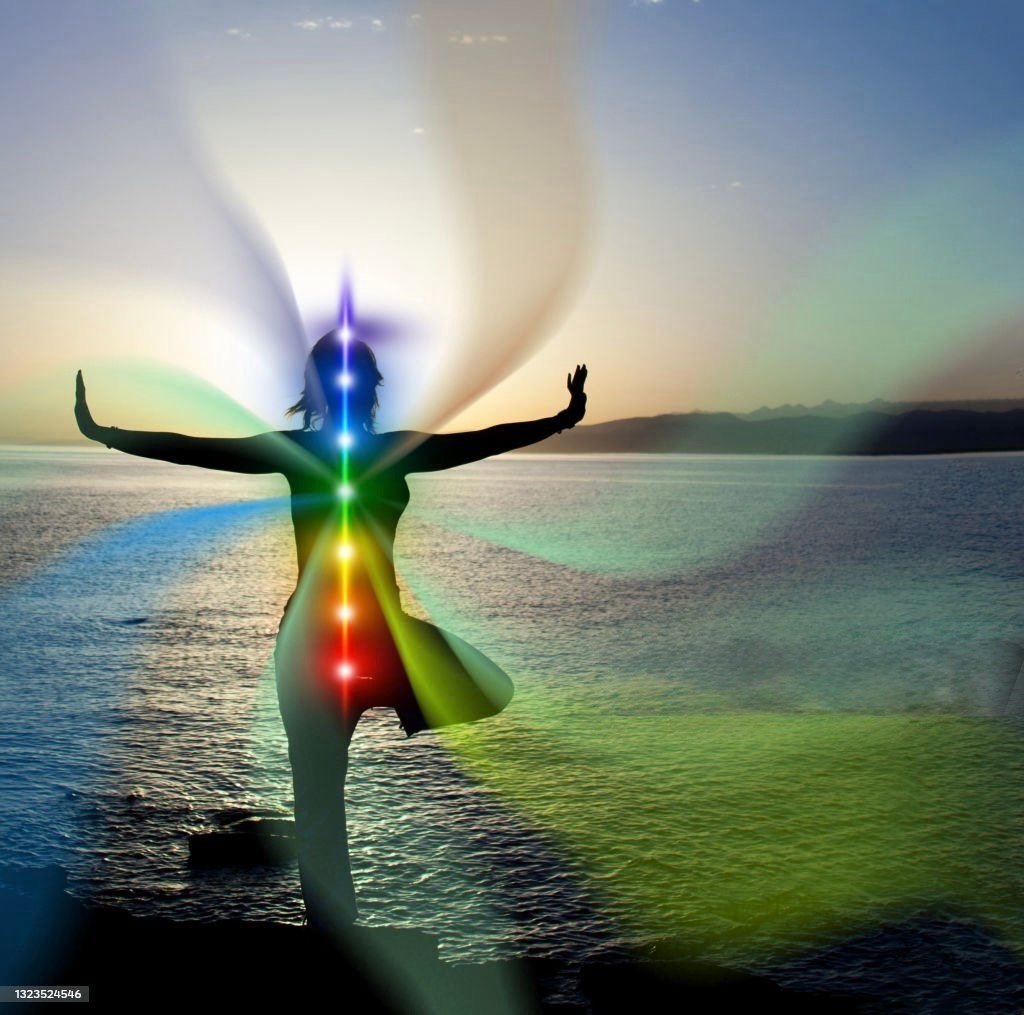

Before anything else can feel steady — confidence, love, clarity, purpose — something more basic has to be in place: a felt sense of safety in your own body. That is the entire domain of the root chakra, the foundation the other six are quietly built upon.
01Meet Muladhara
Muladhara, from the Sanskrit for ‘root support’, is the first of the seven chakras, associated with the colour red and the earth element. It is the centre most concerned with survival, safety and belonging — the most basic, and arguably most important, of all seven.
Everything else in the subtle body is said to rest on this foundation. A shaky root chakra tends to make every other centre harder to stabilise, no matter how much work is done elsewhere.
02Where It Lives in the Body
Muladhara is located at the base of the spine, near the perineum and pelvic floor. Physically, it is associated with the legs, feet, bones and the adrenal glands — the body’s core stress-response system, which is a fitting connection for a centre governing safety.
03Signs It Is Open
When the root chakra is flowing well, you feel physically grounded and at ease in your own skin. Decisions come from a settled place rather than panic. You trust that your basic needs — safety, food, shelter, belonging — are reasonably met, even during difficult stretches of life.
04Signs It Is Blocked
A blocked root chakra tends to show up as chronic anxiety, restlessness, or a persistent low-grade fear that is hard to pin to any single cause. Financial worry, difficulty trusting others, and a sense of never quite being ‘at home’ — in your body, your relationships, or your life — are all common signs.
Physical symptoms are common too: lower back pain, fatigue, and tension held deep in the hips and legs often accompany a struggling root chakra.
05What Blocks the Root Chakra in Modern Life
Financial instability, frequent relocation, early-life insecurity, and simply spending most of the day disconnected from the body — sitting, screens, indoors — all quietly strain this centre. Modern life, in many ways, is not particularly root-chakra friendly.
Trauma, especially anything touching on safety or survival, tends to lodge here more than in any other centre, which is one reason grounding practices are so often recommended as a first, gentle step in any healing process.
06Asanas That Ground You
Standing poses do the most direct work here. Tadasana (Mountain Pose), held with real attention to the feet, teaches the body what stability actually feels like. Malasana (Garland Pose), a deep squat, connects you literally to the earth. Virabhadrasana (Warrior poses) build the strength and steadiness the root chakra is associated with.
- Tadasana — Mountain Pose, for foundational stability
- Malasana — Garland Pose, a grounding deep squat
- Virabhadrasana I & II — Warrior poses, for strength and steadiness
- Balasana — Child’s Pose, for a felt sense of safety and rest
07Breath and Sound for the Root
Slow, deep belly breathing — expanding the lower abdomen fully on the inhale — signals safety directly to the nervous system. Chanting the bija mantra LAM, held low and long, is traditionally used to specifically activate this centre.
“You cannot think your way into feeling safe. You have to feel it, through the body, first.”
08A Simple Daily Grounding Ritual
Stand barefoot on natural ground for two minutes each morning, if you can. Feel your weight distributed evenly through both feet. Take ten slow belly breaths, and silently repeat ‘I am safe, I am supported’. It is a small ritual, but a consistent one, and consistency is exactly what this centre responds to.
The heart of it
- The root chakra governs safety, stability and belonging.
- It is the foundation the other six centres are built upon.
- Modern life — instability, disconnection from the body — often strains it.
- Standing poses, belly breathing and the LAM mantra are its most direct tools.
Build a genuinely grounded practice, taught within a living tradition. Join us in Rishikesh.
Reserve Your Seat