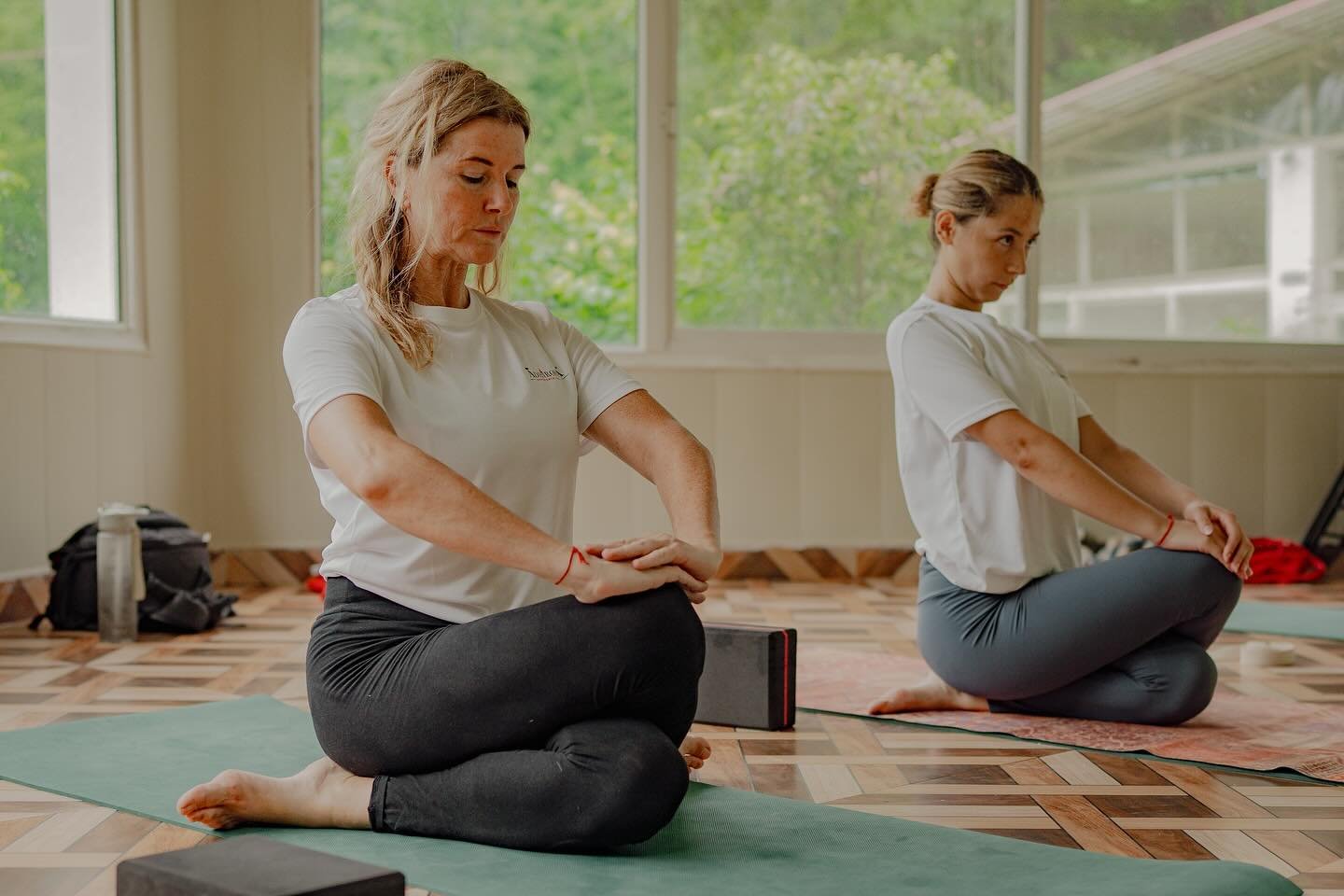

Long hours at a desk have a quiet way of settling into the body — a tight neck, aching shoulders, a restless mind by mid-afternoon. The good news? You do not need a studio, a mat, or even to leave your chair. Just five honest minutes can reset your body and clear your head. Here is exactly how, and why it actually works.
01Why Desk Bodies Ache
We are simply not built to sit still, shoulders rounded and eyes fixed forward, for eight hours a day. The body responds the only way it knows how: it tightens, it slumps, it holds tension in the neck and lower back, and the breath grows shallow — which is often why stress builds without any obvious cause.
These practices work with your body’s natural design. They release the exact places desks tighten, and they invite the breath to deepen again. Do them slowly. Five mindful minutes beats fifteen rushed ones.
02Gentle Neck Release
How: Sitting tall, drop your right ear toward your right shoulder. Breathe for five slow counts. Return to centre, then repeat on the left. Finish by lowering your chin gently toward your chest.
Why it helps: It unwinds the hours of forward head posture that cause headaches and neck stiffness, and gently stretches the upper trapezius, one of the first muscles to tighten under screen time.
03Seated Cat-Cow
How: Hands on your knees. Inhale, arch your back and lift your gaze (cow). Exhale, round your spine and drop your chin (cat). Flow slowly for five breaths.
Why it helps: It restores movement to a spine that has been locked in one position, links breath to motion, and gently massages the discs between each vertebra.
04Wrist & Finger Stretch
How: Extend one arm, palm up. With the other hand, gently draw the fingers back toward you. Hold, then press the palm away. Switch sides. Finish by spreading and closing your fingers a few times.
Why it helps: Typing and mousing quietly strain the wrists; this keeps them supple and helps prevent repetitive strain, especially for anyone spending long hours on a keyboard.
05Eagle Arms
How: Cross your right arm over your left at the elbows, then wrap the forearms so the palms meet, or hold opposite shoulders if that is more comfortable. Lift the elbows slightly and breathe for five counts, then switch sides.
Why it helps: It stretches the tight muscles between the shoulder blades that build up from hours of mousing and typing, and is one of the fastest ways to release upper-back tension without leaving your chair.
06Seated Spinal Twist
How: Sit tall, feet flat. Place your right hand on the back of your chair and your left hand on your right knee. Inhale to lengthen, exhale to gently twist right. Hold five breaths, then switch.
Why it helps: Twists wring out tension along the spine, aid digestion after lunch, and wake up a sleepy afternoon by stimulating circulation through the torso.
07Shoulder & Chest Opener
How: Interlace your fingers behind your back (or hold the sides of your chair). Draw your shoulder blades together, lift your chest, and breathe into the front of your body for five counts.
Why it helps: It reverses the rounded-shoulder slump of the screen and lets you take a full, easy breath again, which alone can lower a racing, midday stress response.
08Seated Figure-Four
How: Cross your right ankle over your left knee, keeping the right foot flexed. Sit tall and, if it feels comfortable, hinge slightly forward from the hips. Hold five breaths, then switch sides.
Why it helps: It releases the hips and outer glutes, which tighten from long sitting and are a common hidden cause of lower back and knee discomfort.
09Seated Forward Fold
How: Feet hip-width, fold slowly forward over your thighs, letting your head and arms hang heavy. Breathe into your back for a few breaths. Rise up slowly, one vertebra at a time.
Why it helps: It calms the nervous system in seconds — the fastest way to quiet a spinning mind between tasks, by gently signalling the body toward rest rather than alert.
10Making It a Habit
The hardest part is not the poses — it is remembering. Anchor the routine to something you already do: a calendar reminder, the end of a meeting, or your afternoon tea. Your body will soon start asking for it.
Try pairing two or three poses with each break rather than attempting the full sequence every time. A neck release and a seated twist between calls, a forward fold before lunch, eagle arms before you shut the laptop — small, repeated doses add up to far more than one long session a week.
“Five minutes of breath and movement, taken often, will change your workday more than any productivity hack ever could.”
The heart of it
- Desks tighten the neck, shoulders, wrists, hips and spine — and shorten the breath.
- Five slow, mindful minutes resets both body and mind.
- Anchor the routine to an existing habit so it actually sticks.
- Little and often beats one long session a week.
Ready to take the practice deeper than a coffee break? Discover our courses and retreats in Rishikesh.
Explore Our Courses