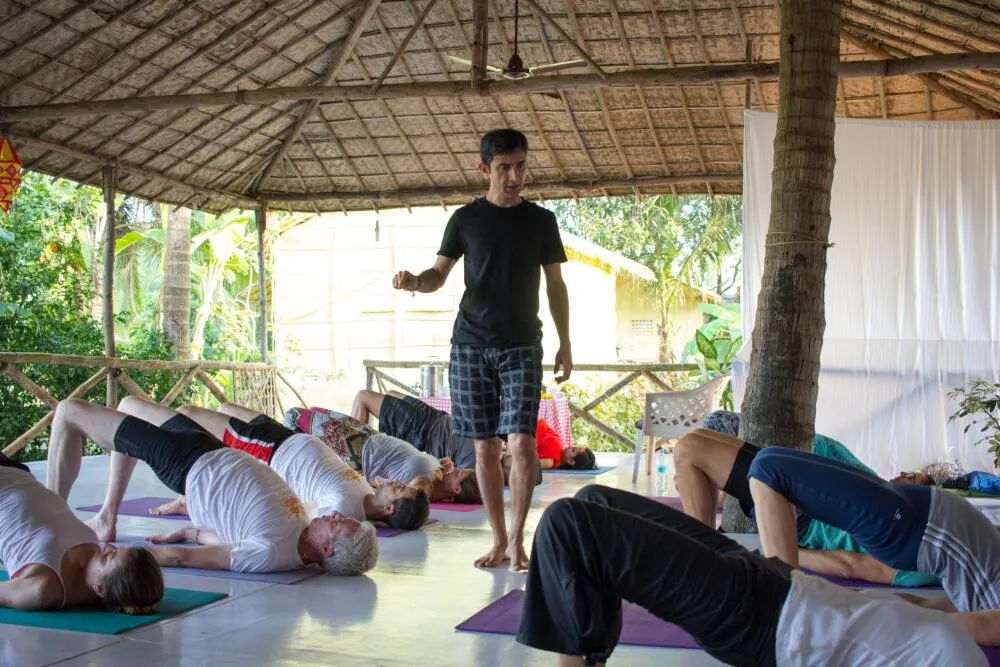

Yoga was once something you did after work, or on a mat in the corner of a bedroom. For a growing number of people it is now the work itself — a profession with real training, real standards and a living to be made from it. This is what the path actually looks like: what you study, where it can take you, and what it asks of you in return.
01The Training That Makes You a Teacher
Passion is where it begins, but it is not enough to stand in front of a room. Teaching safely means understanding how a body moves, why a posture is built the way it is, and what the tradition was pointing at long before any of us arrived. That understanding comes from structured study, and it starts in one place.
The entry point for any aspiring instructor is a 200 hour yoga teacher training (YTT) program registered with an internationally recognised body such as Yoga Alliance. It is the certification that moves you from practitioner to teacher, and a good one covers far more than postures:
- Asana alignment and biomechanics — how a posture is executed properly, how it is modified around an injury, and what makes movement safe.
- Functional anatomy — how muscles, joints and the skeleton actually behave in a practice.
- Philosophy and ethics — Patañjali’s Yoga Sutras, the Hatha Yoga Pradipika, and the code of conduct a teacher is held to.
- Teaching methodology — verbal cueing, sequencing, holding time, and giving a hands-on adjustment without taking liberties.
- Pranayama and meditation — guiding breath and stillness, which is where most new teachers are weakest.
The heart of it
- 200 hours is the foundation, not the finish line.
- Anatomy and ethics matter as much as the asana.
- Choose a school registered with a recognised body — it travels with you.
02Going Deeper: 300 and 500 Hour Study
Once the 200 hours are behind you and you have taught real people in real rooms, the next step is depth rather than more of the same. This is where advanced yoga courses come in.
A 300 hour training is built for teachers who already hold the 200: complex sequencing, the therapeutic side of the practice, advanced pranayama, the subtle body of chakras and nadis, and the anatomical modifications that a mixed class always demands. Hold both, and you reach 500 hour Registered Yoga Teacher status — the level studios look for in senior teachers, lead trainers and directors.
Beyond the main pathway, most working teachers pick up a specialism sooner or later: yin and restorative for stress and deep tissue, prenatal and postnatal work, yoga therapy for chronic pain and rehabilitation, or teaching children and older students, which is its own craft entirely.
“The 200 hours teach you to hold a class. Everything after that teaches you to hold a person.”
03Where the Work Actually Is
The reason so many people make this switch is not only the practice. It is that the work itself bends around the life you want, rather than the other way round.
- Studios and gyms — the classic start. It builds your reputation locally and forces you to teach every kind of body.
- Private clients — one to one is the best paid work in yoga. Executives, athletes and people recovering from injury pay for sessions shaped entirely around them.
- Corporate wellness — companies now buy programmes outright: desk-side sessions, lunchtime practice, workshops on stress.
- Retreats and workshops — teaching somewhere beautiful, or running a weekend on inversions or breathwork, carries the best margins in the profession.
- Your own school — a studio, a wellness space, or a training school of your own, with other teachers working under your name.
- Online teaching — live classes, subscription video, YouTube and apps put your students in other countries without you leaving home.
04What the Work Gives Back
The money is only part of it, and rarely the part teachers talk about first.
- Your own health — you cannot teach this and neglect your practice, so the job keeps you strong and clear.
- Control of your time — you decide when you teach, where, and how much.
- Work that means something — few jobs let you watch someone leave in less pain than they arrived in.
- A certificate that travels — internationally recognised standards mean you can teach in almost any country.
- A study that never closes — there is always more, and the more you learn the better you teach.
If you are weighing this up, teach one free class to friends before you enrol anywhere. Ten minutes of standing in front of a room will tell you more about whether you want this than a month of reading will.
05Four Things That Separate a Career From a Hobby
The teachers who are still teaching in ten years tend to have done these four things early.
- Treat it as a business. Passion fills the room; bookkeeping, insurance, a clean website and some basic marketing keep it filled.
- Find your niche. Teaching everything to everyone is the hardest way to be found. Athletic recovery, trauma-informed work, traditional Hatha — pick the students you are actually for.
- Keep studying. Build the foundation, then add to it deliberately rather than whenever you happen to have time.
- Protect yourself from burnout. Twenty physical classes a week will empty you. Keep rest, food, and one practice that belongs to you and not to your students.
06A Life, Not Only a Living
Choosing yoga as a career is less a job change than a change in how the days are arranged. It is one of the few paths where your own health, your learning and your income move in the same direction instead of competing for what is left of you.
Study properly, keep sharpening the craft, and treat the work with the seriousness it deserves — and it will hold you for a very long time.
If this is the direction you are being pulled in, the foundation is where to begin. Come and train where the practice has always lived.
Explore the 200 Hour Training