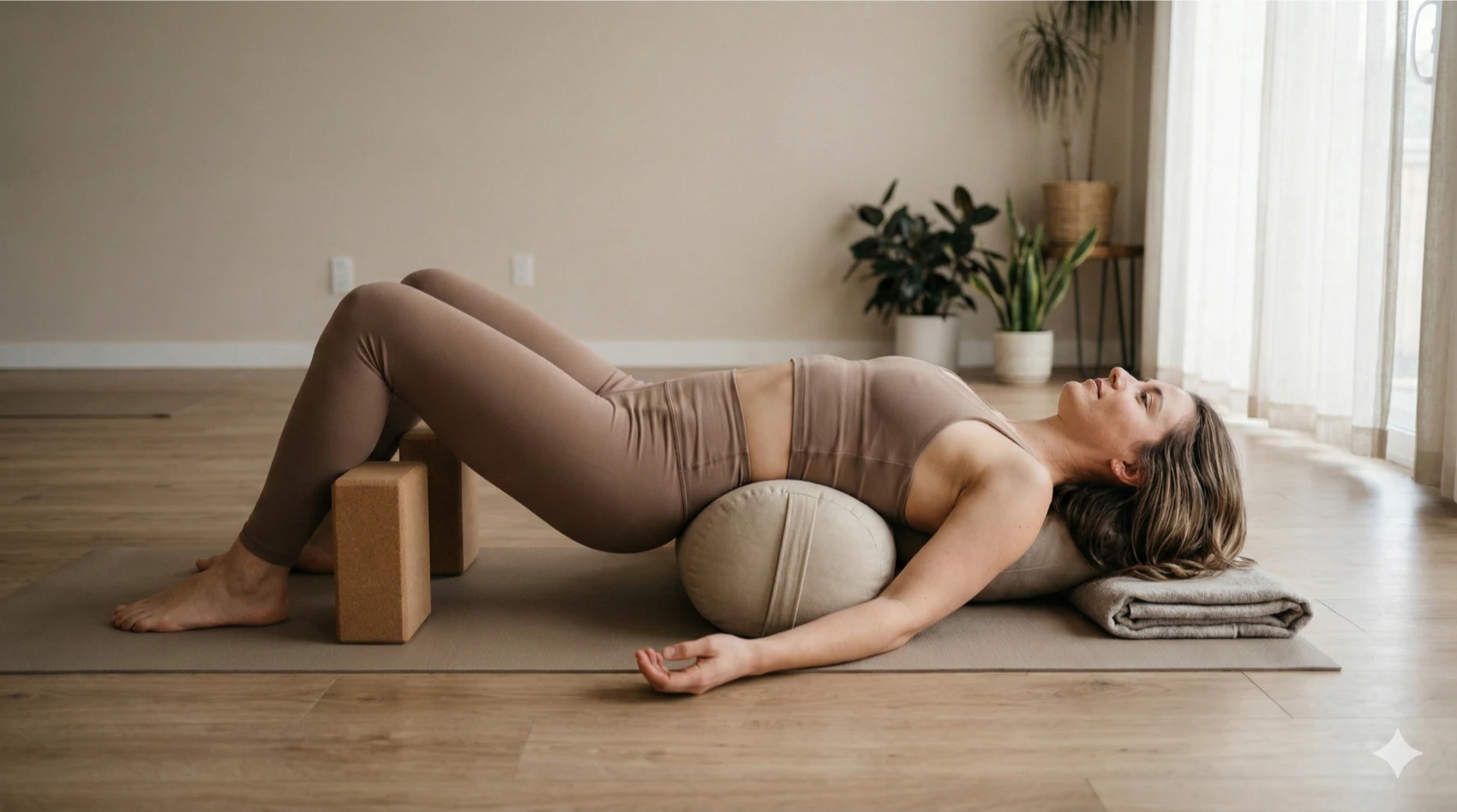

The mat is unrolled with the best of intentions. The goal is simple: heal a back pain naturally, one gentle session at a time. Then comes a forward fold pushed a little too far, and the back screams in protest instead of thanking anyone for the effort. Here is what nobody quite tells beginners: yoga can heal back pain brilliantly, or make it devastatingly worse, and the difference lies almost entirely in a handful of precautions most people never learn. Research from the Journal of Bodywork and Movement Therapies found that twenty-one percent of yoga practitioners experience an injury when practising without proper guidance — and the great majority of those injuries were genuinely preventable. Understanding the safety principles below is what turns the practice from risky back into remarkably healing.
01Why Precaution Changes Everything

None of what follows is complicated, but almost none of it is intuitive either — most of it runs directly against what gym culture and generic fitness advice have already taught the body to expect from a workout. The sections ahead cover the specific mistakes that cause the most damage, what a genuinely neutral spine actually feels like, why flexibility is the wrong goal entirely when healing is the aim, how to tell productive discomfort from actual injury, and what a smart modification looks like on a day when the pain is severe.
02The Mistakes Almost Everyone Makes
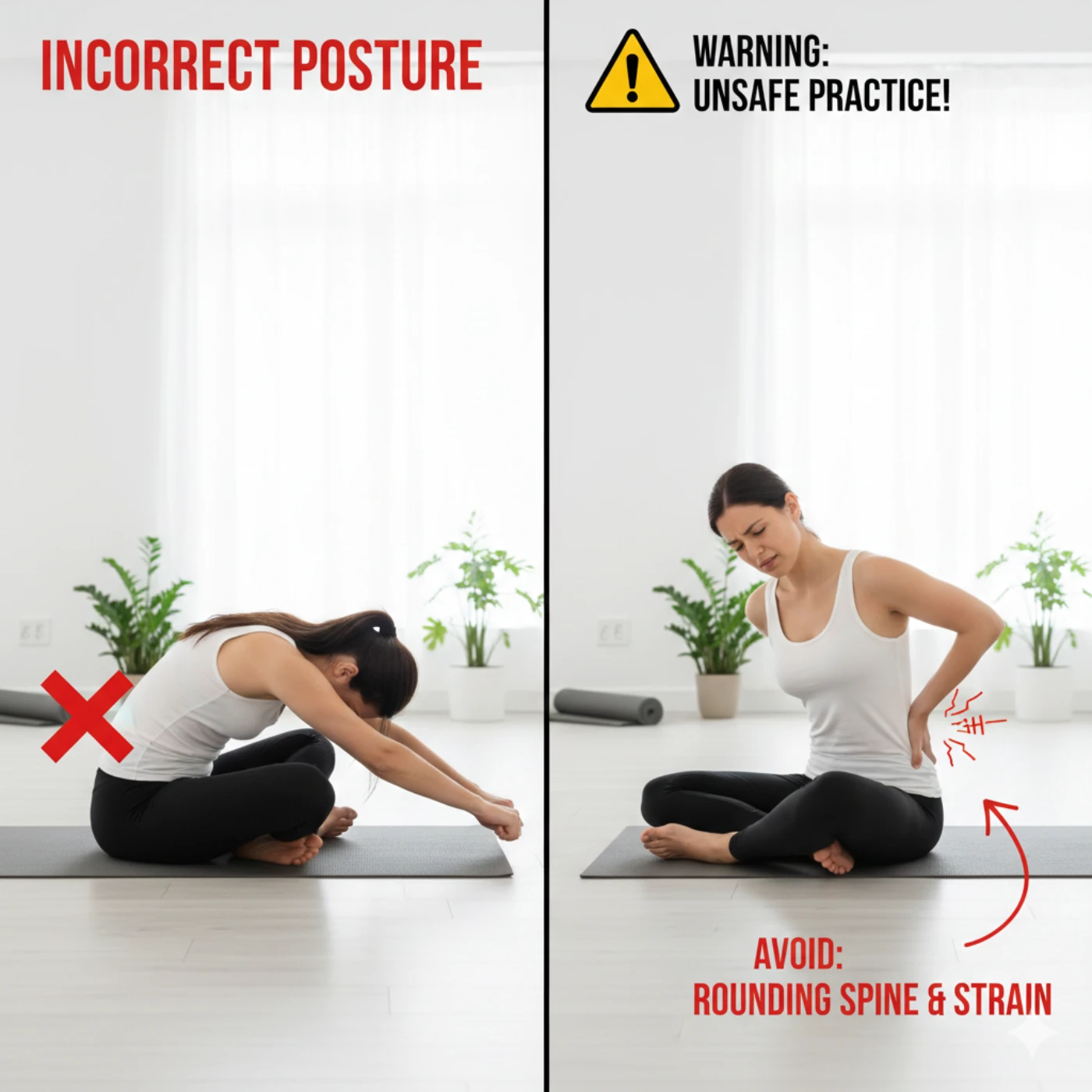
Enthusiasm for healing can quietly become the biggest obstacle to it, and understanding the common error protects against exactly the setback that enthusiasm tends to cause.
The push-through-pain mentality arrives straight out of gym culture — “no pain, no gain” becomes the unspoken mantra, and it devastates an already-vulnerable back. Pain is the body’s alarm system, not a challenge sitting there waiting to be overcome, and pushing through a sharp pain creates real micro-trauma that delays healing rather than accelerating it. Skipping the warm-up is a close second — a cold muscle and joint is genuinely injury-prone, and research from the British Journal of Sports Medicine found that a proper warm-up reduces injury risk by forty-seven percent, a number too large to reasonably ignore. Holding the breath creates tension throughout the entire body; the Hatha Yoga Pradipika puts it plainly — “when the breath is irregular, the mind is unsteady” — and that instability translates directly into physical rigidity exactly where rigidity is least wanted. And neglecting core engagement leaves the spine without any muscular support at all; Dr Stuart McGill states it directly: “the spine requires muscular bracing before movement to prevent injury,” and mastering the foundational poses for lower back pain specifically is what builds the safety net underneath any later progression.
03Neutral Spine Awareness
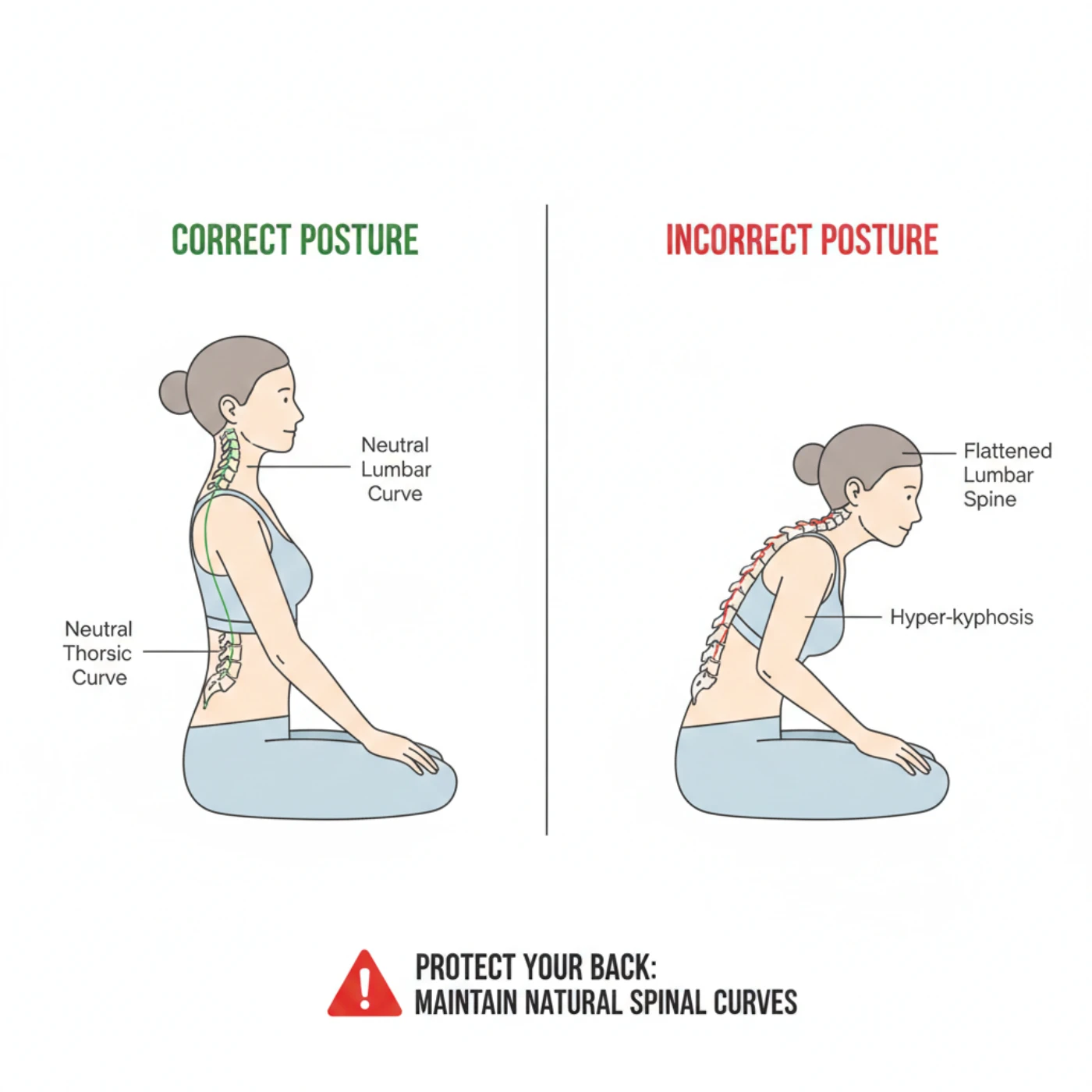
The spine carries a natural set of curves, and respecting them, rather than flattening or exaggerating them under load, is what actually determines whether a given practice heals or quietly harms over time.
Neutral spine maintains those natural curves — an inward curve through the lower back, an outward curve through the mid-back — and these curves distribute force through the spine in the way it was actually built to handle. To find it directly: lie on the back with the knees bent and notice the small gap between the lower back and the floor beneath it; that gap is the natural lumbar curve, and the middle ground where the back feels genuinely most at ease is the neutral position being searched for.
A prop supports this position reliably where the body alone cannot: a folded blanket under the sitting bones tilts the pelvis gently forward; a block under the hands in a forward fold reduces the depth of the fold itself; a bolster under the chest in a prone pose supports the natural curve rather than flattening it against the floor. For anyone exploring yoga for slip disc and sciatica specifically, this same neutral-spine awareness becomes even more critical than usual, since a disc under pressure has considerably less tolerance for a curve pushed out of its natural range.
04Avoiding Over-Stretching
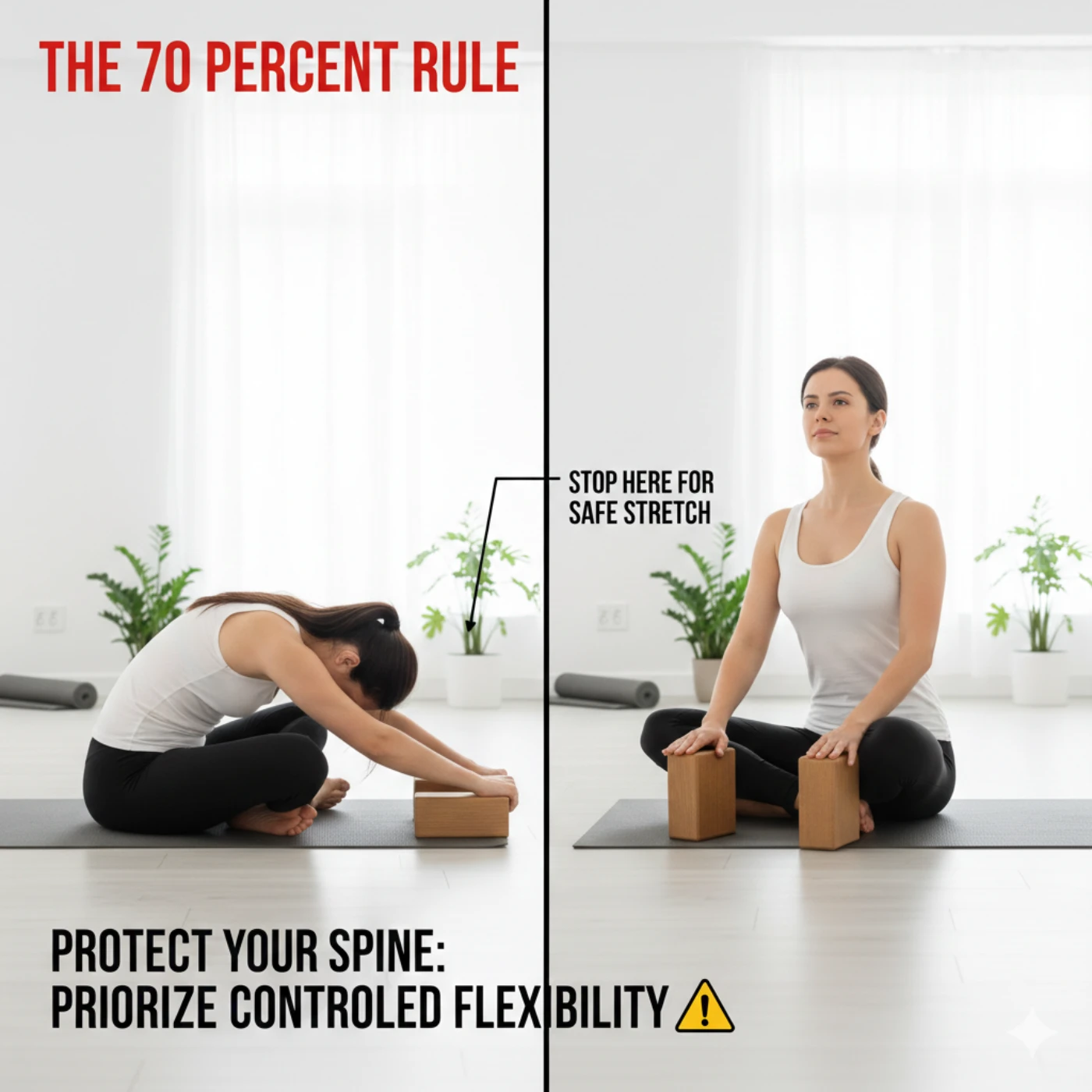
Flexibility is not actually the goal when healing a back — stability is, and the two are not the same thing at all despite how often they get treated as interchangeable. Research suggests that a hypermobile individual experiences forty-three percent more back injury than someone with a merely moderate range of motion, a genuinely counter-intuitive finding for anyone assuming more flexibility is automatically safer.
The seventy percent rule offers a simple, practical guide: practise at roughly seventy percent of maximum range rather than the full range available on a given day — if the floor can be touched, stop instead at the mid-shin. This buffer protects the tissue directly and, just as importantly, allows the practice to happen more frequently without injury interrupting the very consistency that actually produces healing. This buffer matters especially during a morning yoga routine, when the body is naturally stiffer and considerably more vulnerable than it will be later in the day, once movement has already warmed the tissue up.
05Pain Versus Healing Discomfort
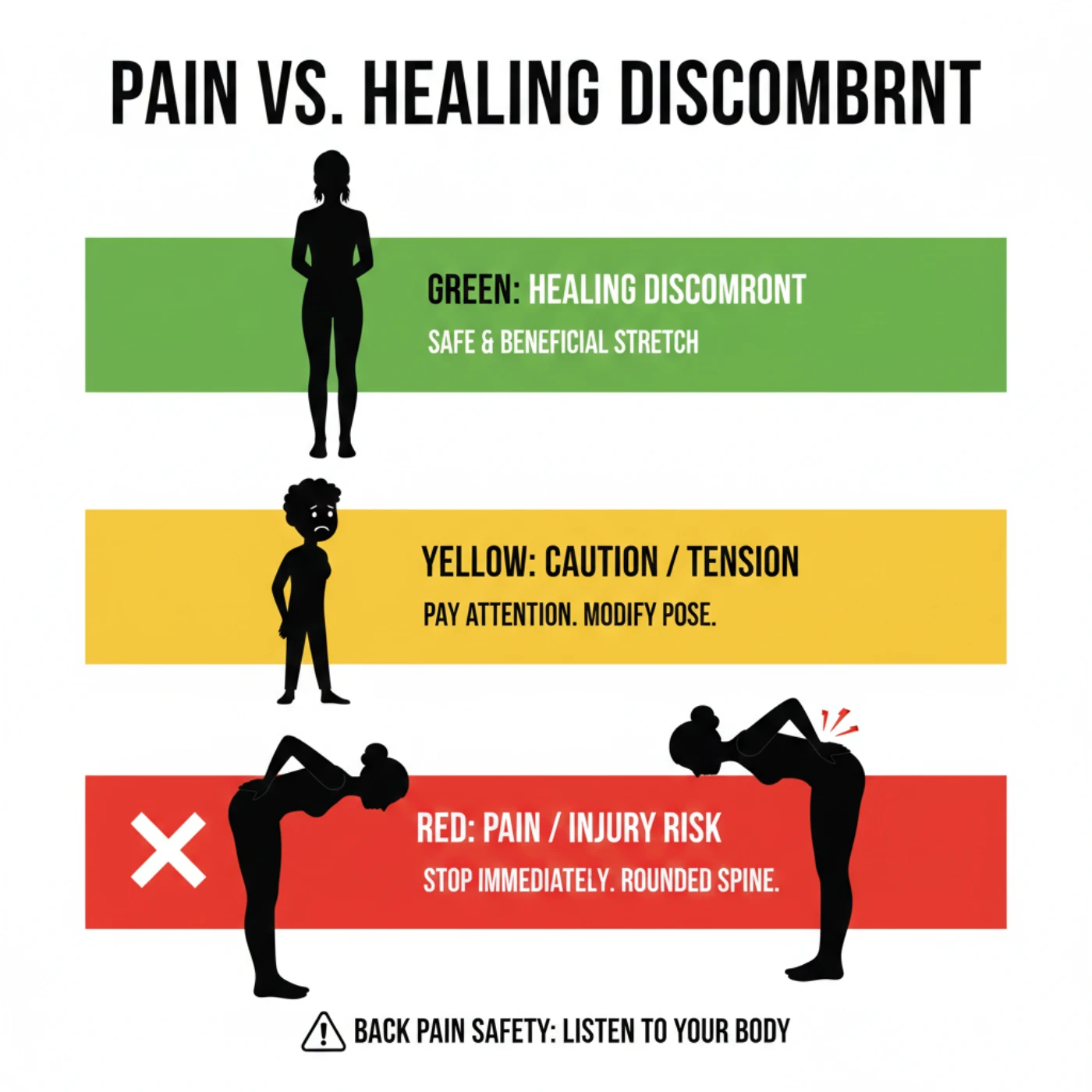
Learning to tell the two apart is what actually separates a healing practice from a harmful one, more than any single pose or sequence choice ever could.
A simple traffic-light system makes the distinction usable in the moment. Green: a mild pulling sensation, active muscle engagement, a gentle warmth — continue as planned. Yellow: a moderate discomfort, a mild twinge that fades again quickly — proceed, but with real caution and attention. Red: a sharp pain, a symptom that radiates outward, any numbness at all — stop immediately, without exception. Anyone also working through physiotherapy exercises alongside yoga will find this same distinction helps navigate both practices safely rather than confusing one for the other.
06Modifications for Severe Pain

Severe pain does not mean abandoning yoga altogether; it means practising considerably smarter rather than simply harder or not at all.
A supine bias favours lying on the back to minimise the load gravity places on an already-strained structure. Micro-movements — a tiny pelvic tilt, a minimal rotation — maintain the neural pathway between brain and spine without demanding a full range of motion the body isn’t ready to offer yet. A breath-focused approach uses pranayama to reduce stress and muscle tension without any movement at all, which is often exactly what a genuinely bad day calls for. Anyone considering a Yoga Teacher Training should treat understanding these modifications as essential, not optional, since guiding a student safely through a severe-pain day is one of the real tests of a properly trained instructor.
07Conclusion
Yoga remains a genuinely powerful tool for spinal health, provided it is practised with real mindfulness and a healthy respect for the body’s actual limits on a given day. Avoiding the common mistakes, maintaining a neutral spine, and honouring the seventy percent rule together turn an ordinary practice into a sustainable path toward recovery, rather than one more well-intentioned attempt that ends in a worse back than it started with.
“Pain is the body’s alarm system, not a challenge to overcome. Pushing through it creates the very micro-trauma the practice was meant to heal.”
The heart of it
- Twenty-one percent of injuries among yoga practitioners are preventable, and nearly all trace back to one of a handful of common mistakes.
- Stability, not flexibility, is the actual goal when healing a back — the seventy percent rule keeps that priority in place.
- A simple traffic-light system separates productive discomfort from a genuine injury signal.
- Severe pain calls for smarter modification, not abandoning the practice altogether.
Learn to practise safely and heal smart, guided by experienced teachers.
Reserve Your Seat