

Stress has become an unavoidable part of modern life, driven by work pressure, personal responsibility and constant digital exposure. Short-term stress can sharpen focus through the body’s ‘fight or flight’ response, but left unmanaged for long enough, it tends to spill over into anxiety, disrupted sleep, weakened immunity and real cardiovascular strain. Adhiroha Yoga School offers a proven, transformative path to yoga for stress relief through mindful practices rooted in yoga for mindfulness.
01The Growing Need for Effective Stress Management

In today’s high-demand lifestyle, stress touches professionals, students, entrepreneurs and families alike. Left unaddressed, it tends to compound into burnout, strained relationships and declining mental health, while temporary fixes rarely reach the actual root cause. Guided by certified yoga training teachers in India, Adhiroha delivers sustainable holistic stress relief through time-tested yogic practice rather than a quick fix.
By pairing ancient yogic wisdom with genuine awareness of modern lifestyle pressures, this approach helps restore balance at both the physical and psychological level, not one at the expense of the other.
Did you know? Chronic stress disrupts hormone balance and immunity, but consistent yoga practice supports long-term nervous system regulation.
02Why Yoga Works: The Science Behind Stress Reduction
Yoga is a scientifically supported method for stress regulation, combining physical postures, conscious breathing and meditation into one integrated tool. Research from the American Council on Exercise indicates that yoga can lower cortisol levels by up to twenty percent, stimulate endorphin release, improve emotional resilience and sharpen focus — measurable benefits that make yoga for stress relief a genuinely sustainable solution rather than a passing wellness trend.
03Key Benefits of Yoga for Stress Management
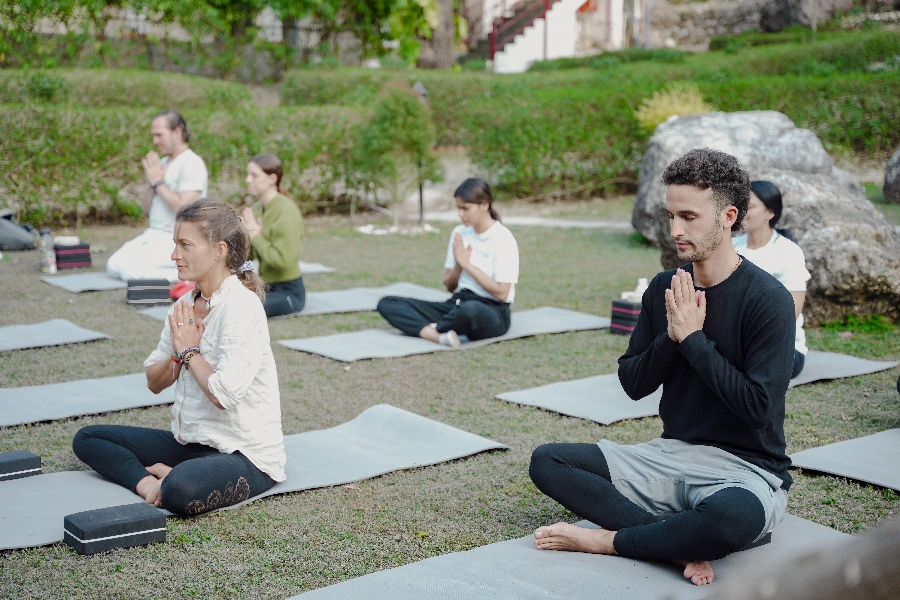
Programmes led by expert yoga training teachers in India deliver benefits across the board: lower cortisol levels and greater emotional stability through regular practice, a calmer nervous system as breathwork and meditation ease anxiety symptoms, and improved physical health through better flexibility, muscle tone, posture and cardiovascular function. Supported by globally recognised Yoga Alliance standards, yoga remains one of the most effective, well-evidenced tools available for stress management today.
04Key Techniques for Optimal Stress Reduction

Foundational poses form the physical backbone of this work — Mountain Pose (Tadasana) for posture and grounded, mindful awareness; Child’s Pose (Balasana) to release tension from the spine and calm the nervous system; Downward Facing Dog (Adho Mukha Svanasana) to refresh body and mind while improving circulation; Bridge Pose (Setu Bandhasana) to open the chest and release stored stress; Tree Pose (Vrksasana) to build balance, concentration and emotional steadiness; and Corpse Pose (Savasana) to induce deep relaxation and let the practice actually integrate.
- Breathing techniques — deep diaphragmatic breathing to activate the parasympathetic nervous system, alternate nostril breathing (Nadi Shodhana) to balance mental activity, and controlled breath holds to improve oxygen efficiency and mental calm
- Meditation practices — guided meditation using visualisation and breath awareness, mindfulness meditation to cultivate present-moment awareness without judgement, and body scan meditation to release physical tension through progressive relaxation
05A Daily Stress Management Routine

Under the guidance of yoga training teachers in India, a simple routine works well for most people: ten minutes of gentle asana and deep breathing in the morning to start the day grounded, five minutes of alternate nostril breathing at midday to reset mental focus, and fifteen minutes of restorative poses and meditation in the evening to properly unwind before sleep.
06Lifestyle Changes That Support Stress Relief
A handful of supportive habits noticeably enhance holistic stress relief: favouring sattvic, whole foods while cutting back on stimulants; combining yoga with gentle outdoor movement; keeping a consistent sleep routine and limiting screen exposure before bed; and simply staying properly hydrated, which supports both physical and mental balance more than most people expect.
“Stress rarely responds to willpower alone. It responds to a nervous system that has been given, consistently, somewhere else to go.”
07Begin Your Stress Relief Journey in Rishikesh
Adhiroha’s programmes in Rishikesh combine mindful movement, meditation and holistic wellness in a genuinely serene Himalayan setting — structured daily practice balanced for body and mind, personalised instruction from certified teachers, the added benefit of Rishikesh’s own spiritual energy, and a community of like-minded practitioners learning alongside you rather than in isolation.
Early enrolment ensures availability for upcoming programmes, particularly during the busier autumn and spring seasons.
08Embrace Serenity Through Yoga
Discover the transformative power of yoga for stress relief through mindfulness-based yoga, guided by expert yoga training teachers in India and rooted throughout in Yoga Alliance principles. Adhiroha’s programmes for stress management yoga 2025 support lasting wellbeing. Begin your journey by applying through Adhiroha’s Application Form. Deepen your understanding with Meditation Techniques for Beginners, or reach out directly at info@adhiroha.com for guidance.
The heart of it
- Chronic stress disrupts hormones and immunity, but consistent practice regulates the nervous system long-term.
- Asana, breathwork and meditation each address a different layer of stress.
- A short daily routine — morning, midday and evening — sustains the benefit far better than one long weekly session.
- Sleep, nutrition and hydration all quietly support or undermine the practice.
Ready to find your calm properly, not just temporarily? Apply for a programme in Rishikesh today.
Apply Now