
Introduction
Nearly 1.28 billion adults worldwide live with hypertension, according to the World Health Organization. High blood pressure is called the "silent killer" for a reason. It quietly strains arteries, stresses the heart, and raises the risk of stroke and cardiac events.
The good news? Yoga for high blood pressure is one of the most well-researched lifestyle interventions available. Studies consistently show reductions of 5–10 mmHg in systolic pressure with regular practice. This guide shows you how to practise safely and effectively.
Why Blood Pressure Rises in the First Place
Blood pressure is the force your blood exerts against artery walls as the heart pumps. It's measured in two numbers — systolic (when the heart beats) and diastolic (when the heart rests).
A normal blood pressure reading sits around 120/80 mmHg. Hypertension is typically diagnosed at 130/80 mmHg or above.
The most common lifestyle drivers include excess dietary sodium, physical inactivity, excess body weight, alcohol and tobacco, chronic stress, and poor sleep. A consistent yoga practice addresses many of these drivers simultaneously.
What Your Blood Pressure Numbers Actually Mean
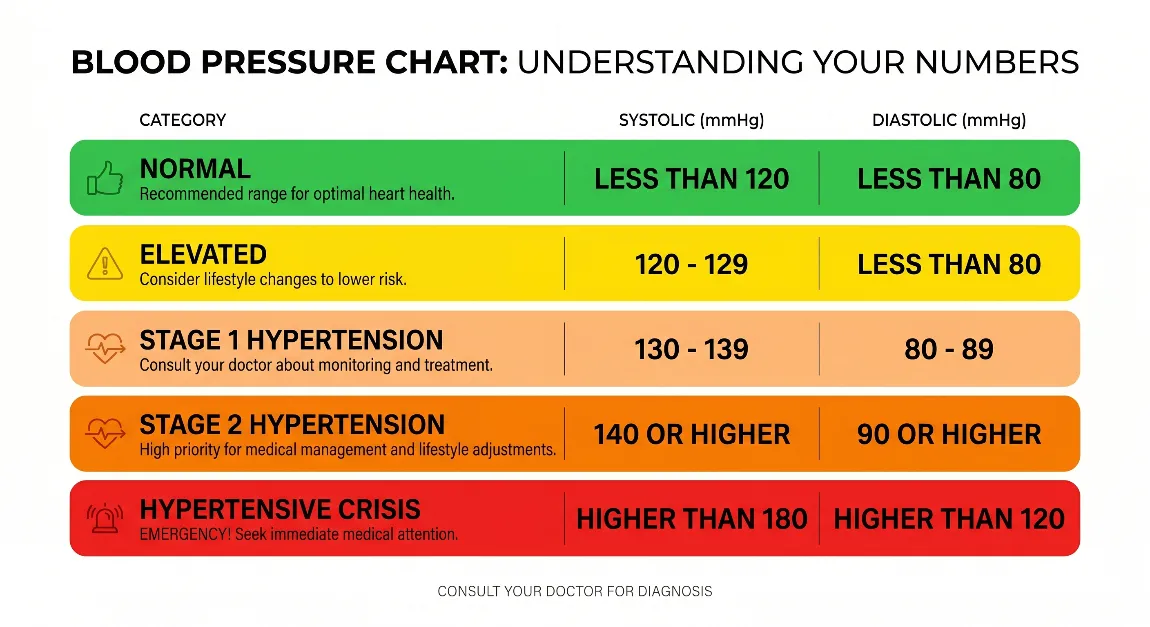
Understanding your blood pressure chart is the first step to managing it intelligently.
| Normal | Below 120 | Below 80 |
| Elevated | 120–129 | Below 80 |
| Stage 1 Hypertension | 130–139 | 80–89 |
| Stage 2 Hypertension | 140 or higher | 90 or higher |
| Hypertensive Crisis | Above 180 | Above 120 |
Use a home blood pressure monitor and track trends over time for accurate insights.
Stress, the Nervous System, and Hypertension
High blood pressure is largely a nervous system problem. Chronic stress keeps the sympathetic nervous system activated, raising heart rate and constricting blood vessels. Cortisol adds to the burden by promoting sodium retention and inflammation.
Activating the parasympathetic nervous system through breath and meditation produces measurable drops in blood pressure.
Gentle Yoga Practices That Support BP Balance
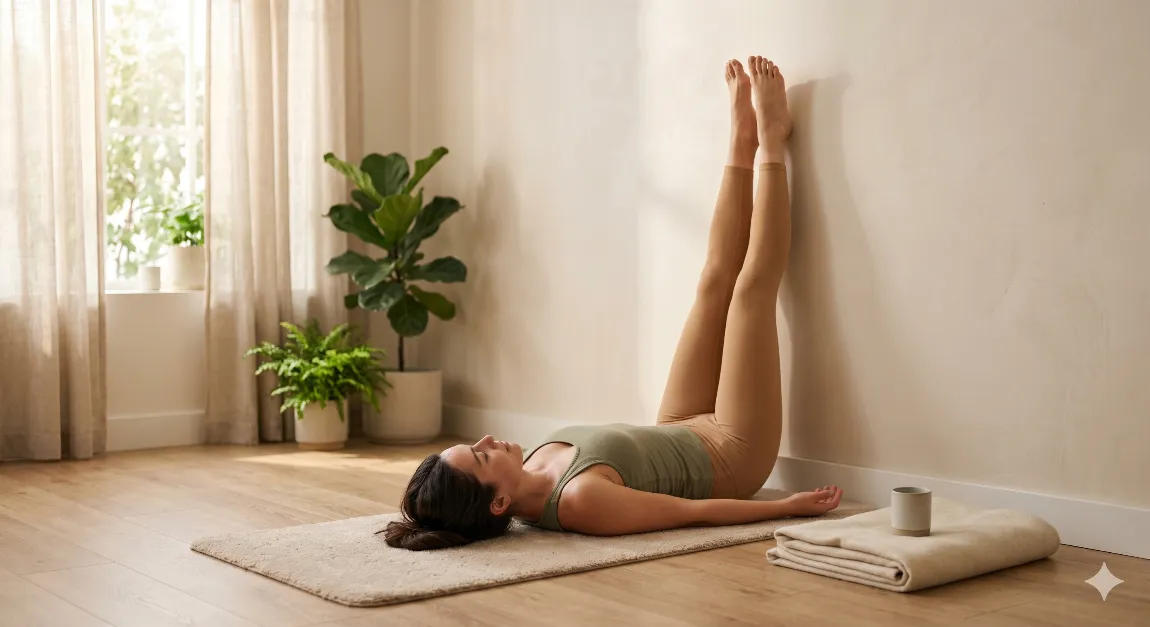
Asanas That Support Healthy Blood Pressure
The most effective postures include:
- Viparita Karani (Legs Up the Wall)
- Setu Bandhasana (Supported Bridge Pose)
- Balasana (Child's Pose)
- Uttanasana (Standing Forward Fold)
- Supta Baddha Konasana
- Shavasana (Corpse Pose)
Approach full inversions, strong breath retention, and intense/hot yoga with caution or avoid them if your blood pressure is not well controlled.
The Role of Breath Control in Managing Blood Pressure
Slow, extended exhalation activates the vagus nerve and directly lowers blood pressure. The most effective practices are:
- Nadi Shodhana (Alternate Nostril Breathing)
- Bhramari (Humming Bee Breath)
- Extended Exhalation (4-7-8 breathing)
- Diaphragmatic Breathing
Even 10 minutes daily can produce noticeable benefits over weeks.
Mistakes That Make Hypertension Worse
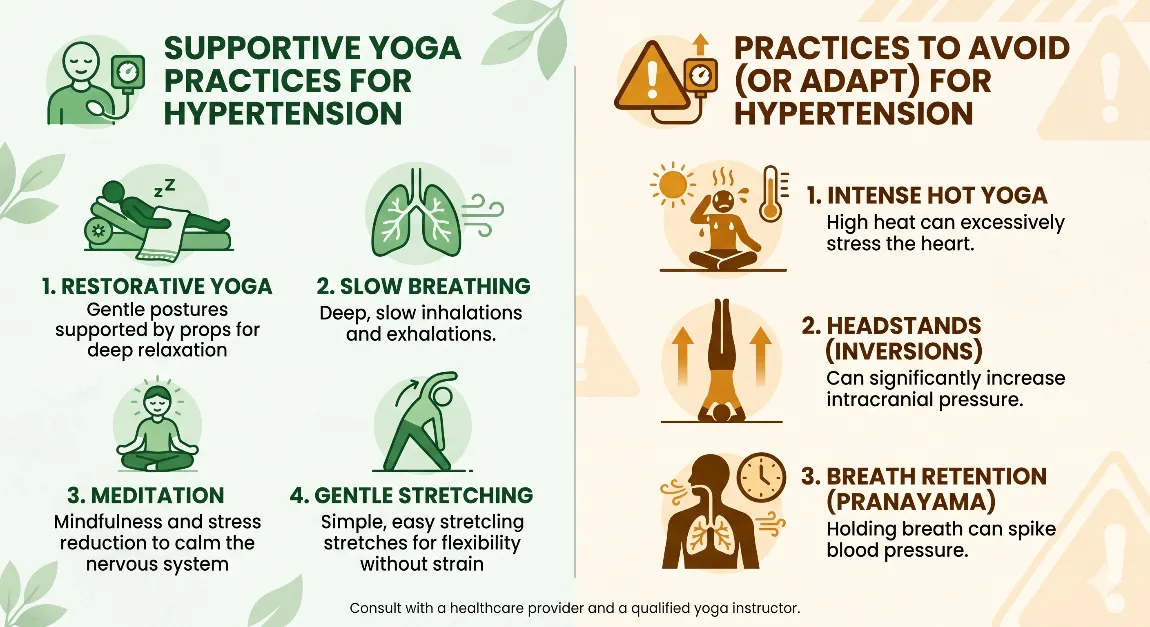
Common mistakes include practising full inversions without guidance, holding the breath (Kumbhaka), intense/hot yoga styles, and ignoring diet. Always combine yoga with medical monitoring and a heart-healthy diet like DASH.
Conclusion
Yoga for high blood pressure is a safe, natural, and powerful complementary approach. Focus on gentle, restorative practices, breathwork, and consistency while working closely with your doctor. Always monitor your blood pressure and never replace medical treatment with yoga alone.