
The lower back carries the weight of the entire upper body, so when pain strikes there, every ordinary movement starts to feel like a burden. Yoga does not simply mask that pain — a study published in the Annals of Internal Medicine found it as effective as physiotherapy for chronic lower back pain relief, addressing the mechanism underneath the ache rather than papering over it. The Bhagavad Gita (chapter 6, verse 17) speaks of yukta, balance — exactly what a strained spine actually needs in order to heal. This is a complete, practical guide: the mechanics of why yoga works, seven specific poses worth learning properly, and how to sequence them into a routine that holds up over weeks rather than one good afternoon.
01Why Yoga Works for Lower Back Pain
Ancient wisdom and modern research are, in this particular case, describing the same thing from two different centuries. The chapters ahead cover the actual mechanics of spinal flexibility, why a forward bend and a backward bend are not interchangeable, why moving slowly matters as much as which pose is chosen, which muscle groups actually do the work, seven poses worth learning in real depth, and a twenty-minute sequence that ties all of it together.
02How Asana Supports Spinal Flexibility
Think of the spine as a chain of thirty-three vertebrae — when one link in that chain gets stuck, the whole chain suffers for it rather than isolating the problem to a single point. Yoga asana creates space between these vertebrae directly, and that decompression allows nutrient-rich fluid to nourish the spinal disc, which is genuinely crucial to how the disc actually heals over time rather than simply managing symptoms around it.
Dr Loren Fishman, a physiatrist who has studied yoga for decades, found that specific poses can measurably restructure the spine over time — his research documented real improvement in bone density and alignment through consistent practice, not merely a subjective feeling of relief. That distinction matters: the goal here is genuine structural change, not just a temporary loosening that fades by the next morning.
03Forward Bends Versus Backward Bends
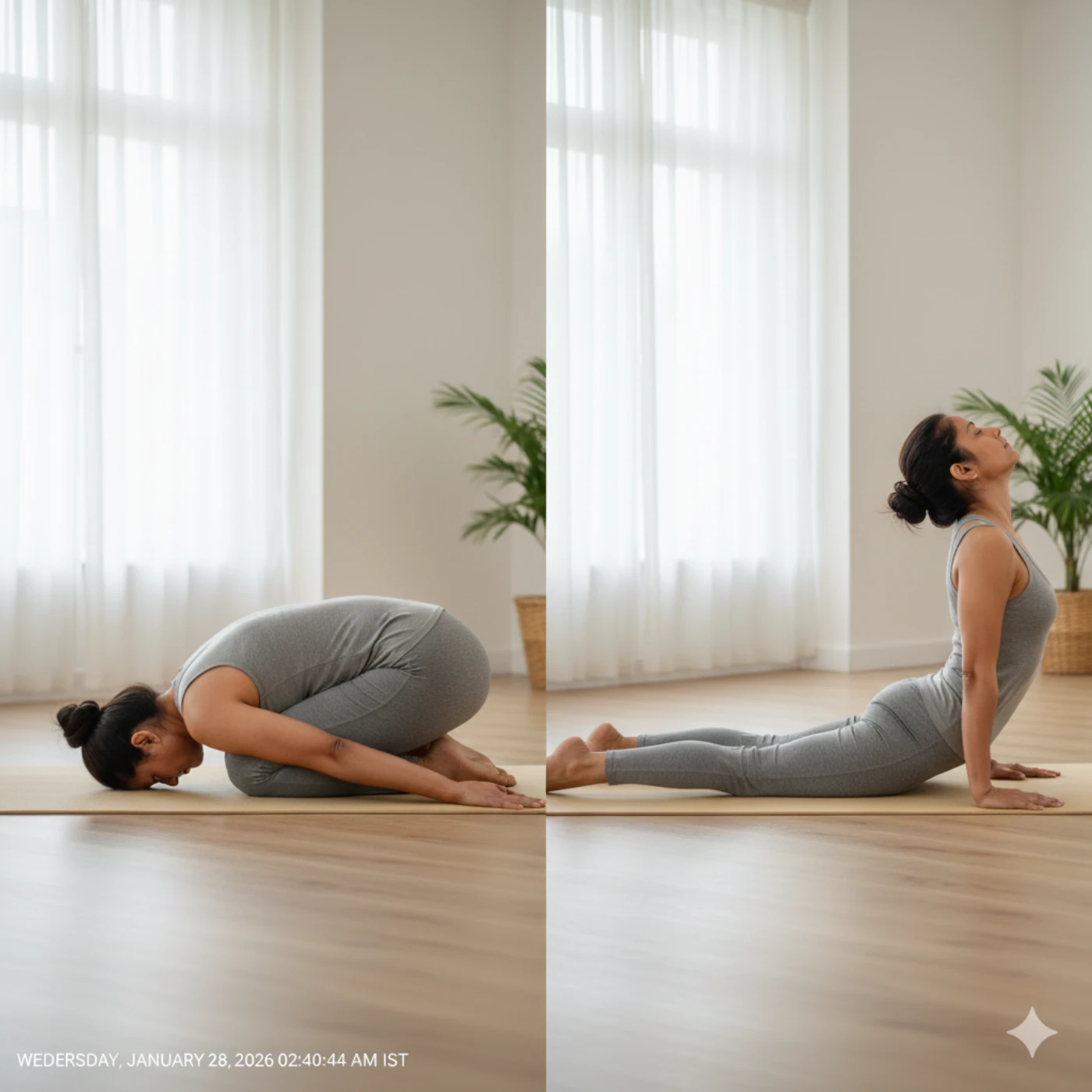
Most people assume every stretch for lower back pain works the same way. It does not, and the difference is worth understanding rather than skipping past.
A forward bend lengthens the posterior chain — the hamstrings, glutes and back extensors — creating a gentle traction effect that relieves compression along the spine directly. A backward bend works the opposite side of the same system, strengthening the muscle that supports the spine from behind while also opening the front body, which tends to grow tight from long hours of sitting regardless of how much forward-folding is done to compensate for it. Research from the Yoga Journal of Physical Therapy indicates that alternating between the two creates a more balanced spinal health than favouring either alone — think of it as an ongoing conversation between flexion and extension, neither side complete without the other regularly present.
04Why Slow Transitions Matter
A fast movement trips the nervous system’s alarm bell; a slow one whispers safety to the same system instead. Rushing between poses makes the muscle brace for impact reflexively, and that protective tension is precisely what the whole practice is trying to release in the first place — undoing with speed exactly what slowness was meant to accomplish.
The phrase sthira sukham asanam, from Patanjali’s Yoga Sutras (chapter 2, verse 46), translates to “steady and comfortable posture,” and taking five to eight breaths to move between one position and the next gives the fascia genuine time to adapt rather than being startled into a brief, unsustainable stretch that releases nothing lasting.
05The Muscles Actually Doing the Work
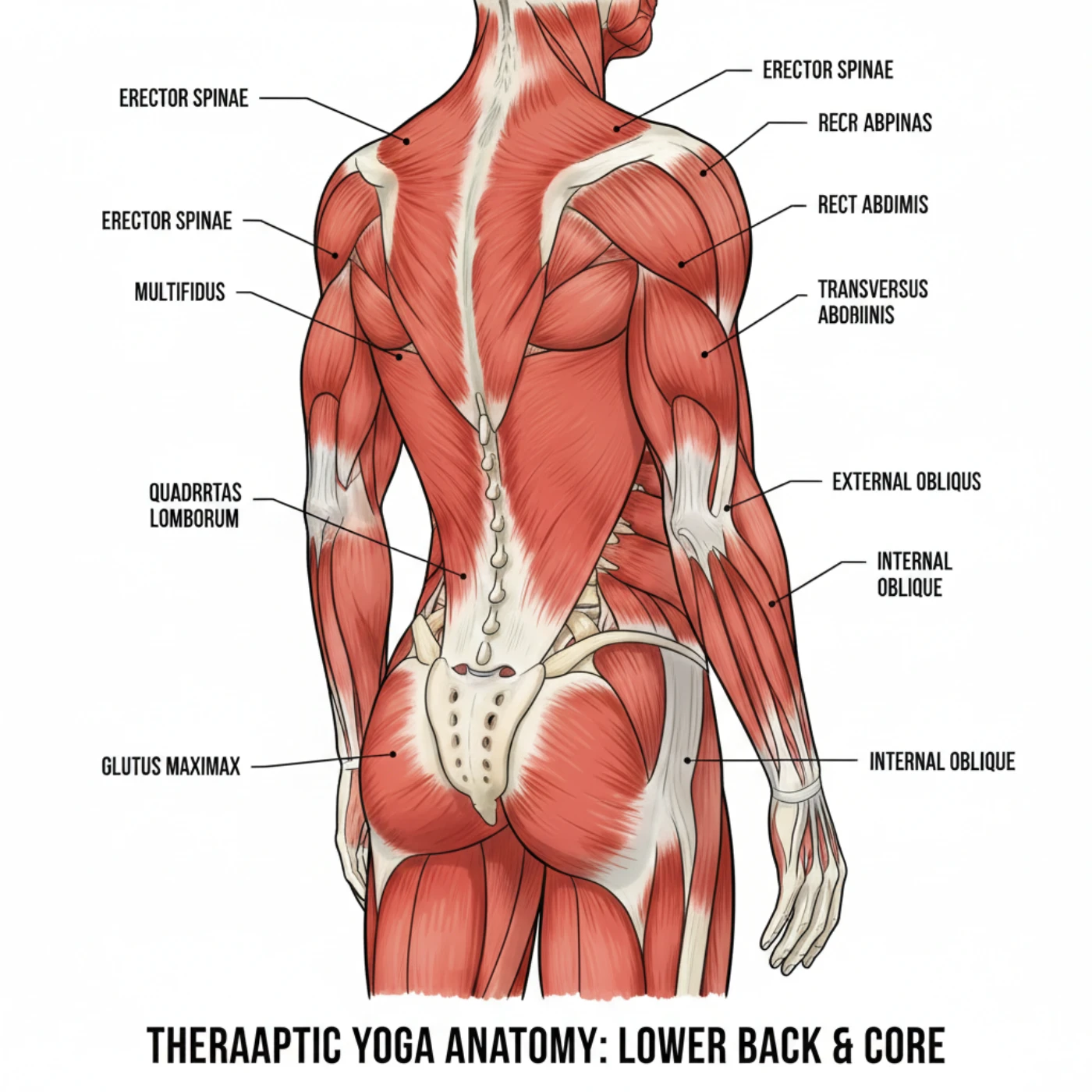
The lower back never works entirely alone; it sits inside a complex support system built from several muscle groups working together rather than one muscle carrying the whole load. The primary players are the erector spinae, multifidus and quadratus lumborum, running directly along and beside the spine itself; the supporting cast includes the core muscle, hip flexor, hamstring and glute, each pulling part of the weight away from the spine when properly engaged.
Studies at Boston Medical Center found that yoga activates these muscle groups in genuinely coordinated patterns rather than in isolation, which is exactly why a well-sequenced practice outperforms an isolated stretch aimed at just one muscle. Instructors training within a full Yoga Teacher Training programme learn to cue precisely this kind of whole-body engagement, rather than cueing a single muscle in isolation the way a gym routine typically would.
06Seven Poses Worth Learning Properly
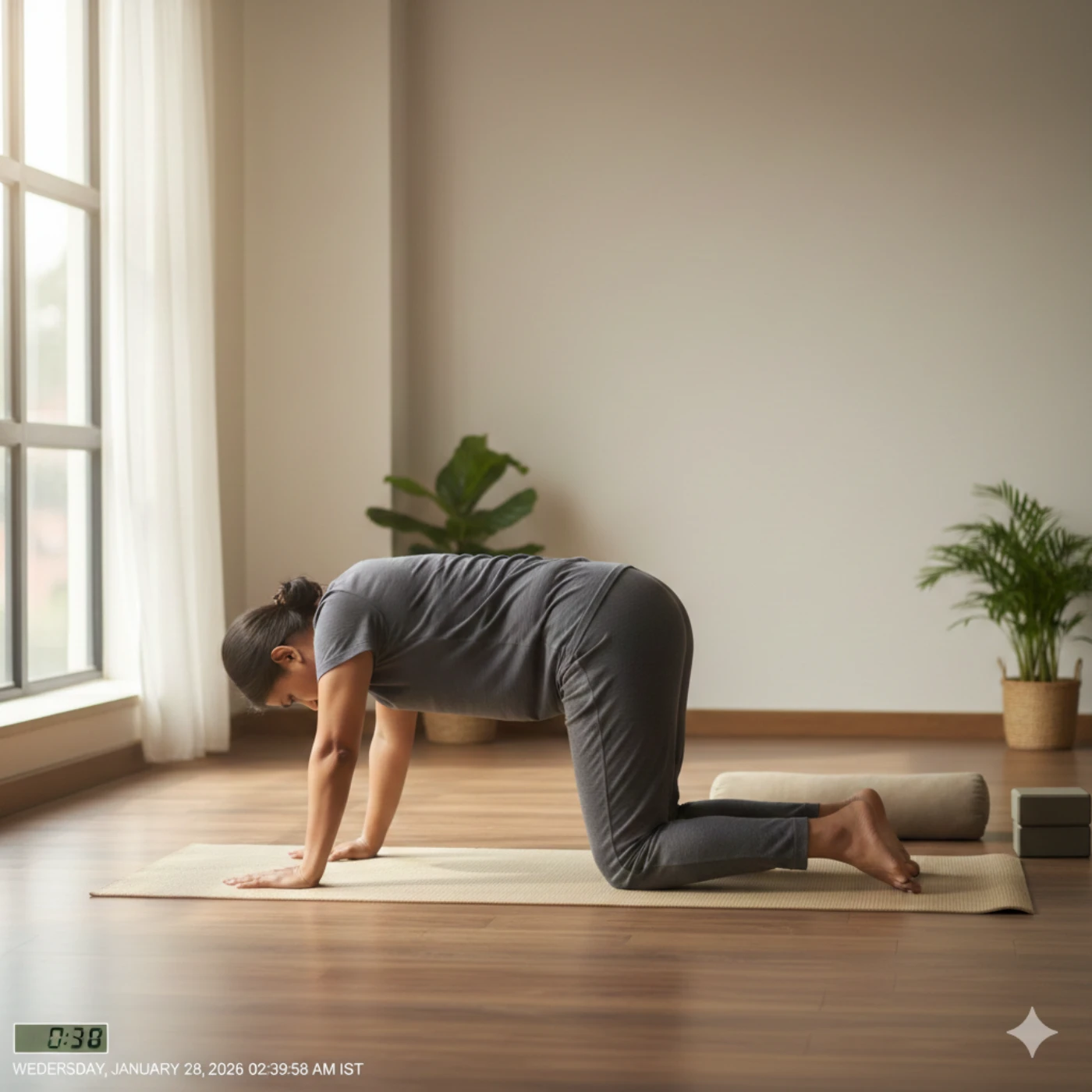
1. Cat-Cow (Marjaryasana-Bitilasana). Inhale, drop the belly and lift the gaze into Cow; exhale, round the spine and tuck the chin into Cat. This simple back-and-forth pumps synovial fluid between the vertebrae with every repetition.
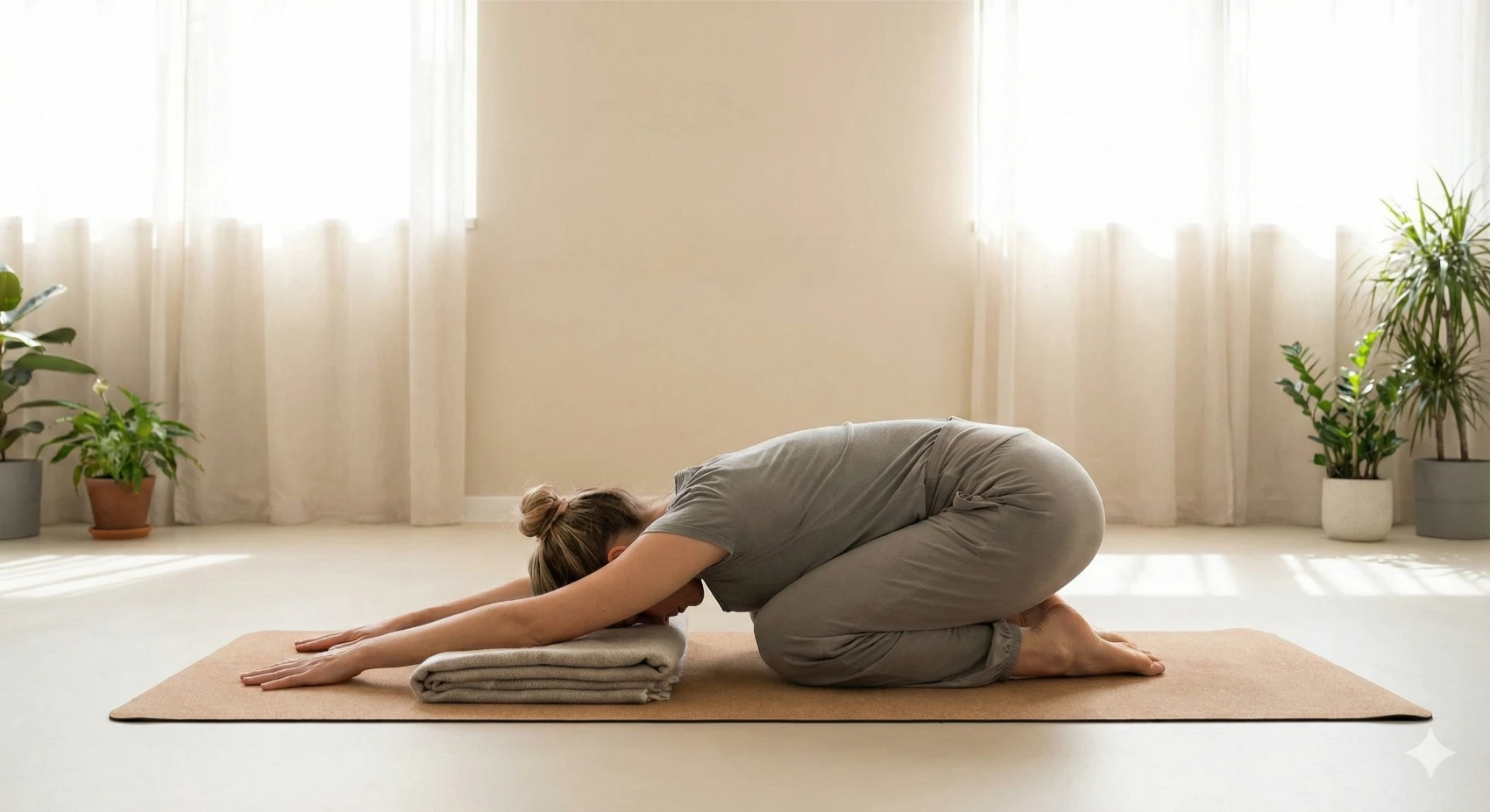
2. Child’s Pose (Balasana). Kneel, sit back onto the heels, and stretch the arms forward along the floor. This gently stretches the erector spinae while calming the nervous system at the very same time.
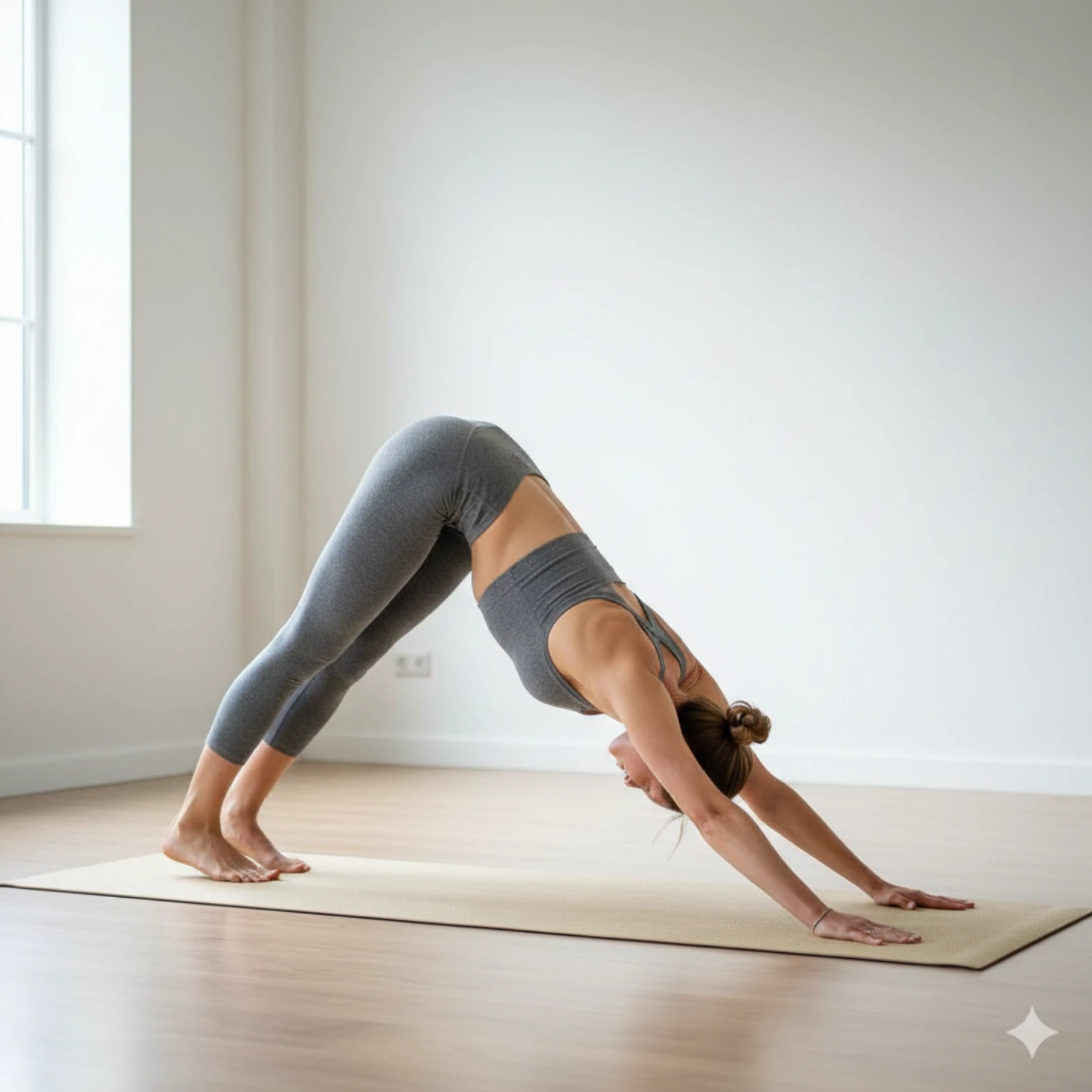
3. Downward-Facing Dog (Adho Mukha Svanasana). From hands and knees, lift the hips up and back. This lengthens the entire posterior chain, and a tight hamstring is very often a major, under-recognised contributor to lower back pain in the first place.
4. Sphinx Pose (Salamba Bhujangasana). Lie on the belly and prop up onto the forearms. This mild backbend strengthens the muscle that supports the lumbar spine directly, without the intensity of a fuller backbend.
5. Supine Twist (Supta Matsyendrasana). Lying on the back, guide the right knee across the body toward the left. This releases tension specifically in the quadratus lumborum, a muscle rarely addressed by ordinary stretching.
6. Bridge Pose (Setu Bandhasana). Press into the feet and lift the hips. This activates the glutes and core together, and the pose appears frequently within a 200-hour Teacher Training curriculum for exactly this reason.
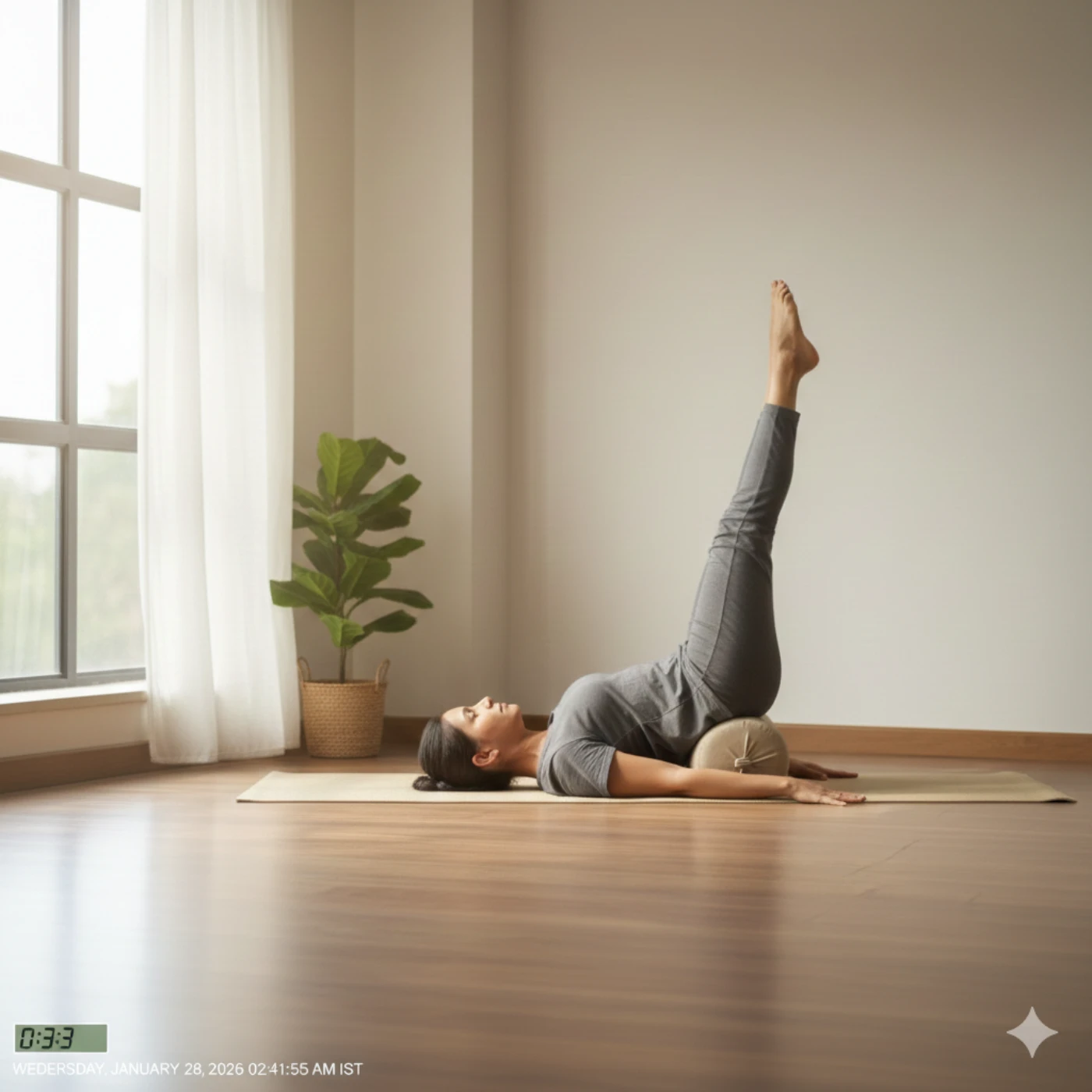
7. Legs-Up-the-Wall (Viparita Karani). Lie back with the legs resting against a wall. This gentle inversion relieves pressure on the lower back directly while also reducing general inflammation through the improved circulation it encourages.
07When to Seek Additional Support
Sciatica pain severe enough to affect walking, a sharp shooting sensation, or numbness are all reasons to consult a healthcare provider directly rather than working through them with a home practice alone. The guide to yoga for slip disc and sciatica goes considerably deeper into nerve-decompression technique specifically, for anyone whose pain fits that particular pattern rather than ordinary muscular tightness.
08A Twenty-Minute Practice Sequence
String the seven poses above together into a single routine: Cat-Cow for two minutes to begin, moving into Child’s Pose for one minute, then Downward-Facing Dog held for five breaths, Sphinx Pose held for five breaths, Bridge Pose for three repetitions, Supine Twist for one minute on each side, and a closing five minutes in Legs-Up-the-Wall to let everything settle. Twenty minutes, start to finish, is enough to move through the full sequence without rushing any single pose past the point where it actually starts working.
09Supporting the Practice Beyond the Mat
Asana works best inside a genuinely holistic approach rather than as an isolated fix. Sleep posture matters, as does a dedicated pranayama practice and a sensible morning routine aimed at combating overnight stiffness before it sets in for the day. For anyone looking for a deeper layer of healing beyond the poses themselves, a modern Ayurveda wellness approach complements a yoga practice beautifully, addressing the same back pain from a constitutional angle rather than a purely mechanical one.
“Yoga does not just mask back pain. It addresses the mechanism underneath it — which is exactly why it holds up as well as physiotherapy in the research.”
The heart of it
- Yoga asana decompresses the spine directly, nourishing the disc rather than simply loosening surrounding muscle temporarily.
- Forward bends and backward bends work opposite sides of the same system — alternate between them rather than favouring one.
- Slow transitions, five to eight breaths between poses, let the fascia genuinely adapt instead of merely stretching briefly.
- A twenty-minute sequence of seven well-chosen poses, done consistently, outperforms a longer, irregular practice.
Learn the full mechanics of a safe, effective back-care practice, guided by experienced teachers.
Reserve Your Seat