Walk into a studio schedule for the first time and the list of style names alone can be a little overwhelming — Hatha, Vinyasa, Ashtanga, Yin, and that's before the more specialised offshoots even enter the picture. Each of these descends from a genuinely different intention, and the right one depends far more on what a body and a life actually need than on which class happens to be trending. This is a straightforward guide to what actually separates them, and how to find the one worth building a practice around.
01Hatha: The Foundational, Unhurried Practice
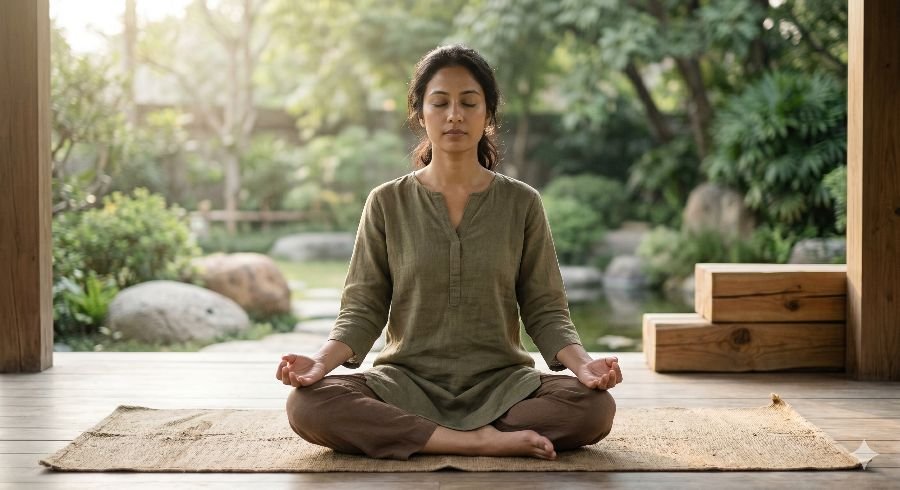
Hatha is, technically, the umbrella term underneath most physical yoga practised today, but in a modern class schedule it usually refers to a slower, more foundational style — postures held for several breaths, less transition between them, and considerably more time to actually feel a shape before moving on from it. This makes Hatha a genuinely good entry point for anyone new to yoga entirely, or for anyone whose priority is careful alignment over a cardiovascular challenge.
02Vinyasa: Movement Linked to Breath
Vinyasa builds a continuous, flowing sequence where each movement synchronises with an inhale or an exhale, creating something closer to a moving meditation than a series of static holds. The pace varies considerably by teacher and studio, but the underlying principle stays constant: breath leads movement, not the other way round. This style suits someone who wants a genuine physical challenge alongside the meditative quality of a coordinated breath, and who finds a slower, hold-based class restless rather than calming.
03Ashtanga: A Rigorous, Fixed Sequence
Ashtanga follows a specific, unchanging sequence of postures, practised in the same order every session and traditionally taught either in a led class or through Mysore-style self-paced practice, where a teacher moves through the room offering individual adjustment rather than calling out the sequence aloud. This style demands genuine physical discipline and consistency, and it rewards a practitioner who likes structure and measurable progress over the improvisation that Vinyasa allows for. It is generally the most physically demanding of the four styles here, and less suited to a genuine beginner without some prior movement background.
04Yin: Slow, Deep and Passive
Yin occupies almost the opposite end of the spectrum — postures held passively for three to five minutes at a time, targeting the connective tissue, fascia and joints rather than the muscles a more active style primarily works. There is little movement and no real cardiovascular component; the practice instead cultivates patience and a genuine tolerance for stillness, and it pairs particularly well as a complement to a more vigorous practice like Ashtanga or Vinyasa, addressing the flexibility and recovery side that a purely active style tends to leave underdeveloped.
05Matching a Style to the Body and the Goal
Someone recovering from an injury, managing chronic stress, or entirely new to yoga tends to do well starting with Hatha or Yin, where the pace allows genuine attention to alignment and sensation. Someone seeking a cardiovascular challenge alongside a meditative quality typically gravitates toward Vinyasa. Someone who thrives on structure, discipline and a measurable, repeatable practice often finds Ashtanga the most satisfying long-term home. And many experienced practitioners eventually combine two styles deliberately — an active practice for strength and cardiovascular benefit, paired with Yin for the flexibility and recovery an active style alone rarely provides.
Trying two or three different styles across a few weeks, rather than committing to the first class attended, tends to reveal a genuinely better fit than reading a comparison alone ever can.
“The right style depends far more on what a body and a life actually need than on which class happens to be trending.”
The heart of it
- Hatha offers a slower, foundational entry point built around careful alignment and held postures.
- Vinyasa links movement to breath, offering a flowing, meditative cardiovascular practice.
- Ashtanga follows a fixed, rigorous sequence rewarding discipline and consistency over improvisation.
- Yin works the connective tissue through long, passive holds, and pairs well as a complement to a more active style.
Explore every major style with experienced teachers in Rishikesh.
Reserve Your Seat