
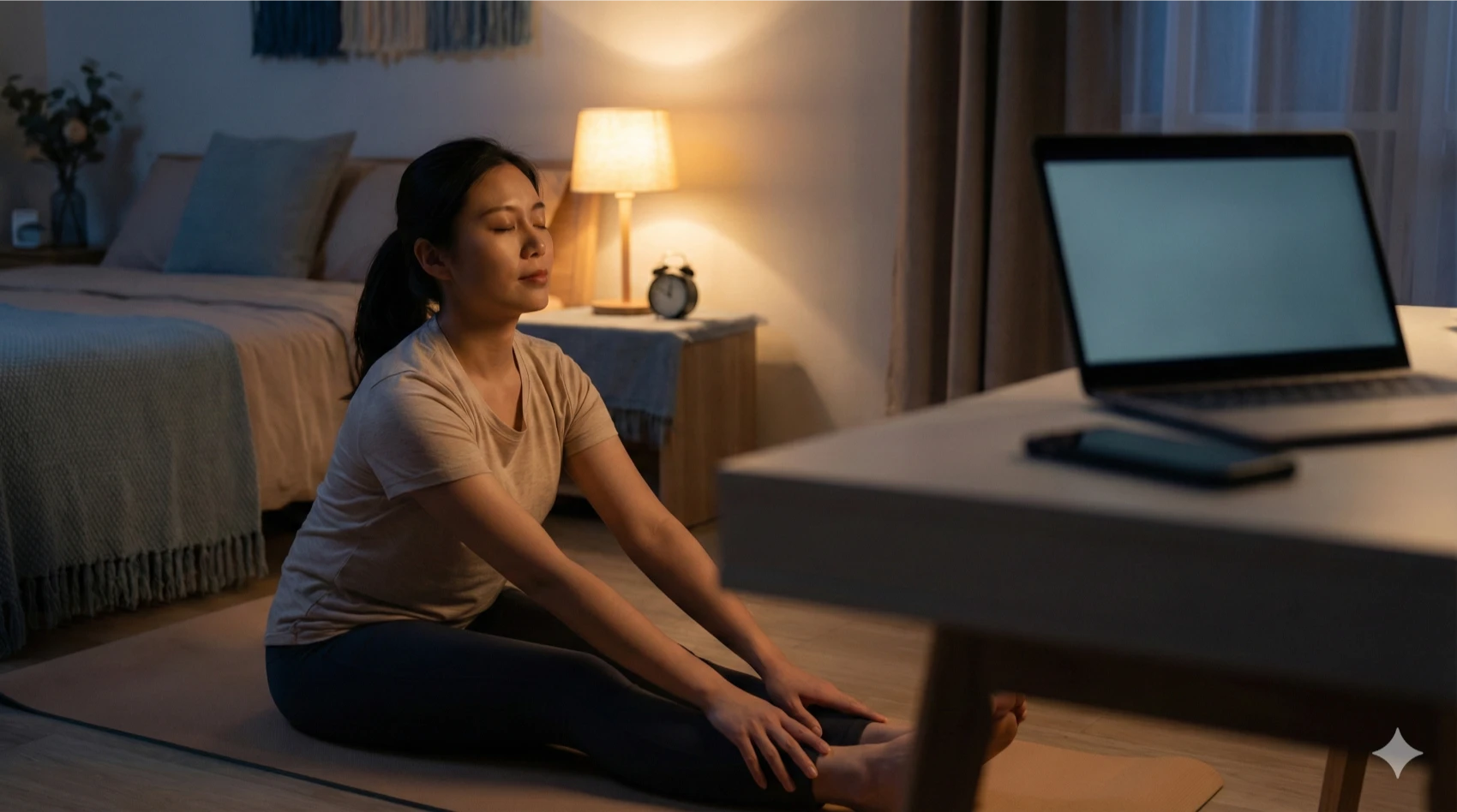
You hit every deadline today. Answered 87 emails. Sat through three virtual meetings. Now it's 11 PM, and your brain won't shut off.
This isn't insomnia in the traditional sense. You don't have a sleep disorder. You have a modern life problem—chronic stress and lifestyle patterns that make sleep biologically impossible.
Research from Johns Hopkins Medicine shows that yoga reduces perceived stress by 58% and improves stress-related insomnia by 65% within 8 weeks of consistent practice. In this guide, you'll learn how work stress creates sleep-blocking biochemistry, why screens sabotage your circadian rhythm, and how yoga interventions target each disruption point specifically.
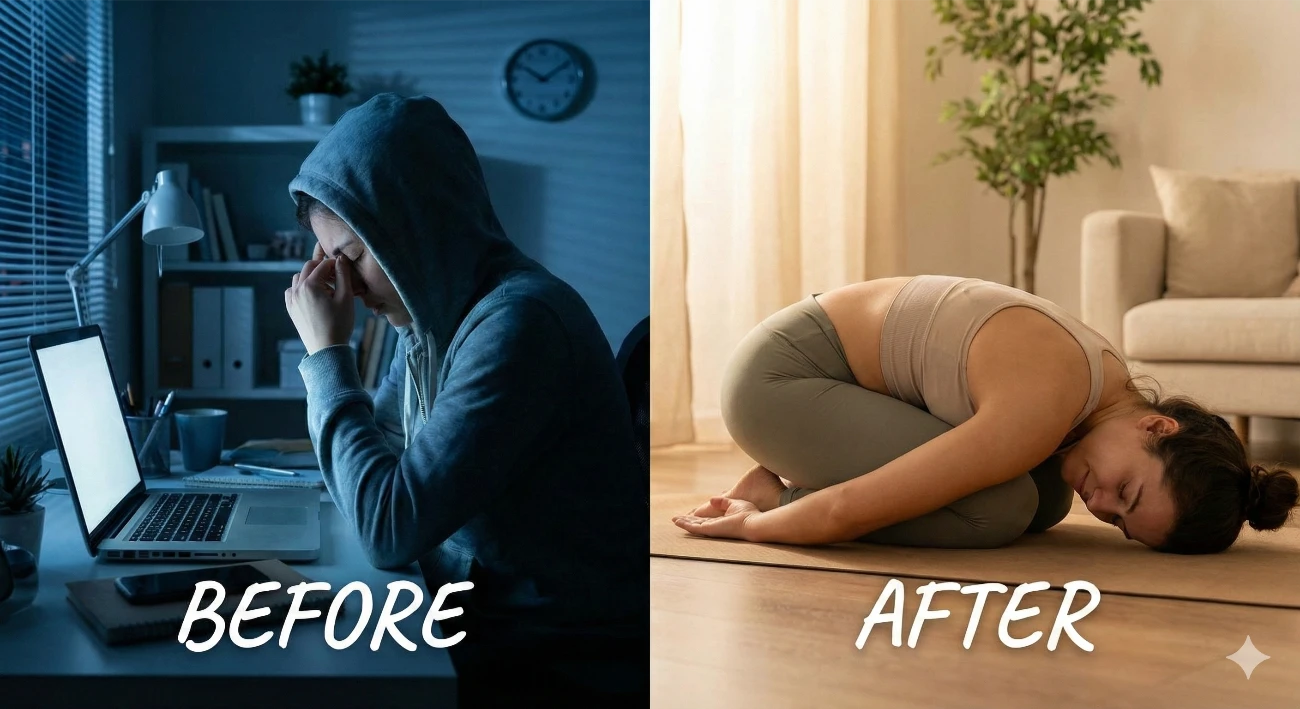
Work Stress and Mental Overload Impact
Work stress doesn't end when you close your laptop. It lives in your body as biochemical activation that directly prevents sleep.
The Cortisol-Sleep Connection
Work stress elevates cortisol—your primary stress hormone. Cortisol should naturally peak in the morning and drop by evening. Chronic work stress keeps it elevated all day and into the night. High evening cortisol is physiologically incompatible with sleep. Even when you stop working, cortisol takes 3-6 hours to decrease.
How work stress blocks sleep:
- Maintains elevated cortisol levels past bedtime
- Suppresses melatonin production (your sleep hormone)
- Keeps sympathetic nervous system activated
- Prevents body temperature from dropping naturally
- Blocks deep sleep stages even if you fall asleep
Mental Overload and Rumination
Work stress creates mental loops. Your prefrontal cortex (thinking brain) stays online when it should be powering down. Research from the Sleep Research Society shows that work-related rumination delays sleep onset by an average of 43 minutes.
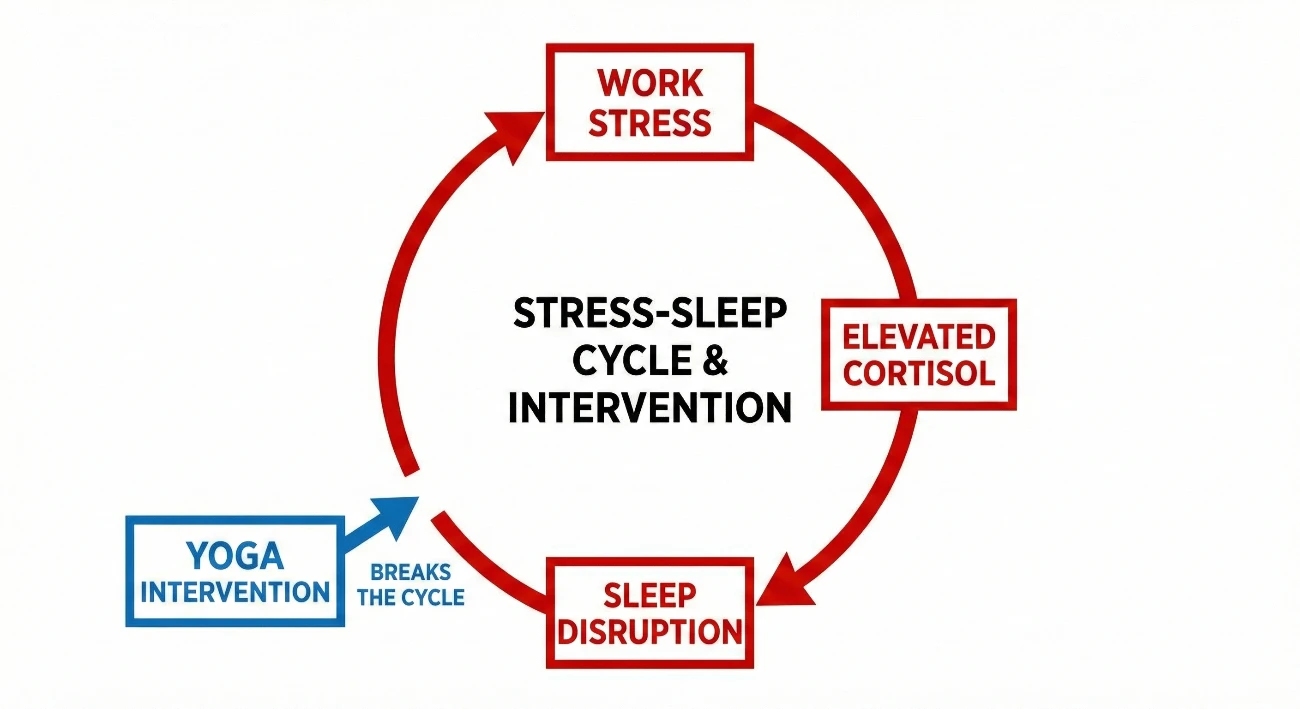
Multiple daily stressors create overlapping adrenaline waves. By evening, you're physiologically wired despite feeling mentally exhausted. This "tired but wired" state is classic stress-induced insomnia.
Screen Exposure and Sleep Disruption
Your phone, laptop, and tablet are sleep saboteurs. Screen exposure disrupts sleep through multiple biological pathways.
Blue Light and Melatonin Suppression
Blue light wavelengths (450-480 nanometers) directly suppress melatonin production. Your brain interprets blue light as daylight, signaling "stay awake." A single hour of evening screen exposure suppresses melatonin by 50% for up to 3 hours after you stop.
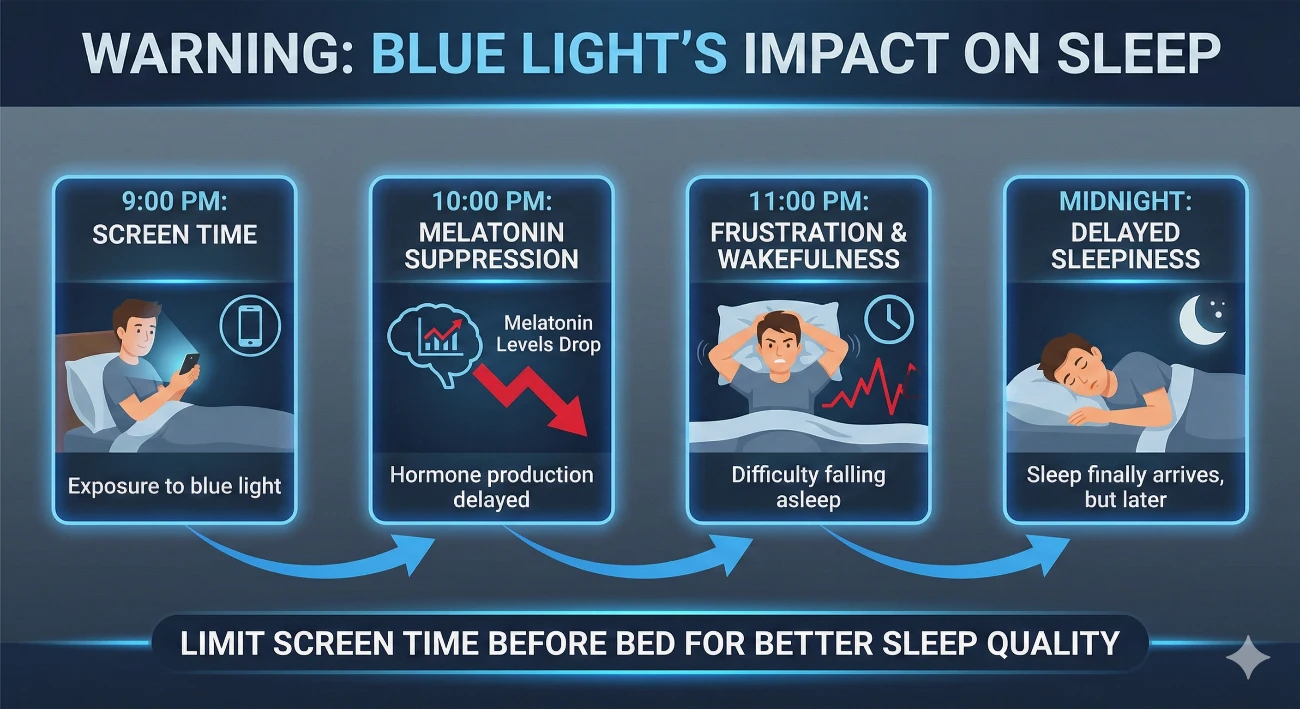
Creating Effective Screen Boundaries
For significant sleep improvement, you need 90-120 minutes screen-free before sleep. Practical boundaries include:
- Set a device curfew 90 minutes before bedtime
- Remove phones from the bedroom entirely
- Use blue light filters if evening use is unavoidable
- Replace scrolling with evening and bedtime yoga practices for sleep
Overstimulation of the Nervous System
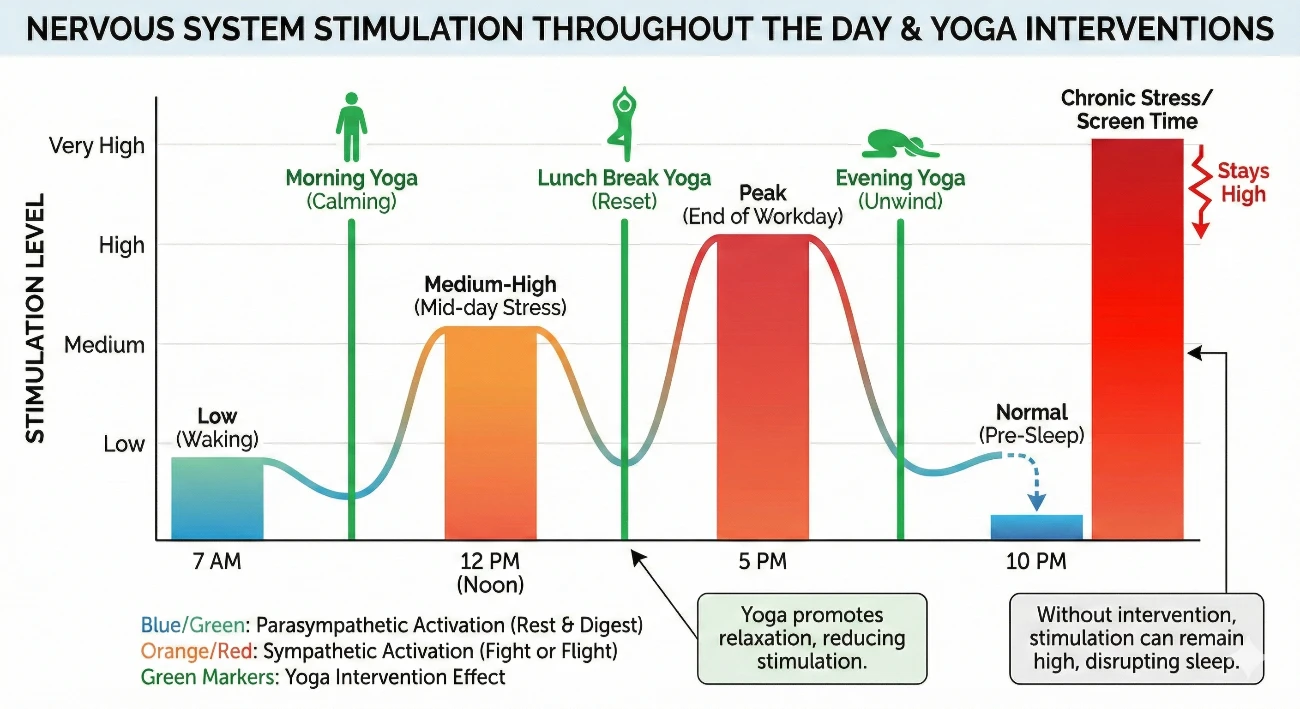
Modern life bombards your nervous system with constant input. By evening, you're overstimulated to the point where sleep becomes neurologically impossible.
Daily sensory inputs that accumulate:
- 100+ notifications across devices
- 8-12 hours of artificial lighting
- Constant ambient noise and visual overstimulation
How Yoga Counteracts Overstimulation
Yoga systematically downregulates an overstimulated nervous system through sensory reduction and deliberate slowness. Closing your eyes eliminates visual input, while slow movements signal "no urgency" to the brain. The yin yoga class approach specifically addresses overstimulation through long-held, passive poses.
Yoga's Role in Stress Reduction
Yoga is not just relaxation—it's systematic nervous system reprogramming. It addresses stress-induced insomnia through multiple biological mechanisms simultaneously.
- Forward folds: Activate parasympathetic system, reduce cortisol.
- Hip openers: Release emotional tension storage.
- Twists: Massage organs, aid cortisol metabolism.
- Breathing: Direct vagus nerve activation via pranayama techniques to calm the mind.
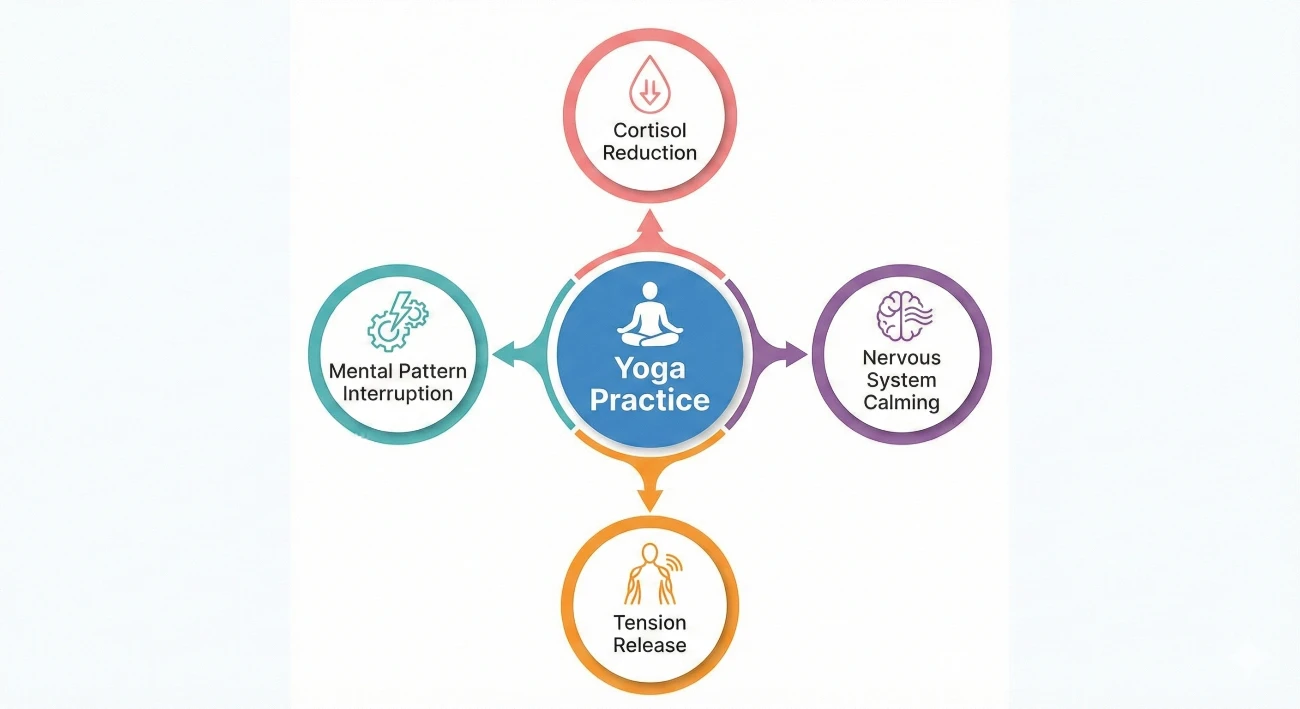
Regular yoga practice doesn't just reduce current stress—it builds stress resilience. Studies show that 8 weeks of consistent yoga increases vagal tone by 30-45%.
Long-Term Sleep Habit Correction
Stress-induced insomnia creates bad sleep habits that persist even after stress decreases. Yoga helps correct these ingrained patterns by building sustainable routines.
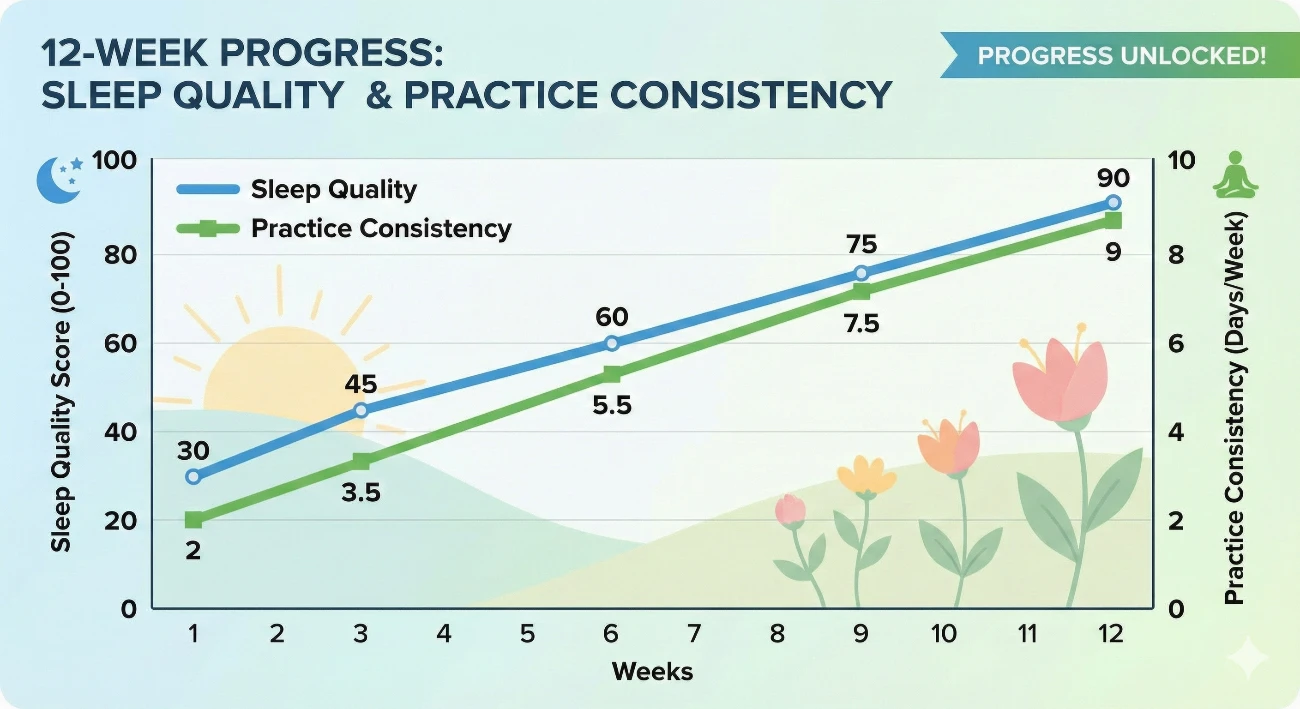
Sustainable Practice Framework:
- Start with 10 minutes nightly (achievable)
- Link to an existing habit (after brushing teeth)
- Maintain consistency even on weekends to rebuild circadian rhythm
- Track progress Indicators like time to fall asleep and morning energy levels
Most people see significant improvement around week 6-8 of consistent practice. For complete support, explore yoga for stress relief practices that extend beyond sleep-specific applications.
FAQs
-
What is the cause of lack of sleep?
Lack of sleep has multiple causes. Stress-induced insomnia specifically stems from chronic stress keeping your sympathetic nervous system activated past bedtime. Work pressure, financial worries, relationship conflicts, and lifestyle overstimulation maintain cortisol and adrenaline elevation that blocks sleep. Irregular schedules, excessive screen time, and lack of wind-down routines compound the problem. Yoga addresses these causes by reducing stress hormones, calming nervous system activation, and creating consistent sleep preparation routines.
-
What is lack of sleep called?
Lack of sleep is called sleep deprivation when circumstances prevent adequate sleep opportunity. When you have time but can't sleep, it's insomnia. Stress-induced insomnia specifically refers to sleep problems caused by chronic stress activation. Short-term sleep loss (a few days) is acute sleep deprivation. Chronic sleep deprivation persists for weeks or months. Yoga effectively addresses both conditions by calming your nervous system and rebuilding natural sleep capacity through consistent practice.
-
What are the 5 effects of lack of sleep?
Five major effects of sleep deprivation include: (1) Cognitive impairment—reduced memory, focus, and decision-making ability, (2) Emotional dysregulation—increased anxiety, irritability, and mood instability, (3) Weakened immunity—higher susceptibility to illness and slower healing, (4) Metabolic disruption—weight gain, blood sugar instability, and increased diabetes risk, (5) Cardiovascular strain—elevated blood pressure and increased heart disease risk. Yoga helps mitigate these effects by reducing stress hormones, supporting immune function, and improving sleep quality through nervous system regulation.
-
What are five causes of sleep deprivation?
Five common causes of sleep deprivation include: (1) Chronic work stress maintaining evening cortisol elevation, (2) Excessive screen time suppressing melatonin production, (3) Irregular sleep schedules disrupting circadian rhythm, (4) Caffeine and late meals affecting sleep biochemistry, (5) Lack of wind-down routine leaving nervous system activated. Yoga addresses all five causes—reducing stress hormones, replacing screen time with calming practice, establishing consistent routines, and creating effective wind-down rituals that signal your body to prepare for sleep.
-
What vitamins help you sleep better?
Key vitamins and minerals for sleep include magnesium (relaxes muscles and calms nervous system), vitamin D (regulates circadian rhythm), B-complex vitamins (support neurotransmitter production), and vitamin C (helps cortisol regulation). However, supplements alone rarely solve stress-induced insomnia. Combining proper nutrition with #yoga for stress and anxiety# practices creates comprehensive support. Evening yoga enhances nutrient absorption through stress reduction and improved digestion. Most people benefit more from consistent yoga practice than supplements alone, though combining both approaches maximizes results.
-
How to survive on 5 hours of sleep?
While not ideal, you can function on limited sleep temporarily through: strategic caffeine timing (morning only), short power naps (20 minutes maximum), prioritizing hydration and nutrition, and managing stress through breathing exercises. However, surviving isn't thriving. Chronic 5-hour sleep damages long-term health. Focus instead on improving sleep duration through evening yoga practice, consistent sleep schedules, and stress reduction. If life circumstances limit sleep opportunity temporarily, use #morning meditation# and breathwork to optimize function while working toward sustainable 7-8 hour sleep patterns.