
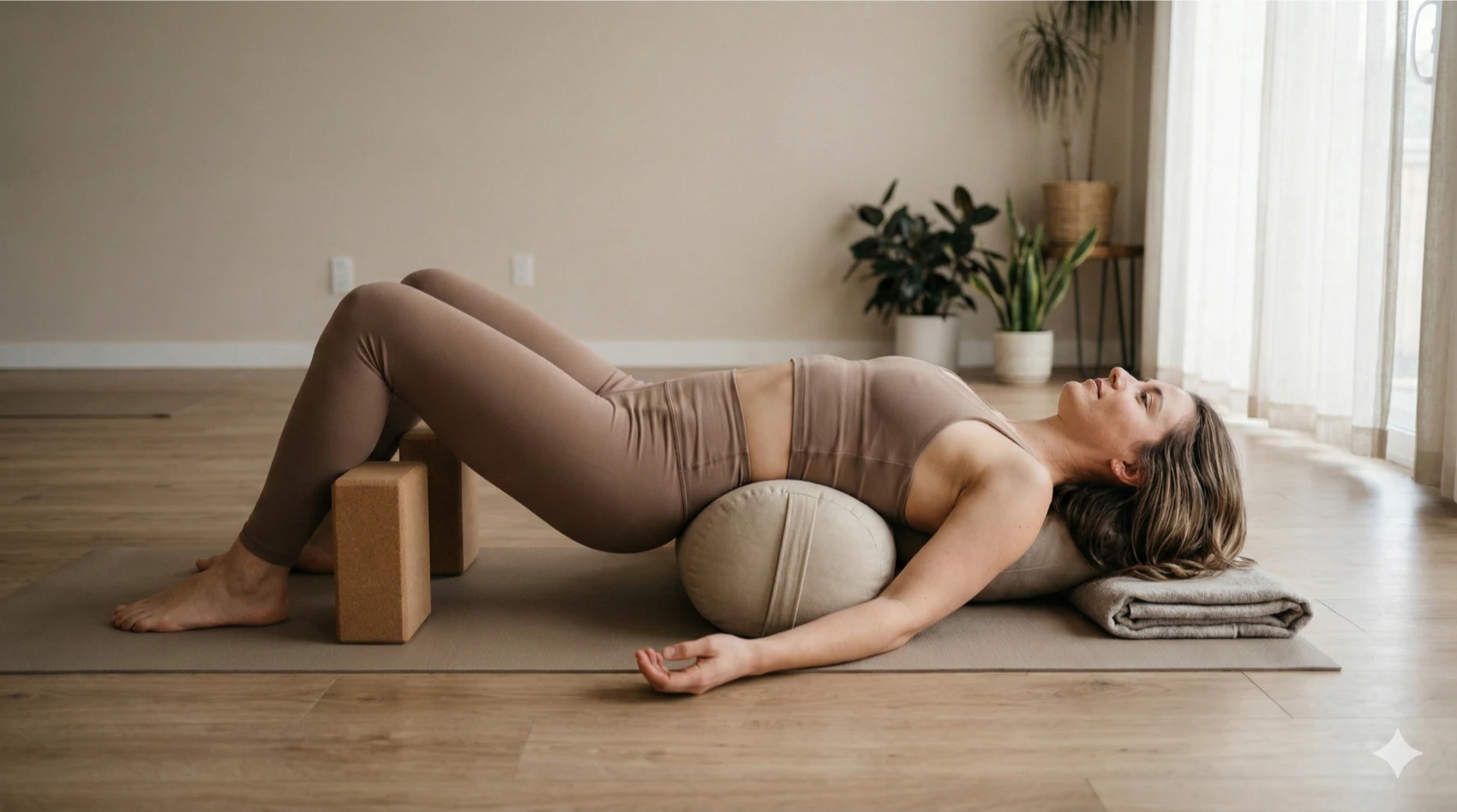
You unroll your yoga mat with the best intentions. You want to heal your back pain naturally. Then you push into a forward fold. Your back screams in protest.
Here's what nobody tells you: Yoga can heal back pain brilliantly—or make it devastatingly worse. The difference lies in understanding critical precautions. Research from the Journal of Bodywork and Movement Therapies found that 21% of yoga practitioners experience injury when practicing without proper guidance. Most of these injuries were completely preventable.
But here's the good news: Understanding key safety principles transforms yoga from risky to remarkably healing.

Common Mistakes People Make
Your enthusiasm for healing can become your biggest obstacle. Understanding common errors protects you from setbacks.
The "Push Through Pain" Mentality
Many people carry gym culture mentality into yoga. "No pain, no gain" becomes their mantra. This approach devastates backs. Pain is your body's alarm system, not a challenge to overcome. When you push through sharp pain, you're creating micro-trauma that delays healing.
Skipping the Warm-Up
Cold muscles and joints are injury-prone. Your body needs gradual preparation. Research from the British Journal of Sports Medicine shows that proper warm-up reduces injury risk by 47%.
Holding Your Breath
Breath-holding creates tension throughout your body. The Hatha Yoga Pradipika emphasizes: "When the breath is irregular, the mind is unsteady." This instability translates directly to physical rigidity.
Neglecting Core Engagement
Without core activation, your spine lacks muscular support. According to Dr. Stuart McGill, "The spine requires muscular bracing before movement to prevent injury." Mastering foundational poses for lower back pain creates the safety net for eventual progression.
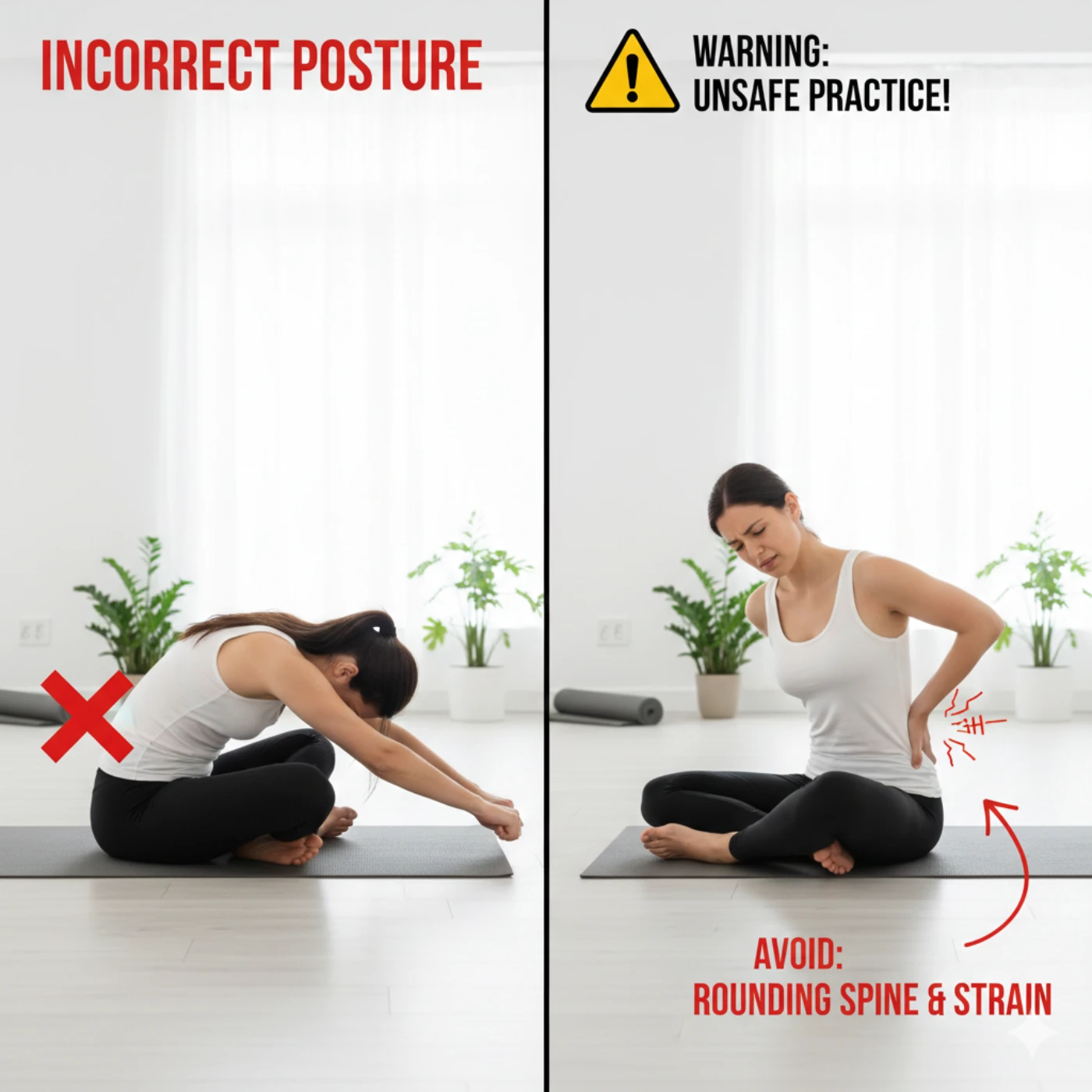
Importance of Neutral Spine Awareness
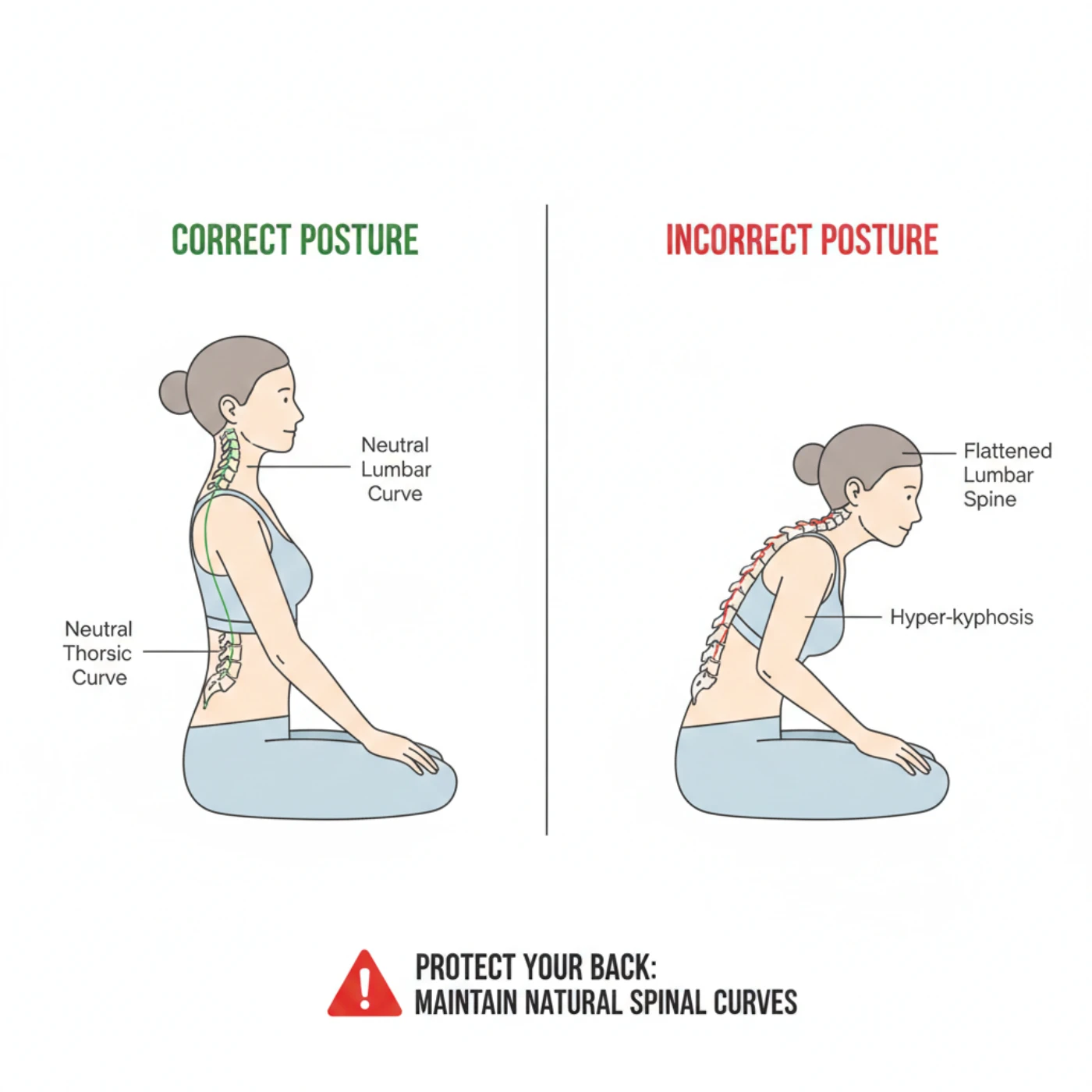
Your spine has natural curves. Respecting these curves determines whether yoga heals or harms.
What Is Neutral Spine?
Neutral spine maintains your natural curves: an inward curve at the lower back (lumbar) and an outward curve at the mid-back (thoracic). These curves distribute force optimally.
Finding Your Neutral
Lie on your back with knees bent. Notice the small space between your lower back and floor—that's your natural lumbar curve. This middle ground, where your back feels most at ease, is your neutral position.
Using Props for Neutral Support
- Folded Blanket: Under sitting bones to tilt the pelvis forward.
- Blocks: Under hands in forward folds to reduce depth.
- Bolsters: Under the chest in prone poses to support natural curves.
For those exploring yoga for slip disc and sciatica, neutral spine awareness becomes even more critical.
Avoiding Over-Stretching
Flexibility isn't the goal when healing back pain. Stability is. Research shows that hypermobile individuals experience 43% more back injuries than those with moderate flexibility.
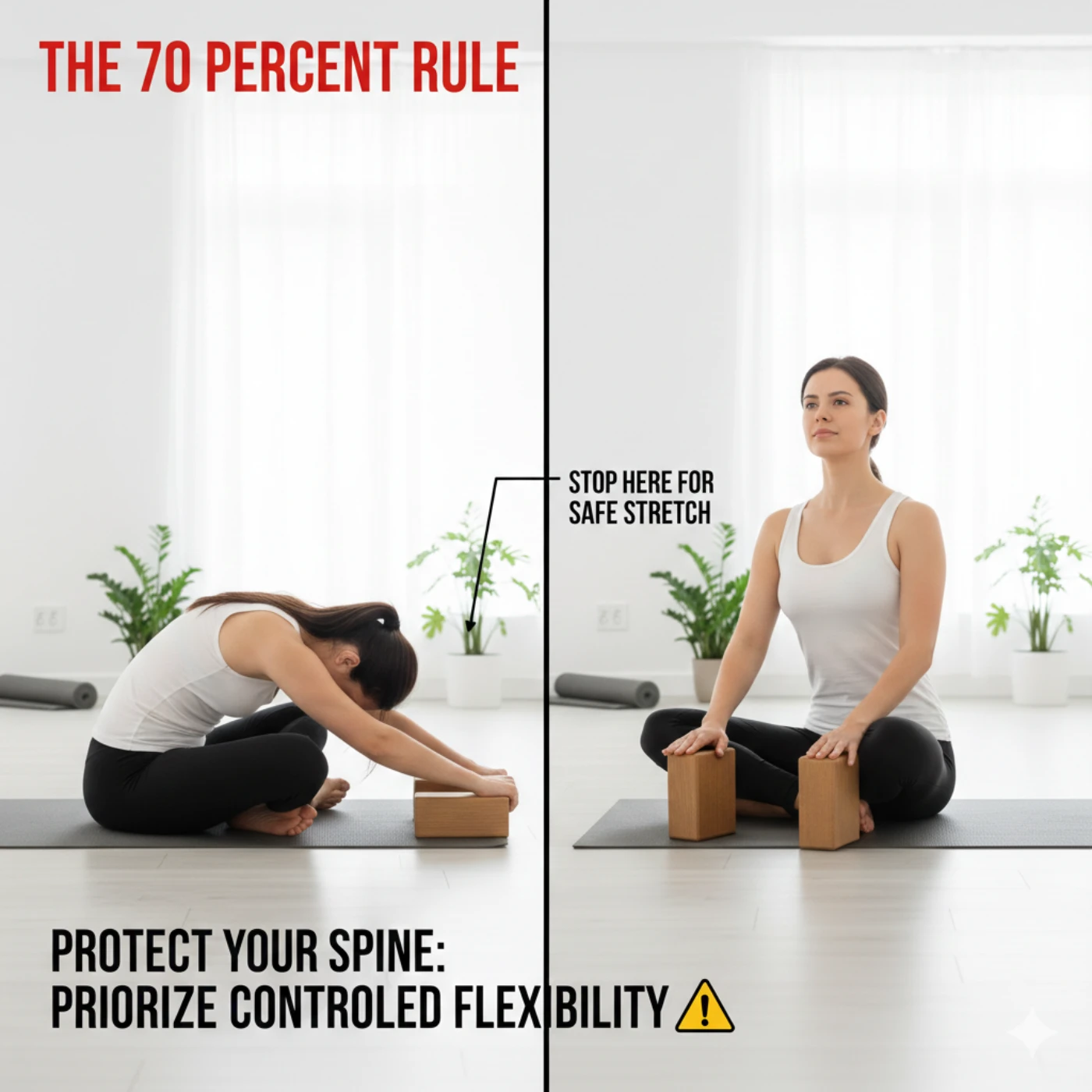
The 70% Rule
Practice at 70% of your maximum range. If you can touch the floor, stop at your mid-shins. This buffer zone protects your tissues and allows you to practice more frequently without injury.
Especially during a morning yoga routine, avoiding over-stretching is vital as the body is naturally stiffer and more vulnerable.
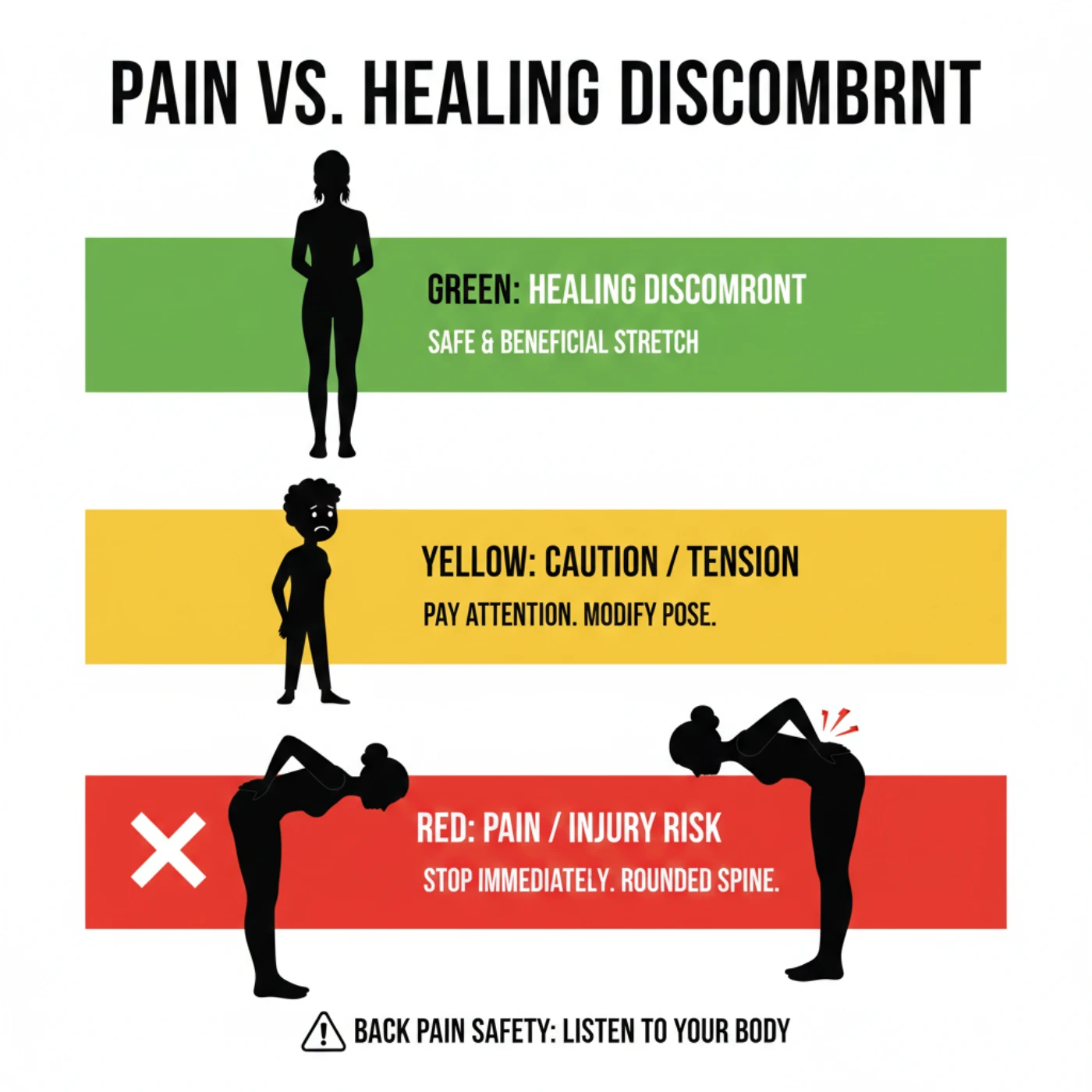
Pain vs Healing Discomfort
Learning the difference separates healing practice from harmful practice.
The Traffic Light System
- Green Light: Mild pulling, muscle engagement, warmth. (Continue)
- Yellow Light: Moderate discomfort, mild twinges that disappear. (Proceed with caution)
- Red Light: Sharp pain, radiating symptoms, numbness. (Stop immediately)
If you are also doing physiotherapy exercises, understanding these distinctions helps you navigate both safely.
Modifications for Severe Pain
Severe pain doesn't mean abandoning yoga; it means practicing smarter.
- Supine Bias: Favor lying on your back to minimize gravity's load.
- Micro-Movements: Tiny pelvic tilts or minimal rotations to maintain neural pathways.
- Breath-Focused: Use Pranayama to reduce stress and muscle tension without movement.
For those considering Yoga Teacher Training, understanding these modifications is essential for guiding students safely.

Conclusion
Yoga is a powerful tool for spinal health, provided it is practiced with mindfulness and respect for the body's limits. By avoiding common mistakes, maintaining a neutral spine, and honoring the 70% rule, you transform your practice into a sustainable path to recovery.
FAQs
-
How do I know if I'm doing yoga wrong with back pain?
Stop immediately if you experience sharp pain, radiating symptoms down your leg, numbness, or increasing discomfort during practice. Safe yoga feels like gentle pulling or muscle work, not stabbing sensations. If pain worsens the next day, you pushed too hard.
-
Can yoga make back pain worse?
Yes, if practiced without proper precautions. Pushing into sharp pain, over-stretching, comparing yourself to others, and attempting advanced poses too soon all worsen back pain. Following safety guidelines transforms yoga into healing practice.
-
What yoga poses should I avoid with lower back pain?
Avoid deep forward folds, extreme backbends, intense twists, and poses requiring end-range spinal movement. Skip full wheel, plow, deep seated forward bends, and any position causing sharp pain or radiating symptoms.
-
How much pain is normal during yoga for back issues?
Mild, dull, diffuse sensation (2-4 out of 10) that decreases as you hold the pose is normal. Sharp, stabbing, electric pain at any intensity level is not normal. If discomfort increases or radiates, stop immediately.
-
Should I practice yoga every day with back pain?
Daily gentle practice often helps more than occasional intense sessions. Keep sessions short (10-15 minutes) during severe pain phases. Listen to your body—some days need complete rest. Consistency at moderate intensity works best.