

Introduction

PCOS weight gain isn't your fault. Up to 80% of women with PCOS struggle with weight — especially around the abdomen — due to insulin resistance, elevated androgens, and cortisol dysregulation. Traditional "eat less, move more" advice often fails because PCOS changes how your body processes energy.
This guide explains the real drivers of PCOS weight gain and shows how yoga supports sustainable weight management without worsening hormonal imbalance.
Hormonal vs Lifestyle Weight Gain — Understanding the Difference
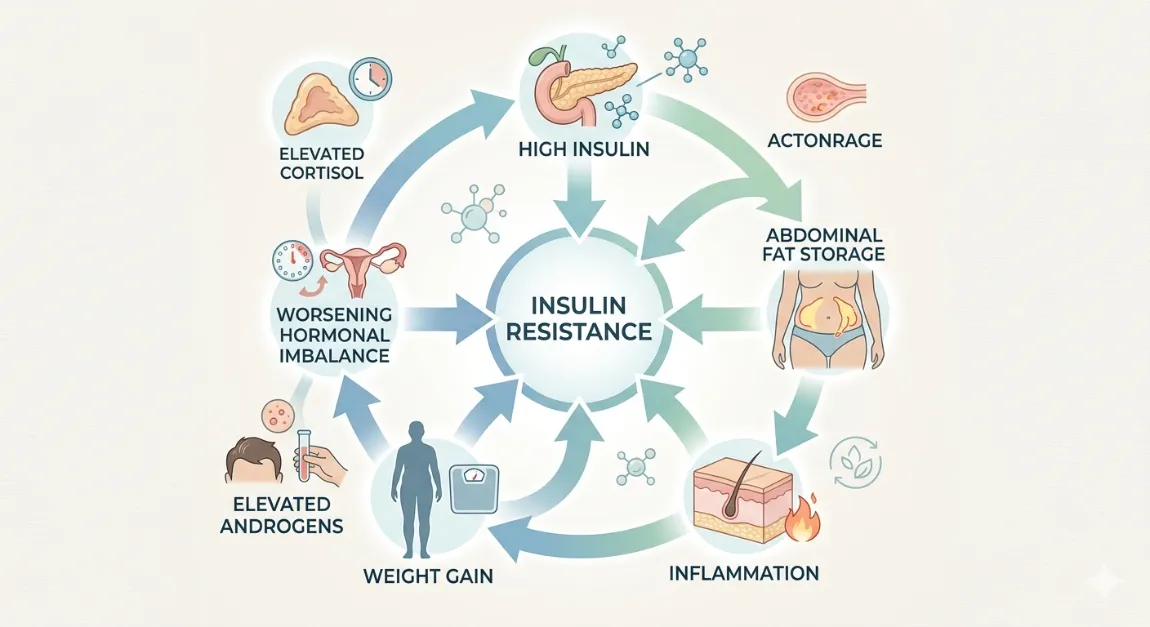
PCOS weight gain is driven by insulin resistance, elevated androgens (causing abdominal fat storage), chronic inflammation, and cortisol dysregulation — not simply calories. High insulin promotes fat storage and prevents fat burning, creating a vicious cycle that makes weight loss much harder than in women without PCOS.
Insulin Resistance and PCOS Metabolism
Insulin resistance affects up to 70% of women with PCOS. Cells stop responding properly to insulin, leading the pancreas to produce more. This signals the body to store fat — particularly visceral belly fat — and makes weight loss difficult even with calorie restriction.
Yoga improves insulin sensitivity through muscle engagement, stress reduction, better sleep, and reduced inflammation.
The Sustainable Movement Approach for PCOS

The best approach combines moderate yoga, walking, and strength training while avoiding overtraining. Recommended styles:
- Gentle to moderate Hatha and Vinyasa (3–4 times weekly)
- Power yoga (1–2 times weekly)
- Restorative and Yin Yoga for recovery
- Daily walking (30–45 minutes)
Pranayama and meditation further support metabolic health by lowering cortisol.
Avoiding Overtraining Mistakes That Worsen Weight Gain

Excessive cardio, daily hot yoga, and chronic high-intensity training elevate cortisol, worsen insulin resistance, and promote belly fat. Signs of overtraining include plateaus, fatigue, mood changes, sleep disruption, and irregular cycles. Prioritise rest days, recovery, and 7–9 hours of quality sleep.
Long-Term Body Regulation Through Yoga

Sustainable progress takes time. Expect energy and mood improvements in 4–6 weeks, noticeable metabolic shifts around 8–12 weeks, and meaningful weight changes over 16–24 weeks. Focus on non-scale victories: better energy, regular cycles, reduced cravings, and improved strength.
Frequently Asked Questions
Q: Why is PCOS weight loss so difficult?
Insulin resistance, elevated androgens, inflammation, and cortisol dysregulation make fat storage easier and fat burning harder. Addressing these root causes is essential.
Q: What is the best yoga for PCOS weight loss?
Moderate Hatha, Vinyasa, and strength-focused flows combined with Restorative/Yin Yoga for recovery. Walking and light strength training complement yoga well.
Q: How long does it take to see results with PCOS?
Energy and mood improve in 4–6 weeks. Sustainable weight loss and metabolic improvements typically appear in 12–24 weeks with consistent practice and nutrition.
Q: Can over-exercising worsen PCOS weight gain?
Yes. Excessive exercise raises cortisol, worsens insulin resistance, and can lead to plateaus or more abdominal fat storage.
Conclusion
PCOS weight gain is not a willpower issue — it's a metabolic one. Yoga offers a sustainable, nervous-system-friendly path to better insulin sensitivity, reduced stress, and long-term body regulation. Focus on consistency, recovery, and self-compassion. Combine gentle movement with proper nutrition and medical support for the best results.
FAQs
-
How to gain weight in PCOS?
Most women with PCOS struggle with weight gain, not inability to gain weight. However, some women with PCOS lose weight unintentionally due to stress, anxiety, or overactive thyroid. To gain weight healthily with PCOS: eat adequate protein (1.6–2g per kg body weight), include strength training or power yoga 3 times weekly to build muscle, prioritise sleep and stress management, and eat calorie-dense whole foods like nuts, avocados, and whole grains. Work with a dietitian if unintentional weight loss persists.
-
Why am I struggling with weight gain?
If you are struggling with unintended weight gain in PCOS, the root causes are typically insulin resistance, elevated androgens promoting abdominal fat storage, chronic cortisol elevation from stress, chronic inflammation, and thyroid dysfunction. Address all drivers simultaneously: practice moderate yoga 4–5 times weekly, prioritise protein and fiber at every meal, sleep 7–9 hours nightly, manage chronic stress, and work with a healthcare provider to optimise insulin sensitivity and thyroid function if needed.
-
What causes fast weight gain?
Fast weight gain (more than 2–3 kg per month) in PCOS is usually driven by worsening insulin resistance, starting or changing hormonal birth control, new medications (antidepressants, corticosteroids), severe stress triggering cortisol spikes, thyroid dysfunction, or fluid retention. If weight gain is sudden and rapid, see a doctor to rule out thyroid issues, medication side effects, or other underlying conditions requiring treatment.
-
What is the 30 30 30 rule for PCOS?
The 30-30-30 rule suggests eating 30 grams of protein within 30 minutes of waking, followed by 30 minutes of light movement. This stabilises blood sugar, reduces insulin spikes, and supports metabolic function throughout the day. While not a magic fix, protein-forward breakfasts and morning movement do improve insulin sensitivity and reduce cravings in many women with PCOS. Combine this with consistent yoga practice for best results.
-
How to decrease PCOD naturally?
PCOS symptoms can be significantly reduced through lifestyle changes: practice yoga 4–5 times weekly focusing on moderate-intensity and restorative styles, eat a balanced diet prioritising protein, fiber, and healthy fats, minimise refined carbs and sugar, sleep 7–9 hours nightly, manage chronic stress through breathwork and meditation, and maintain a healthy weight through sustainable habits. Most women notice meaningful symptom improvement within 8–12 weeks of consistent practice. Medical treatment may still be necessary for some — yoga works best as complementary support, not replacement.
-
Which type of yoga is best for weight gain?
If you are trying to gain weight (build muscle), power yoga, vinyasa flow, and strength-focused hatha yoga are most effective. These styles build lean muscle mass when practiced 3–4 times weekly alongside adequate protein intake. Avoid excessive cardio and hot yoga — these can suppress appetite and increase calorie burn without building muscle.
-
What exercises are good for PCOS hormonal imbalance?
The best exercise for PCOS combines moderate-intensity movement that improves insulin sensitivity without elevating cortisol excessively. Effective options include: yoga 4–5 times weekly (mix of gentle hatha, moderate vinyasa, restorative), walking 30–45 minutes daily, strength training 2–3 times weekly, and Pilates or barre for core strength. Limit high-intensity interval training to 1–2 sessions weekly maximum — excessive HIIT worsens cortisol dysregulation in PCOS.
-
Is yoga good for gaining weight?
Yoga alone does not cause weight gain — but strength-focused yoga (power yoga, arm balances, standing poses held for time) can build muscle mass when combined with adequate protein and calorie intake. For intentional weight gain, combine yoga with strength training and ensure you are eating in a calorie surplus with adequate protein. For unintentional weight loss in PCOS, restorative yoga and stress management practices may help restore hormonal balance and healthy weight.