
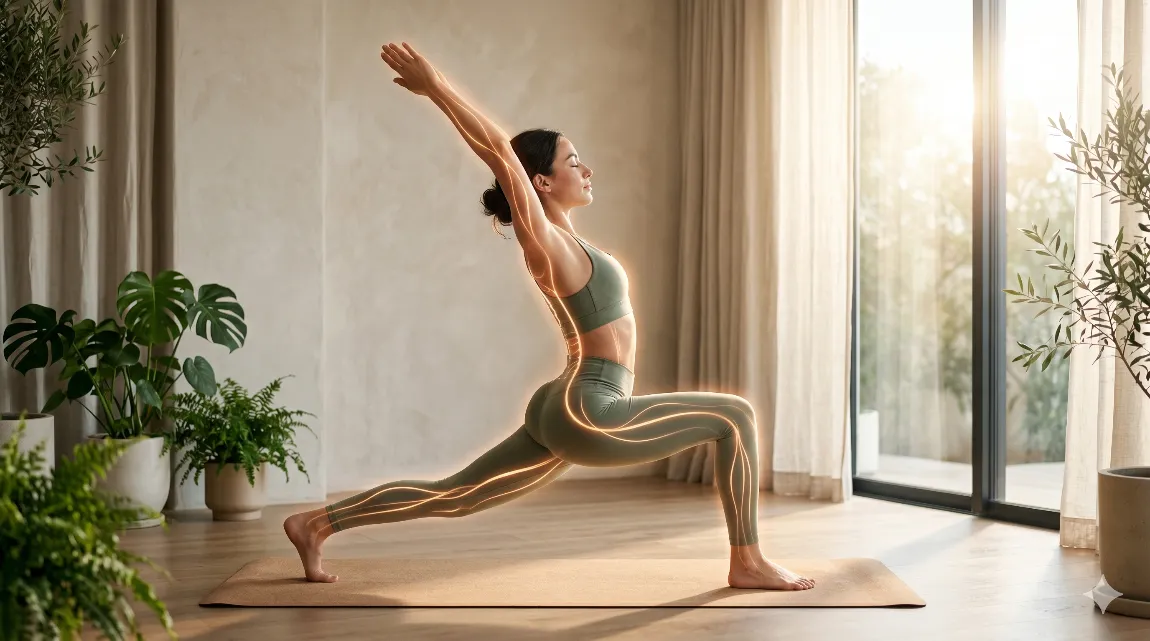
Introduction
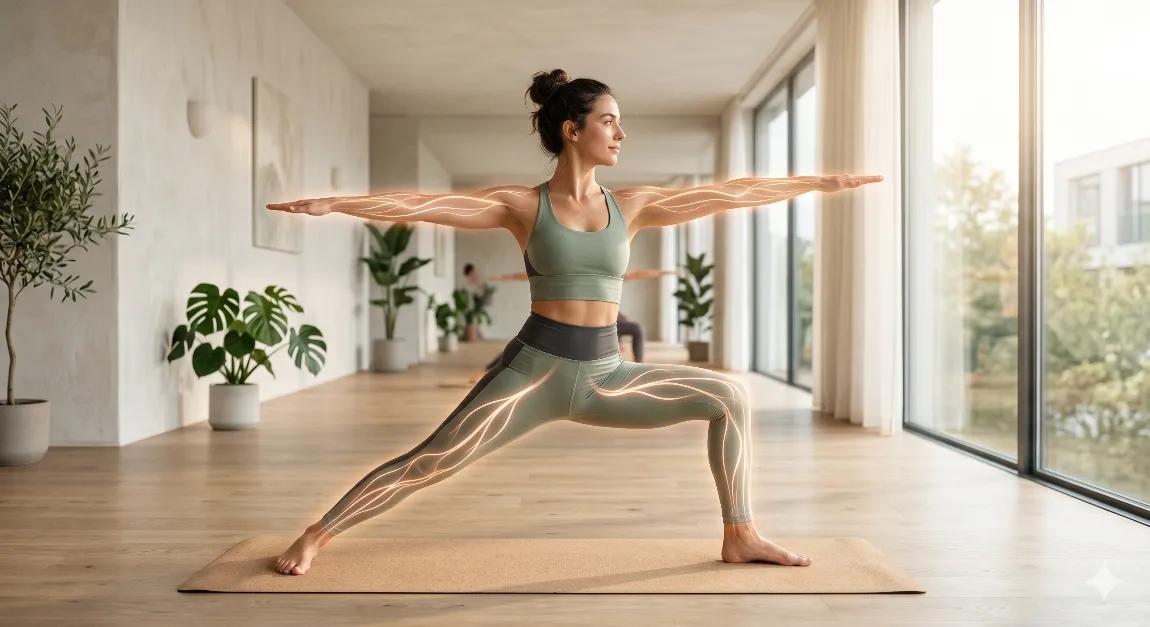
Your blood travels roughly 12,000 miles every single day — through arteries, capillaries, and veins — delivering oxygen, nutrients, and immune support to every cell in your body.
When that flow slows down, the effects are felt everywhere. Cold hands and feet. Brain fog. Fatigue. Swollen ankles. Yoga for improving blood circulation directly addresses this problem through movement, breath, posture, and consistency.
What Normal Blood Circulation Actually Looks Like
Healthy circulation means blood is moving efficiently through the entire cardiovascular network — delivering what cells need and removing what they don't. In a healthy circulatory system you'll notice warm, evenly toned skin, steady energy throughout the day, quick wound healing, clear thinking, and muscles that recover well after use.
Normal blood circulation isn't just about the heart. It depends on the health and elasticity of blood vessel walls, the viscosity of blood itself, the efficiency of the lymphatic system, and the muscle contractions that help push blood upward from the legs back toward the heart.
Signs Your Circulation Needs Attention
The body gives clear signals when blood flow is compromised. Signs of poor heart circulation and vascular flow include:
- Cold hands and feet even in warm environments
- Numbness or tingling in the extremities
- Swollen ankles or feet
- Persistent fatigue
- Slow wound healing
- Muscle cramps — particularly in the legs
- Skin discolouration
- Brain fog or difficulty concentrating
- Varicose veins
If you experience chest pain, sudden shortness of breath, or one-sided swelling, seek immediate medical attention.
How a Sedentary Lifestyle Slows Blood Flow
When you sit for long periods, the calf muscles — which act as a secondary pump — become inactive. Blood pools in the lower legs. Research shows that just one hour of uninterrupted sitting reduces arterial dilation in the legs by up to 50%.
Yoga offers full-body circulatory activation — reaching joints, muscles, and vascular beds that standard walking never touches.
The 7 Steps of Blood Flow Through the Body
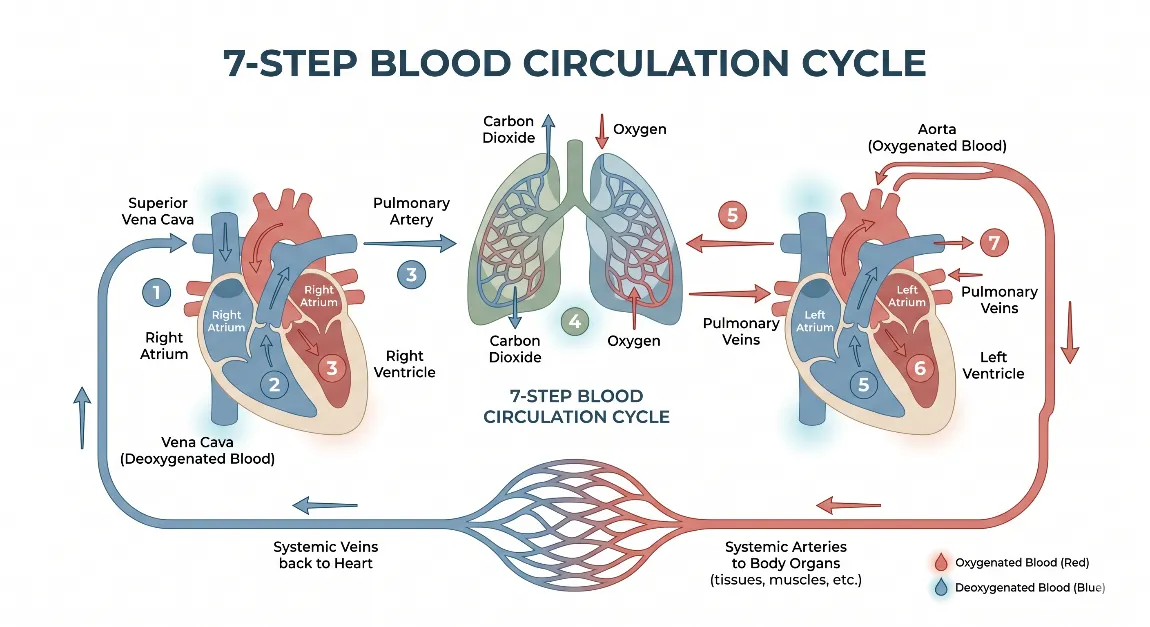
The 7 steps of blood flow follow this sequence:
- Deoxygenated blood from the body enters the right atrium via the superior and inferior vena cava
- It passes into the right ventricle, which pumps it to the lungs via the pulmonary artery
- In the lungs, carbon dioxide is exchanged for oxygen
- Oxygenated blood returns to the left atrium via the pulmonary veins
- It moves into the left ventricle
- The left ventricle pumps it out through the aorta into systemic circulation
- Blood returns via the venous system back to the right atrium
Yoga supports this cycle primarily by improving venous return through muscle activation, inversion, and diaphragmatic breathing.
How Yoga Improves Circulation and Venous Return
Muscle Pump Activation
Poses like Warrior I & II, Chair Pose, and standing sequences activate the muscle pump mechanism powerfully.
Inversion and Gravity Assistance
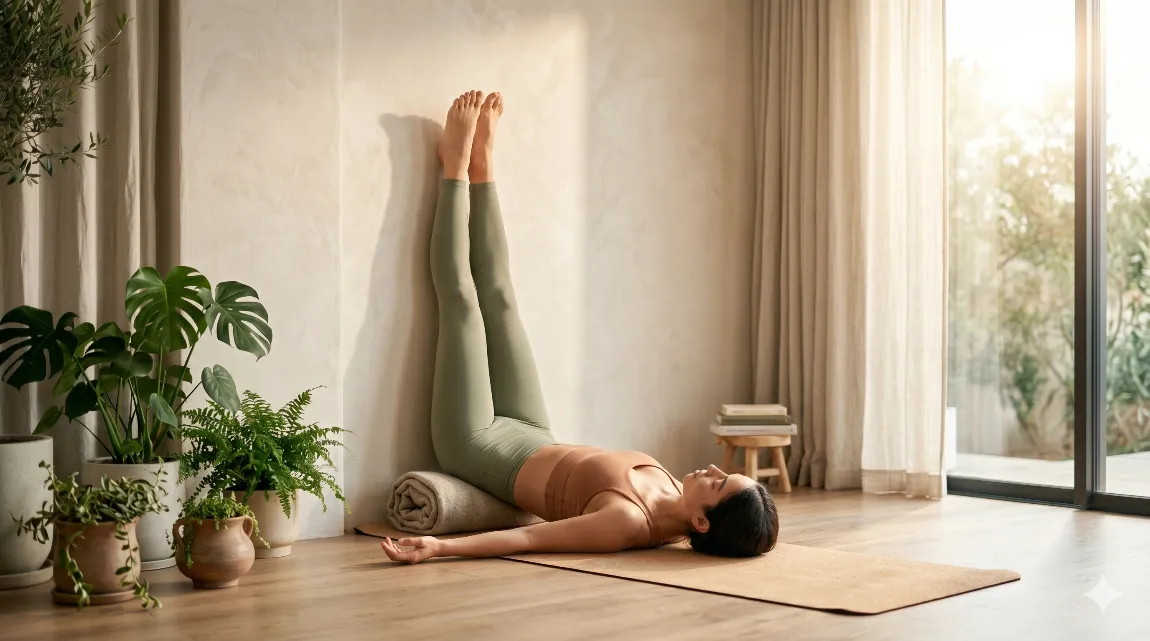
Viparita Karani (legs up the wall) is the most accessible and effective inversion for circulation.
Diaphragmatic Breathing and the Thoracic Pump
Deep breathing amplifies the thoracic pump with every breath.
Twists and Compression-Release
Spinal twists flush stagnant blood and draw fresh oxygenated flow in.
Best Positions, Mudras, and Movements for Blood Flow
Best Body Positions for Circulation
Legs elevated above heart level, lying flat, gentle movement, and seated cross-legged positions are highly supportive.
Mudras That Support Blood Circulation
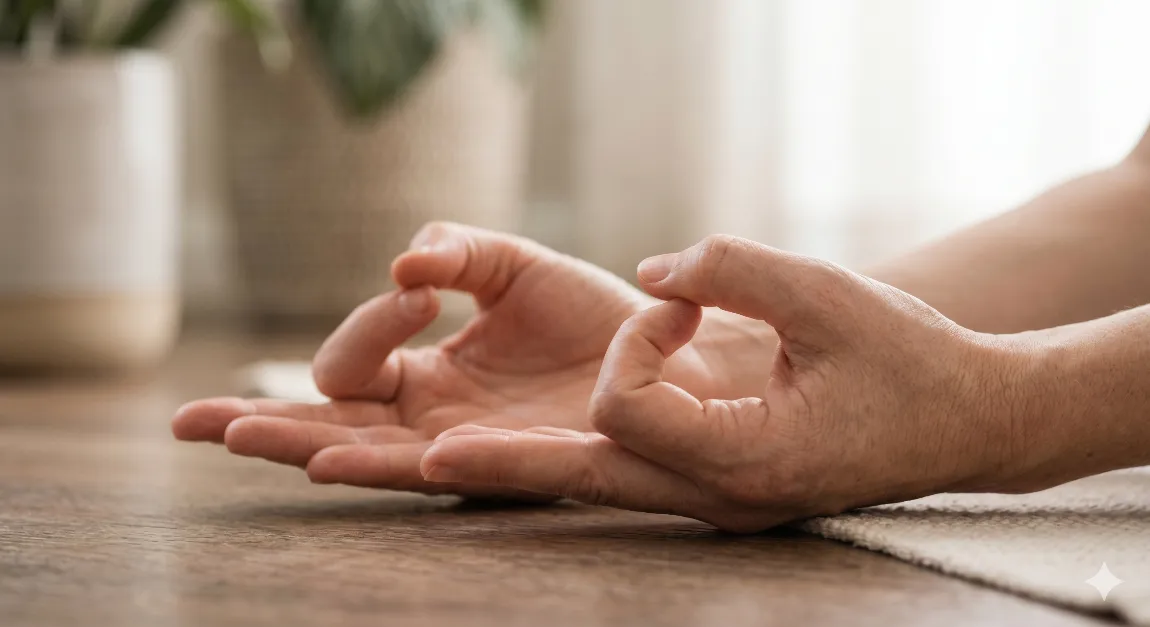
Apana Vayu Mudra (Heart Mudra), Prana Mudra, and Gyan Mudra are traditionally used to support circulation. Practise them during pranayama or meditation for 10–15 minutes daily.
Daily Habits That Support Healthy Circulation
The most impactful daily habits include walking after meals, staying hydrated, elevating legs, cold-warm contrast showers, and reducing sodium intake.
Best drinks: beetroot juice, pomegranate juice, green tea, and plenty of plain water.
Conclusion
Yoga for improving blood circulation is one of the most effective natural methods available. By combining movement, inversions, breathwork, and daily habits, you can significantly enhance blood flow, reduce discomfort, and support long-term vascular health.
FAQs
-
What are the 7 steps of blood flow?
Blood flow follows this sequence: deoxygenated blood enters the right atrium → moves to the right ventricle → is pumped to the lungs via the pulmonary artery → picks up oxygen in the lungs → returns to the left atrium via pulmonary veins → moves to the left ventricle → is pumped through the aorta into systemic circulation, delivering oxygen before returning via the venous system. Yoga supports this cycle primarily by improving venous return — step 7 — through muscle activation, inversion, and diaphragmatic breathing.
-
How do you fix poor circulation?
Poor circulation responds well to consistent movement — yoga, walking, and swimming are particularly effective. Elevating the legs daily, staying well hydrated, reducing sedentary time, managing blood pressure, and addressing any underlying conditions (diabetes, thyroid issues) are all important. For persistent or severe symptoms, always consult a doctor to rule out vascular disease, deep vein thrombosis, or cardiac causes.
-
What is the best drink for blood circulation?
Beetroot juice is the most researched — dietary nitrates convert to nitric oxide in the body, which dilates blood vessels and improves flow. Pomegranate juice, green tea, and ginger tea also support vascular function through different antioxidant mechanisms. Plain water remains the most essential — dehydration thickens blood and strains the entire circulatory system.
-
Which mudras improve blood circulation?
Apana Vayu Mudra (Heart Mudra) is the most widely used for cardiac and circulatory support in yoga tradition. Prana Mudra supports vital energy and overall circulation. These are best practised during pranayama or meditation, held for 10–15 minutes. While scientific research on mudras specifically is limited, their use within a broader yoga practice supports the nervous system regulation that underpins healthy vascular function.
-
Which exercises increase blood circulation?
Walking, swimming, cycling, and yoga are the most consistently effective for improving circulation — particularly venous return. Yoga is unique in combining muscle pump activation, inversion, diaphragmatic breathing, and spinal twisting into a single session. For those with circulatory issues, yoga and gentle walking are generally the safest starting points before progressing to more intense exercise.
-
Which position is best for blood circulation?
Legs elevated above heart level — as in Viparita Karani (legs up the wall) — is the single most effective resting position for improving venous return and reducing lower limb swelling. Lying flat also removes gravitational resistance. Avoid prolonged sitting with legs bent at 90 degrees, which compresses the vessels behind the knee and restricts lower leg blood flow.