

Introduction

Mood swings. Irregular periods. Unexplained weight changes. Persistent fatigue. Adult acne. Sleep disruption. These are not random problems — they are your hormones speaking.
Hormonal imbalance affects mood, energy, reproductive health, metabolism, and overall well-being. While no single practice can fix everything overnight, consistent yoga offers powerful, natural support for your endocrine system by reducing stress, improving circulation to glands, and promoting nervous system balance.
Understanding Hormonal Disruption Patterns in Women
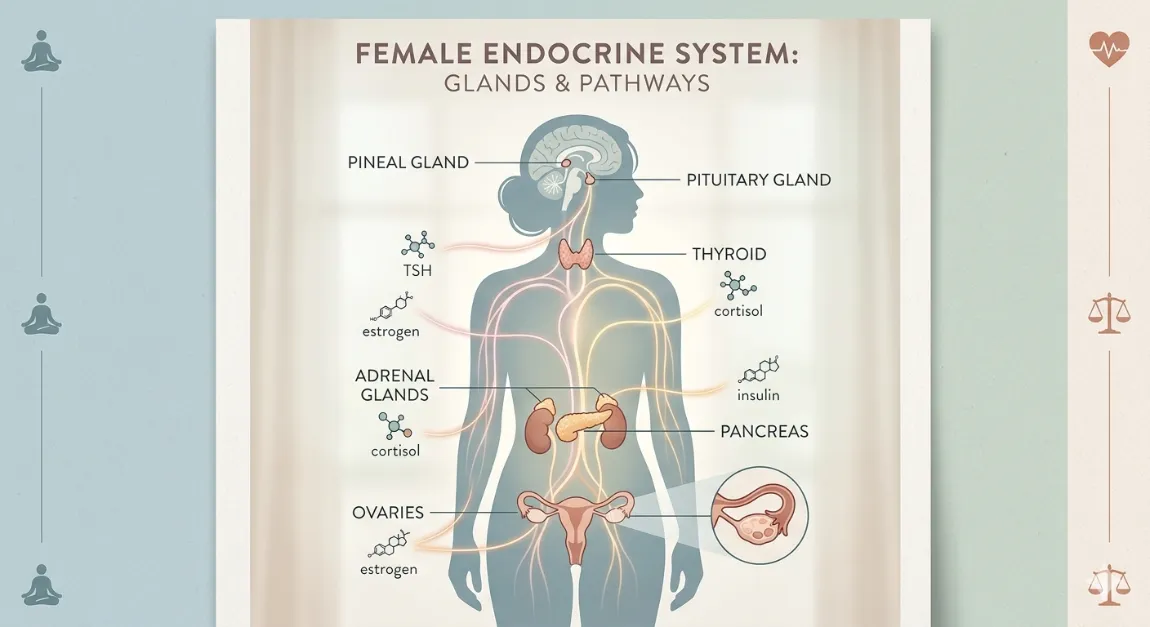
Your endocrine system includes the thyroid, adrenals, ovaries, pituitary, pineal, and pancreas. When balanced, you enjoy stable energy, regular cycles, steady mood, and predictable weight. When disrupted, symptoms cascade across the body.
Common patterns include thyroid dysfunction, adrenal dysregulation (high cortisol), estrogen/progesterone imbalance, and insulin resistance. Most women experience multiple imbalances at once.
Supporting Your Endocrine System Through Yoga

Yoga supports hormonal balance by reducing cortisol, stimulating hormone-producing glands, improving circulation, and enhancing sleep quality. Key mechanisms include nervous system regulation and direct stimulation of glands through specific poses.
Effective poses include Bridge Pose (thyroid), Butterfly Pose (ovaries), Cobra Pose (adrenals), and Cat-Cow (pancreas and adrenals).
Stress Reduction and Hormone Regulation — The Core Connection

Chronic stress is the biggest driver of hormonal disruption. It dysregulates the HPA axis, keeping cortisol elevated and suppressing reproductive and thyroid hormones. Yoga activates the parasympathetic nervous system, lowers cortisol, and helps restore balance to the entire endocrine system.
Consistency Over Intensity — Why Regularity Matters Most
Gentle, consistent practice is far more effective than intense sessions for hormonal health. Best styles include Restorative Yoga, Yin Yoga, Gentle Hatha, Pranayama, and Yoga Nidra. Avoid daily hot yoga or excessive high-intensity workouts, which can further elevate cortisol and stress the adrenals.
Lifestyle Factors Quietly Affecting Your Hormones
Even the best yoga practice needs support from daily habits: 7–9 hours of quality sleep, stable blood sugar through regular balanced meals, moderate movement, minimising endocrine disruptors, and addressing emotional stress. Yoga works best as part of a holistic approach.
Conclusion
Your hormones are always communicating. Yoga offers a gentle, effective way to listen and respond by calming the nervous system, supporting your glands, and creating conditions for natural balance. Practise consistently, honour your body’s signals, and combine yoga with supportive lifestyle habits and medical care when necessary.
FAQs
-
Which yoga is good for hormonal imbalance?
Gentle, restorative, and breath-focused yoga styles are most effective for hormonal balance. Restorative yoga, yin yoga, gentle hatha, pranayama, and Yoga Nidra calm the nervous system, reduce cortisol, and support endocrine function without overstressing already sensitive hormone systems. Key poses include Bridge Pose, Butterfly Pose, Cobra Pose, Cat-Cow, Legs-Up-the-Wall, and Shoulder Stand (for those without contraindications). Avoid or limit: hot yoga, excessive inversions, and high-intensity vinyasa — these can worsen cortisol elevation and hormonal dysregulation.
-
Can I fix hormonal imbalance naturally?
You can support and improve hormonal balance naturally through consistent lifestyle changes — but "fix" depends on the root cause. Functional hormonal imbalances driven by stress, poor sleep, blood sugar dysregulation, and sedentary habits often improve significantly with yoga, nutrition, sleep optimisation, and stress management. Structural issues — thyroid nodules, PCOS cysts, pituitary tumors — require medical diagnosis and treatment, with yoga as valuable complementary support. Natural approaches work best when combined with medical guidance, not as replacements for necessary treatment.
-
How do I balance my hormones naturally?
Balancing hormones naturally requires a multi-faceted approach addressing stress, movement, nutrition, sleep, and lifestyle simultaneously. Practice gentle yoga 3–5 times weekly focusing on restorative poses and breathwork. Prioritise 7–9 hours of quality sleep nightly. Eat balanced meals with adequate protein, healthy fats, and fiber every 3–4 hours. Manage chronic stress through yoga, meditation, therapy, or community support. Minimise endocrine disruptors in plastics and personal care products. Most women notice initial improvements in energy and mood within 4–6 weeks of consistent practice. Hormonal markers typically improve over 8–12 weeks.
-
How to balance all female hormones?
There is no single intervention that "balances all hormones" because the endocrine system is interconnected — when one hormone shifts, others respond. The most effective approach addresses the central drivers: reduce chronic stress (which dysregulates cortisol, then everything else), stabilise blood sugar (which affects insulin, cortisol, and reproductive hormones), prioritise sleep (which regulates melatonin, cortisol, growth hormone, and reproductive hormones), and move consistently but gently (which supports circulation to endocrine glands without over-stressing them). Yoga is particularly effective because it addresses multiple drivers simultaneously — stress reduction, improved circulation, better sleep, and endocrine gland stimulation.
-
Can yoga increase estrogen?
Yoga does not directly increase estrogen production. However, by reducing cortisol, improving sleep, supporting healthy weight, and optimising endocrine function overall, yoga creates the internal conditions that allow estrogen levels to normalise naturally. In women with low estrogen due to chronic stress or hypothalamic amenorrhea, reducing stress through yoga can help restore the hormonal environment needed for healthy estrogen production. In women with estrogen dominance, yoga supports liver function, stress reduction, and healthy metabolism — all of which help the body clear excess estrogen more effectively.
-
How do I reset my hormone balance?
There is no "reset button" for hormones — but there are effective protocols for restoring function over time. Commit to 8–12 weeks of consistent practice including daily gentle yoga (15–30 minutes), 7–9 hours of quality sleep nightly, balanced nutrition with regular meal timing, stress management through breathwork or meditation, and minimising inflammatory foods and endocrine disruptors. Track symptoms weekly — energy, mood, cycle regularity, sleep quality, skin changes. Most women notice meaningful improvements by week 6–8, with hormonal blood markers showing change by week 10–12.
-
What is the 14 day hormone reset?
The "14 day hormone reset" is a popular wellness trend claiming rapid hormonal rebalancing through specific dietary and lifestyle protocols. The reality? Hormones do not reset in 14 days. Cortisol patterns can shift within days of consistent stress management. But thyroid function, reproductive hormone cycles, and insulin sensitivity require 6–12 weeks of consistent change to improve meaningfully. Short-term protocols can jumpstart healthy habits and provide initial symptom relief — but sustainable hormonal balance requires long-term consistent lifestyle change, not quick fixes.
-
How do I check my hormonal balance?
Hormonal balance is assessed through a combination of symptom tracking and blood testing. Common blood tests include: TSH, free T3, free T4 (thyroid function), fasting insulin and glucose (blood sugar regulation), cortisol (stress hormone), estradiol, progesterone, LH, FSH (reproductive hormones), testosterone (androgen levels), DHEA-S (adrenal function). Timing matters — reproductive hormones should be tested on specific cycle days for accuracy.