
Understanding Trimester-Based Yoga Practice
Each trimester brings distinct physical and hormonal changes that demand different yoga approaches. Your pregnancy divides into three roughly 13-week periods. Each phase presents unique challenges, opportunities, and safety considerations that shape your practice fundamentally.
You might be wondering why one yoga approach doesn't work throughout pregnancy. The answer lies in your body's dramatic transformation. What feels safe and beneficial at 8 weeks might become uncomfortable or risky at 28 weeks. Your practice must evolve as intentionally as your baby grows.
First trimester fatigue differs completely from third trimester heaviness. Early pregnancy brings invisible changes—hormone floods, embryo implantation, and organ system formation. Later pregnancy brings visible expansion, postural shifts, and preparation for birth.
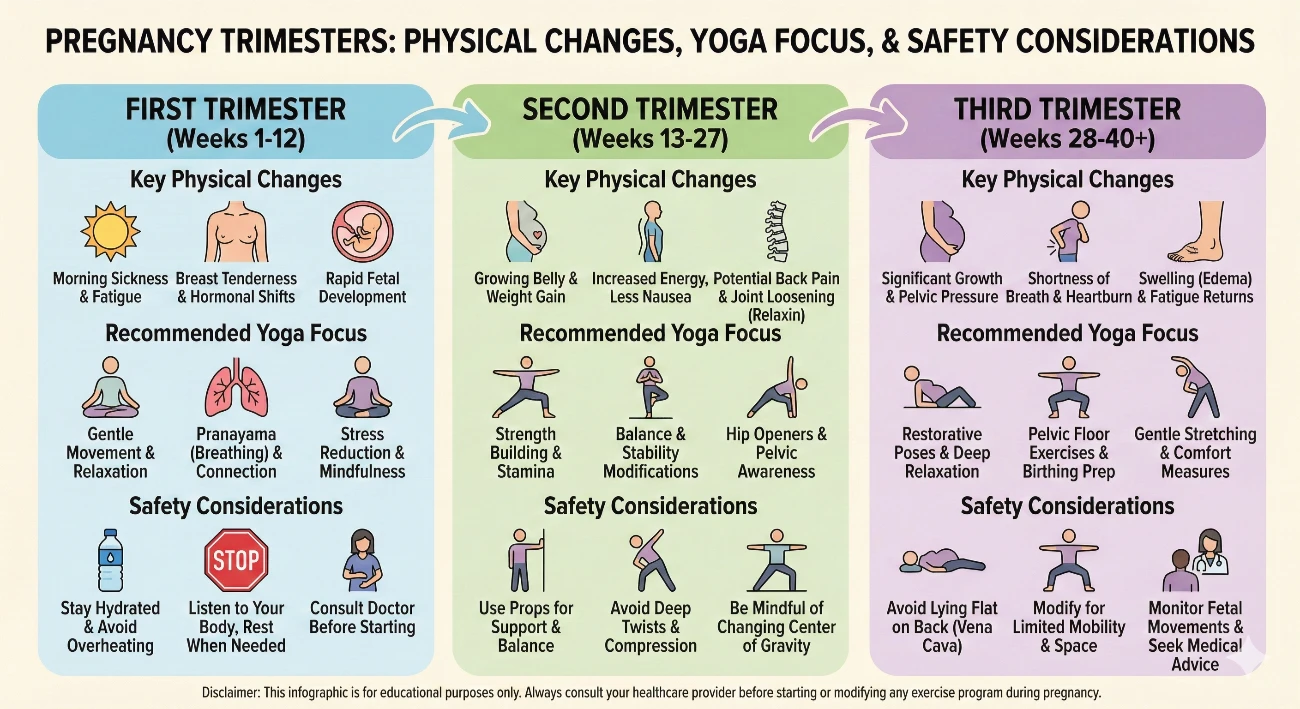
Trimester-based practice isn't about restrictions. It's about intelligent adaptation that maximizes benefits while honoring your body's changing needs. Ancient Ayurvedic texts recognize pregnancy as requiring unique care during different phases; the Garbha Upanishad describes how the developing child passes through distinct stages requiring different maternal support.
Research in the International Journal of Yoga demonstrates that trimester-appropriate yoga reduces pregnancy complications by 35% compared to general prenatal exercise. Specificity matters.
First Trimester: Stability, Fatigue, and Sensitivity (Weeks 1-13)
The first trimester is your body's silent revolution. While your belly barely shows, internal changes happen at lightning speed. Progesterone surges to support the developing embryo, which can make you exhausted, slightly nauseous, and emotionally sensitive.
You might be wondering if yoga is even safe this early. Absolutely—but with crucial modifications starting immediately. Many women don't realize that pregnancy yoga begins the moment they see that positive test.
First trimester practice emphasizes:
- Gentle movement over intensity: Set aside power flows. You're building a human nervous system, which takes enormous energy.
- Grounding and stability: Standing poses with wall support help you feel centered during hormonal chaos.
- Breath awareness without retention: Develop breathing patterns for labor, but skip breath-holding—your baby needs constant oxygen.

Avoid deep twists and intense core work (boat pose, full planks) immediately. Temperature control is also critical; overheating during these early weeks can affect neural tube development. Practice in cool environments and stay hydrated.
First Trimester Snapshot:
| Safe Poses | Poses to Avoid |
|---|---|
| Supported warrior variations, Cat-cow, Child's pose (knees wide) | Deep twists, Full planks, Hot yoga, Deep backbends |
Second Trimester: Balance, Strength, and Posture (Weeks 14-27)
Welcome to the "golden trimester"—energy returns and your belly becomes beautifully obvious. This is the ideal time for establishing a consistent practice rhythm. However, your shifted center of gravity makes unsupported balance poses genuinely risky.
Second trimester priorities:
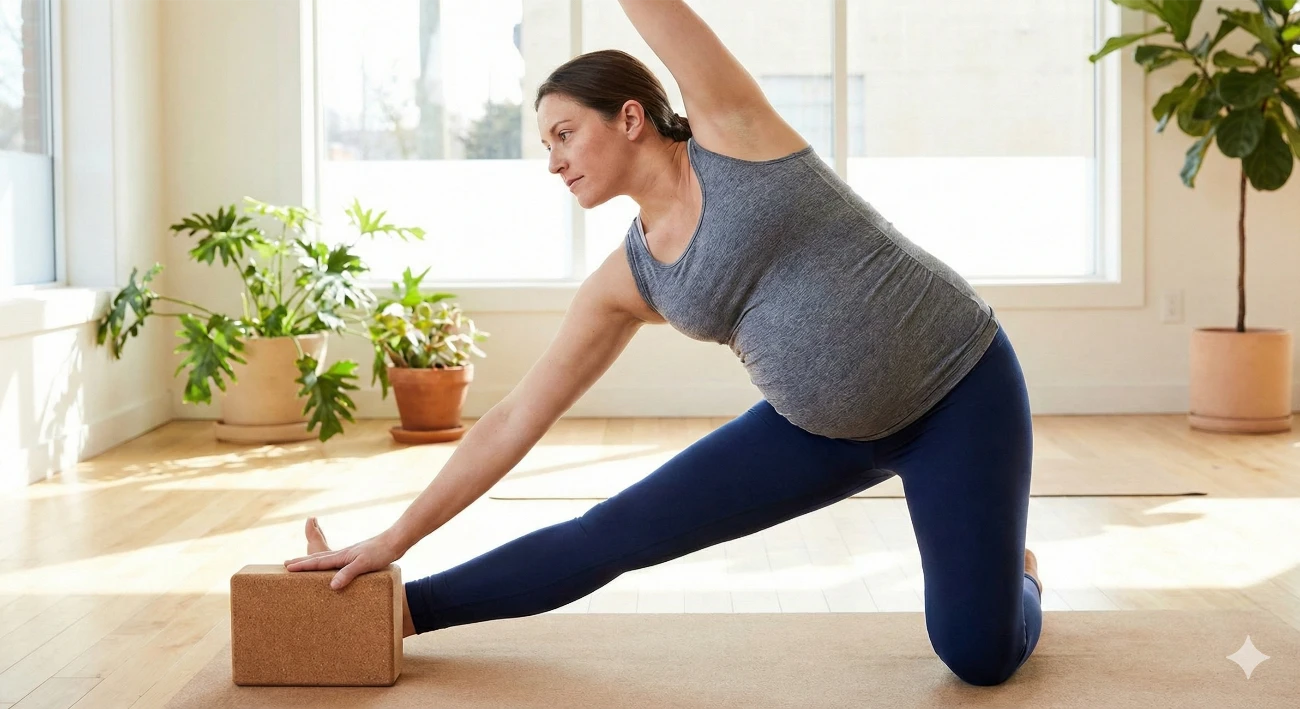
- Strengthening without straining: Build leg and back strength to support your growing weight.
- Lateral movements: Side stretches give your baby room to grow and your lungs space to breathe.
- Pelvic floor awareness: Learning to release and relax muscles in preparation for birth.
Important: Back-lying positions should phase out between 16-20 weeks to avoid vena cava compression. Switch to side-lying variations, specifically on the left side to optimize blood flow to the placenta.
According to research in the Maternal and Child Health Journal, regular yoga during the second trimester can lead to 40% less lower back pain. Use props like blocks and bolsters as essential partners now.
Third Trimester: Comfort, Mobility, and Relaxation (Weeks 28-40)
The final stretch brings maximum physical challenge. Your practice now shifts focus toward comfort, mobility, and mental preparation for birth rather than fitness.

Shortness of breath is common as the baby pushes against the diaphragm. Every pose must allow for full, comfortable breathing. Pelvic rocking movements and supported squats help relieve back pressure and encourage optimal baby positioning.
Third Trimester Snapshot:
- Beneficial: Supported child’s pose, Side-lying poses, Pelvic rocks, Supported squats.
- Avoid: Any belly compression, Lying flat on back, Quick transitions.
As noted by midwife Ina May Gaskin, women who maintain yoga through late pregnancy often feel more confident and empowered during labor. These sessions might shorten to 15–20 minutes, and that is perfectly okay.
How Practice Intensity Changes Across Pregnancy
Intensity must decrease as pregnancy progresses—this isn't weakness, it's wisdom. While the second trimester allows for the highest intensity, you should always stay within the "talk test" limit: if you can't maintain a conversation, you're working too hard.
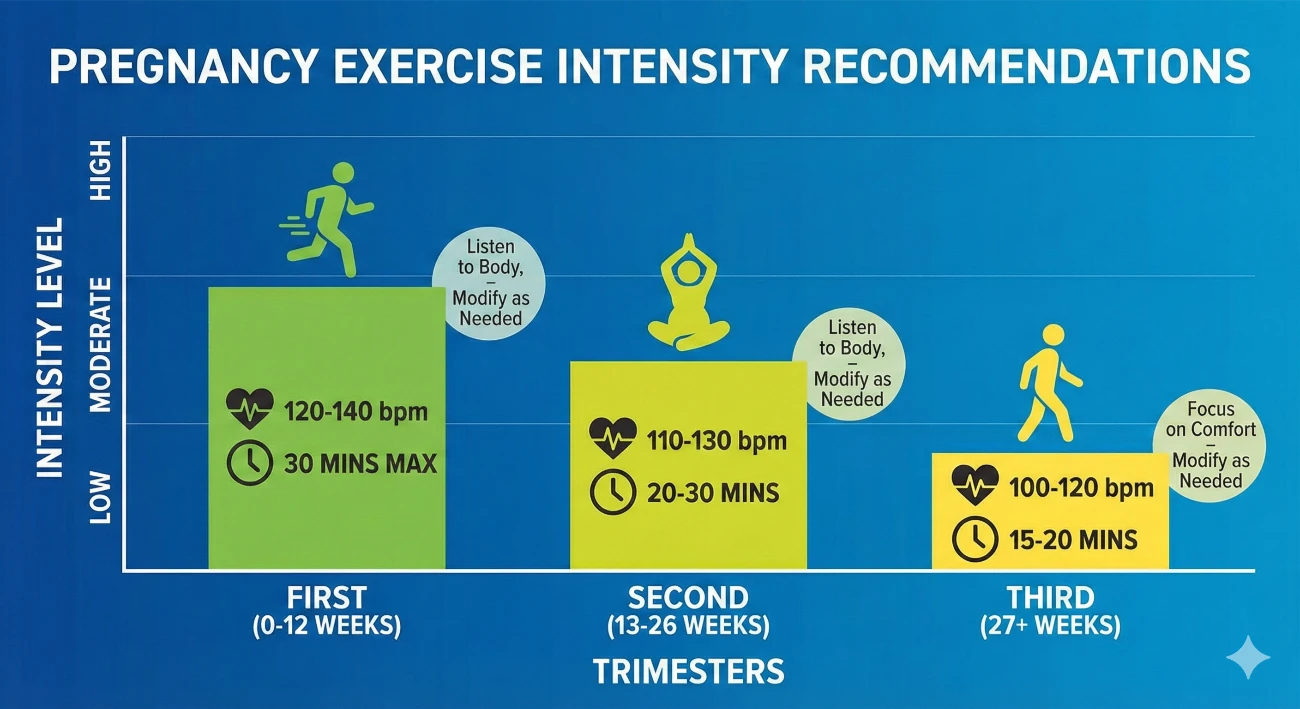
Aim for a heart rate between 60-70% of your maximum (roughly 120-140 bpm). Perceived exertion is your most important guide—your body’s feedback overrides any general rule.
Common Mistakes Across All Trimesters
The biggest mistake is comparing your pregnant practice to your pre-pregnancy capabilities. Here are other pitfalls to watch for:
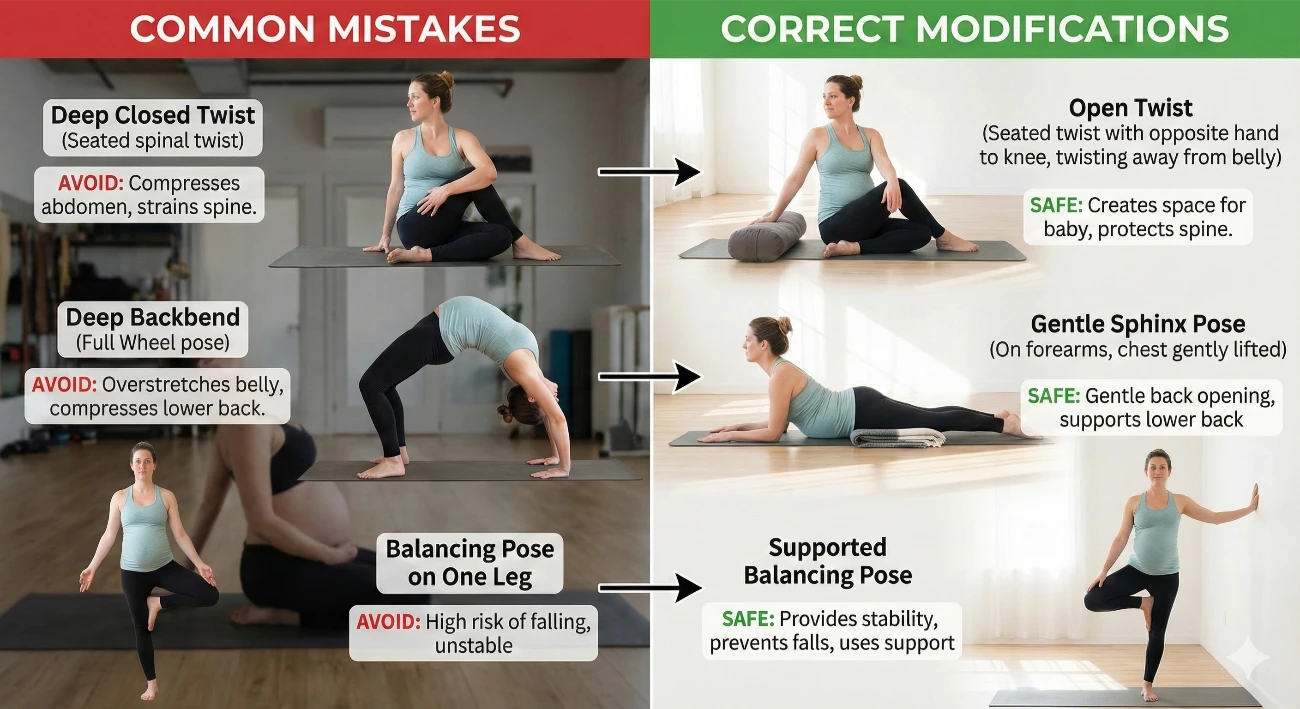
- Holding poses too long: Avoid static holds beyond 5-6 breaths.
- Overstretching: Relaxin makes joints feel flexible, but pushing too deep creates instability.
- Ignoring warning signals: Never push through pain, dizziness, or unusual cramping.
- Inadequate hydration: Dehydration affects amniotic fluid levels and body temperature.
Conclusion: Honoring Your Trimester Journey
Your pregnancy yoga journey is a trimester-by-trimester unfolding of adaptation. From honoring invisible changes in the first trimester to building strength in the second and finding comfort in the third, this progression is an intelligent evolution.
Trust your body's wisdom, respect its signals, and adapt continuously. These months of mindful practice create a foundation of breath, focus, and strength that will serve you through labor and into motherhood.
FAQs
-
When should I start pregnancy yoga?
Start as soon as you confirm pregnancy. The modifications you need begin immediately, even before physical changes appear. Early start establishes good habits and teaches you to honor your body's signals from the beginning.
-
How early can I start pregnancy yoga?
You can begin the day you see that positive test. First trimester modifications protect your developing baby even when your belly hasn't grown. If you practiced yoga before pregnancy, you'll transition to prenatal modifications immediately. If you're new to yoga, pregnancy is a wonderful time to begin with proper prenatal instruction.
-
Which month should I start yoga in pregnancy?
The first month—as early as possible. Many women wait until the second trimester thinking first trimester is too delicate, but appropriate prenatal yoga is safe and beneficial from conception. The earlier you start, the more you benefit from consistent practice throughout pregnancy.
-
Can I do yoga in the 1st trimester?
Absolutely, with important modifications. Avoid deep twists, intense core work, overheating, and back-lying after week 16. Focus on gentle movement, breath awareness, and honoring fatigue. First trimester yoga emphasizes stability and rest rather than challenge. Listen to your body absolutely—some days require rest rather than practice.
-
Can I do downward dog in the first trimester?
Modified downward dog can work in early first trimester if you practiced it before pregnancy. However, many women find inversions uncomfortable even early on. Use blocks under your hands to reduce the angle, keep the position brief, and exit immediately if you feel lightheaded. Most prenatal instructors recommend transitioning away from downward dog as your primary resting pose.
-
What not to do at 7 weeks pregnant?
Avoid deep twisting, intense abdominal work, hot yoga, breath retention, back-lying for extended periods, and pushing through fatigue. Skip jumping transitions and full inversions. Listen to nausea signals—if a pose triggers queasiness, exit immediately. Rest generously—your body is building your baby's vital organs and this requires enormous energy.