
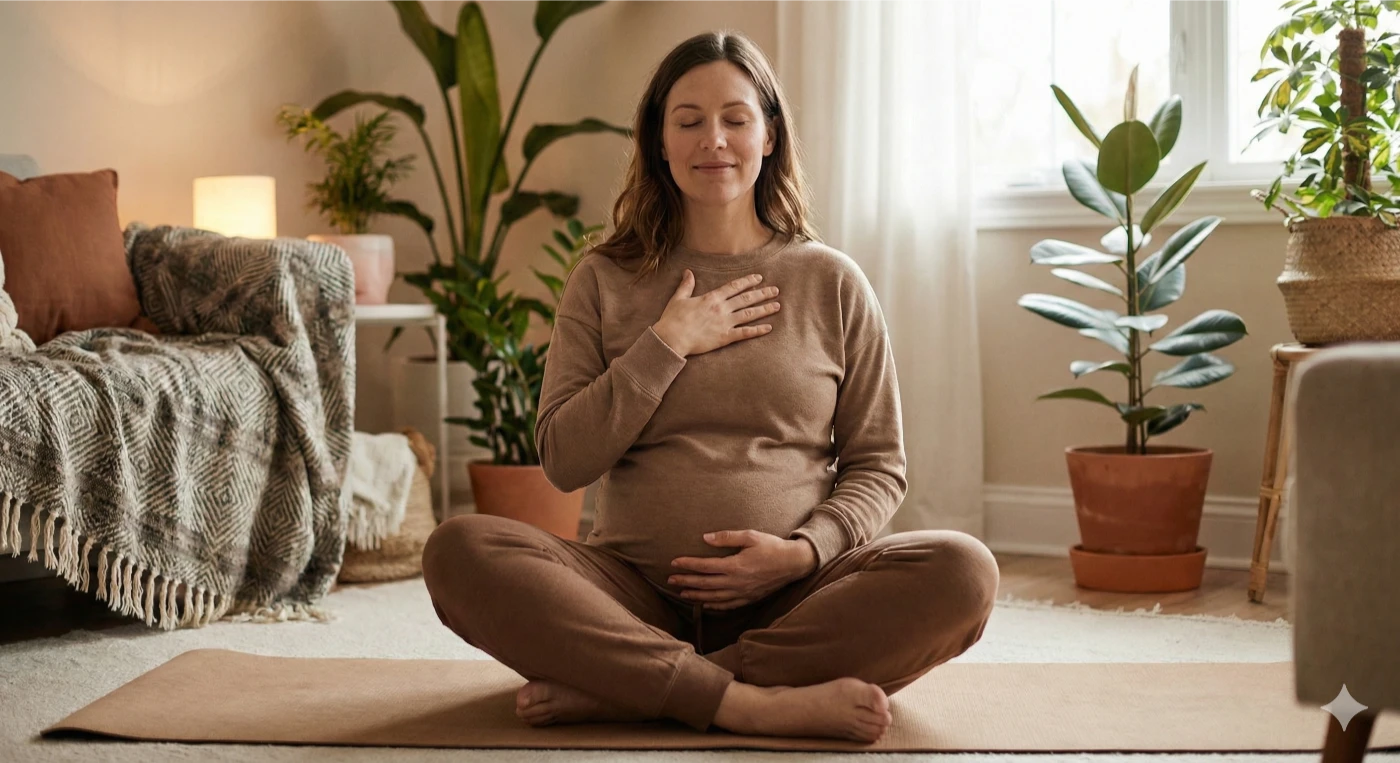
What Happens to Your Body During Pregnancy
Growing a human being transforms your body in remarkable ways. Your hormones shift dramatically from the moment of conception. Relaxin floods your system, loosening ligaments and joints to prepare your pelvis for birth. Progesterone rises sharply, making you feel exhausted during early months.
These changes don't happen uniformly. Your center of gravity shifts forward as your belly grows. Your spine curves more prominently in the lower back, creating strain you've never felt before.
Blood volume increases by nearly 50% during pregnancy. Your heart works harder, pumping more blood to nourish your growing baby. Your respiratory system adapts too; the growing uterus pushes your diaphragm upward, reducing lung capacity by about 20%.
How Prenatal Yoga Is Different From Regular Yoga
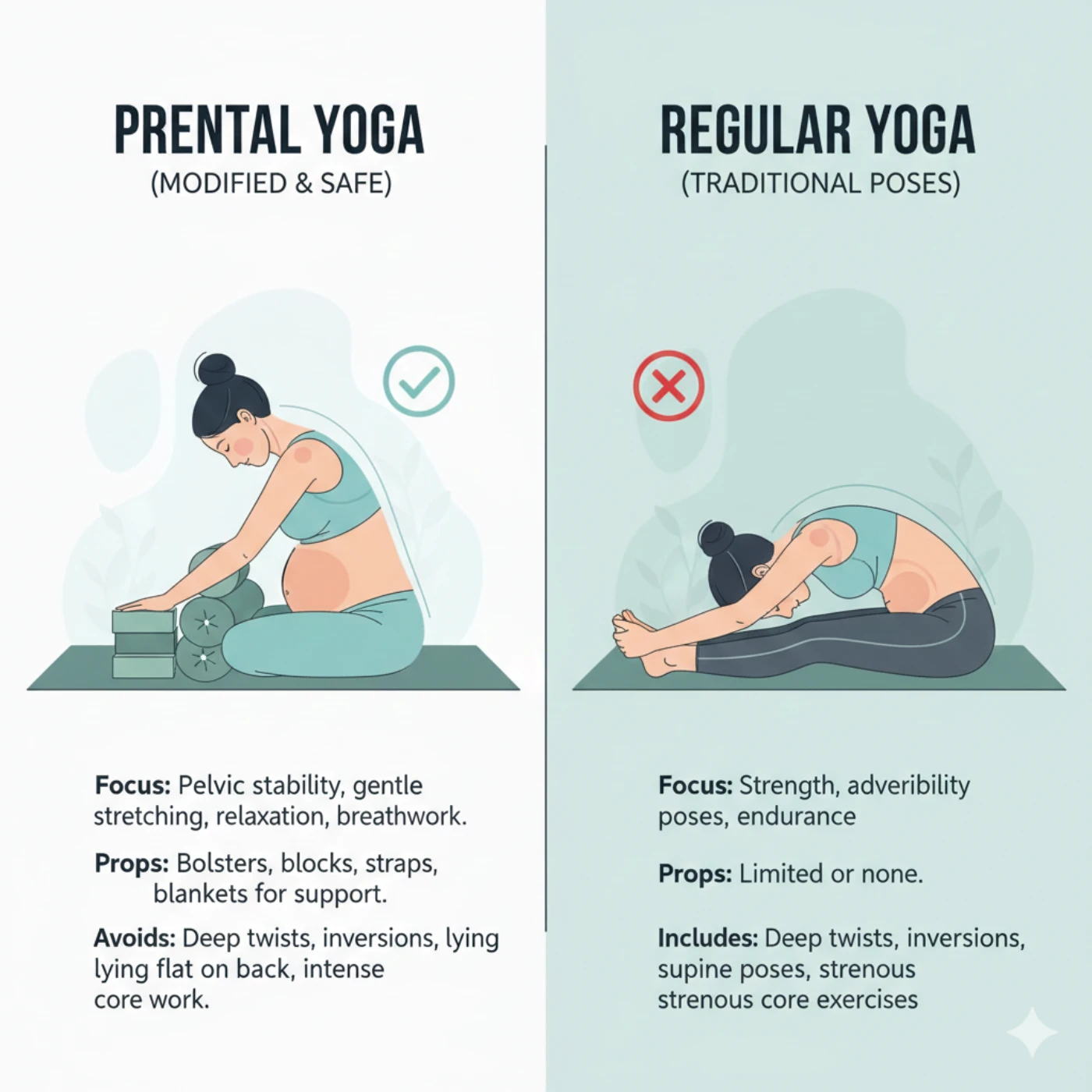
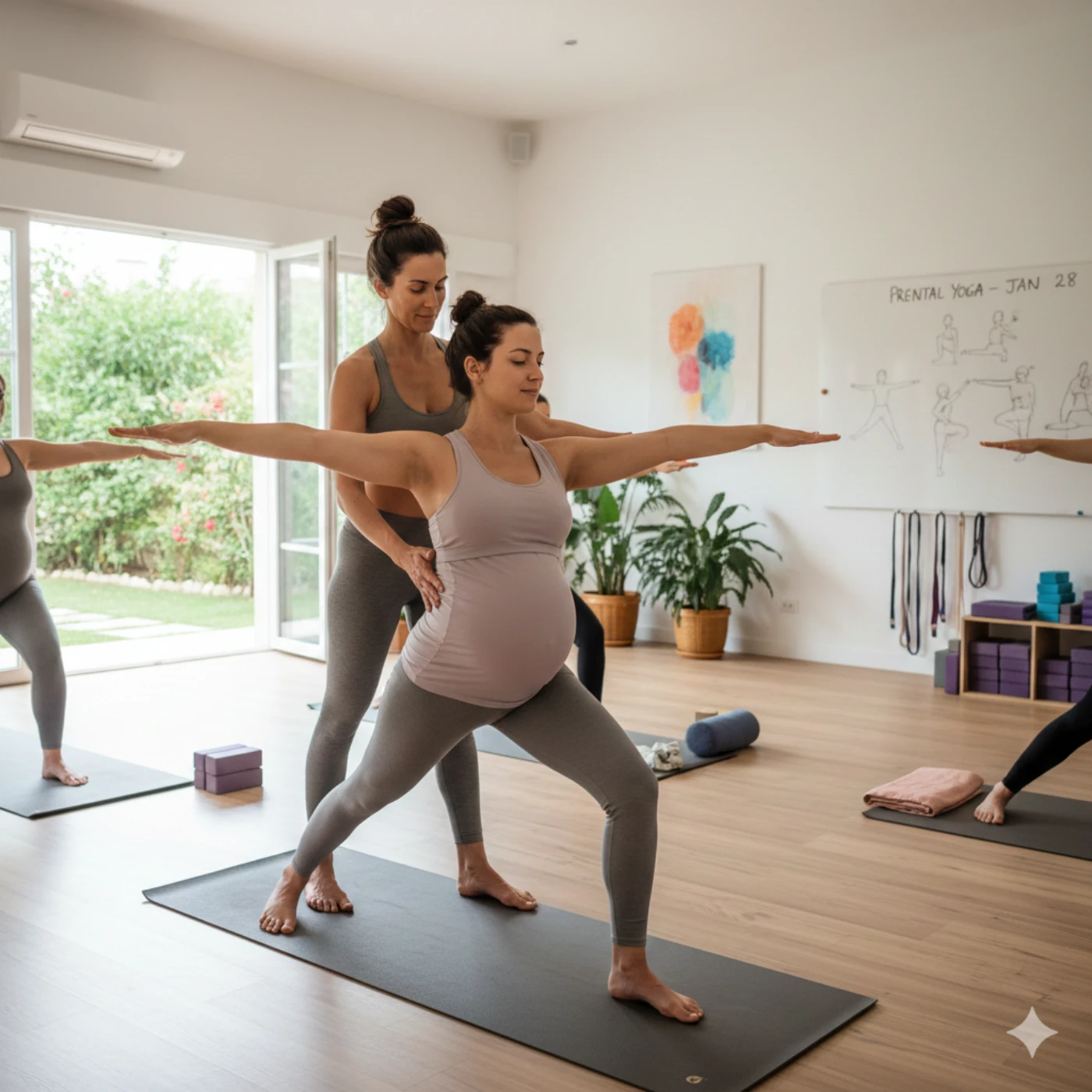
Prenatal yoga isn't just regular yoga made easier; it's a completely redesigned practice. While traditional classes might push you toward your edge, pregnancy yoga pulls you back to center.
Key Differences:
- Breathing as Foundation: Poses serve the breathwork, not the other way around.
- Prop-Supported Balance: Shifted gravity means wall support is essential for safety.
- Modified Core Work: No crunches or deep twists to protect against diastasis recti.
- Space Creation: Prioritizes making room for the baby over building intense muscular strength.
Temperature awareness becomes crucial. Overheating poses real risks to fetal development. Pregnancy yoga happens in moderate temperatures with frequent water breaks.
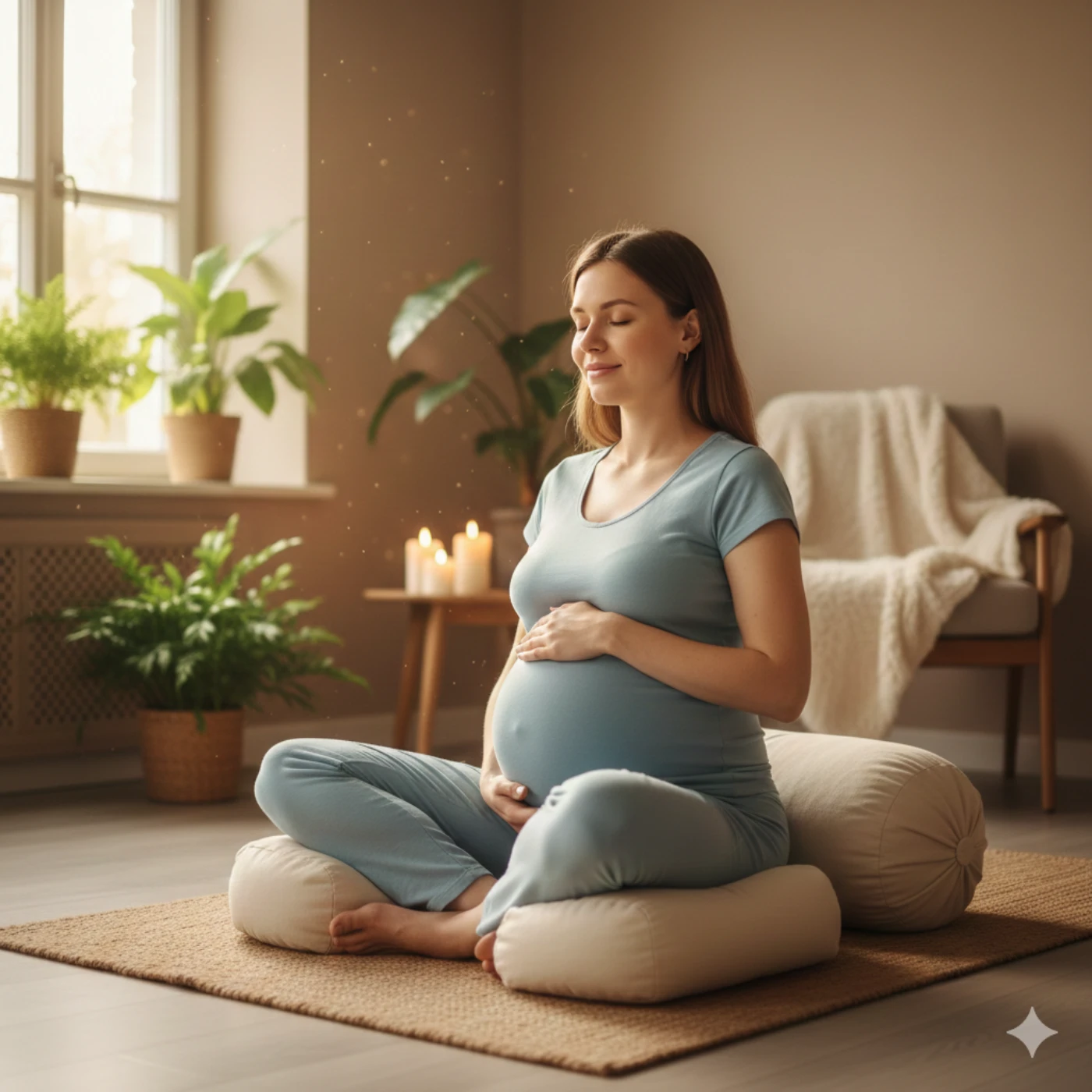
Benefits of Yoga for Mother and Baby
The benefits extend far beyond flexibility. Studies in BMC Pregnancy and Childbirth show that practitioners experience 30% less anxiety. Physical discomfort like lower back pain responds remarkably well to targeted, gentle poses.
Holistic Benefits:
- Better Sleep: Training the nervous system to downshift helps combat insomnia.
- Stronger Pelvic Floor: Prepares the body for birth and speeds postpartum recovery.
- Improved Digestion: Gentle movement massages organs to relieve constipation.
- Placental Health: Improved circulation ensures better oxygen delivery to the baby.

Joining pregnancy yoga classes also builds a community of expecting mothers, creating support networks that last beyond childbirth.
General Safety Principles for Pregnancy Yoga
Safety is the primary consideration. Avoid lying flat on your back after 16-20 weeks, as the uterus can compress the vena cava, reducing blood flow.
- The Talk Test: If you can't maintain a conversation, you're working too hard.
- Avoid Heat: Never practice in studios where temperature exceeds 102°F (39°C).
- Modify Folds: Widen your stance to create space for your belly.
- No Jumping: Jarring movements strain the pelvic floor unnecessarily.

The Power of Breath, Awareness, and Rest
Your pranayama shifts from energizing to calming. Ujjayi breath serves you beautifully, preparing you for labor breathing patterns. However, always skip breath retention (holding your breath), as it reduces oxygen supply to the baby.
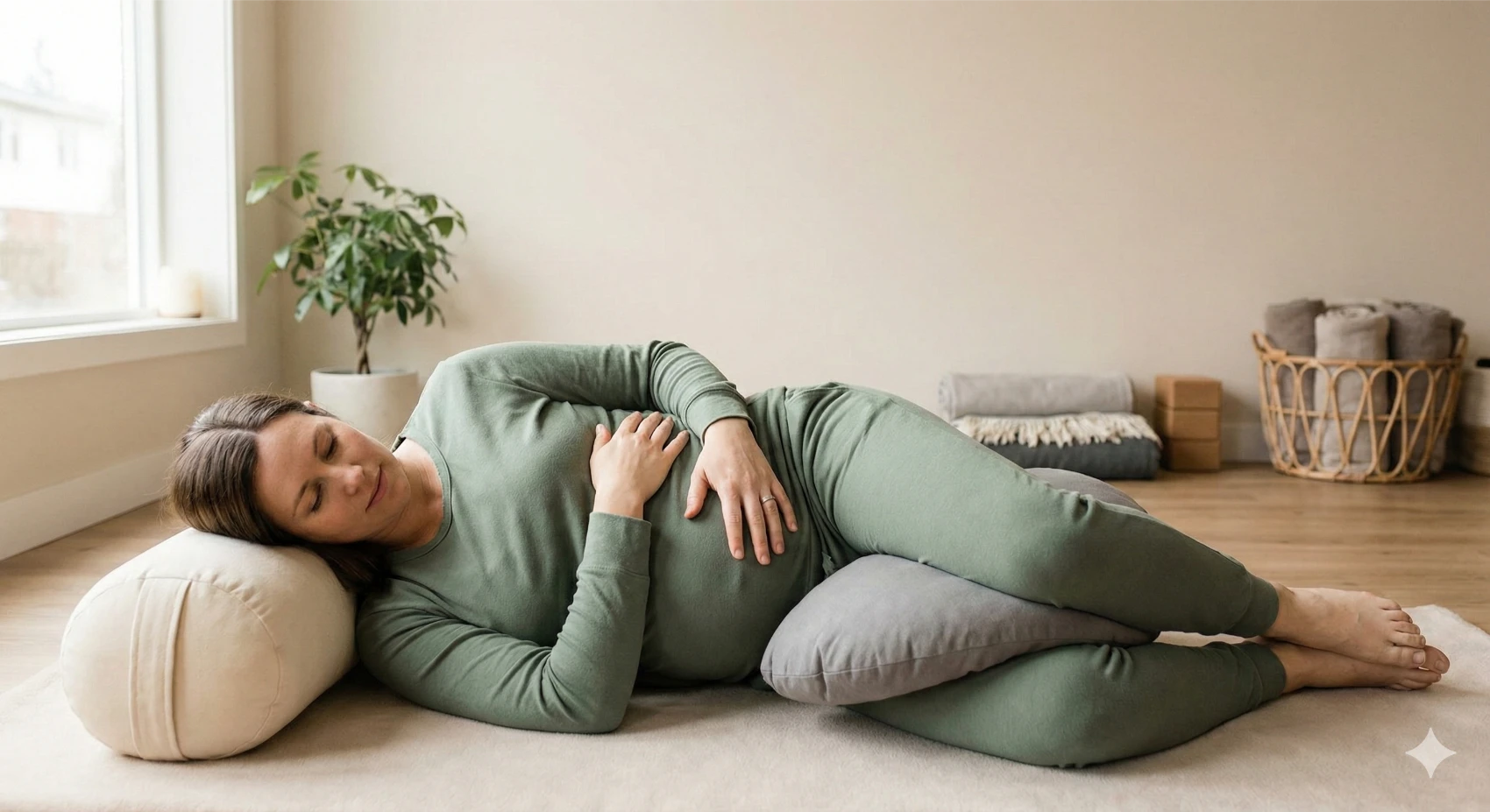
Rest is essential. After 20 weeks, Side-lying Savasana becomes the standard final relaxation position. You can explore these cooling approaches further in modern ayurveda wellness practices.
Why Guidance and Modifications Matter
Certified prenatal instructors understand pregnancy physiology in ways generic trainers might not. They recognize that a pose safe at 15 weeks may be risky at 25 weeks.
If you're looking for instructors, verify 200 hour teacher training yoga alliance credentials along with specific prenatal specialization.
When to Pause or Avoid Yoga
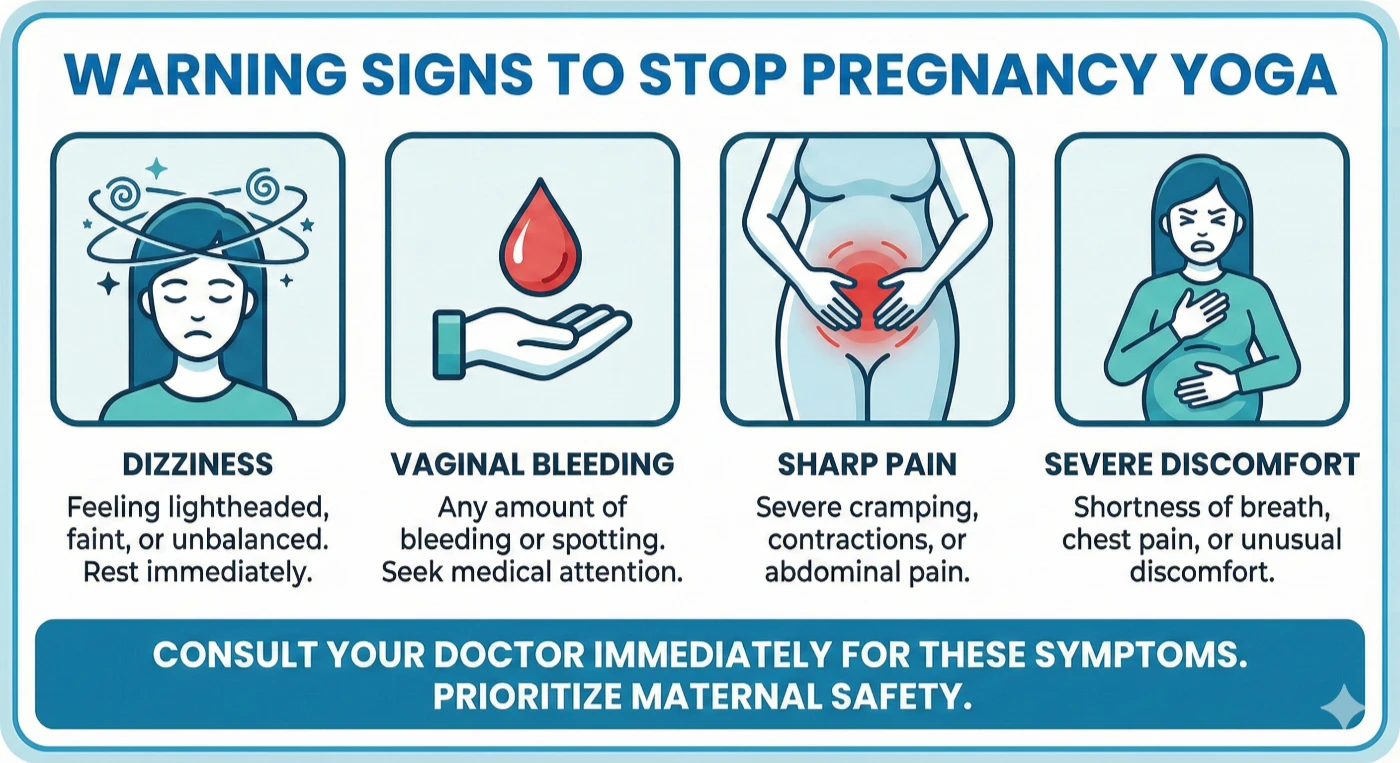
Stop immediately and consult a doctor if you experience:
- Vaginal bleeding or persistent cramping.
- Dizziness, severe headache, or vision changes.
- Decreased fetal movement.
- Chest pain or heart palpitations.
The Yoga Sutras teach that asana should be "sthira sukham"—steady and comfortable. If practice becomes painful, you must prioritize your baby's wellbeing over consistency.
Conclusion: Nurturing Your Journey
Pregnancy yoga is a journey of connection. By honoring these safety principles and modifications, you create a healthy environment for both yourself and your baby. Ready to begin? Explore our Prenatal Yoga Programs to start your practice with expert guidance.
FAQs
-
Which yoga is best in pregnancy?
Prenatal yoga specifically designed for pregnancy is best. This specialized practice includes modifications for your changing body, avoids contraindicated poses, and emphasizes breath work and relaxation. Hatha-based prenatal yoga works wonderfully as it focuses on gentle holding of poses with breath awareness. Restorative yoga also benefits pregnant women by promoting deep relaxation. Avoid hot yoga, power yoga, Ashtanga's intense sequences, and any style that emphasizes core strengthening or deep twisting.
-
What is pregnant yoga?
Pregnant yoga, also called prenatal yoga, is a specialized yoga practice adapted specifically for expecting mothers. It differs from regular yoga by eliminating risky poses, incorporating props for support, slowing the pace significantly, and prioritizing breath awareness and relaxation over strength or flexibility. Prenatal yoga focuses on creating space for your growing baby, relieving pregnancy discomfort, preparing your body and mind for labor, and building community with other expecting mothers. The practice emphasizes listening to your body and honoring its changing needs.
-
What is the hardest month of pregnancy?
The hardest month varies by individual, but many women find the first month (weeks 4-8) and the final month (weeks 36-40) most challenging. Early pregnancy brings extreme fatigue, nausea, and hormonal adjustment while your body works invisibly hard to establish pregnancy. The final month brings physical heaviness, shortness of breath, sleep difficulties, and emotional intensity about approaching labor. During these times, yoga practice should be gentlest—prioritizing rest, breath work, and restorative poses over active movement.
-
Which pose is best for pregnancy?
Cat-cow pose is arguably the best single pose for pregnancy as it benefits all trimesters. This gentle movement relieves back pain, creates space for baby, improves spinal flexibility, and can be practiced safely throughout pregnancy. Other excellent poses include supported child's pose (knees wide), butterfly pose for hip opening, and side-lying relaxation. The "best" pose for you depends on your trimester, energy level, and what discomfort you're addressing. Always choose poses that allow comfortable breathing and feel genuinely good in your body.
-
Does yoga help in normal delivery?
Yes, research shows yoga significantly supports vaginal delivery. Regular prenatal yoga practice strengthens legs and pelvic muscles needed for labor positions, teaches breath control that helps manage contractions, builds mental focus and stamina for the marathon of childbirth, and reduces fear and anxiety about delivery. Studies indicate women who practice yoga throughout pregnancy experience shorter labor durations and reduced need for medical interventions. The pelvic floor awareness and release you develop directly impacts your ability to birth effectively.