
Relief for Back and Pelvic Pain
Back pain affects nearly 70% of pregnant women—but it doesn't have to control your pregnancy.
Your growing belly pulls your spine into increased curvature. This creates compression in your lower back that radiates through your hips and pelvis.
Want to know the best part?
Targeted yoga poses create space exactly where you need it. You're not just masking pain—you're addressing the root cause through intelligent movement.
Pelvic girdle pain strikes differently than general back discomfort. You'll feel it in your pubic bone, SI joints, or deep in your hips when walking or turning in bed. This happens because relaxin loosens the ligaments holding your pelvis together. Your joints move more than they should, creating inflammation and pain.
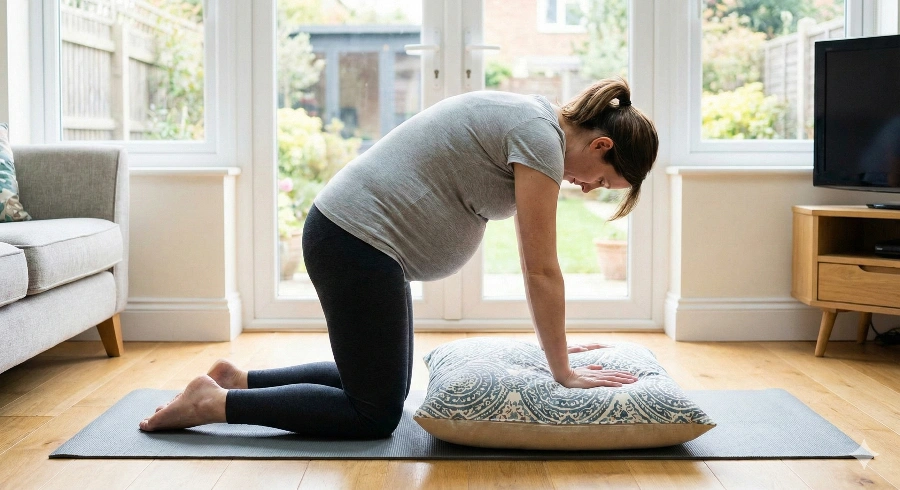
Cat-cow becomes your best friend. Start on hands and knees with a cushion under your belly for support. Inhale as you gently arch your back, lifting your chest and tailbone. Exhale as you round your spine, tucking your tailbone and dropping your head. Move slowly and mindfully through 10-15 rounds.
Child's pose with wide knees releases your lower back completely. Kneel with knees wide apart, big toes touching, and sink your hips back toward your heels. Rest your forehead on a bolster or stacked blankets. Your belly settles comfortably between your thighs, and your back releases all tension.
According to research in The Spine Journal, pregnant women practicing yoga twice weekly experienced 50% reduction in lower back pain intensity compared to those receiving standard care.
Side-lying hip opener targets SI joint pain specifically. Lie on your left side with a pillow between your knees. Bend your top knee and let it rest on a bolster positioned in front of you. This position creates gentle opening through your hip and pelvis without strain. Breathe deeply for 2-3 minutes, then switch sides.
Supported squat position opens your pelvis while relieving sacral compression. Stand facing a wall or sturdy chair, feet wider than hip-width, toes turned slightly out. Hold onto your support and slowly lower into a squat, keeping your back upright.
What nobody tells you? Your breath matters as much as the position. Deep breathing activates your parasympathetic nervous system, which directly reduces pain perception and muscle tension.
Managing Fatigue and Heaviness
Pregnancy exhaustion feels different than regular tiredness—it's bone-deep and overwhelming. Your body is building an entire human while maintaining your own functions. Blood volume increases by 50%, your heart pumps harder, and every system works overtime.

Legs-up-the-wall variation (before 20 weeks) reverses blood flow and reduces leg heaviness. After 20 weeks, modify to side-lying with legs elevated on pillows to prevent vena cava compression.
Gentle standing side stretches create space for breathing and wake up your energy. Stand with feet hip-width apart, reach your right arm overhead and gently lean left. Hold for 3-5 breaths, then switch sides.
Research published in Evidence-Based Complementary and Alternative Medicine shows that pregnant women practicing gentle yoga report 35% improvement in energy levels compared to non-practicing peers.
Seated spinal rotation (open twist only) energizes your spine. Sit on the edge of a chair with feet flat, knees wide. Gently rotate away from your belly, never into it. Energy practices during pregnancy are about supporting your body's enormous work with gentle encouragement.
Modified downward dog at the wall stretches your entire posterior chain sustainably. Stand arm's length from a wall, place hands at shoulder height, walk feet back, and hinge at your hips to create an L-shape.
Reducing Swelling and Circulation Issues
Swollen ankles and fingers affect nearly 75% of pregnant women, especially in the third trimester. Your body retains extra fluid to support increased blood volume, and your growing uterus can compress major blood vessels.
Ankle circles and flexes while lying down mobilize accumulated fluid. Lie on your left side and circle your top ankle slowly in both directions, then flex and point. Perform 10-15 repetitions per side.
Supported child's pose with elevated hips encourages lymphatic drainage. Kneel with a bolster in front of you, fold forward, and rest your torso. Having your hips higher than your heart allows gravity to assist fluid return.
Gentle side-lying leg lifts engage your leg muscles to pump fluid. Lie on your left side and slowly lift your top leg 6-8 inches, hold briefly, and lower. Perform 10-12 repetitions.
Seated forward fold with chair support improves circulation without compression. Sit on a chair with feet wide, place pillows on your thighs, and hinge forward. This keeps your heart level with your hips—ideal for circulation.
Hand and wrist circles address upper body swelling. Extend your arms, make fists, spread fingers wide, and circle your wrists. This simple practice prevents the hand swelling that makes rings tight.
Postural Discomfort Solutions
Your posture changes dramatically as your center of gravity shifts forward. Your body compensates by arching the lower back, rounding shoulders, and jutting the head forward. Fighting these adaptations is less effective than supporting the body through them.
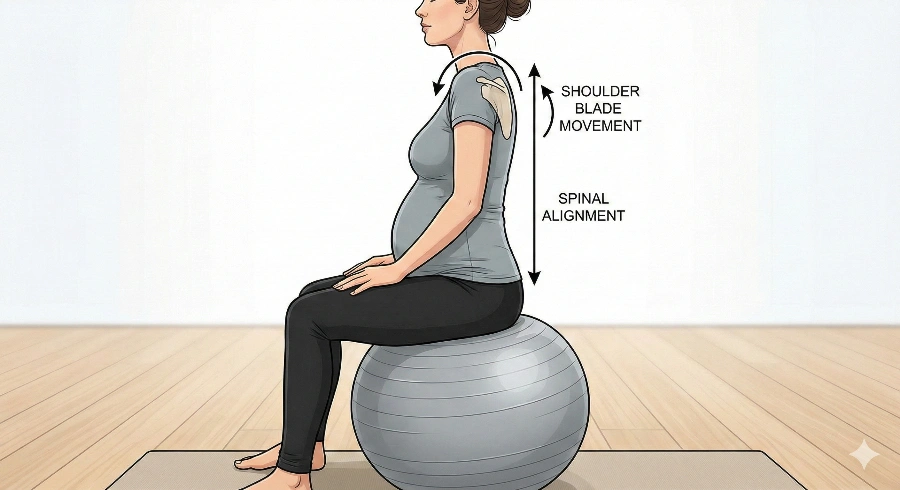
Shoulder rolls and chest openers counteract forward rounding. Roll your shoulders up and back 8-10 times. Clasp hands behind your back to gently lift your chest and draw shoulder blades together.
Wall angels strengthen upper back muscles. Stand with your back against a wall, raise arms into a "goalpost" position, and slowly slide them up and down. Perform 8-10 repetitions.
Seated hip circles on a yoga ball mobilize your pelvis and relieve stiffness. Sit on the ball and circle your hips slowly in both directions. This lubricates the SI joints and releases tension.
Research in The Journal of Women's Health Physical Therapy demonstrates that pregnant women who practice postural awareness exercises report 40% less upper back and neck pain.
Gentle neck stretches release tension from forward head posture. Tilt your ear toward your shoulder, hold for 3-5 breaths, and repeat on the other side.
Daily Relief Practices
Consistency matters more than duration. A 10-minute daily practice provides more cumulative benefit than a weekly hour-long session. Build a sustainable routine that you can actually maintain.

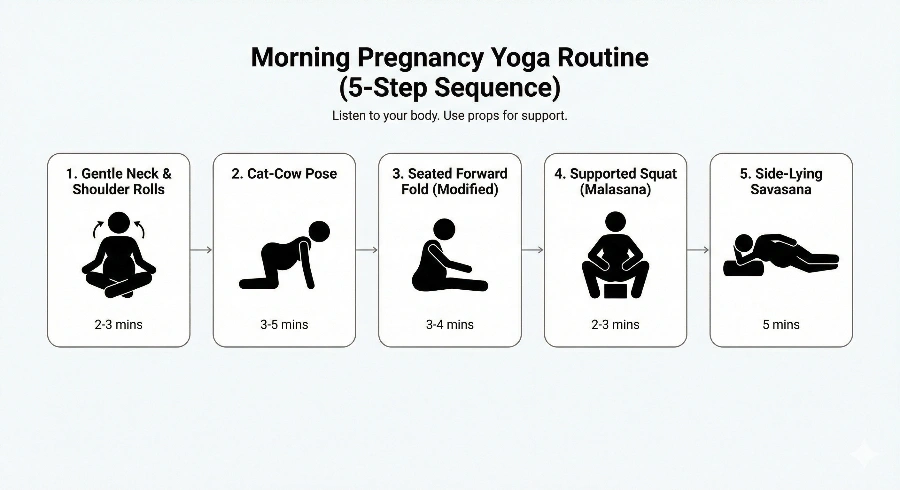
Morning wake-up sequence (5-7 minutes): Full-body stretch in bed (left side), 10 rounds of cat-cow, and 10 breaths in wide-knee child's pose.
Midday tension release (3-5 minutes): Standing side stretches, shoulder rolls, and gentle seated open twists. This prevents discomfort from accumulating throughout the day.
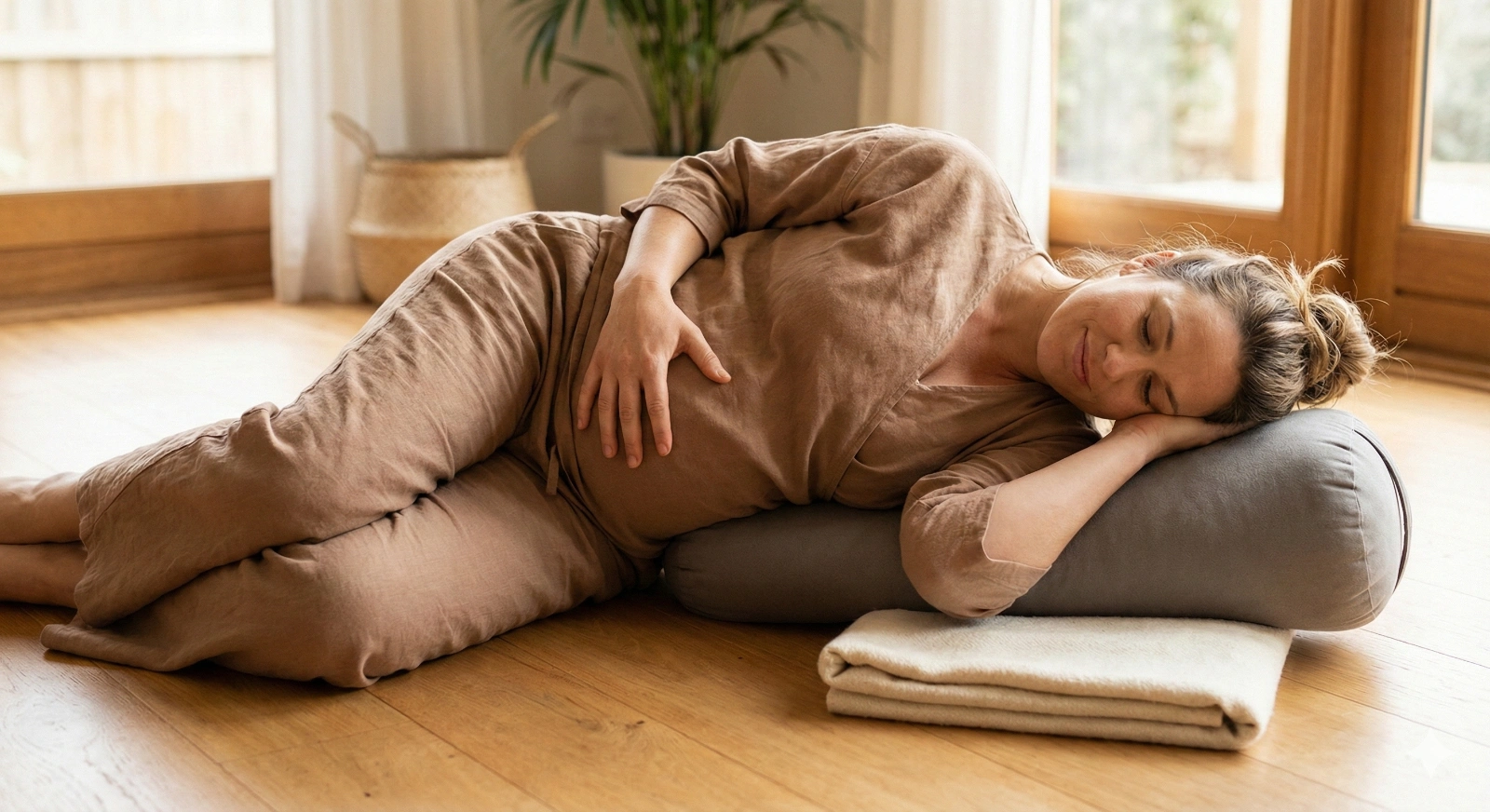
Evening relaxation sequence (10-15 minutes): Supported child's pose (2-3 minutes), gentle leg lifts, and 5 minutes of complete relaxation in supported side-lying position.
These micro-practices prevent discomfort from accumulating. For a deeper understanding of how your practice should evolve, refer to pregnancy yoga guides for trimester-specific safe practices.
FAQs
-
Will yoga help with back pain during pregnancy?
Yes, significantly. Studies show that pregnant women practicing gentle yoga 2-3 times weekly experience 50-70% reduction in lower back pain compared to those who don't practice. Specific poses like cat-cow, child's pose, and supported squats create space in your lower back while strengthening supporting muscles. The key is consistency—regular gentle practice prevents pain buildup rather than just treating existing discomfort. Always modify poses as your belly grows and stop immediately if any position increases pain.
-
Can I sit in Vajrasana in the second trimester?
Vajrasana (thunderbolt pose) can work in early second trimester but needs modification as your belly grows. Sit with knees wide enough to accommodate your belly comfortably—this typically means much wider than traditional vajrasana. Place a cushion or folded blanket under your hips if you feel any knee discomfort. If this position creates any pelvic pressure or makes breathing difficult, choose a different seated position instead. By third trimester, most women find other seated positions more comfortable.
-
How to sleep in pregnancy?
Sleep on your left side after 20 weeks to optimize blood flow to your baby and prevent vena cava compression. Place a firm pillow between your knees to align your hips, another pillow under your belly for support, and optionally one behind your back. This creates a "nest" of support that maintains proper alignment throughout the night. Gentle evening yoga—especially hip openers, forward folds, and breathing practices—significantly improves sleep quality by reducing physical discomfort and calming your nervous system before bed.
-
Can I sit butterfly while pregnant?
Yes, butterfly pose (baddha konasana) is generally safe and beneficial throughout pregnancy with proper modifications. Sit with your back against a wall for support, and don't push your knees toward the floor—let them rest at whatever height feels comfortable. Place blocks or folded blankets under your knees for support if needed. This pose opens your hips, relieves pelvic tension, and can help prepare your body for labor. Exit immediately if you feel any pubic bone pain, which can indicate symphysis pubis dysfunction requiring different modifications.
-
What is the best position to sit in third trimester of pregnancy?
Side-lying position provides maximum comfort and safety in third trimester, but for seated positions, try sitting on a yoga ball or the edge of a firm chair with feet flat and wide. These allow your pelvis to tilt naturally and give your belly space. Avoid sitting cross-legged on the floor if it creates pelvic discomfort. When sitting, keep your spine tall but not rigidly straight, allow gentle rocking or circling movements, and change positions frequently—staying in any one position too long creates stiffness and discomfort.
-
What not to ignore in the 3rd trimester?
Never ignore sudden severe swelling (especially facial), persistent headaches with vision changes, decreased fetal movement, regular contractions before 37 weeks, vaginal bleeding, severe abdominal pain, or fluid leakage. These require immediate medical attention. Also don't ignore persistent pelvic pain that worsens with movement—this might indicate symphysis pubis dysfunction needing specific treatment. While general discomfort is normal, sharp pain, overwhelming fatigue that doesn't improve with rest, or your intuition saying something feels wrong all warrant contacting your healthcare provider immediately.