
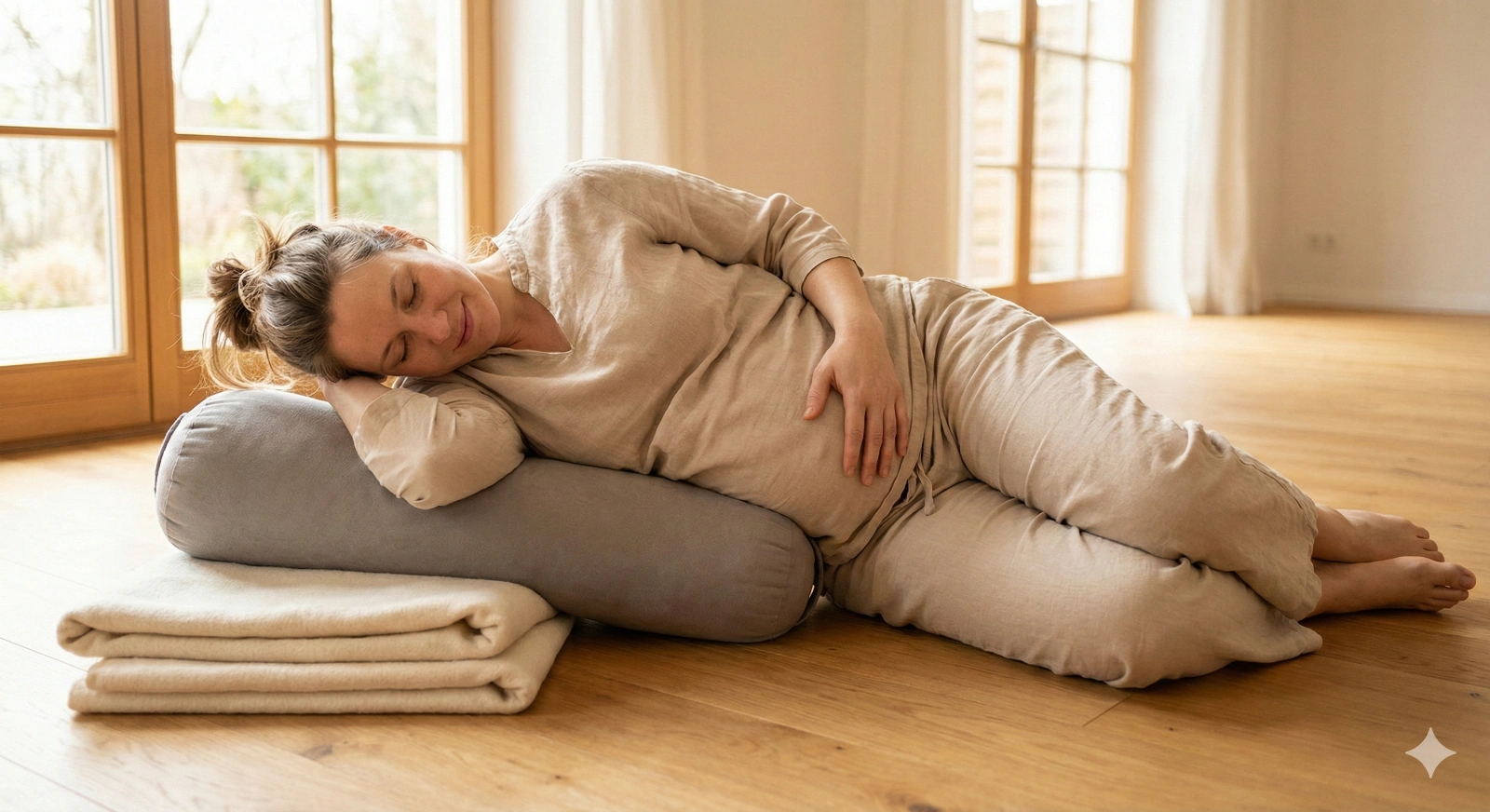
Breath Awareness During Pregnancy
Your breath becomes your most powerful labor tool—master it now, use it then.
Conscious breathing does more than relax you. Research in The Journal of Obstetrics and Gynecology shows pregnant women practicing daily breath awareness reported 45% less anxiety and shorter active labor.
Want to know the best part? You can practice anywhere, anytime—no mat, no studio needed. Your breath is always available.
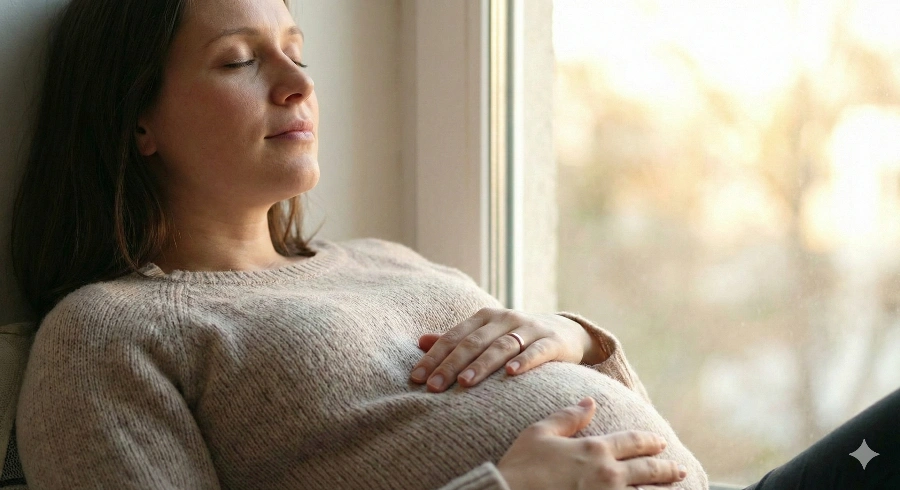
The surprising truth? Most people use only 30% of their lung capacity daily. Pregnancy breath work teaches you to access the full 100%.
For comprehensive breathwork training, pranayama techniques to calm the mind provides detailed guidance on breath control for mental balance.
Essential Breathing Techniques
Ujjayi breath creates your foundation for pregnancy breathing practice. This gentle ocean-sounding breath calms your nervous system while maintaining steady oxygen flow.
How to practice:
- Inhale slowly through nose, slightly constricting throat
- Create soft, audible sound like ocean waves
- Exhale through nose with same constriction
- Continue 5-10 minutes daily
Here's the deal—this isn't about forcing breath. You're cultivating awareness of natural rhythm and gradually deepening it.
Three-part breath (dirga pranayama) maximizes oxygen for you and baby:
- Place one hand on chest, one on belly
- Inhale into belly, then ribcage, then upper chest
- Exhale in reverse: chest, ribs, belly
- Creates wave-like pattern invaluable during labor
Counted breath provides immediate anxiety relief:
- Inhale count of 4, exhale count of 6
- Repeat 10-15 times
- Longer exhale activates parasympathetic nervous system
Belly breathing with baby connection combines breath and bonding. Sit comfortably, hands on belly, visualizing breath flowing to baby while releasing tension. This becomes your anchor during labor—training mind-body connection to stay calm during intensity.
If building morning practice, morning meditation techniques integrate breath awareness with gentle movement beautifully.
Advanced Pranayama for Balance
Alternate nostril breathing (nadi shodhana) balances your nervous system perfectly:
- Use right thumb to close right nostril, inhale left
- Close left nostril, release thumb, exhale right
- Inhale right, switch, exhale left
- Continue 5-10 rounds
Research by Dr. Sat Bir Singh Khalsa, Harvard Medical School neuroscientist, shows this reduces stress biomarkers by 40% in pregnant women. Now here's where it gets interesting—this retrains your autonomic nervous system to respond more calmly to stressors.
Cooling breath (sheetali) helps with pregnancy heat:
- Roll tongue into tube (or purse lips)
- Inhale through rolled tongue
- Exhale through nose
- Practice 5-8 rounds for cooling
Think about it this way—your hormones create internal heat. This breath provides natural cooling without medication.
Relaxation for Anxiety and Fear
Pregnancy anxiety isn't weakness—it's biology responding to enormous life change. Studies in Applied Psychophysiology and Biofeedback show 78% of pregnant women experience moderate to high anxiety.
The reality? Your baby directly experiences your stress through shared blood chemistry. When you relax, baby relaxes—cortisol decreases, heart rate stabilizes.
Deep Relaxation Practices
Progressive muscle relaxation (PMR) teaches you to release hidden tension:
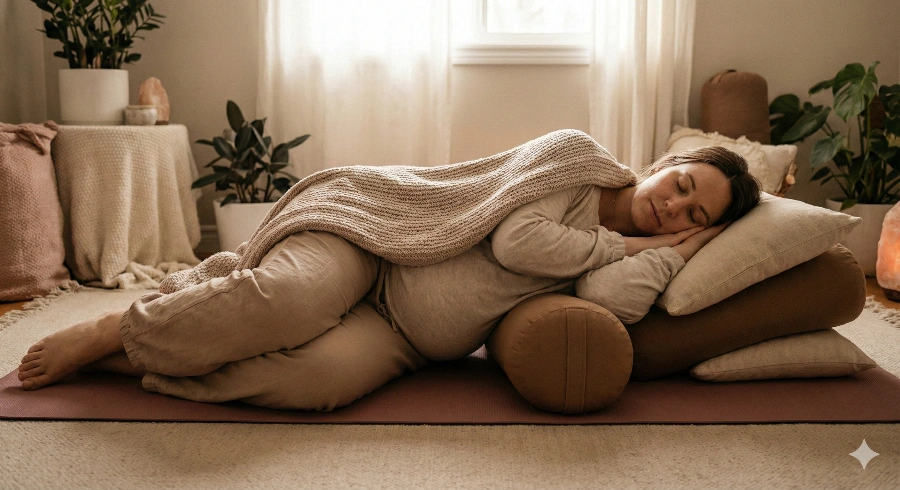
- Lie in supported side-lying position
- Starting with feet, tense 5 seconds, release completely
- Move systematically: calves, thighs, hips, belly, chest, arms, neck, face
- Practice 15-20 minutes, 3-4 times weekly
You're training awareness to notice where you store tension before it becomes pain.
Yoga Nidra (yogic sleep) creates profound relaxation. This ancient practice from Hatha Yoga Pradipika guides you into deep rest while maintaining alert awareness. Follow 20-30 minute guided recordings in supported side-lying position.
According to Dr. Richard Miller, clinical psychologist (iRest Institute), pregnant women practicing Yoga Nidra twice weekly experienced 38% anxiety reduction and improved birth outcomes. For specialized practice, yoga nidra for deep sleep provides comprehensive guided sessions.
Hold on—twenty minutes of Yoga Nidra provides rest equivalent to 2-3 hours of sleep.
Restorative poses provide passive relaxation:
- Supported child's pose with bolsters (5-10 minutes)
- Side-lying with full support (10-15 minutes)
Judith Hanson Lasater, physical therapist, notes restorative practice reduces cortisol by 25% while increasing oxytocin. Restorative yoga practices for stress offers detailed sequences for nervous system calming.
Meditation for Emotional Calm
Body scan meditation cultivates non-reactive awareness essential for labor. Spend 30-60 seconds per area noticing sensations without judgment. This trains observing sensations without panic—the exact skill needed during contractions.
Guided visualization harnesses imagination's power. Your nervous system can't distinguish real from vividly imagined—visualization creates actual relaxation. Close eyes, imagine your safest place, engage all senses, stay immersed 10-15 minutes.
Loving-kindness meditation (metta) addresses motherhood fears. Sit comfortably, hands on belly, and repeat: "May I be healthy and strong. May my baby be healthy and strong. May we both be safe and peaceful."
For significant anxiety, yoga for stress and anxiety offers comprehensive techniques.
Emotional Grounding and Calmness
Pregnancy hormones create emotional waves—grounding practices keep you from drowning. One moment elated, next sobbing over commercials. This isn't instability, it's normal hormonal fluctuation.
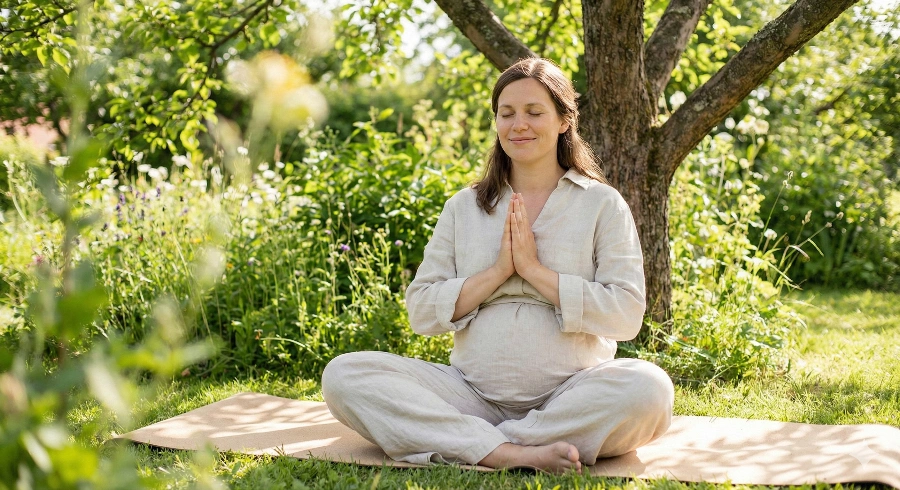
Grounding Techniques for Stability
- Mountain pose with grounding visualization: Stand feet hip-width, visualize roots from feet into earth. Inhale stability upward, exhale anxiety downward.
- Seated grounding breath: Sit tall, inhale drawing earth's energy upward, exhale releasing overwhelm downward.
- Mantra repetition (japa): Choose resonant phrase: "I am safe," "My baby grows perfectly," "I trust this process." Repeat during practice.
- Mindful movement: Slow cat-cow or gentle sway. Focus on sensations to pull attention from anxious thinking into presence.
The bottom line? Grounding isn't suppressing emotions—it's creating stable foundation to experience them safely.
Daily Practices for Emotional Balance
Expressive journaling processes emotions constructively. Keep a notebook near your yoga space and write for 5-10 minutes after practice with complete honesty. Dr. James Pennebaker shows expressive writing reduces pregnancy anxiety by 32%.
Gratitude practice shifts emotional baseline. Identify three pregnancy gratitudes daily. The Yoga Sutras of Patanjali (Book I, Sutra 12) teaches "abhyasa" (practice) with "vairagyam" (non-attachment) creates mental stability.
For deeper understanding, understanding stress from a yogic perspective provides philosophical framework.
Mental Preparation for Childbirth
Labor is 90% mental—your mind determines experience more than body. Research in Birth: Issues in Perinatal Care shows mental preparation reduces perceived pain by 40% and interventions by 30%.
Pay attention—every yoga session staying calm during discomfort is labor rehearsal.
Labor Rehearsal Practices
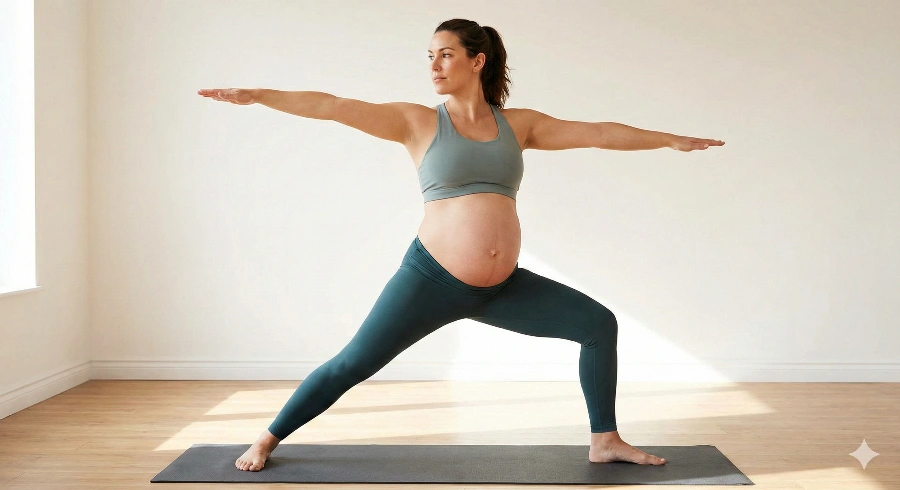
Breath riding practice mimics contraction breathing: Perform challenging pose (chair or warrior II). As discomfort builds, maintain slow steady breath. Hold 60-90 seconds (contraction length). Rest, repeat 5-8 times. This teaches working with intensity rather than fighting.
Mental rehearsal visualization: Side-lying position. Visualize ideal labor in detail. See yourself calm, breathing through contractions. Imagine baby descending, being born.
Mantra for contractions: "Open and release," "Riding the wave," "My body knows how," "One breath at a time." Practice during challenging holds.
Ina May Gaskin, legendary midwife, notes women practicing mental preparation feel more in control during labor.
Overcoming Birth Fears
Pain versus suffering distinction: Pain is physical sensation (unavoidable), while suffering is mental resistance (optional). Practice observing discomfort without drama. Labor pain serves purpose—opening body for baby. Resistance increases suffering without reducing pain.
Release and surrender practice: Supported child's pose or savasana. Consciously release all tension. Practice surrendering to support and notice resistance to letting go.
Fear release meditation: Identify biggest birth fear. Locate where you feel it physically. Breathe into that location with compassion. Exhale, release the fear. Replace with: "I am capable. My body is designed for this."
Building Confidence Through Practice
Confidence isn't theoretical—it's built through embodied experience. Every session staying present during challenge proves capability. You're creating evidence-based self-trust. Your brain doesn't distinguish between yoga challenge and labor challenge.
Strength-building sequences:
- Modified warriors with wall support
- Supported squats held 30-60 seconds
- Hold 5-8 breaths while legs shake
- Breathe, stay present, prove capability
Completion practice: Design 20-minute sequence. Commit to completing without quitting. When wanting to stop, breathe and continue. This teaches: contractions end, you will meet baby, you can do this.
Affirmations during movement: "I am strong" (warriors), "My body is capable" (squats), "I trust this process" (breath work). Research shows women with higher self-efficacy use 35% less pain medication and report higher birth satisfaction.
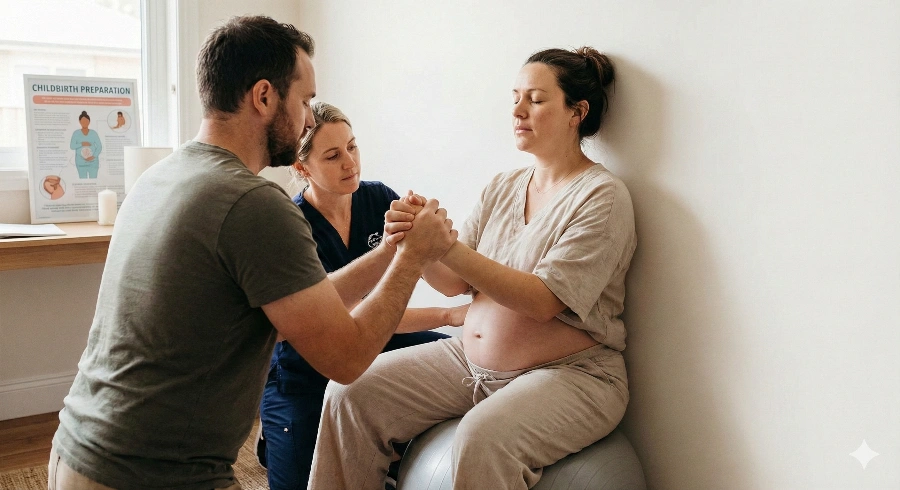
Partner involvement: Practice breathing together. Partner provides audible rhythm. Practice touch comfort and rehearse support phrases.
Progress documentation: Keep practice journal. Note poses becoming easier and record breaths deepening. Review periodically. You're not the same person who started—you're stronger, more prepared.
The Bhagavad Gita teaches: "You have right to action alone, never to fruits thereof." Focus on showing up, building skills—confident birth follows.
Community connection multiplies confidence. Practice surrounded by other pregnant women—collective strength carries into individual births. For teaching pregnancy yoga, yoga teacher training programs with prenatal specialization provide comprehensive understanding.
Visualization of success: Visualize yourself after birth. Holding baby, feeling triumphant. Knowing you did it. Feel pride, relief, overwhelming love. Wait—this future memory motivates present practice.
FAQs
-
Does age affect baby's gender?
Baby's gender is determined at conception by chromosomes—X creates female, Y creates male. Maternal age doesn't influence this. However, older age (35+) increases certain pregnancy risks like chromosomal abnormalities, though not gender. Focus energy on controllable practices—breathing, relaxation, emotional preparation. These benefit baby's development and birth experience regardless of age or gender.
-
Can stress affect baby's gender?
No, stress cannot affect gender determined at conception. However, chronic high stress impacts baby's development—elevated cortisol crosses placenta, affecting fetal brain development and birth weight. This is why breathing and relaxation matter. While you can't change gender, you can manage stress through regular pranayama, meditation, and restorative yoga—creating healthier environment.
-
Does yoga help in normal delivery?
Yes, substantially. Research shows regular prenatal yoga increases vaginal delivery likelihood and reduces interventions by 25-35%. Breath control translates to managing contractions effectively. Pelvic floor awareness teaches muscle release during pushing. Mental preparation builds confidence, reducing fear that slows labor. Women practicing yoga report shorter labors, less pain medication, and higher birth satisfaction.
-
What to avoid in the 1st trimester?
Avoid deep twisting (compresses embryo), intense core work, hot yoga (overheating risks neural tube development), breath retention (reduces oxygen), back-lying extended periods, jumping movements, and pushing through fatigue. First trimester brings enormous invisible changes—embryo implantation, organ formation, hormonal surges. Honor this with gentle practice. Rest is legitimate practice—your body performs extraordinary work.
-
What not to do at 7 weeks pregnant?
Completely avoid hot yoga (temperature above 102°F risks development), deep twists, intense abdominal exercises, breath holding, and pushing through severe nausea or fatigue. This is peak morning sickness—modify extensively or skip physical poses, focusing on gentle breathing. Never lie on belly once uncomfortable. Avoid poses creating lower abdomen pulling. Get medical clearance before starting new exercise.
-
How yoga improves circadian rhythm?
Yoga regulates circadian rhythm through multiple mechanisms—morning practice with natural light signals daytime to hypothalamus, evening sequences trigger melatonin for sleep, breath work balances autonomic nervous system, and consistent practice times train biological clock. During pregnancy, sleep disruption is common from hormones, frequent urination, and discomfort. Regular practice, especially gentle evening sequences, helps reset sleep-wake cycle. This benefits both you and baby—maternal rhythm influences fetal development and future infant sleep.