
Your body has been running on emergency mode for too long. That constant hum of anxiety, the difficulty unwinding at night, the feeling that you can't quite catch your breath—these aren't character flaws.
They're signs your nervous system needs recalibration. And therapeutic yoga might be exactly what your overworked nerves have been crying out for.
What Is Nervous System Regulation?
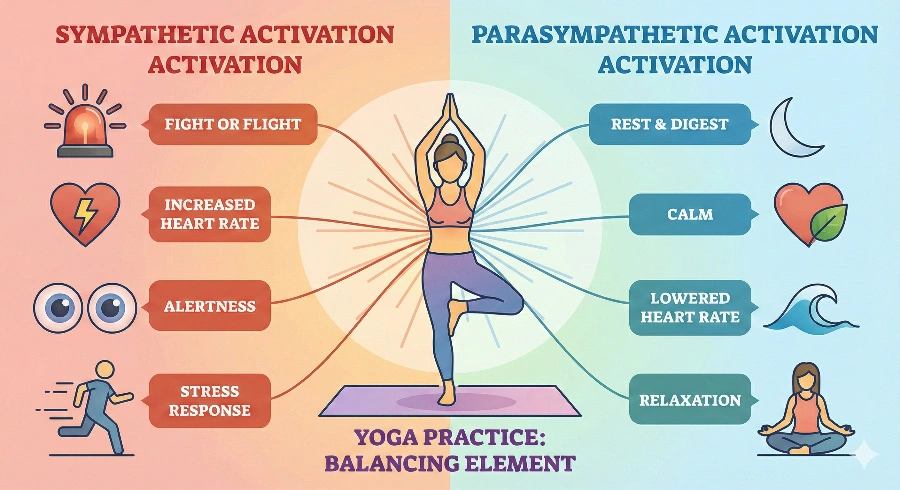
Your nervous system operates like a sophisticated control center. It has two primary modes: sympathetic (your gas pedal) and parasympathetic (your brake).
The sympathetic nervous system activates your fight-or-flight response. Heart rate increases, digestion slows, muscles tense—you're ready for action.
The parasympathetic nervous system does the opposite. It triggers rest-and-digest mode where healing, repair, and genuine relaxation happen.
You might be wondering where the problem lies. Modern life keeps most of us stuck in sympathetic overdrive with occasional crashes into exhausted collapse—but rarely true parasympathetic restoration.
How Therapeutic Yoga Affects Your Nervous System
Therapeutic yoga works differently than regular exercise. Where intense workouts activate your sympathetic system, therapeutic yoga specifically targets parasympathetic activation through intentional practices.
But here's the kicker: It's not just about relaxation. Healthy nervous system regulation means you can access both states appropriately and transition smoothly between them.
The Vagus Nerve Connection
The vagus nerve is your body's primary parasympathetic highway. It runs from your brainstem through your heart, lungs, and digestive organs.
Therapeutic yoga stimulates vagal tone through specific breathing patterns, gentle movements, and prolonged exhales. Higher vagal tone equals better stress resilience and emotional regulation.
According to the Polyvagal Theory developed by Dr. Stephen Porges, our nervous system has three states: safe and social (ventral vagal), fight-or-flight (sympathetic), and shutdown (dorsal vagal). Yoga helps us access that safe and social state where healing happens.
Breath as Direct Neural Input
Your breath is the only autonomic function you can consciously control. This makes it a powerful entry point for nervous system regulation.
Slow, deep breathing with extended exhales directly activates your parasympathetic response. Fast, shallow breathing does the opposite, signaling danger to your system.
In therapeutic yoga, we use this knowledge deliberately. Practices like three-part breath and ujjayi breathing become tools for self-regulation rather than just relaxation techniques.
Essential Practices for Nervous System Regulation
Restorative Yoga Poses
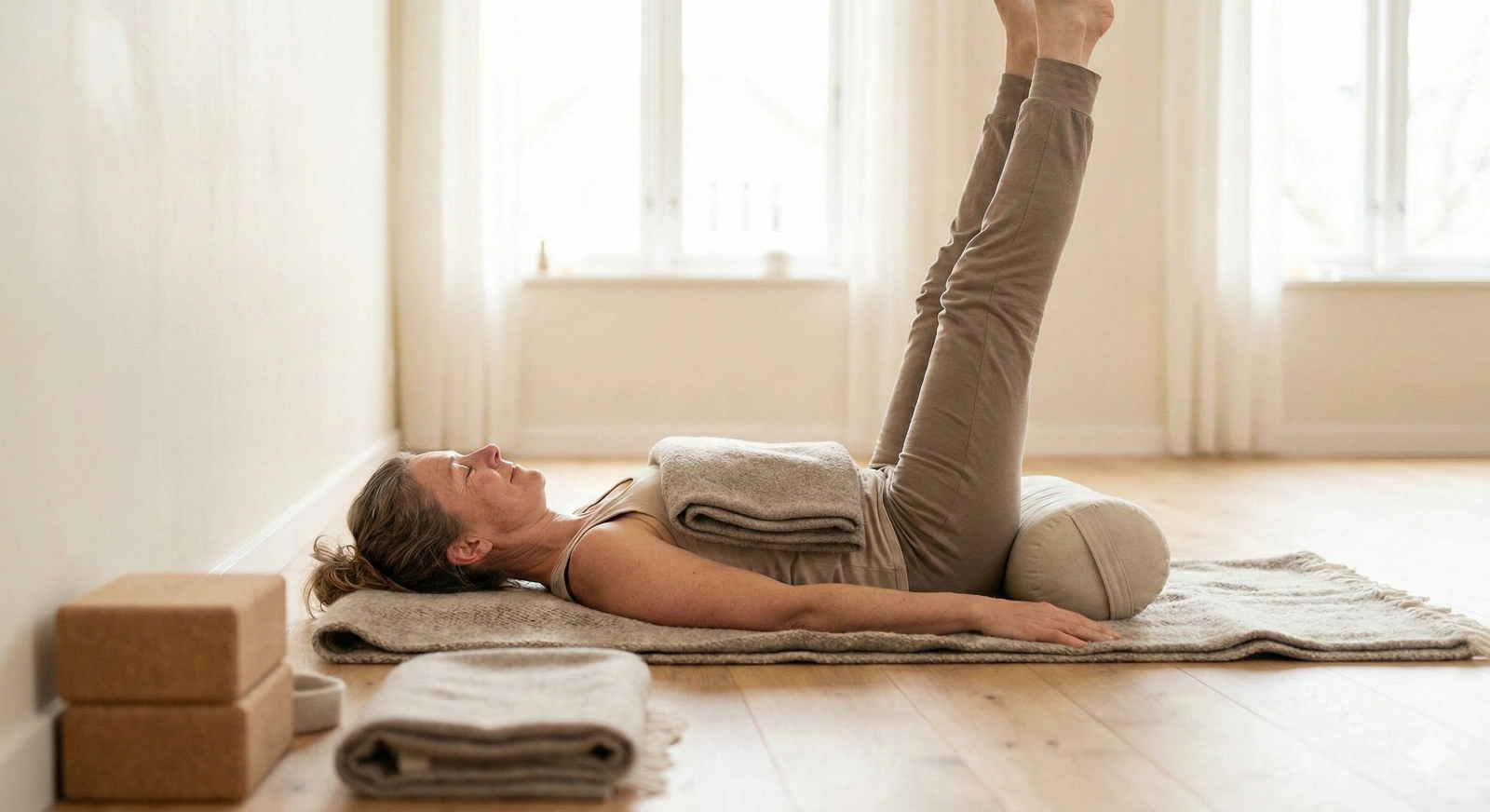
Restorative poses use props to fully support your body. When physical effort drops to near zero, your nervous system receives the message: "You're safe. You can rest now."
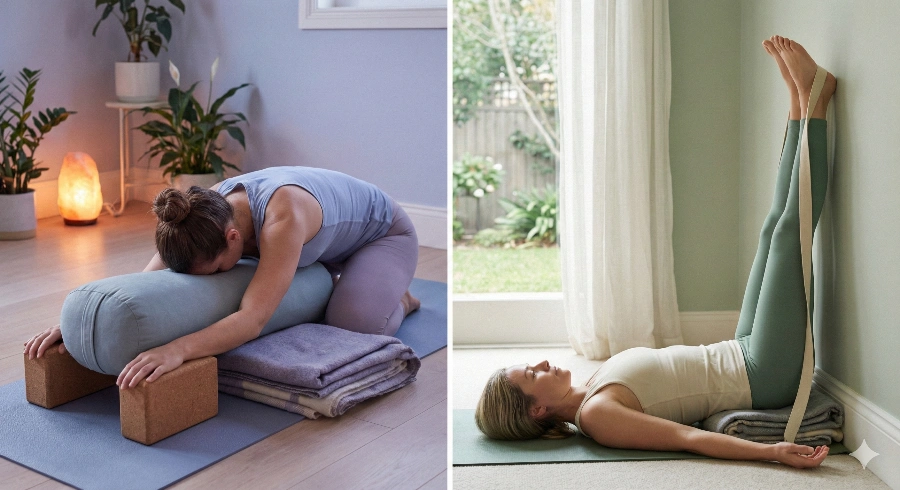
- Supported Child's Pose: Place a bolster lengthwise between your knees and drape your torso over it. Turn your head to one side, arms relaxed. Stay for 3-5 minutes, allowing your exhales to lengthen naturally. This gentle compression on your belly stimulates the vagus nerve.
- Legs-Up-the-Wall: Lie on your back with legs extended up a wall, hips close to the baseboard. This mild inversion shifts blood flow and signals your parasympathetic system. Use a folded blanket under your hips for comfort. Stay 5-10 minutes, breathing slowly through your nose.
Breathwork for Parasympathetic Activation
- 4-7-8 Breathing: Inhale for 4 counts, hold for 7, exhale for 8. The extended exhale is key—it activates your vagus nerve directly. Practice 4 rounds before bed or anytime you feel anxiety rising. Notice how your heart rate slows within minutes.
- Alternate Nostril Breathing (Nadi Shodhana): This balances both hemispheres of your nervous system. Close right nostril, inhale through left for 4 counts. Close left nostril, exhale through right for 4 counts. Inhale right, exhale left. Continue for 5-10 minutes.
Research published in the International Journal of Yoga shows this practice significantly reduces heart rate and blood pressure while increasing parasympathetic activity.
Mindful Movement Sequences
Unlike vigorous flows, therapeutic sequences move slowly with awareness. Each transition becomes an opportunity to notice sensations without judgment.
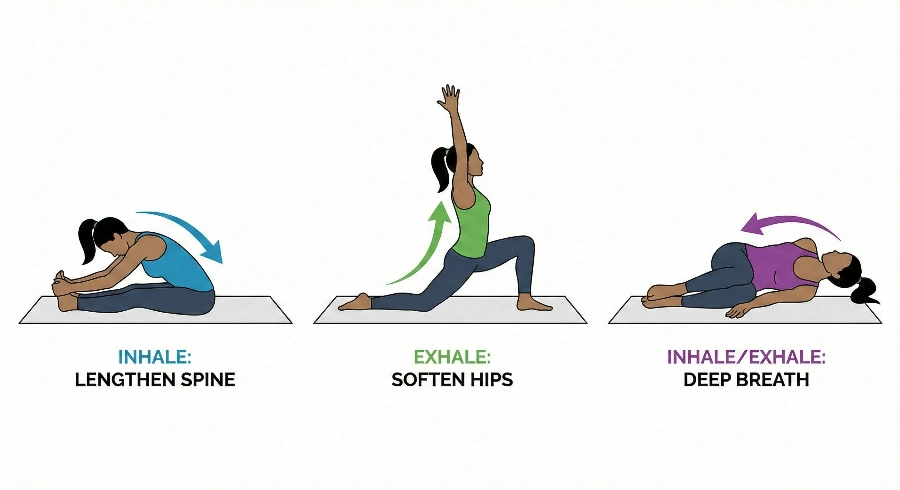
- Gentle Cat-Cow: On hands and knees, move between spinal flexion and extension for 2 minutes. Match movement to breath—inhale to extend, exhale to flex. The rhythmic movement combined with coordinated breathing creates a meditative state.
- Standing Forward Fold with Support: Stand facing a wall or chair. Hinge at hips, letting your upper body drape over bent knees or rest on the support. Stay for 2-3 minutes. Forward folds naturally calm the nervous system by reducing visual stimulation and encouraging introspection.
The Role of Interoception
Interoception is your ability to sense internal body signals—hunger, thirst, heart rate, muscle tension. Many people with dysregulated nervous systems have poor interoceptive awareness.
They miss early stress signals until they're in full panic mode. Or they've become so disconnected from body sensations that they can't recognize when they're actually safe.
Therapeutic yoga rebuilds this awareness. By lying still and scanning your body, you learn to identify subtle sensations before they escalate. Body scan meditation is foundational here. Start at your toes, slowly bring attention up through each body part, simply noticing without changing anything.
This practice strengthens the neural pathways between your body and brain. Over time, you catch tension earlier and can intervene before it becomes chronic.
Why Slower Is Actually Harder (and Better)
Your mind wants to race ahead, solve problems, plan the future. Slow, restorative practice feels uncomfortable at first because it removes all distraction. You're left with yourself—your thoughts, sensations, emotions. This is where the real work happens.
When you can lie still in supported fish pose for 10 minutes without fidgeting, you're training nervous system resilience. You're proving to your body that stillness doesn't equal danger.
For people with trauma histories, this can be especially challenging. The body has learned that hypervigilance equals safety. Working with a trauma-informed yoga teacher becomes crucial. They understand that "relaxing" isn't always relaxing when your nervous system is wired for protection.
Measuring Your Progress
Unlike physical fitness where you see muscle growth or increased flexibility, nervous system regulation shows up differently. Notice these subtle shifts:
- You fall asleep more easily
- You recover from stressful events faster
- Your resting heart rate decreases
- You can take deeper breaths naturally
- You feel emotions without being overwhelmed by them
Track these changes in a simple journal. After two weeks of consistent practice, patterns emerge. Some people use heart rate variability (HRV) monitors. Higher HRV indicates better nervous system flexibility—your ability to shift between sympathetic and parasympathetic states smoothly.
Common Obstacles and Solutions
"I can't quiet my mind" — You don't need to. Therapeutic yoga isn't about stopping thoughts but changing your relationship with them. Notice thoughts like clouds passing. Your nervous system calms when you stop fighting the mind's natural activity.
"I feel more anxious during practice" — This is called "activation" and it's actually a sign your nervous system is processing stored stress. Work with shorter holds initially. Five breaths in a pose instead of five minutes. Gradually increase as your capacity builds.
"I fall asleep immediately" — If you're chronically sleep-deprived, your body will grab any rest opportunity. This is fine temporarily. As your sleep debt resolves, you'll be able to stay present in longer practices.
Integrating Practice Into Daily Life
You don't need a full yoga mat session to regulate your nervous system. Micro-practices throughout the day are incredibly effective.
Before difficult conversations, take three slow breaths. After checking email, do 30 seconds of shoulder rolls while breathing deeply. These nervous system "resets" prevent cumulative stress buildup. You're interrupting the pattern before it becomes overwhelm.
Set phone reminders for midday breathing breaks. Stack the practice onto existing habits—breath work while your coffee brews, gentle stretches while brushing your teeth.
The Bigger Picture
Nervous system regulation through therapeutic yoga isn't about achieving permanent zen. It's about building resilience—the ability to ride life's waves without capsizing.
You'll still face stress, sadness, and challenge. But with a regulated nervous system, you respond rather than react. You feel your feelings without being consumed by them. You rest when you need to and activate when appropriate.
This is the true gift of the practice. Not escape from life, but full engagement with it from a grounded, resourced place. Your nervous system has been holding tension and trauma you didn't even know was there. Therapeutic yoga offers a gentle path to release it.
Start small. Five minutes of legs-up-the-wall today. Tomorrow, add some slow breathing. Next week, try a full restorative sequence. Your nervous system will thank you. And gradually, that constant background hum of anxiety will soften into something more like peace.
FAQs
-
How is therapeutic yoga different from regular yoga?
While regular yoga often focuses on physical fitness, strength, and flexibility, therapeutic yoga is specifically designed to balance the nervous system. It uses slower movements, restorative poses with props, and targeted breathing techniques to move the body from a state of "survival" (stress) to a state of "safety" (healing).
-
Can therapeutic yoga really help with chronic anxiety?
Yes. Chronic anxiety is often a sign of a "dysregulated" nervous system stuck in a fight-or-flight loop. By stimulating the vagus nerve and increasing interoceptive awareness, therapeutic yoga helps retrain your brain to recognize that you are safe, which can significantly reduce the physical and mental symptoms of anxiety over time.
-
How often should I practice to see results?
Consistency is more important than duration. Practicing for just 10–15 minutes daily is often more effective for nervous system regulation than a single 90-minute session once a week. Small, daily "micro-practices"—like deep breathing or a single restorative pose—help maintain a steady state of calm.
-
Do I need special equipment to start?
While professional bolsters and blocks are helpful, you can easily use household items. Thick pillows can replace bolsters, folded beach towels can act as yoga blankets, and a sturdy belt or scarf can serve as a yoga strap. The goal is to feel fully supported so your muscles can release tension.
-
What if I feel restless or "more" anxious during the practice?
This is a common experience called "relaxation-induced anxiety." When we slow down, we finally feel the stress that was already there. If this happens, keep your eyes open, focus on a fixed point in the room, or try gentle movement like Cat-Cow instead of stillness. Always listen to your body and back off if a practice feels overwhelming.