

Introduction

Mood swings. Irregular periods. Unexplained weight changes. Persistent fatigue. Adult acne. Sleep disruption. These are not random problems — they are your hormones speaking.
Hormonal imbalance affects mood, energy, reproductive health, metabolism, and overall well-being. While no single practice can fix everything overnight, consistent yoga offers powerful, natural support for your endocrine system by reducing stress, improving circulation to glands, and promoting nervous system balance.
Understanding Hormonal Disruption Patterns in Women
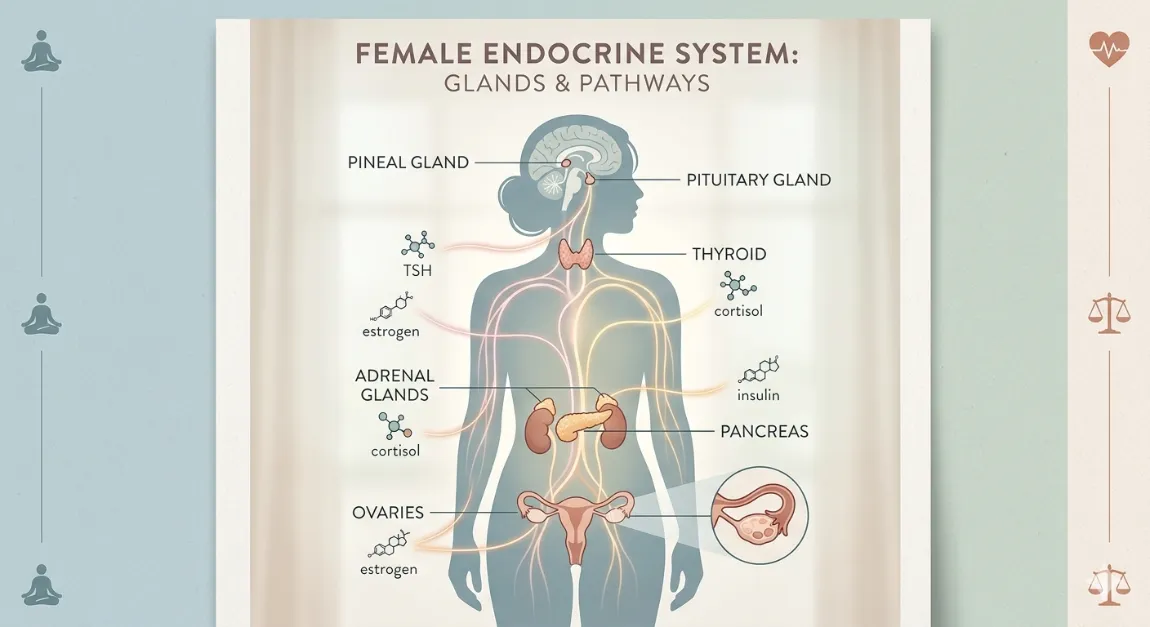
Your endocrine system includes the thyroid, adrenals, ovaries, pituitary, pineal, and pancreas. When balanced, you enjoy stable energy, regular cycles, steady mood, and predictable weight. When disrupted, symptoms cascade across the body.
Common patterns include thyroid dysfunction, adrenal dysregulation (high cortisol), estrogen/progesterone imbalance, and insulin resistance. Most women experience multiple imbalances at once.
Supporting Your Endocrine System Through Yoga

Yoga supports hormonal balance by reducing cortisol, stimulating hormone-producing glands, improving circulation, and enhancing sleep quality. Key mechanisms include nervous system regulation and direct stimulation of glands through specific poses.
Effective poses include Bridge Pose (thyroid), Butterfly Pose (ovaries), Cobra Pose (adrenals), and Cat-Cow (pancreas and adrenals).
Stress Reduction and Hormone Regulation — The Core Connection

Chronic stress is the biggest driver of hormonal disruption. It dysregulates the HPA axis, keeping cortisol elevated and suppressing reproductive and thyroid hormones. Yoga activates the parasympathetic nervous system, lowers cortisol, and helps restore balance to the entire endocrine system.
Consistency Over Intensity — Why Regularity Matters Most
Gentle, consistent practice is far more effective than intense sessions for hormonal health. Best styles include Restorative Yoga, Yin Yoga, Gentle Hatha, Pranayama, and Yoga Nidra. Avoid daily hot yoga or excessive high-intensity workouts, which can further elevate cortisol and stress the adrenals.
Lifestyle Factors Quietly Affecting Your Hormones
Even the best yoga practice needs support from daily habits: 7–9 hours of quality sleep, stable blood sugar through regular balanced meals, moderate movement, minimising endocrine disruptors, and addressing emotional stress. Yoga works best as part of a holistic approach.
Conclusion
Your hormones are always communicating. Yoga offers a gentle, effective way to listen and respond by calming the nervous system, supporting your glands, and creating conditions for natural balance. Practise consistently, honour your body’s signals, and combine yoga with supportive lifestyle habits and medical care when necessary.
FAQs
No FAQs available for this article.