
Introduction
You've heard about kundalini awakening. Maybe someone described mystical experiences—energy surging up their spine, profound insights, life-changing transformations.
Now you're curious. But also cautious.
And you should be.
Kundalini yoga isn't your typical fitness class. It's ancient technology designed to awaken dormant energy at your spine's base—energy that, when activated improperly, can overwhelm unprepared systems.
But here's the truth: kundalini yoga for beginners is absolutely safe when approached correctly.
You don't need years of experience, exceptional flexibility, or complete philosophical understanding before starting.
What you DO need is proper guidance, realistic expectations, and step-by-step practices designed specifically for beginners.
This guide answers every question: Can beginners really practice kundalini? What are first steps? Which exercises work best? How do you find qualified teachers? What mistakes should you avoid?
By the end, you'll have a clear roadmap for beginning your kundalini journey safely—without overwhelm or the dangers that make people ask "why is kundalini yoga dangerous?"
Can Beginners Safely Practice Kundalini Yoga?
Yes—beginners can absolutely practice kundalini yoga safely.
The myth that needs destroying:
Many believe kundalini requires years of Hatha experience, advanced meditation skills, or spiritual preparation.
This misconception keeps curious seekers from powerful practices perfectly suitable for beginners.
The reality:
Yogi Bhajan, who brought kundalini yoga to the West in 1969, specifically adapted practices for Western students—many with zero yoga experience.
He created beginner-friendly kriyas (complete exercise sequences) designed to safely introduce kundalini energy activation without overwhelming nervous systems.
Dr. Sat Bir Singh Khalsa, Harvard Medical School researcher studying kundalini, confirms: "Properly taught kundalini yoga is safe for beginners. The key is appropriate intensity, qualified instruction, and gradual progression."
His research in the International Journal of Yoga Therapy documents successful outcomes with beginners experiencing zero adverse effects when practices follow safety protocols.
What makes kundalini safe for beginners:
- Predetermined sequences mean you follow exact instructions—no improvisation needed.
- Most kriyas offer modifications.
- Beginner practices typically last 11-31 minutes.
- Clear contraindications protect vulnerable individuals.
The progression principle:
Think of kundalini like strength training. Beginners don't start with 200-pound deadlifts—they build gradually.
Similarly, beginners start with gentle energy activation—simple breathwork, basic movements, short meditations. Advanced practices come after building foundational capacity.
The Hatha Yoga Pradipika (Chapter 2, Verse 15) advises: "Just as lions, elephants and tigers are controlled by and by, so the breath is controlled by slow degrees."
When beginners should wait:
Certain conditions require delaying practice: active mental health crisis, uncontrolled epilepsy, recent surgery, pregnancy (certain practices), or active substance abuse.
Address these with appropriate professionals first. Then return to kundalini from stable foundation.
For healthy beginners with normal stress and curiosity about consciousness—kundalini yoga is accessible, safe, and transformative.

What Is Kundalini Awakening? Understanding Basics
Understanding what kundalini actually is removes fear and creates realistic expectations.
The traditional explanation:
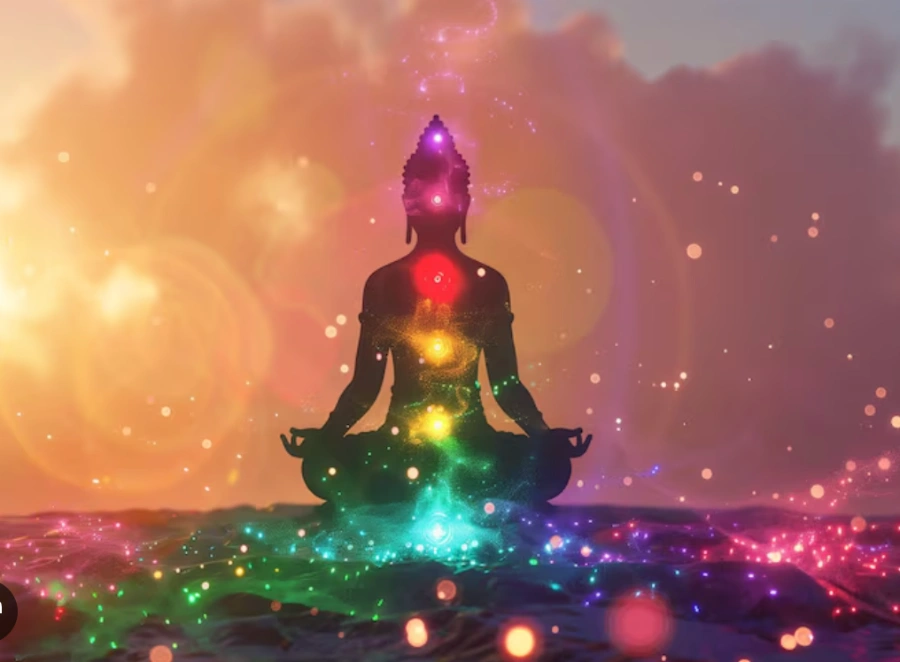
Sanskrit texts describe kundalini shakti as primordial cosmic energy lying dormant at your muladhara chakra (root energy center at spine's base).
When awakened, this kundalini energy rises through sushumna nadi (central energy channel), activating each chakra sequentially until reaching the crown, producing enlightenment.
What is kundalini meaning practically?
Beyond poetic descriptions, kundalini represents your evolutionary potential—the biological mechanism for consciousness expansion encoded in human nervous system structure.
Dr. Gopi Krishna, who experienced spontaneous kundalini awakening, described it as "the biological basis of genius, psychic powers, and spiritual evolution" in his book Kundalini: The Evolutionary Energy in Man.
The scientific perspective:
Modern researchers suggest kundalini awakening involves neurological activation creating new connections and enhanced brain function, electromagnetic shifts measurable through sensitive equipment, neurochemical cascades releasing endorphins and serotonin, and endocrine optimization affecting hormone production.
The seven kundalini awakening stages:
As kundalini energy rises through chakras, you experience progressive transformation:
- Root Chakra: Physical vitality surges, survival fears dissolve
- Sacral Chakra: Creative energy flows, emotional blocks release
- Solar Plexus: Personal power emerges, confidence strengthens
- Heart Chakra: Compassion expands, unconditional love awakens
- Throat Chakra: Authentic voice emerges, expression flows
- Third Eye: Intuition sharpens, inner vision opens
- Crown Chakra: Unity consciousness dawns, separation dissolves
The Shiva Samhita (Chapter 5, Verses 96-97) describes: "When the sleeping Kundalini awakens by favor of guru and the mind becomes free from all impressions, then the aspirant realizes the Supreme Self."
Important clarification for beginners:
You're not trying to force complete awakening immediately. That requires years of preparation.
As a beginner, you're introducing your system to kundalini energy gently—small activations produce significant benefits: increased energy, mental clarity, emotional balance, physical vitality.
If you want detailed progression understanding, our comprehensive guide on kundalini awakening stages and symptoms walks through the complete journey.
First Steps Before Attempting Kriyas
Don't rush into complex kriyas immediately. These foundational steps prepare your body and mind for safe, effective practice.
Step 1: Establish basic breath awareness
Kundalini's power comes largely from pranayama (breathwork). Before attempting complex techniques, develop basic breath awareness.
Practice this daily for one week:
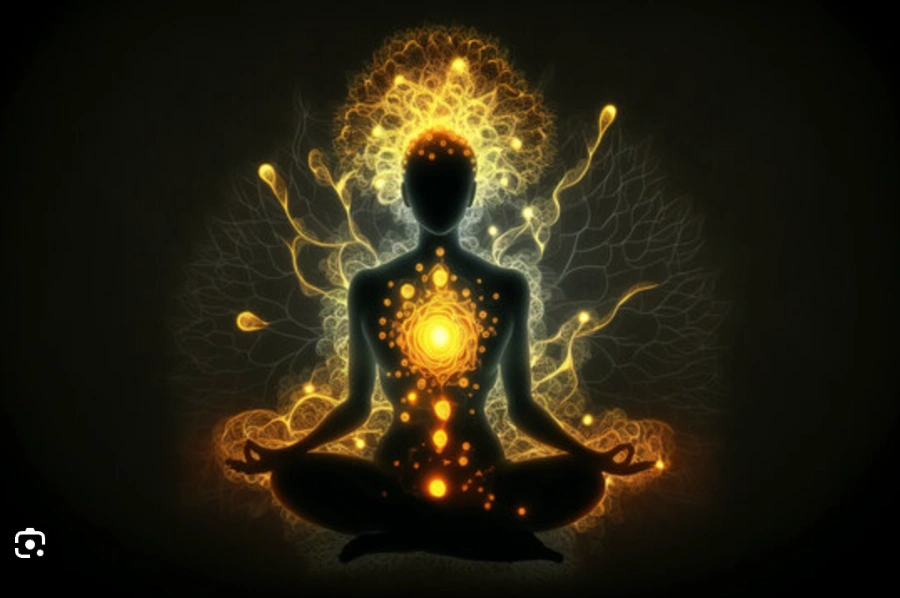
Sit comfortably with straight spine. Close your eyes. Simply observe your natural breath for 5-11 minutes.
Notice breath's rhythm. Feel air entering nostrils. Sense chest and belly expanding. Watch thoughts without engaging them.
This simple practice builds concentration capacity needed for kundalini meditation. Starting your day with morning meditation like this creates perfect foundation.
Step 2: Learn long deep breathing
Long deep breathing is kundalini's foundation breath—used in most beginner kriyas.
How to practice:
Sit with straight spine. Inhale slowly and completely through your nose—filling lower belly, then mid-chest, then upper chest. Take 5-8 seconds for complete inhalation.
Exhale slowly and completely—releasing from upper chest, then mid-chest, then drawing navel toward spine. Take 5-8 seconds for complete exhalation.
Practice 3-5 minutes daily until this becomes natural and comfortable.
Step 3: Understand tuning in
Every kundalini practice begins with "tuning in"—chanting Adi Mantra to create sacred space and connect with lineage.
The Adi Mantra is: "Ong Namo Guru Dev Namo" (I bow to the Divine Wisdom, I bow to the Teacher within)
Sit in easy pose (cross-legged). Bring hands to prayer position at heart center. Close eyes. Inhale deeply.
Chant the mantra three times on one breath if possible, or break it into parts:
- "Ong Namo" (vibrate from navel)
- "Guru Dev Namo" (resonate in chest)
Step 4: Create dedicated practice space
You don't need elaborate setup, but consistent space matters.
Find a quiet corner where you won't be disturbed. Place a yoga mat or cushion. Keep it clean and clutter-free.
Having dedicated space signals your nervous system: "This is where transformation happens." Consistency accelerates progress.
Step 5: Set realistic time commitment
Beginners often fail because they attempt unsustainable schedules.
Don't commit to 90 minutes daily. That's unrealistic.
Instead, commit to 11-20 minutes daily for 40 days (traditional sadhana period). This builds habit without overwhelming your schedule.
Quality and consistency matter more than duration.
Step 6: Study basic kundalini philosophy
Understanding the "why" behind practices increases effectiveness.
Read about chakras, nadis (energy channels), and kundalini energy basics. Our foundation guide on understanding kundalini and yoga provides comprehensive introduction.
The Yoga Kundalini Upanishad (Verse 79) explains: "The Kundalini sleeps above the kanda (root), like a serpent having three and a half coils. As long as she sleeps in the body, the jiva is an animal; true knowledge does not arise."
Step 7: Journal your experiences
Start a kundalini practice journal before beginning. After each practice session, note:
- Physical sensations (heat, tingling, pressure)
- Emotional states (calm, agitated, blissful)
- Mental clarity or fog
- Energy levels
- Any unusual experiences
Beginner-Friendly Kundalini Exercises
These five practices are perfectly safe for complete beginners. Start with one, practice 40 days, then add another.
Exercise 1: Ego Eradicator (3 minutes)
Sit cross-legged. Raise arms to 60-degree angles forming "V" above head. Curl fingers into fists with thumbs pointing up.
Begin long deep breathing (or Breath of Fire if comfortable). Keep arms raised despite burning sensation.
After 3 minutes, inhale deeply, bring thumbs together overhead, exhale and relax.
Benefits: Mental clarity, increased energy, negative thought pattern breaking.
Exercise 2: Spinal Flexes (1-3 minutes)
Sit with hands on knees. Inhale—flex spine forward, chest lifts. Exhale—flex spine backward, rounding.
Continue rhythmically. Start with 26 repetitions, gradually increasing to 108.
Benefits: Spinal flexibility, energy circulation, chakra activation.
Exercise 3: Breath of Fire (1-3 minutes)
Sit with straight spine. Pump navel point rapidly inward as you exhale sharply through nose. Inhalation happens automatically.
Start with 30 seconds. Build to 3 minutes over weeks.
Contraindications: Avoid during menstruation, pregnancy, or with uncontrolled hypertension.
Exercise 4: Alternate Nostril Breathing (3-5 minutes)
Use right thumb to close right nostril. Inhale through left (count 4). Close both, hold (count 4). Open right, exhale (count 4).
Reverse. Practice 5-10 rounds.
Benefits: Mental balance, stress reduction, anxiety relief.
Exercise 5: Sa Ta Na Ma Meditation (11 minutes)
Hands on knees in Gyan Mudra (thumb touching index finger). Chant "Sa Ta Na Ma" touching thumb to fingers sequentially.
Practice 5 minutes aloud, 1 minute whisper, 5 minutes silent.
Benefits: Mental clarity, memory improvement, emotional balance.
Want more techniques? Our detailed guide on essential kundalini practices and kriyas provides complete instructions for 20+ exercises.
Common Mistakes Beginners Must Avoid
These mistakes create frustration, overwhelm, or even the dangers people fear about kundalini yoga.
Mistake 1: Practicing too intensely too quickly
Beginners often push hard, thinking "more is better."
Wrong. Kundalini works through accumulation, not force.
How to fix it: Start with recommended durations. If a kriya suggests 3 minutes, don't do 10 minutes on day one. Your nervous system needs gradual adaptation.
Mistake 2: Skipping the tuning-in mantra
Some beginners skip "Ong Namo Guru Dev Namo" because it feels religious or they're in a hurry.
Don't. This mantra isn't optional decoration—it's essential preparation.
Why it matters: The mantra creates energetic protection, connects you to lineage of teachers who've practiced safely, and signals your nervous system to enter receptive state.
Mistake 3: Forgetting to ground after practice
After intense kundalini activation, you must ground energy back into your body.
Beginners sometimes finish practice and immediately return to normal activities while still in altered states. This creates spaciness, anxiety, or difficulty focusing.
To fix this: After practice, always include:
- Final deep relaxation (5-11 minutes lying flat)
- Eating something grounding (apple, nuts, warm soup)
- Walking barefoot on earth if possible
- Avoiding intense mental work for 30+ minutes
Mistake 4: Comparing your experience to others
Kundalini awakening symptoms vary dramatically between individuals.
Your friend might experience intense heat and spontaneous movements. You might feel subtle warmth and deep peace.
Both are valid. Neither is "better" or "more advanced."
Better approach: Track YOUR experiences in your journal. Progress is personal, not competitive.
Mistake 5: Practicing during contraindicated times
Certain times require avoiding specific practices:
During menstruation: Avoid Breath of Fire and inverted poses. Practice gentle kriyas with long deep breathing instead.
During illness: Skip vigorous practices. Use gentle breathing and meditation until health returns.
After heavy meals: Wait 2-3 hours before practicing. Full stomach compresses diaphragm, limiting breath capacity.
Late at night: Energizing kriyas practiced before bed cause insomnia. Practice calming kriyas only in evening.
Mistake 6: Self-teaching without qualified guidance
YouTube videos and books provide valuable information. But they can't:
- Observe your technique and correct dangerous errors
- Assess whether you're ready for advanced practices
- Provide personalized modifications for your body
- Help you navigate unexpected experiences
Finding Qualified Kundalini Teachers
Not all yoga teachers understand kundalini. Here's how to find genuine guidance.
Certification requirements:
Qualified kundalini yoga teachers complete Level 1 Training (200+ hours), Level 2 (300+ hours), or Level 3 (1000+ hours) through Kundalini Research Institute or equivalent programs.
Compare this to general 200 hour teacher training yoga alliance certifications—kundalini requires specialized education.
What to look for:
- Embodiment: Does the teacher radiate calm presence, compassion, clear communication?
- Experience: Minimum 5+ years of daily personal practice.
- Safety emphasis: Clear contraindications and modifications explained.
Red flags:
- Promising rapid enlightenment
- Pushing students beyond stated capacity
- Creating inappropriate relationships
- Demanding excessive money for "secret" teachings
- Or discouraging questioning.
Finding local teachers:
Search "kundalini yoga near me" plus your city. Many studios offering ashtanga open practice or yin yoga class also provide kundalini instruction.
Simple Daily Practice for Beginners
This 20-minute sequence provides complete, balanced practice. Commit to 40 consecutive days.
Complete Beginner's Daily Sadhana (20 minutes)
Minutes 1-2: Tuning In - Chant "Ong Namo Guru Dev Namo" three times
Minutes 3-5: Spinal Flexes - 26-54 repetitions
Minutes 6-8: Ego Eradicator - Arms at 60 degrees, long deep breathing
Minutes 9-13: Alternate Nostril Breathing - 5-10 rounds
Minutes 14-19: Sa Ta Na Ma Meditation - 3 minutes aloud, 3 minutes whisper
Minute 20: Closing - Inhale, stretch, exhale, bow head in gratitude
Post-practice: Lie flat 3-5 minutes. Journal briefly. Eat something grounding.
Progression after 40 days:
Continue this sequence for another 40-90 days, or begin exploring specific kriyas for particular goals. Consider formal study through 300 hour yoga teacher training or 500 hour yoga teacher training if teaching interests you.
For comprehensive wellness, combine kundalini with ayurveda courses and modern ayurveda wellness consultations.
Why Is Kundalini Yoga Dangerous? Real Risks
Let's address this honestly without fear-mongering.
The short answer:
Kundalini yoga isn't inherently dangerous, but it IS powerful. Like electricity—not dangerous when used properly, but requiring respect.
Where the "dangerous" reputation comes from:
Unqualified teachers with minimal training, forced awakening attempts beyond capacity, pre-existing mental health vulnerabilities without therapeutic support, and cultural misappropriation stripping away safety elements.
The actual risks:
Physical: Hyperventilation from improper technique, dizziness from excessive breath retention, muscle strain from overexertion.
Psychological: Anxiety amplification, traumatic memory surfacing without support, dissociation in vulnerable individuals.
Energetic: Ungrounded activation creating spaciness, premature chakra opening, overwhelm from too much too fast.
The safety protocol:
Work with certified teachers, start with beginner practices only, practice recommended durations, include grounding afterward, maintain therapy if needed, stop if severe symptoms occur, and approach with respect.
The Kularnava Tantra (Chapter 13, Verse 106) warns: "Dangerous practices should be learned from the guru directly and practiced with caution."
For comprehensive understanding of both benefits and risks, our article on kundalini energy healing effects explains the full spectrum.
Is Kundalini Awakening Rare?
The honest answer:
Full kundalini awakening—complete rising through all seven chakras producing permanent enlightenment—is relatively rare.
Most practitioners experience partial activations: energy stirring in lower chakras, temporary altered states, progressive shifts over years.
This is completely normal and profoundly transformative.
What beginners should expect:
Weeks 1-4: Subtle energy shifts, improved sleep, mood changes. Nothing dramatic.
Months 2-3: Increased body awareness, enhanced emotional clarity, occasional warmth during practice.
Months 4-6: Noticeable life changes—improved relationships, career clarity, creative breakthroughs.
Years 1-2: Definite transformation in stress response, emotional regulation. Consistent activation during practice.
Years 3+: Deep spiritual development, enhanced intuition, possible spontaneous activations outside practice.
The paradox:
The more you chase dramatic awakening, the less likely it occurs. Kundalini responds to surrender, not grasping.
The Yoga Vasistha teaches: "The Supreme State is attained by those free from desire, not by those who long for it."
Practice consistently. Trust the process. Small daily shifts accumulate into profound lifetime transformation.
If you're curious about detailed progression, our guide covering complete kundalini awakening stages maps the entire journey.
Wondering how kundalini compares to other practices you might explore? Check our comparison on kundalini versus other yoga styles to find your perfect path.
FAQs
-
Can complete beginners practice kundalini yoga safely?
Yes—kundalini yoga for beginners is completely safe with qualified instruction, appropriate intensity, and gradual progression. Yogi Bhajan specifically adapted practices for Western beginners with zero experience. Start with 11-20 minute beginner kriyas, use modifications, and work with certified teachers. Thousands practice daily without complications by following proper safety protocols.
-
What is the best kundalini yoga practice for beginners?
The best beginner practice combines spinal flexes (3 minutes), Ego Eradicator (3 minutes), alternate nostril breathing (5 minutes), and Sa Ta Na Ma meditation (6 minutes). This 20-minute sequence provides complete foundation. Practice for 40 consecutive days before adding complexity. Consistency with simple practices beats sporadic attempts at advanced techniques.
-
How long before I experience kundalini awakening?
Most beginners notice subtle shifts within 2-4 weeks—improved energy, better sleep, enhanced mood. Noticeable life changes emerge after 3-6 months. Dramatic experiences are unpredictable and unnecessary for transformation. Focus on daily practice quality. Gradual expansion over months is more sustainable than sudden overwhelming activations.
-
Why is kundalini yoga considered dangerous?
Kundalini isn't inherently dangerous but IS powerful, requiring respect and guidance. Risks arise from practicing too intensely, unqualified teachers, forcing awakening, or unaddressed mental health conditions. When approached correctly—qualified instruction, appropriate intensity, gradual progression, proper grounding—kundalini is safe for healthy beginners. The "dangerous" reputation comes from cases ignoring safety protocols.
-
Do I need flexibility or athletic ability?
No—kundalini doesn't require exceptional flexibility or strength. Unlike Vinyasa or Ashtanga emphasizing complex poses, kundalini focuses on breathwork, meditation, and simple movements. The challenge is mental and energetic. Average fitness suffices. If you can sit and breathe consciously, you can practice kundalini effectively.