

introduction

You've learned what kundalini is.
You understand the practices.
Now comes the question that matters most: What actually happens during kundalini awakening?
What is the kundalini awakening experience really like? How do you recognize it? What are the kundalini awakening stages? Which symptoms indicate genuine activation versus imagination or imbalance? And crucially—why is kundalini yoga dangerous when approached carelessly?
This comprehensive guide answers these questions with unusual depth and honesty.
You'll discover:
- What kundalini awakening actually means (beyond mystical descriptions)
- The progressive stages of awakening
- Physical, emotional, mental, and spiritual symptoms
- How to distinguish genuine awakening from kundalini syndrome
- Why premature or forced awakening creates problems
- Safety protocols and grounding techniques
- When to seek help and what kind
- Integration practices for sustainable transformation
What Is Kundalini Awakening? Beyond the Mysticism
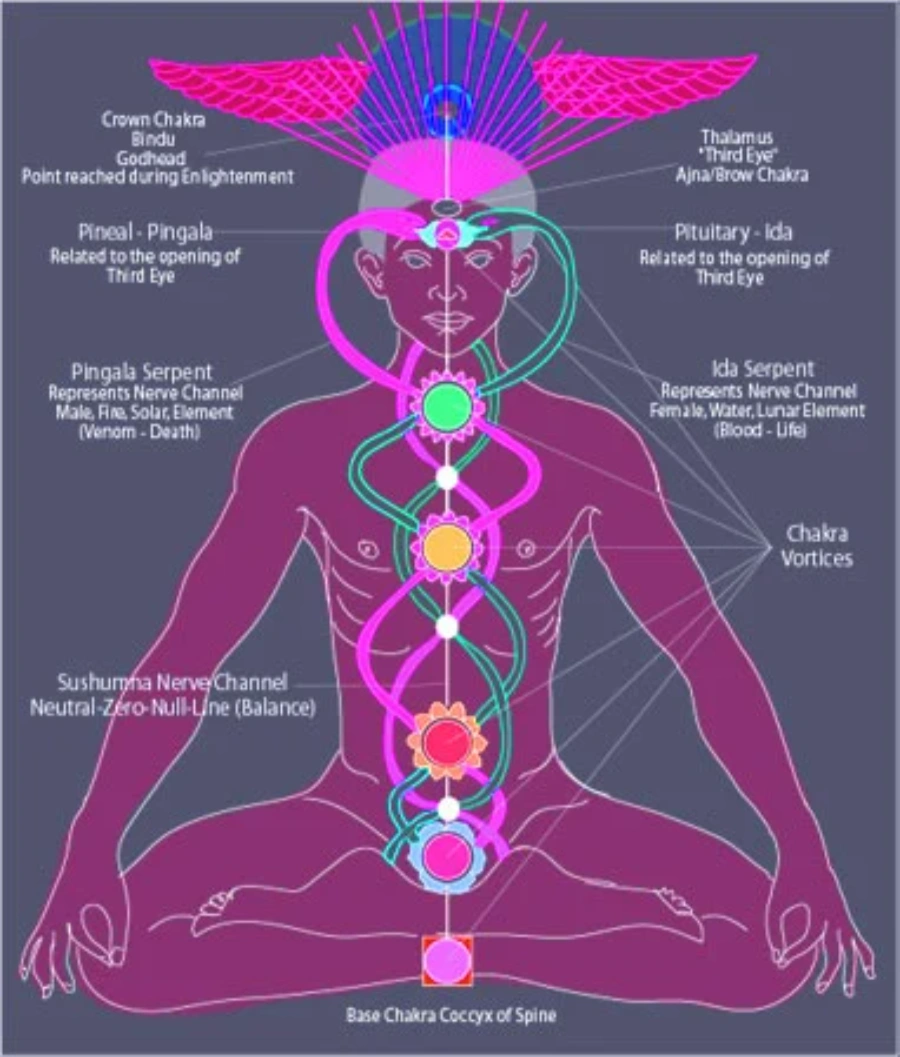
What is the kundalini awakening in concrete terms?
It's the activation of dormant evolutionary energy residing at your spine's base, followed by its ascent through the central energy channel (sushumna nadi), progressively activating and transforming each chakra as it rises toward the crown.
Not metaphor. Actual experience.
When kundalini awakens, it doesn't stay dormant. It moves. And as it moves, it transforms everything it encounters—physical structures, emotional patterns, mental constructs, and consciousness itself.
Dr. Stanislav Grof, psychiatrist and consciousness researcher who has studied thousands of cases, describes in his book "The Stormy Search for the Self": "In its milder form, kundalini awakening can be confused with arousal of sexual energy, but in full-blown form it represents an incomparably more powerful experience, involving every aspect of one's being."
What Awakening Is NOT
Before understanding what it is, clear up common misconceptions:
- It's not enlightenment itself - Awakening initiates a process. Enlightenment is sustained realization.
- It's not always blissful - Purification can be challenging, even painful as old patterns release.
- It's not instant transformation - The process unfolds over months, years, or decades.
- It's not a sign of spiritual superiority - Awakening can happen to unprepared individuals, creating difficulties rather than benefits.
- It's not under ego control - You don't "make" kundalini awaken through will alone. You create conditions and surrender to the process.
The Mechanism of Awakening
Kundalini awakening represents a shift in how energy flows through your system.
Normally: Energy flows through peripheral channels (ida and pingala nadis), supporting ordinary consciousness—thinking, feeling, and daily functioning.
During awakening: Energy enters the central channel (sushumna), creating extraordinary states—heightened awareness, mystical experiences, and consciousness transformation.
This isn't symbolic. Practitioners experience measurable changes:
- Body temperature fluctuations
- Spontaneous breath patterns
- Involuntary movements (kriyas)
- Altered brainwave states
- Hormonal shifts
The Yoga Kundalini Upanishad, Verse 1.3-1.4 states: "When Kundalini sleeps, the individual consciousness is awake to the world. When she awakes, the individual consciousness is absorbed in the supreme consciousness."
This ancient text describes precisely what modern practitioners report—a shift from ordinary self-identification to expanded awareness.
Spontaneous vs. Cultivated Awakening

Kundalini awakening happens two primary ways.
Cultivated Awakening
This occurs through dedicated spiritual practice:
- Years of consistent meditation
- Pranayama and energy work
- Kriya yoga or tantric practices
- Guidance from qualified teachers
- Intentional preparation
- Gradual, manageable progression
- Better foundation for integration
- Support structures in place
- Understanding of what's happening
- Tools for navigation
Spontaneous Awakening
This happens without deliberate preparation:
- Near-death experiences
- Intense trauma or crisis
- Childbirth
- Powerful emotional experiences
- Psychedelic experiences
- Transmission from awakened teacher
- Unknown reasons
- Sudden, unexpected onset
- Potentially overwhelming intensity
- Lack of context for understanding
- No established support system
- Greater need for grounding
Bonnie Greenwell, PhD, transpersonal psychologist specializing in spiritual emergence, explains in "The Kundalini Guide": "Spontaneous awakenings can be more challenging because people lack the framework to understand what's happening. They may seek psychiatric help, believing they're having a mental breakdown, when they're actually experiencing a spiritual emergence."
Neither path is "better"—but each requires different approaches to navigate successfully.
Is Kundalini Awakening Rare?

Is kundalini awakening rare?
The answer depends on how you define "awakening."
The Spectrum of Awakening
Minor activations - Extremely common. Many yoga practitioners experience:
- Occasional energy sensations
- Brief states of expanded awareness
- Spontaneous kriyas during practice
- Temporary heightened intuition
Significant risings - Moderately common. Some practitioners experience:
- Energy rising to heart or throat chakra
- Sustained periods of altered awareness
- Noticeable life changes
- Clear but manageable symptoms
Complete awakening - Genuinely rare. Full kundalini rising involves:
- Energy reaching crown chakra
- Sustained samadhi experiences
- Permanent consciousness shifts
- Complete life reorganization
Why Rarity Doesn't Matter
The relevant question isn't "Is it rare?" but "Am I experiencing kundalini activity and how do I work with it skillfully?"
Whether your awakening is subtle or dramatic, the principles of grounding, integration, and wise navigation apply equally.
Kundalini Awakening Stages: The Progressive Path
What are the kundalini awakening stages?
While each journey is unique, traditional teachings and modern experience reveal general patterns.
Understanding these stages helps you:
- Recognize where you are in the process
- Know what to expect next
- Avoid rushing ahead prematurely
- Seek appropriate support at each phase
Stage One: Preparation and Purification
Duration: Months to years
Primary focus: Building foundation
Key activities: Practice, lifestyle changes, shadow work
What Happens
This preliminary stage prepares your system for kundalini's intensity. It's like strengthening a channel before running high voltage through it.
Physical preparation:
- Body becomes more flexible and resilient
- Nervous system strengthens through pranayama
- Diet often shifts naturally toward lighter foods
- Sleep patterns may change
- Energy levels fluctuate as you purify
Emotional preparation:
- Suppressed emotions surface for processing
- Old relationship patterns become visible
- Unresolved traumas demand attention
- Shadow material emerges
Mental preparation:
- Thought patterns become more apparent
- Beliefs are questioned
- Habitual mind states loosen
- Interest in spiritual philosophy deepens
Energetic preparation:
- Subtle body becomes more sensitive
- You feel energy in hands, spine, or chakras
- Nadis (energy channels) begin clearing
- Kriyas (spontaneous movements) may appear during practice
Signs You're in Stage One
- Increased sensitivity to energy
- Spontaneous lifestyle changes
- Deep emotional processing
- Growing desire for spiritual practice
- Physical purification symptoms (temporary digestive changes, skin issues as toxins release)
What to Do
Establish daily practice: Even 20-30 minutes builds capacity steadily.
Clean your diet: Reduce stimulants, heavy foods, alcohol.
Process emotions: Therapy, journaling, or somatic practices help release old patterns.
Study philosophy: Understanding kundalini prepares you mentally.
Find community: Connect with practitioners and potential teachers.
Exploring complementary practices like yin yoga class sessions and morning meditation establishes the gentle, consistent foundation this stage requires.
Common Mistakes
- Rushing: Trying to force awakening before adequate preparation.
- Ignoring emotional work: Focusing only on techniques while avoiding psychological healing.
- Isolation: Attempting solo practice without guidance or community.
- Extremes: Overly strict regimens that create rigidity rather than openness.
The Hatha Yoga Pradipika, Chapter 2, Verse 2 advises: "The first practice is posture. It should be steady and comfortable. While perfecting posture, control of the breath should be practiced."
This ancient wisdom emphasizes foundation before advanced techniques—advice that prevents many problems.
Stage Two: Initial Activation
Duration: Days to weeks
Primary focus: First stirring of kundalini
Key experience: Unmistakable energy sensations
What Happens
Kundalini stirs from dormancy at the spine's base. This initial activation is usually unmistakable—you know something significant is occurring.
Physical experiences:
- Heat or tingling at spine's base
- Electricity-like sensations along spine
- Spontaneous body movements (kriyas)
- Sudden breath changes
- Vibrations throughout body
- Waves of energy rising
Emotional experiences:
- Intense feelings arising seemingly from nowhere
- Waves of bliss or ecstasy
- Temporary anxiety or fear
- Overwhelming love or compassion
- Emotional releases (crying, laughing)
Mental experiences:
- Racing thoughts or mental silence
- Spontaneous insights
- Perceptual changes
- Time distortion
- Enhanced creativity
Energetic experiences:
- Seeing lights or colors with eyes closed
- Feeling energy channels activating
- Awareness of chakras
- Electromagnetic field sensitivity
Signs of Stage Two
- Undeniable energy sensations
- Life suddenly feels different
- Ordinary activities seem charged with meaning
- Sleep disturbances common
- Increased synchronicities
What to Do
Stay grounded: Increase earth-element practices (walking barefoot, gardening, grounding foods).
Maintain routine: Keep regular schedule for meals, sleep, and work despite intensity.
Moderate practice: Don't increase intensity. Sometimes reducing stimulating practices helps.
Rest deeply: Your system needs integration time.
Avoid major decisions: Wait until stabilization before life-changing choices.
Connect with guidance: This is when a qualified teacher becomes invaluable.
Common Challenges
- Overwhelm: The intensity can feel like too much. Remember: it will pass and stabilize.
- Fear: Strange sensations trigger anxiety. Understanding what's happening helps.
- Isolation: Feeling like no one understands. Finding others who've experienced awakening provides validation.
- Spiritual ego: Thinking you're special or enlightened. Humility matters.
Lee Sannella, MD, ophthalmologist and researcher of kundalini phenomena, documented in "The Kundalini Experience": "The first stage typically involves overwhelming physical sensations, often accompanied by fear if the person doesn't understand what's happening. Education and normalization of the experience are crucial."
Stage Three: Rising Through Chakras
Duration: Months to years
Primary focus: Progressive chakra activation
Key experience: Sequential transformation
What Happens
Kundalini doesn't rush to the crown. It rises gradually, activating and purifying each chakra systematically.
At each chakra, kundalini encounters blockages—unresolved issues, suppressed emotions, limiting beliefs. It works through these obstacles, which manifests as specific challenges and transformations.
Root Chakra (Muladhara) Activation
Physical:
- Leg strength issues or breakthroughs
- Lower back sensations
- Digestive changes
- Grounding challenges
- Survival fears surfacing
- Financial anxiety
- Family issues arising
- Tribal/belonging questions
Sacral Chakra (Svadhisthana) Activation
Physical:
- Sexual energy intensification or shifts
- Hip opening experiences
- Reproductive system changes
- Creative energy surges
- Sexuality issues surfacing
- Pleasure/guilt dynamics
- Creative blocks releasing
- Emotional fluidity developing
Solar Plexus (Manipura) Activation
Physical:
- Digestive fire intensifying
- Core strength developing
- Body temperature regulation shifts
- Appetite changes
- Power dynamics becoming clear
- Confidence issues surfacing
- Control patterns visible
- Willpower strengthening
Heart Chakra (Anahata) Activation
Physical:
- Chest opening sensations
- Heart palpitations (usually benign but check with doctor)
- Breathing deepens
- Immune system shifts
- Old heartbreaks releasing
- Forgiveness arising
- Compassion expanding
- Grief processing
Throat Chakra (Vishuddha) Activation
Physical:
- Throat sensations or tension
- Voice changes
- Thyroid activity shifts
- Neck flexibility increasing
- Truth-telling compulsion
- Communication blocks releasing
- Authentic expression emerging
- Difficulty with dishonesty
Third Eye (Ajna) Activation
Physical:
- Pressure between eyebrows
- Vision changes or light sensitivity
- Headaches (temporary)
- Pineal gland activation
- Intuition dramatically heightening
- Psychic experiences beginning
- Dreams becoming vivid and meaningful
- Mental clarity intensifying
Crown Chakra (Sahasrara) Activation
Physical:
- Crown sensations or pressure
- Energy pouring in from above
- Bliss states
- Bodily boundaries dissolving
- Ego structures loosening
- Unity consciousness glimpses
- Purpose clarity emerging
- Peace beyond understanding
Duration and Non-Linearity
This stage isn't linear. Kundalini may:
- Work on multiple chakras simultaneously
- Return to earlier chakras for deeper work
- Skip chakras initially, returning later
- Move rapidly or slowly depending on readiness
The Shat-Chakra-Nirupana, Verse 51 describes: "When the sleeping goddess Kundalini is awakened through the grace of Guru, then all the lotuses and knots are pierced."
This process requires patience, surrender, and trust.
Stage Four: Crown Opening and Integration
Duration: Weeks to months
Primary focus: First complete rising
Key experience: Samadhi and unity consciousness
What Happens
Kundalini reaches the crown chakra (sahasrara), creating profound experiences that many describe as the most significant of their lives.
Common experiences:
- Dissolution of separate self
- Union with divine/source/universal consciousness
- Overwhelming bliss or ecstasy
- Complete peace beyond words
- Understanding without thinking
- Time and space becoming irrelevant
Physical manifestations:
- Energy fountain at crown
- Full body bliss waves
- Complete stillness or spontaneous movement
- Tears of gratitude or joy
- Laughter without reason
Challenges:
- Integration difficulty (how to function normally after such experiences?)
- Spiritual bypassing temptation (using bliss to avoid mundane life)
- Communication barriers (how to explain this to others?)
- Depression when ecstatic states pass
- Destabilization of ordinary identity
What to Do
Ground intensively: Increase earth-connecting practices dramatically.
Maintain embodiment: Stay in your body despite pull toward transcendence.
Process intellectually: Write, create art, or talk with understanding friends to integrate insights.
Continue practice: Don't abandon routines that brought you here.
Resist spiritual bypassing: Use insights to improve daily life, not escape it.
Be patient with stabilization: Peak experiences don't equal permanent realization.
Adyashanti, contemporary spiritual teacher, warns in "The End of Your World": "After spiritual awakening, the integration process can be more challenging than the awakening itself. People often struggle to bring their realization into everyday life."
Stage Five: Stabilization and Embodiment
Duration: Months to years (or lifetime)
Primary focus: Living the transformation
Key experience: Sustained integration
What Happens
The dramatic intensity settles. What remains is sustainable transformation integrated into daily life.
Characteristics:
- Energy flows naturally without effort
- Awareness remains expanded during ordinary activities
- Wisdom guides decisions automatically
- Emotional reactivity significantly reduced
- Compassion and service arise naturally
- Life simplifies as non-essentials fall away
This is NOT:
- Permanent bliss (emotions still arise)
- Freedom from challenges (life continues)
- Spiritual superiority (humility deepens)
- End of growth (evolution continues)
This IS:
- Sustainable peace
- Responsive rather than reactive living
- Natural alignment with truth
- Embodied wisdom
- Continued unfolding
Ongoing Practices
Even after stabilization, practice continues:
- Daily meditation maintains clarity
- Pranayama keeps energy flowing
- Service expresses realization
- Study deepens understanding
- Community provides support
Traditional 300 hour yoga teacher training and 500 hour yoga teacher training levels often include teachings on post-awakening integration—helping practitioners who've had spontaneous experiences or guiding those intentionally cultivating awakening.
Many also integrate ayurveda courses and modern ayurveda wellness principles, recognizing that constitutional balance supports sustainable kundalini integration.
Long-Term Evolution
Kundalini awakening isn't a final destination. It's a threshold crossed into ongoing development.
Some practitioners experience multiple complete risings over years, each bringing deeper transformation. Others stabilize after one major rising, with kundalini remaining gently active throughout life.
The goal shifts from "awakening kundalini" to "embodying awakening"—living wisdom rather than just experiencing it.
Physical Kundalini Awakening Symptoms
Physical symptoms accompany kundalini awakening frequently. Understanding them helps distinguish kundalini activity from medical issues.
Important: Always rule out medical causes first. These symptoms can indicate kundalini OR health problems requiring treatment.
Common Physical Symptoms
Energy sensations:
- Heat along spine or throughout body
- Electric or tingling feelings
- Vibrations or buzzing
- Pressure at chakra points
- Waves of energy moving through system
Involuntary movements (Kriyas):
- Spontaneous yoga poses
- Shaking or trembling
- Head movements
- Hand gestures (mudras)
- Vocalizations
Breathing changes:
- Automatic pranayama occurring
- Breath spontaneously stopping
- Rapid breathing episodes
- Breath patterns changing during meditation
Temperature regulation:
- Sudden hot or cold flashes
- Sweating without exertion
- Body feeling too hot or cold
- Temperature fluctuations throughout day
Sleep disturbances:
- Needing significantly less sleep
- Waking at specific times (often 3-4 AM)
- Vivid dreams or lucid dreaming
- Difficulty sleeping due to energy intensity
Sensory changes:
- Light sensitivity
- Sound sensitivity
- Enhanced smell or taste
- Seeing lights or colors
- Hearing internal sounds
Physical discomforts:
- Temporary headaches (especially at third eye or crown)
- Digestive changes
- Heart palpitations
- Muscle twitches
- Joint sensations
When to Seek Medical Attention
Immediate medical care if you experience:
- Chest pain lasting more than a few minutes
- Severe headache unlike any before
- Persistent heart palpitations
- Difficulty breathing
- Fainting or loss of consciousness
- Severe abdominal pain
Managing Physical Symptoms
Grounding practices:
- Walking barefoot on earth
- Cold showers or baths
- Heavy, root vegetables
- Slower, more stable yoga (like practices in yin yoga class sessions)
- Spending time in nature
- Reducing stimulating pranayama
- Avoiding excessive meditation if overwhelming
- Balancing intense practice with rest
- Using sound healing (like sounds to heal sessions) for gentle regulation
Emotional and Psychological Effects
Kundalini doesn't just create physical sensations. It profoundly impacts emotions and psychology.
Emotional Symptoms
Intense feelings:
- Overwhelming love or bliss
- Deep sadness or grief
- Inexplicable joy
- Waves of compassion
- Anxiety or fear episodes
Emotional releases:
- Spontaneous crying without apparent cause
- Laughter bubbling up
- Anger surfacing and releasing
- Old traumas emerging for healing
- Childhood memories returning vividly
Relationship impacts:
- Difficulty relating to people who don't understand
- Outgrowing old friendships
- Deeper connections with some, distance from others
- Changed family dynamics
- New relationships based on spiritual resonance
Psychological Symptoms
Identity shifts:
- Questioning who you really are
- Personality changes
- Old self-concepts dissolving
- New values emerging
- Life purpose clarity or confusion
Perception changes:
- Reality seeming dreamlike or unreal
- Seeing through social conditioning
- Recognizing patterns everywhere
- Understanding arising without thinking
- Heightened meaning in ordinary experiences
Shadow material surfacing:
- Repressed aspects demanding integration
- Recognizing projections
- Facing uncomfortable truths
- Processing denied experiences
- Integrating rejected parts of self
Stanislav Grof, MD, in his extensive research documented in "Psychology of the Future," notes: "Spiritual emergencies involving kundalini often include intense emotional and biographical material. What might appear as regression or breakdown is actually the psyche's attempt to heal and transform."
Navigating Emotional Challenges
Allow the process:
- Don't suppress emotions arising
- Create safe containers for release (therapy, journaling, trusted friends)
- Recognize this is temporary though intense
- Therapists familiar with spiritual emergence
- Kundalini-experienced practitioners or teachers
- Support groups for spiritual transformation
- Trusted friends who can hold space
- This process is difficult
- You're not "doing it wrong"
- Emotions are information, not problems
- Be gentle with yourself
- Keep routines where possible
- Continue basic self-care
- Don't make major life decisions during peak intensity
- Ground regularly
Mental and Cognitive Changes
Kundalini affects thinking, perception, and cognition significantly.
Cognitive Symptoms
Thought pattern changes:
- Mind becoming very quiet or very loud
- Thoughts losing their compelling quality
- Observer consciousness developing
- Difficulty concentrating on mundane tasks
- Enhanced focus on meaningful topics
Enhanced intuition:
- Knowing things without knowing how you know
- Accurate hunches or gut feelings
- Perceiving others' emotions or thoughts
- Premonitions or precognition
- Synchronicities increasing dramatically
Altered states:
- Spontaneous meditative states
- Time distortion (hours feeling like minutes or vice versa)
- Feeling simultaneously grounded and transcendent
- Consciousness seeming to expand beyond body
- Moments of no-self or pure awareness
Information processing changes:
- Difficulty with superficial conversation
- Deep understanding arising spontaneously
- Seeing connections others miss
- Information overwhelm
- Need for silence and solitude
Potential Mental Health Concerns
Important distinction:
Kundalini awakening can mimic mental health conditions but has key differences:
Spiritual emergency (kundalini):
- Context of spiritual practice or spontaneous awakening
- Often includes positive experiences alongside challenges
- Person usually maintains some awareness it's a process
- Symptoms have energetic/spiritual quality
- Usually responds to spiritual practices and grounding
- May have no spiritual context
- Predominantly negative or distressing
- Person loses touch with reality
- Symptoms purely psychological
- Requires psychiatric intervention
The challenge: Sometimes both occur simultaneously. Someone can experience genuine kundalini awakening AND need mental health support.
When to Seek Mental Health Support
Seek professional help if:
- Unable to function in daily life
- Thoughts of self-harm or suicide
- Complete loss of reality contact
- Prolonged inability to care for yourself
- Others expressing serious concern about your behavior
- Spiritual Emergence Network (SEN)
- Transpersonal psychology practitioners
- Psychiatrists who understand kundalini
Spiritual and Energetic Experiences
Beyond physical, emotional, and mental symptoms, kundalini creates distinctly spiritual and energetic experiences.
Spiritual Symptoms
Mystical experiences:
- Unity consciousness (feeling one with everything)
- Direct perception of divine presence
- Timeless, spaceless awareness
- Sacred presence in ordinary moments
- Understanding without words
Expanded awareness:
- Feeling energy fields around people or objects
- Perceiving auras or subtle energies
- Awareness of non-physical beings or guides
- Past life memories or experiences
- Accessing collective consciousness
Psychic openings:
- Telepathy experiences
- Precognition or premonitions
- Clairvoyance (clear seeing)
- Clairaudience (clear hearing)
- Clairsentience (clear feeling/knowing)
Existential shifts:
- Deep questioning of reality's nature
- Recognizing the illusion of separation
- Understanding life's interconnection
- Death fear dissolving
- Purpose and meaning clarifying
Energy Body Experiences
Chakra sensations:
- Feeling specific chakras activating
- Perceiving chakra colors or qualities
- Blockages releasing
- Energy centers communicating
- Feeling energy flowing through channels
- Perceiving the three main nadis (ida, pingala, sushumna)
- Blockages in nadis clearing
- New pathways opening
- Energy snake moving up spine
- Specific pathway through chakras
- Coiling sensations
- Meeting and merging with descending grace
The Bhagavad Gita, Chapter 6, Verse 20 describes advanced meditation states: "When the mind, restrained by the practice of yoga, becomes perfectly steady, one sees the Self through the purified mind and finds satisfaction within."
How Do You Know If Your Kundalini Is Activated?
How do you know if your kundalini is activated versus experiencing something else?
Clear Indicators of Kundalini Activation
- Multiple symptom categories: Genuine kundalini activation typically affects physical, emotional, mental, and spiritual dimensions simultaneously—not just one area.
- Energy sensations along spine: Kundalini specifically rises through the central channel. Most people feel this distinctly.
- Progressive chakra experiences: Rather than random symptoms, kundalini creates recognizable patterns as it moves through each energy center.
- Spontaneous kriyas: Involuntary movements, especially during meditation or yoga, strongly suggest kundalini activity.
- Life transformation: Kundalini doesn't just create interesting experiences—it transforms values, relationships, and life direction.
- Context of practice: Most activations occur within context of spiritual practice (though spontaneous cases exist).
What It's Probably NOT
If you only experience:
- Physical sensations without any other changes
- Mental experiences without energetic component
- Desire for kundalini without actual symptoms
- Symptoms that appear and disappear completely without pattern
- Experiences that stop entirely when you want them to
- Natural energy fluctuations
- Imagination or expectation
- Other spiritual experiences (not kundalini-specific)
- Medical conditions
Getting Confirmation
Consult with:
- Experienced kundalini teachers
- Spiritual emergence counselors
- Others who've undergone awakening
- Your own deepening intuition
Why Is Kundalini Yoga Dangerous? The Real Risks
Why is kundalini yoga dangerous?
This question deserves honest, non-sensationalized answers.
The truth: Kundalini itself isn't dangerous. Misuse, forcing, and lack of preparation create problems.
The Real Risks
- 1. Premature Awakening
Forcing kundalini before adequate preparation is like running electricity through wires not rated for the voltage.
Consequences:
- Nervous system overwhelm
- Psychological destabilization
- Physical symptoms that don't resolve
- Inability to function normally
- Spiritual emergency requiring intervention
- 2. Ungrounded Awakening
Kundalini rising without grounding creates instability.
Consequences:
- Feeling spaced out or disconnected
- Difficulty functioning in daily life
- Manic episodes
- Inability to relate to others
- Grandiose spiritual ego
- 3. Psychological Destabilization
Kundalini can surface repressed material faster than psyche can process it.
Consequences:
- Overwhelming emotions
- Fragmentation
- Trauma surfacing without support
- Identity crisis
- Depression or anxiety intensification
- 4. Physical Health Issues
Intense practices without body readiness cause problems.
Consequences:
- Chronic fatigue
- Digestive disorders
- Hormonal imbalances
- Sleep disruption
- Nervous system damage
- 5. Spiritual Bypassing
Using kundalini experiences to avoid life's challenges.
Consequences:
- Neglecting relationships and responsibilities
- Financial or practical life deterioration
- Inability to integrate awakening
- Spiritual ego inflation
- Isolation from support systems
Bonnie Greenwell, PhD, who has counseled hundreds of people through kundalini crises, states in "When Spirit Leaps": "The danger isn't kundalini itself, but awakening it in an unprepared nervous system or without adequate support structures. Most problems arise from forced practices, psychological fragility, or lack of proper guidance."
Who Should Avoid Kundalini Practices
Contraindications:
- Active psychosis or schizophrenia
- Recent severe trauma without processing
- Unstable living situation
- Substance abuse issues
- Pregnancy (modify practices significantly)
- Certain heart conditions
- Severe anxiety disorders without treatment
Kundalini Syndrome: When Awakening Goes Wrong
What happens if kundalini goes wrong?
Kundalini Syndrome occurs when awakening creates suffering rather than transformation.
Warning Signs
Physical symptoms that won't resolve:
- Chronic pain along spine
- Persistent tremors or movements
- Extreme heat or cold
- Exhaustion lasting months
- Anxiety or panic attacks
- Depression
- Dissociation
- Feeling out of control
- Inability to function
- Too much energy with no outlet
- Inability to sleep
- Constant activation
- Feeling like you're "losing it"
Common Causes
- Forced awakening through extreme techniques
- Lack of support or guidance
- Weak foundation (insufficient preparation)
- Substance-induced awakening
- Trauma activation
Bonnie Greenwell, PhD, states in "When Spirit Leaps": "The danger isn't kundalini itself, but awakening it in an unprepared nervous system or without adequate support structures."
When to Seek Professional Help
Know when self-management isn't enough.
Seek Help Immediately If:
Psychiatric emergency:
- Suicidal thoughts or plans
- Thoughts of harming others
- Complete loss of reality contact
- Severe paranoia or delusions
- Inability to care for basic needs
Medical emergency:
- Chest pain
- Severe headache with neurological symptoms
- Fainting or seizures
- Severe and persistent pain
- Any symptom suggesting serious illness
Seek Professional Support (Non-Emergency) If:
Psychological distress:
- Depression lasting weeks
- Anxiety interfering with function
- Trauma surfacing without integration
- Relationship or work life deteriorating significantly
- Feeling unable to cope
Physical symptoms:
- Persistent pain or discomfort
- Sleep problems lasting beyond 2-3 weeks
- Significant energy depletion
- Digestive or hormonal issues
- Any concerning physical symptom
Spiritual crisis:
- Kundalini activation feeling unmanageable
- Extreme experiences without integration
- Prolonged destabilization
- Isolation and inability to function
- Feeling you're "going crazy"
Finding Appropriate Support
Resources:
- Spiritual Emergence Network (SEN): International network of professionals understanding spiritual crises
- Kundalini Research Network: Connecting researchers, practitioners, and those experiencing awakening
- Transpersonal Psychology Practitioners: Therapists trained in spiritual development and crisis
- Kundalini-Experienced Teachers: Those who've navigated awakening personally and guide others
- Support Groups: Online and in-person groups for kundalini experiencers
Living with Awakened Kundalini
After awakening stabilizes, what does life look like?
The "New Normal"
- Energy awareness becomes baseline: You constantly feel subtle energy. This becomes normal, not special.
- Intuition guides naturally: You know things without knowing how. This guides decisions effortlessly.
- Presence increases: You're more here, now. Past and future lose their grip.
- Reactivity decreases: Emotions still arise but don't control you. Response replaces reaction.
- Meaning deepens: Ordinary life feels sacred. Small moments carry profound significance.
- Connection expands: You feel interconnected with all life. Separation seems like illusion it is.
Ongoing Practices
Daily maintenance:
- Morning meditation or yoga
- Breathwork or pranayama
- Grounding practices
- Mindful activities
- Evening reflection or gratitude
- Longer practice sessions
- Community connection (like attending practices at centers offering ashtanga open practice or similar)
- Nature time
- Creative expression
- Service or volunteering
- Retreats or workshops
- Solitude periods
- Deep practice intensives
- Teacher meetings or mentorship
Integration Challenges Continue
Awakening doesn't solve everything:
You still experience:
- Challenging emotions
- Relationship difficulties
- Financial or practical concerns
- Health issues
- Human limitations
- Your relationship to challenges
- Capacity to navigate difficulties
- Perspective on problems
- Resources for handling stress
- Understanding of life's purpose
Daily Practices for Integration
Specific practices support sustainable kundalini integration.
Morning Practices (20-40 minutes)
Upon waking:
- Gratitude reflection (1-2 minutes)
- Gentle stretching or spinal movements (5 minutes)
- Pranayama practice (5-10 minutes)
- Meditation (10-20 minutes)
- Intention setting (1-2 minutes)
- Morning meditation sessions provide structured guidance
- Specific kriyas if you practice Kundalini Yoga
- Silent sitting if you prefer simplicity
- Mantra repetition
Throughout Day
Mindful moments:
- Pause for three conscious breaths hourly
- Bring awareness to routine activities
- Notice energy and emotion without reactivity
- Practice presence during conversations
- Feel your feet on ground
- Notice body sensations
- Connect with breath
- Orient to physical surroundings
- Release excess energy through movement
- Ground when feeling spacey
- Avoid energy overwhelm
- Balance activity and rest
Evening Practices (15-30 minutes)
Before bed:
- Gentle movement or stretching (5-10 minutes)
- Progressive relaxation or yoga nidra (10-15 minutes)
- Gratitude or reflection journaling (5 minutes)
- Intention for sleep and integration
- Restorative yoga poses
- Sound healing or sounds to heal recordings
- Gentle self-massage
- Reading spiritual texts
Long-Term Transformation
Years after awakening, what remains?
Sustained Changes
Perception:
- Reality appears more fluid, less solid
- You see through social conditioning
- Patterns become obvious
- Meaning permeates existence
- Authenticity increases
- Superficiality decreases
- Compassion deepens naturally
- Boundaries become clearer
- Life direction clarifies
- Service becomes natural expression
- Work aligns with values
- Meaning guides choices
- Less stress reactivity
- Greater emotional resilience
- Physical vitality often improves
- Inner peace becomes baseline
Ongoing Evolution
Kundalini awakening isn't final destination.
Growth continues through:
- Deeper samadhi experiences
- Further purification
- Expanded consciousness
- Refined understanding
- Embodied wisdom
Contributing to Others
Many who've integrated awakening naturally want to help others.
Ways to serve:
- Teaching: Formal instruction through yoga teacher training programs or informal sharing
- Counseling: Supporting others through spiritual emergence
- Writing or creating: Expressing insights through art
- Simple presence: Being stabilizing influence in communities
- Living example: Embodying transformed consciousness
Final Reflections
Kundalini awakening is one of humanity's most profound experiences.
It's not for everyone. It's not necessary for everyone. But for those called to this path, it offers transformation beyond what ordinary consciousness can imagine.
The journey requires:
- Courage to face yourself completely
- Patience with a process you can't control
- Humility to seek guidance
- Wisdom to know your limits
- Trust in something greater than ego
That home is closer than your next breath. Kundalini simply removes what's blocking you from recognizing it.
The sacred energy waits patiently at your spine's base.
Whether you awaken it through years of practice or it rises spontaneously, whether your journey is smooth or challenging, whether awakening comes quickly or slowly—the destination remains the same.
Complete, unconditional recognition of your true nature.
And the discovery that you were never separate from it.
Welcome home.
FAQs
-
What happens during a kundalini awakening?
During kundalini awakening, dormant energy at the spine's base activates and rises through the central channel (sushumna nadi), progressively activating each chakra. Physical symptoms include heat, tingling, spontaneous movements, and energy sensations. Emotionally, suppressed feelings surface for release. Mentally, perception shifts with heightened intuition and altered states. Spiritually, unity consciousness glimpses occur. The experience varies greatly—some people have gentle, gradual awakenings while others experience intense, dramatic transformations. Duration ranges from days to years depending on individual readiness and circumstances.
-
How do I awaken my kundalini?
Awakening kundalini safely requires consistent, dedicated practice over time—not forced techniques. Begin with foundational yoga and meditation to build capacity. Practice specific pranayama like alternate nostril breathing and breath of fire under guidance. Learn and practice kriyas (energy-building sequences) from qualified teachers. Maintain ethical lifestyle choices and emotional health. Most importantly, find an experienced teacher who can guide you safely. Authentic awakening happens naturally when you're ready—forcing it through extreme methods creates problems. Patience, preparation, and proper guidance matter more than intensity.
-
What is the first stage of the kundalini awakening?
The first stage is Preparation and Purification, lasting months to years. During this phase, your body becomes more flexible and resilient through practice, suppressed emotions surface for processing, old patterns become visible, and the subtle body grows more sensitive. You'll experience fluctuating energy levels, diet shifts, sleep changes, and spontaneous kriyas (movements) during practice. This stage builds the necessary foundation—physical capacity, emotional stability, and energetic channels—before kundalini actually activates. Rushing past this preparation creates problems later.
-
What are the side effects of the kundalini awakening?
Physical side effects include heat or tingling along the spine, spontaneous body movements (kriyas), breathing pattern changes, sleep disturbances, and energy sensations throughout the body. Emotional effects involve intense feelings arising unexpectedly, old traumas surfacing, crying or laughing without apparent cause, and relationship changes. Mental effects include altered perception, racing thoughts or profound silence, heightened intuition, difficulty concentrating on mundane tasks, and spontaneous insights. Most side effects are temporary as the system adjusts, though some persist until proper integration occurs.
-
How do you know if your Kundalini is activated?
Signs of kundalini activation include unmistakable energy sensations along your spine, spontaneous body movements during meditation or yoga, heat or electricity feelings, breathing changes occurring automatically, heightened intuition and synchronicities, emotional releases, altered states of consciousness, and life transforming significantly. Genuine activation typically affects physical, emotional, mental, and spiritual dimensions simultaneously—not just one area. The experience has a distinct quality different from imagination or other spiritual experiences. Most people experiencing real activation know something profound is happening, even without the framework to understand it initially.