
Can Anyone Learn to See Auras?

The short answer is yes. Absolutely yes.
You don't need special psychic gifts or supernatural powers to perceive auras. What you need is patience, practice, and willingness to shift how you use your perception.
But here's the kicker: You might already be seeing auras without realizing it. Ever noticed a subtle glow around someone in soft lighting?
Felt drawn to or repelled by someone's "energy" before they spoke? Sensed something "off" about a person despite their friendly words?
That's aura perception working in the background. Understanding what an aura actually is helps demystify the process.
Your aura is an electromagnetic field, not magic. It radiates from your body constantly, creating measurable effects.
Why Most People Don't See Auras
Modern life actively works against subtle perception. Constant mental chatter drowns out subtle signals.
Artificial lighting masks natural energy phenomena. Digital screens overstimulate your visual system throughout the day.
Children often see auras naturally before being told such things don't exist. Many adults remember perceiving colors around people when young, then losing this ability.
You might be wondering if poor eyesight prevents aura viewing. Actually, some people with visual impairments perceive auras more easily.
They rely less on conventional sight and more on subtle perception. Your physical eyes are just one tool for seeing.
Preparing Your Vision and Mind

Successful aura viewing requires preparing both your physical vision and mental state. You can't see subtle energy fields with your usual focused, analytical gaze.
Developing Peripheral Vision Awareness
Aura perception typically begins in your peripheral vision. Rod cells in your eyes (which detect light and movement) are more sensitive to subtle phenomena than cone cells (which detect color and detail).
Practice this simple exercise daily. Sit comfortably and focus on a single point straight ahead—a dot on the wall works perfectly.
Without moving your eyes from that central point, expand your awareness. Notice everything at the edges of your visual field.
What appears in your periphery? Can you sense movement without turning your eyes?
Notice trees, birds, and movement in your peripheral field without looking directly at them without looking directly at them. This trains your visual system for subtle perception.
Creating Optimal Viewing Conditions
Lighting dramatically affects your ability to see auras. Harsh fluorescent lights or direct sunlight make subtle energy fields nearly impossible to see.
Soft, natural light works best. Early morning or late afternoon provides ideal conditions.
Dim indoor lighting can work if you position yourself correctly. Place your subject (whether your hand or another person) against a plain, neutral background.
White, pale gray, or beige walls work perfectly. Busy patterns or dark backgrounds mask subtle energy completely.
Distance matters too. Position yourself about 8-10 feet from your subject when first learning.
Too close and you can't see the full field. Too far and subtle colors become too faint to detect.
But here's the thing: Your mental state matters more than physical conditions. A calm, receptive mind perceives what an anxious, doubting mind misses.
The Basic Hand Viewing Technique

Now for the practical method that works for most beginners. This technique builds your perception gradually, starting with the easiest layer to see.
Step 1: Position Your Hand
Hold your dominant hand at arm's length against a white or pale wall. Spread your fingers slightly so you can see the spaces between them.
The contrast between your hand and the background makes the etheric layer easier to detect. Breathe deeply for a minute.
Release tension from your shoulders, jaw, and eyes. You're not trying hard—you're relaxing into receptivity.
Step 2: Master Soft Focus
Here's where most beginners struggle. You must look through your hand, not at it.
Remember those Magic Eye pictures? Use that same soft, slightly unfocused gaze.
Focus your eyes on the wall behind your hand rather than the hand itself. Your hand will appear slightly blurry—that's correct.
You're using peripheral vision to observe your hand while your central vision focuses past it. This gaze feels unnatural at first because we're trained to look directly at things.
Practice switching between hard focus (looking at your hand) and soft focus (looking through it). Notice the difference in how your eyes and mind feel.
Step 3: Notice the Etheric Layer
After 30-60 seconds of soft gazing, you'll likely notice something. A thin, clear or slightly grayish outline appears around your hand.
This is the etheric layer, the innermost part of the aura. It extends about 1-2 inches from your physical body.
With practice, you'll see it become clearer and more defined. Move your hand slowly side to side.
Watch how the etheric layer moves with it, maintaining consistent distance from your skin. This confirms you're perceiving an actual energy field, not eye strain or tricks of light.
Step 4: Detecting Color
Once you consistently see the etheric outline, watch for color. Colors typically appear beyond the clear etheric layer, extending further from the body.
You might see color as faint wisps, clouds, or hazes. The colors may be subtle—pastel rather than vibrant initially.
Trust what you perceive, even if it seems faint or uncertain. Different fingers may show different colors based on energy moving through different meridians.
Your dominant hand might display different energy than your receptive hand. These variations reflect energy flow through different parts of your system.
Step 5: Practice Daily
Like any skill, aura viewing improves with consistent practice. Five minutes daily produces better results than an hour once weekly.
Your visual system and consciousness need regular training. Keep a journal noting what you see.
Which colors appear? How does your aura change based on mood, time of day, or physical condition?
Patterns emerge over time, teaching you your personal energy language. Be patient with yourself—everyone develops at their own pace.
Reading Your Own Aura in a Mirror
Reading your own aura provides valuable self-knowledge. It eliminates the complication of another person's energy affecting your perception.
The Mirror Method Setup
Stand 2-3 feet from a full-length mirror with a plain wall behind you. Soft, indirect lighting works best—avoid harsh overhead lights.
Early morning or dusk provides naturally ideal conditions. Position yourself so you can see your full body or at least your upper torso and head.
Focus your gaze on the center of your forehead (third eye area) in the mirror. Use the same soft focus technique described earlier.
Don't look directly at yourself—look through your reflection to the wall behind. This feels awkward at first but becomes natural with practice.
What to Look For
After a minute or two, notice the outline appearing around your body. The etheric layer typically shows first as a thin, clear or whitish line.
Beyond that, colors may begin appearing. Pay attention to where colors appear strongest.
The area around your head often shows colors most vividly. This reflects your mental and spiritual state.
Your chest area reveals heart energy and emotional patterns. Your lower body displays grounding and creative energies.
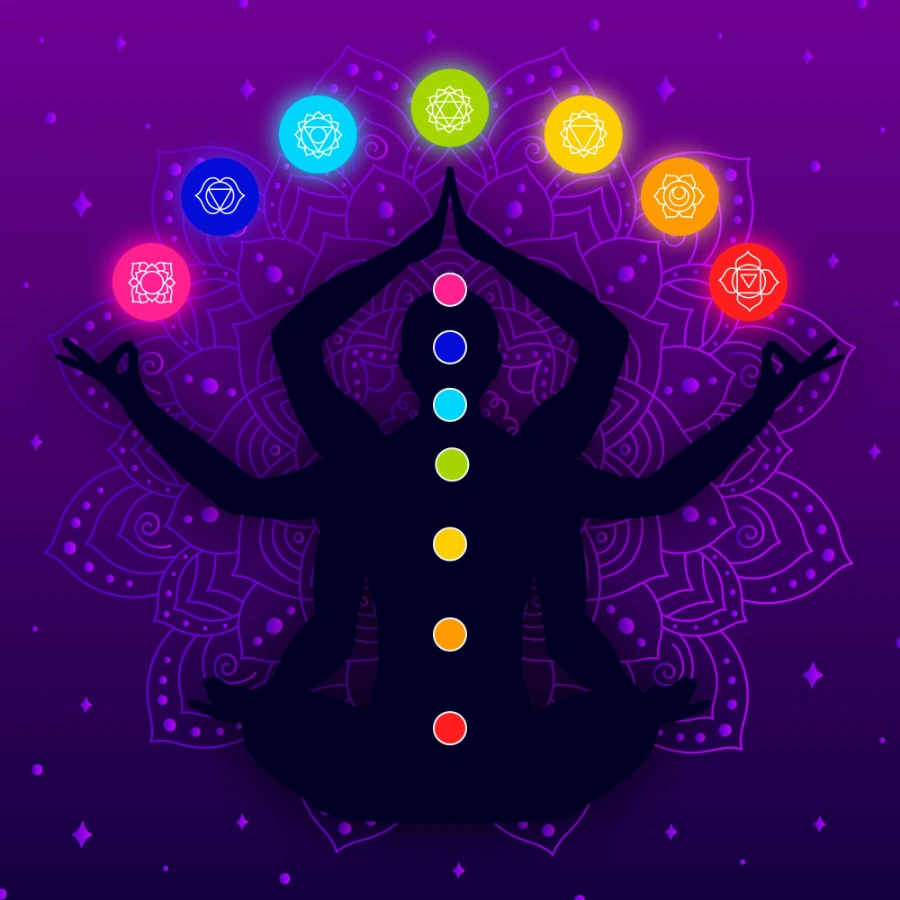
You might be wondering why colors appear stronger in certain areas. Energy naturally concentrates around your chakras—the seven main energy centers.
Learning about the seven main chakras deepens your understanding of what you're perceiving. Each chakra corresponds to specific colors and body areas.
Tracking Changes Over Time
Your aura shifts constantly based on thoughts and emotions. Try this experiment during your mirror practice.
Think about something you love—a person, place, or cherished memory. Watch your aura brighten and expand before your eyes.
Now recall something frustrating or disappointing. You'll likely see the aura contract or colors become murkier.
This real-time feedback demonstrates how thoughts and emotions instantly affect your energy field. Understanding how chakra imbalances affect your aura helps you interpret these patterns.
Reading Other People's Auras
Once you can see your own aura, reading others follows the same principles. A few additional considerations apply when working with another person's energy.
Choosing Your First Subject
Practice with willing, open-minded people first. Skepticism creates energetic resistance that makes auras harder to see.
Friends interested in spiritual development make ideal practice partners. Have your subject stand or sit against a plain, neutral background about 8-10 feet away.
Ensure adequate soft lighting. Ask them to relax and breathe naturally—tension contracts the aura.
The Full-Body Reading Process
Focus your soft gaze on the center of their forehead. This third eye area serves as an anchor point.
Remember—you're not staring at them intensely. You're gazing softly through them to the wall behind.
Watch for color variations around different body areas. Bright green around the heart suggests a natural healer.
Strong blue near the throat indicates communication gifts. Understanding the detailed meanings of each aura color allows you to interpret these patterns accurately.
Reading Aura Changes in Real Time
Here's where aura reading becomes fascinating. Ask your subject to think about something they love—a person, place, or cherished memory.
Watch their aura brighten and expand before your eyes. Now ask them to recall something frustrating or disappointing.
Watch their throat area. Many people show distortion or darkening in their blue throat chakra energy when speaking untruths.
But here's the thing: You're not a human lie detector. Many factors affect auras, and jumping to conclusions creates problems.
Ethical Considerations
Reading auras involves perceiving private information. Just because you can see someone's energy doesn't mean you should comment on it unsolicited.
Would you appreciate strangers analyzing your emotional state and announcing their findings? If you notice concerning patterns—dark patches suggesting illness or severely depleted energy—consider whether sharing this information helps or harms.
Mentioning "I notice your energy seems low" might prompt someone to address health issues. Announcing "Your aura looks terrible, something's really wrong with you" creates anxiety without offering solutions.
Use aura reading primarily for self-knowledge and development. When reading others, do so with compassion, respect, and discernment.
Understanding What You're Seeing
Perceiving auras is one skill. Interpreting them accurately is another.
The Etheric Layer vs. Emotional Layer
The etheric layer appears as a thin, clear or slightly grayish outline. It extends about 1-2 inches from the physical body.
This layer closely mirrors physical health. A strong, defined etheric layer indicates good physical vitality.
This is where you'll see reds, oranges, yellows, greens, blues, and purples. These colors shift throughout the day based on emotional states and thoughts.
Size and Extension
Aura size matters as much as color. A healthy aura extends 3-6 feet from the body in all directions.
Some highly energetic or spiritual people show auras extending even further. A contracted aura (less than 1-2 feet) suggests depletion, illness, or emotional withdrawal.
The person may be protecting themselves energetically or dealing with trauma—they're energetically "hunkered down."
Notice if the aura extends evenly or shows gaps or holes in certain areas. Gaps often appear where chakras are blocked. Understanding signs of blocked chakras helps you identify these patterns.
The root chakra directly influences red frequencies in your aura.
Common Mistakes to Avoid
Most beginners make predictable errors that slow their progress. Avoiding these pitfalls accelerates your development.
Trying Too Hard
The number one mistake is forcing perception through intense effort. You cannot see auras by staring intensely and demanding results.
That approach creates tension that actively blocks subtle perception. Aura viewing requires relaxed receptivity, not aggressive pursuit.
Think of it like trying to remember a word on the tip of your tongue. The harder you try to force it, the more elusive it becomes.
When you relax and let go, it appears naturally. If you find yourself straining, tensing your eyes, or feeling frustrated, stop.
Take a break. Take deep breaths. Return when you can approach the practice with playful curiosity.
Dismissing What You Perceive
Many beginners see or sense something, then immediately dismiss it. "That's just my imagination." "I'm probably seeing things." "This can't be real."
This self-doubt sabotages development. Trust your perception, especially in the beginning.
Yes, you might be imagining some of what you see. So what?
Imagination and intuition use the same channels. As you practice, you'll naturally learn to distinguish genuine perception from mental projection.
Give yourself permission to be uncertain. "I think I'm seeing blue" works better than "I definitely see blue" or "I'm probably just imagining this."
Poor Practice Conditions
Trying to see auras in harsh fluorescent lighting makes success nearly impossible. Practicing against busy, patterned backgrounds while feeling stressed and rushed sets you up for failure.
Create optimal conditions, especially when learning. Soft natural light, neutral backgrounds, quiet space, and relaxed state dramatically improve results.
As your skill develops, you'll perceive auras even in challenging conditions. But begin with every advantage you can give yourself.
FAQs
-
Can everyone see auras or is it a special gift?
Anyone can learn to perceive auras with practice and patience. While some people have natural sensitivity to subtle energy, most of us can develop this ability through training our perception and quieting our minds. It's a skill you cultivate, not an exclusive gift you're born with or without. Start with simple exercises and be patient with your unique learning timeline.
-
What gives a person an aura?
Your aura is generated by your body's electromagnetic activity. Every heartbeat, thought, and cellular process creates electrical signals that radiate outward beyond your physical body. Your nervous system pulses with energy, your brain produces measurable waves, and your heart generates a field extending several feet. Combined, these create your personal energy field that can be perceived with practice.
-
Are aura pictures accurate?
Aura photography systems measure real biofeedback data like skin temperature and conductivity, then translate that information into colorful images. Many users find the results surprisingly accurate for reflecting their current state. However, these pictures capture only a snapshot moment, while your actual aura shifts constantly. Consider them interesting tools providing one perspective on your energy, not absolute truth. The colors shown in aura pictures follow the same general interpretations as visually
-
How long does it take to learn to see auras?
The timeline varies dramatically between individuals. Some people perceive auras within their first practice session, while others need weeks or months of consistent effort. Factors affecting your timeline include natural sensitivity, meditation experience, belief systems, and practice consistency. Five minutes of daily practice typically produces faster results than occasional longer sessions. Most people see the etheric outline within a few practice sessions, with colors becoming visible over subsequent weeks.
-
Why can't I see auras even after practicing?
Several factors might block your perception. Trying too hard creates tension that prevents subtle sight—remember to use soft, relaxed focus rather than intense staring. Poor lighting conditions or busy backgrounds make auras nearly impossible to see. Mental chatter and stress drown out subtle signals. You might also be perceiving auras but dismissing what you see as imagination or eye tricks. Trust your perception, even when uncertain. Some people feel or intuitively know aura information rather than seeing it visually—this is equally valid.
-
What's the difference between seeing auras and feeling them?
Seeing auras involves visual perception of colors and light around the body. Feeling auras involves sensing energy as physical sensations—warmth, tingling, pressure, or texture. Both are valid forms of perception. Some people are naturally more visual, others more kinesthetic. Many develop both abilities over time. The important thing is receiving information about energy fields, regardless of how that information comes through your awareness.