
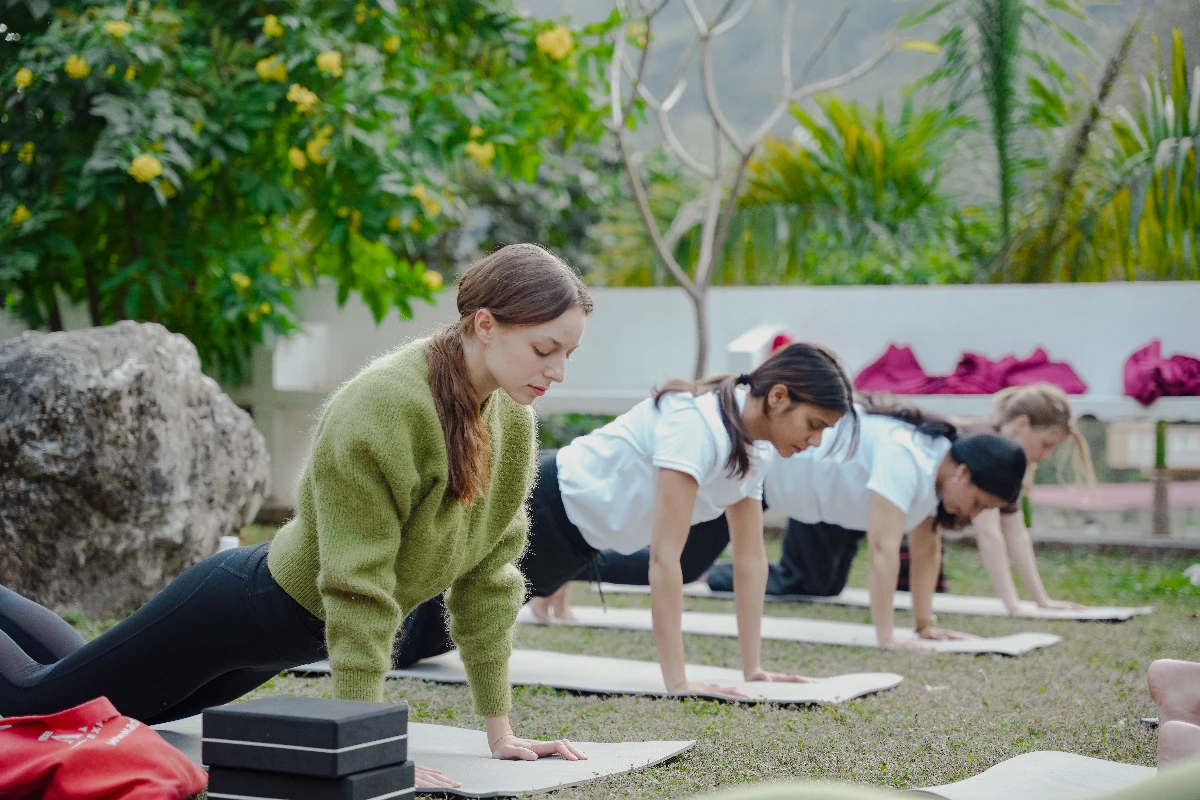
Introduction
The clock reads 10:30 PM. You're exhausted but somehow not sleepy. Your body feels restless. Your mind won't stop running through tomorrow's to-do list.
Most sleep advice tells you what NOT to do before bed—no screens, no caffeine, no vigorous exercise. But nobody tells you what TO do to actively prepare your body for sleep.
That's where evening yoga changes everything.
You might be wondering if a few stretches can really make a difference. Research shows people who practice gentle evening yoga fall asleep 12 minutes faster on average and report 27% better sleep quality.
This isn't about becoming a yogi or mastering complicated poses. It's about giving your body the release, relaxation, and signals it needs to transition naturally into sleep mode.
In this guide, you'll learn exactly which poses calm your nervous system, how long to hold each stretch, and how to sequence your practice for maximum sleep benefits.
Why Evening Yoga Supports Sleep
Evening yoga isn't just stretching before bed. It's a deliberate nervous system intervention that addresses exactly what's keeping you awake.
Throughout your day, your sympathetic nervous system (fight-or-flight) stays activated. Work stress, deadlines, and constant mental stimulation keep you in go-mode. By evening, you're stuck there.
The Nervous System Switch
Sleep requires parasympathetic activation—your rest-and-digest mode. Evening yoga flips this switch through multiple pathways at once.
Slow, controlled movements signal safety to your nervous system. Deep breathing with extended exhales activates your vagus nerve. Gentle poses release accumulated physical tension.
But here's the kicker.
This isn't instantaneous magic. Your nervous system needs time to transition. Starting yoga 1-2 hours before your target bedtime gives your body adequate transition time from active to rest mode.
Body Temperature and Mental Transition
Sleep onset requires a drop in core body temperature. Gentle yoga movements followed by stillness facilitate this cooling process. Forward folds and restorative poses lower metabolic rate.
The hardest part of sleep often isn't physical tiredness—it's mental activation. Evening yoga redirects mental energy to physical sensation and breath. This breaks rumination patterns.
The practice becomes a ritual boundary between day and night. Your brain learns that this sequence signals "work is done, sleep preparation begins." Over 2-3 weeks, this association strengthens dramatically.
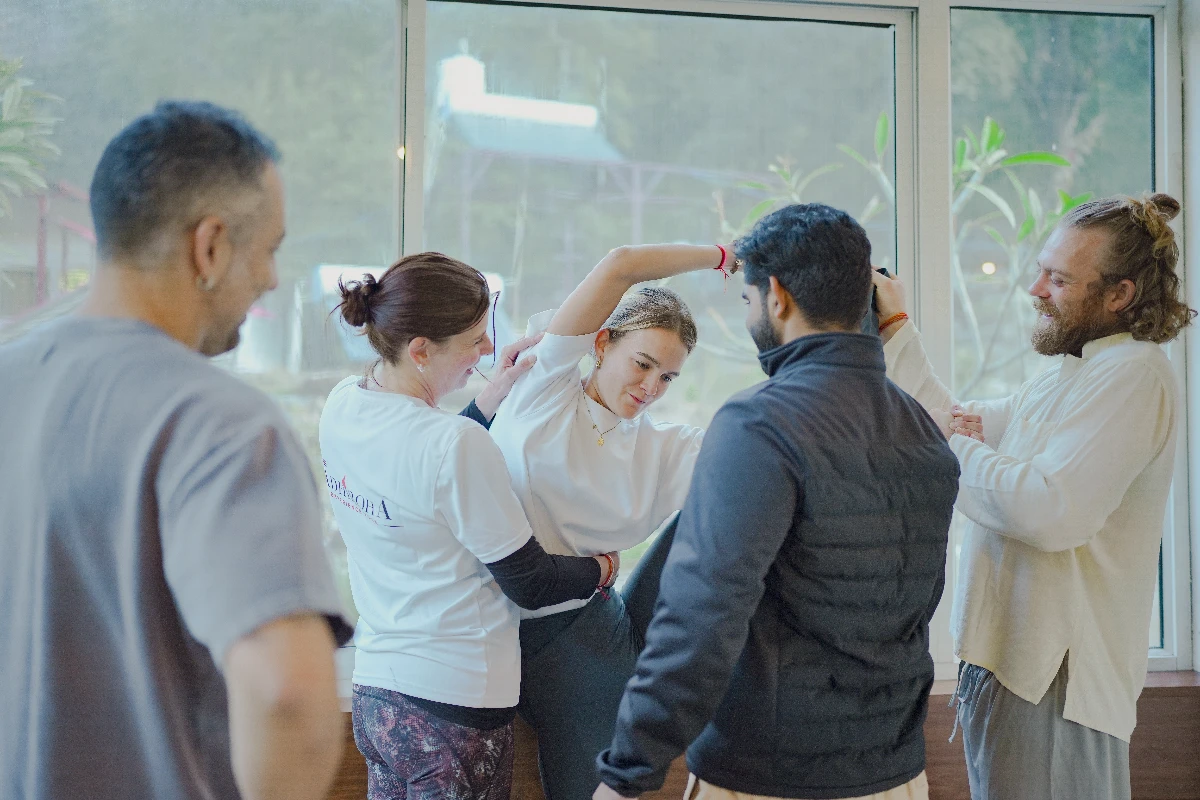
Gentle Movements vs Stimulating Poses
Not all yoga is created equal when it comes to sleep. Some poses calm your system while others energize it—and doing the wrong ones at night sabotages your sleep.
Poses That Calm Your Nervous System
Forward folds are your evening best friend. Child's pose, seated forward bend, and standing forward fold all trigger parasympathetic activation. Your heart is higher than your head, blood pressure decreases, and your nervous system interprets this as safe-to-rest.
Gentle twists release tension without stimulation. Supine spinal twists, seated twists, and reclined variations massage your spine and organs while maintaining a calm state.
Hip openers like reclining pigeon, butterfly pose, and happy baby release emotional and physical holding in your pelvis. The hips store tremendous tension that blocks full body relaxation.
But here's what matters most.
These poses work specifically because they're passive. You're allowing gravity and time to create release rather than forcing or pushing.
Poses to Avoid After 6 PM
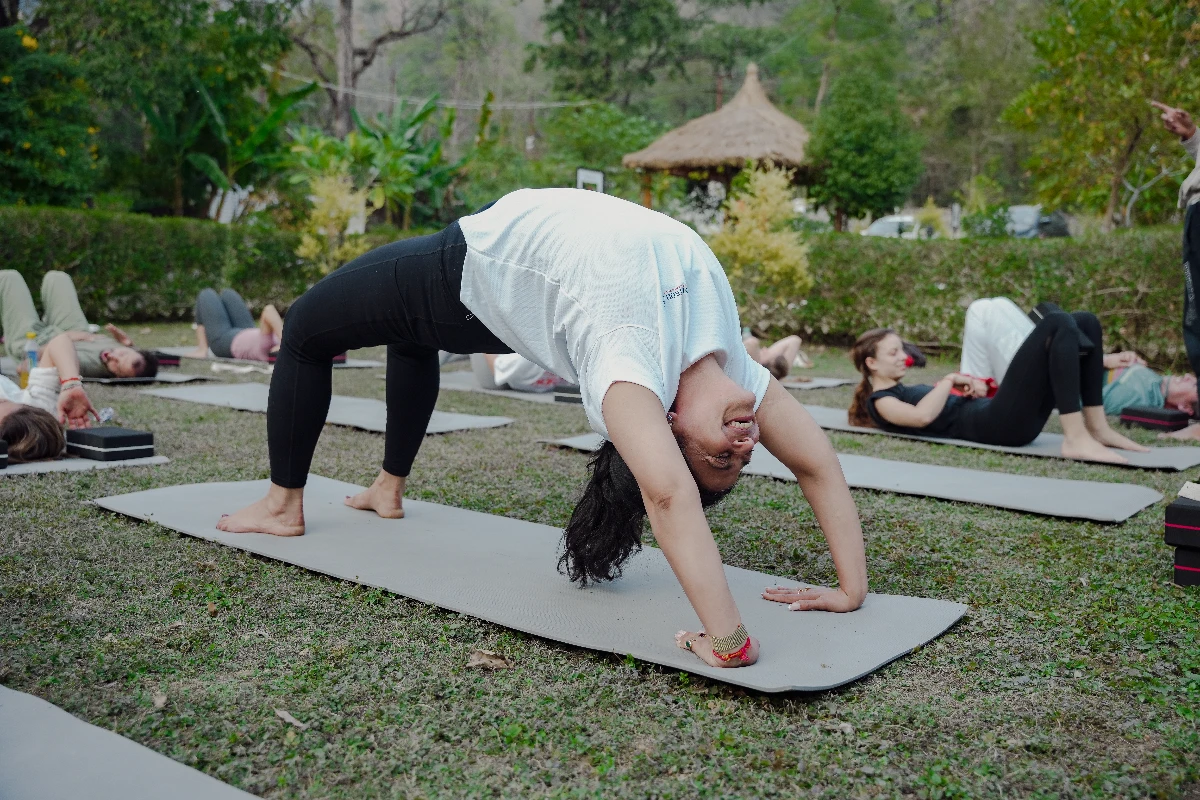
Backbends are stimulating by nature. Cobra, upward dog, camel, and wheel open your chest, increase heart rate, and activate your nervous system. Save these for morning.
Inversions like headstand and shoulder stand can stimulate many people. Gentle legs-up-the-wall is fine, but full inversions are better earlier in the day.
Strong core work raises cortisol and creates activation. Boat pose, plank variations, and any intense abdominal work should stay in your morning routine.
Vigorous flows and power yoga generate heat and raise heart rate. Even if you feel physically tired afterward, you're likely mentally activated.
The Temperature Test
Here's a simple guide: if a pose makes you sweat or breathe heavily, it's too stimulating for evening. Your practice should leave you feeling relaxed, not accomplished.
Your heart rate should gradually decrease during evening practice, not spike. If you're attending yin yoga class sessions in the evening, these are perfectly designed for sleep preparation—long-held, passive poses that deeply activate parasympathetic response.
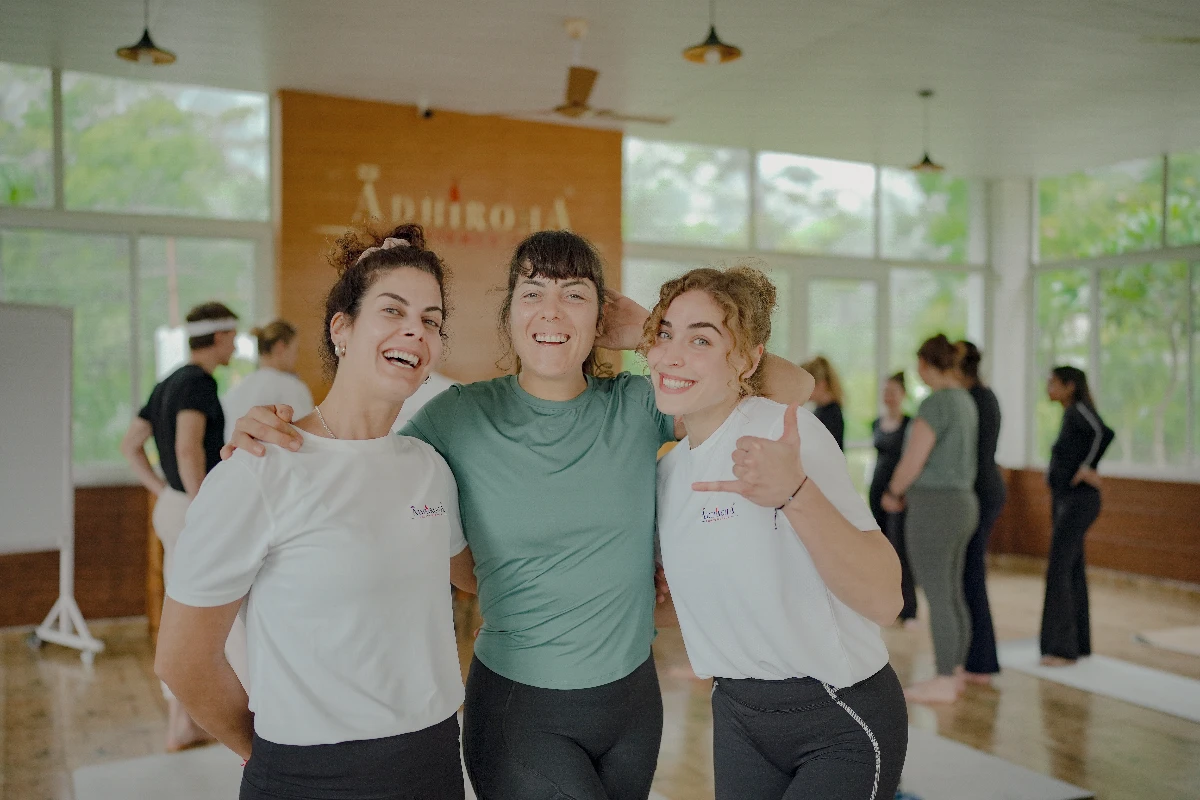
Reducing Physical Restlessness Before Bed
That restless feeling—the inability to get comfortable, the urge to keep shifting positions—blocks sleep onset more effectively than almost anything else.
Physical restlessness isn't just mental. It's accumulated tension, incomplete stress cycles, and energy that hasn't been properly discharged.
Targeted Tension Release
Your hips hold emotional tension and daily sitting compression. Poses like reclining pigeon, butterfly, and happy baby specifically address hip tightness. Hold these for 3-5 minutes each to allow deep release.
Your shoulders and neck carry stress from computer work. Gentle shoulder rolls, neck stretches, and threading the needle release upper body tension. Move slowly, breathing into tight areas.
Your jaw and face hold tremendous tension most people don't recognize. During evening practice, consciously soften your jaw, release your tongue from the roof of your mouth, and let your face muscles go slack.
Movement Patterns That Help
Gentle rocking motions soothe your nervous system. Rock side to side in child's pose. Rock forward and back in cat-cow. These rhythmic movements mimic soothing motions we respond to from infancy.
Shaking movements help discharge stuck energy. Gentle leg shakes, arm shakes, or full-body trembling (lying on your back) release neurological activation.
You might be wondering how long this takes. Most people notice significant reduction in restlessness within 10-15 minutes of practice.
When to Seek Additional Support
If restlessness doesn't improve with consistent evening practice after 2-3 weeks, consider underlying issues. Restless leg syndrome requires medical evaluation.
Can lack of protein affect sleep? Absolutely. Insufficient protein leads to blood sugar instability, causing nighttime restlessness and waking. Ensure adequate protein throughout the day.
Stretch Duration and Sequencing That Works
How long you hold poses and the order you do them in matters tremendously for sleep benefits. Random stretching doesn't create the same nervous system response as properly sequenced practice.
The Magic of Time
Quick stretches activate your muscles but don't shift your nervous system. Deep parasympathetic activation requires time—typically 2-5 minutes per pose.
When you first enter a pose, your muscles resist. After 30-60 seconds, initial tension begins releasing. Between 90 seconds and 3 minutes, deeper fascia releases and nervous system shifts occur.
But here's the kicker.
You can't force deeper release by trying harder. You create it by staying present, breathing steadily, and allowing time to do the work.
Sequencing Principles
Start standing or seated upright, progressively moving toward lying down. This mirrors your body's natural progression toward sleep.
Begin with larger movements, gradually slowing and softening. Move from active to passive. Early poses can involve mild effort. Later poses should be completely supported.
A Sample Evening Sequence
Standing forward fold: 2 minutes. Let gravity create the stretch. Soften your knees.
Seated forward fold: 3 minutes. Prop your knees if hamstrings are tight. Focus on lengthening your exhales.
Supine twist (each side): 3 minutes. Let both shoulders stay grounded. Breathe into your belly.
Reclining butterfly: 4 minutes. Support your knees with pillows if needed. Place one hand on your heart, one on your belly.
Legs up the wall: 5 minutes. Scoot close to the wall. Let your arms rest by your sides.
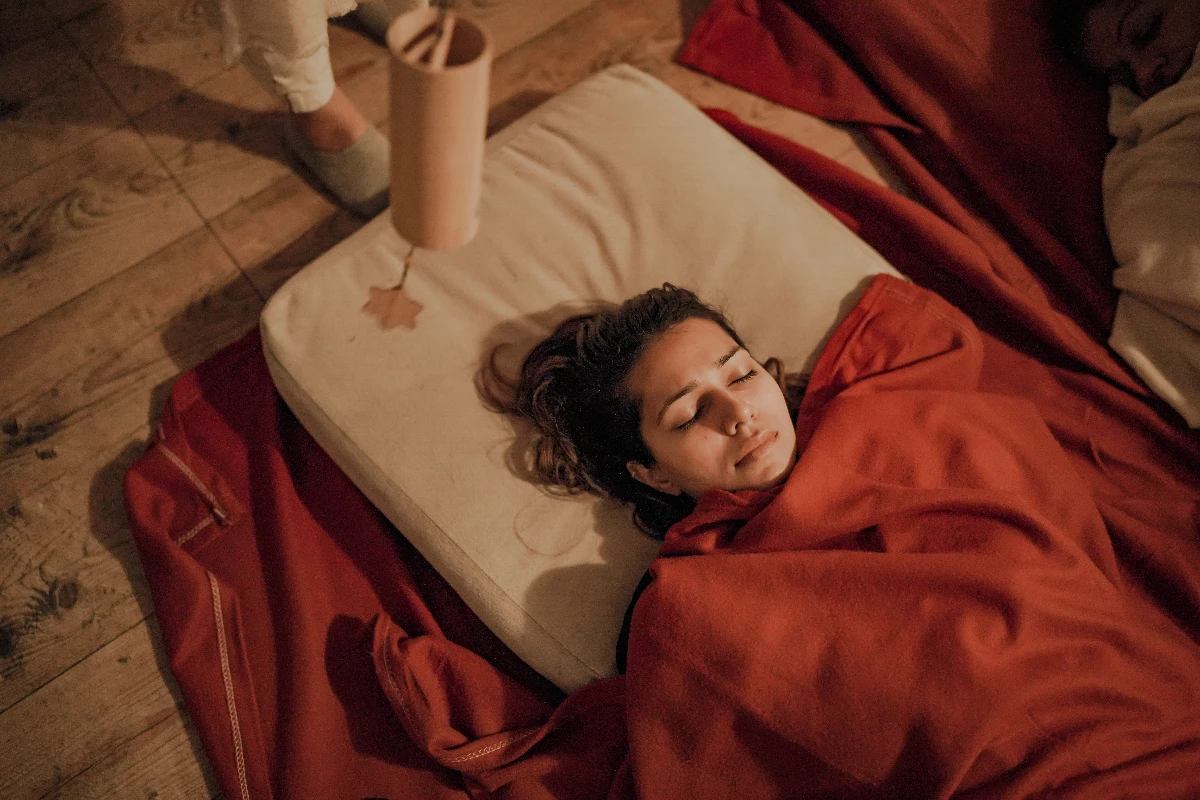
Final relaxation: 10 minutes minimum. Cover yourself with a blanket. Allow complete stillness.
This 27-minute sequence creates profound nervous system shifts.
Adapting Duration
Don't have 30 minutes? Five minutes in child's pose with focused breathing creates more benefit than rushing through ten poses.
The minimum effective practice: one forward fold (2-3 minutes), one hip opener (2-3 minutes), and final relaxation (5 minutes). That's 10-12 minutes total.
Creating a Sustainable Pre-Sleep Yoga Habit
Knowing what to do doesn't help if you don't actually do it. Building a practice that sticks requires strategy, not just motivation.
Start Ridiculously Small
Start with five minutes. Not fifteen. Not thirty. Five. This feels almost too easy, which is exactly the point.
You're building the habit of practicing, not the habit of long practices. Once five minutes becomes automatic (usually 2-3 weeks), increase to ten.
Choose one pose you genuinely enjoy. Maybe it's child's pose. Maybe it's legs up the wall. Do that pose for five minutes every night.
Link to Existing Habits
Attach your practice to something you already do reliably. After you brush your teeth, roll out your mat. After you put on pajamas, do one pose.
Don't rely on motivation. Link it physically to an existing routine. Your bathroom is your cue to practice.
Environment Setup
Keep your mat visible. An unrolled mat in your bedroom is a constant invitation.
Minimize friction to starting. If you need to move furniture and dig out props, you won't practice. Make it so easy you can't not do it.
Consider gentle sounds to heal playing during practice—consistent audio becomes a powerful sleep signal.
Handle Missed Days Gracefully
When you miss a night, simply practice the next night. No punishment sets. No making up for lost time.
Guilt about missed practices creates negative associations. Compassionate consistency beats perfection every time.
Natural Progression
After 3-4 weeks of consistent five-minute practice, you'll naturally want longer sessions. Add one additional pose or two extra minutes.
Some people maintain ten-minute practices indefinitely. Others grow to thirty minutes. Both are successful if sleep improves and the practice sustains.
Students in 300 hour yoga teacher training learn that the best practice is the one you'll actually do. Sustainable beats optimal every single time.
FAQs
-
How do you treat insomnia?
Insomnia treatment combines multiple approaches. Evening yoga addresses the nervous system dysregulation and physical tension that often maintain insomnia. Practice gentle forward folds, hip openers, and breathing exercises 1-2 hours before bed to activate your parasympathetic nervous system. Combine yoga with consistent sleep schedules, limiting evening screen time, and creating a cool, dark sleep environment. For chronic insomnia lasting more than three months, consult a healthcare provider who may recommend cognitive behavioral therapy for insomnia (CBT-I) alongside your yoga practice.
-
What is the reason for insomnia?
Insomnia has multiple causes. Stress and anxiety keep your sympathetic nervous system activated, preventing the parasympathetic shift needed for sleep. Physical tension from sitting all day blocks full body relaxation. Irregular sleep schedules confuse your circadian rhythm. Blue light from screens suppresses melatonin production. Caffeine consumed too late maintains alertness. Evening yoga addresses the stress, tension, and nervous system factors while supporting circadian rhythm regulation.
-
Does insomnia go away?
Insomnia can resolve with appropriate treatment and lifestyle changes. Acute insomnia from temporary stress often resolves naturally within weeks. Regular evening yoga practice shows significant improvement in sleep quality within 4-8 weeks for many people. The key is addressing root causes—nervous system dysregulation, physical tension, poor sleep habits—rather than just treating symptoms. With dedicated practice and comprehensive sleep hygiene, most insomnia improves substantially.
-
What is the best position for sleep?
Side sleeping is generally considered best for most people, particularly sleeping on your left side which may benefit digestion and reduce acid reflux. Back sleeping with proper pillow support works well for spinal alignment but can worsen snoring or sleep apnea. Before bed, practice gentle yoga twists to release spinal tension, hip openers to reduce lower back pressure, and shoulder stretches to ease upper body tightness. These prepare your body to maintain comfortable sleep positions throughout the night.
-
What are natural remedies for sleep?
Natural sleep remedies include evening yoga practice, consistent sleep schedules, cool bedroom temperatures (65-68°F), complete darkness, and limiting screens before bed. #Morning meditation# practices that include breathwork train nervous system regulation throughout the day. Certain foods support sleep: tart cherry juice contains natural melatonin, magnesium-rich foods like almonds and spinach promote relaxation, and complex carbohydrates with protein stabilize blood sugar overnight. However, evening yoga's nervous system benefits often surpass isolated remedies.
-
Which deficiency causes insomnia?
Multiple nutrient deficiencies contribute to insomnia. Magnesium deficiency affects over 50% of adults and impairs nervous system relaxation and melatonin production. Iron deficiency can cause restless leg syndrome, disrupting sleep. Vitamin D deficiency correlates with poor sleep quality. B-vitamin deficiencies affect neurotransmitter production needed for sleep regulation. While addressing deficiencies through diet or supplements helps, combining proper nutrition with evening #yin yoga class# practices creates the most comprehensive approach to sleep restoration.