
Introduction
Your breath holds the key to unlocking chronic back tension. Yet you've probably never thought about it.
Right now, take a breath. Notice where it goes. Does your chest rise? Do your shoulders lift?
Here's what most people don't realize: How you breathe directly impacts your back pain. Shallow chest breathing creates constant tension in your neck, shoulders, and spine.
Research from the Journal of Physical Therapy Science found that diaphragmatic breathing reduced chronic low back pain by 58% after just 8 weeks. The participants didn't change their exercise routine—they simply changed how they breathed.
But here's the kicker: You take approximately 20,000 breaths per day. Each one either supports your spine or stresses it.
How Breath Affects Spinal Muscles
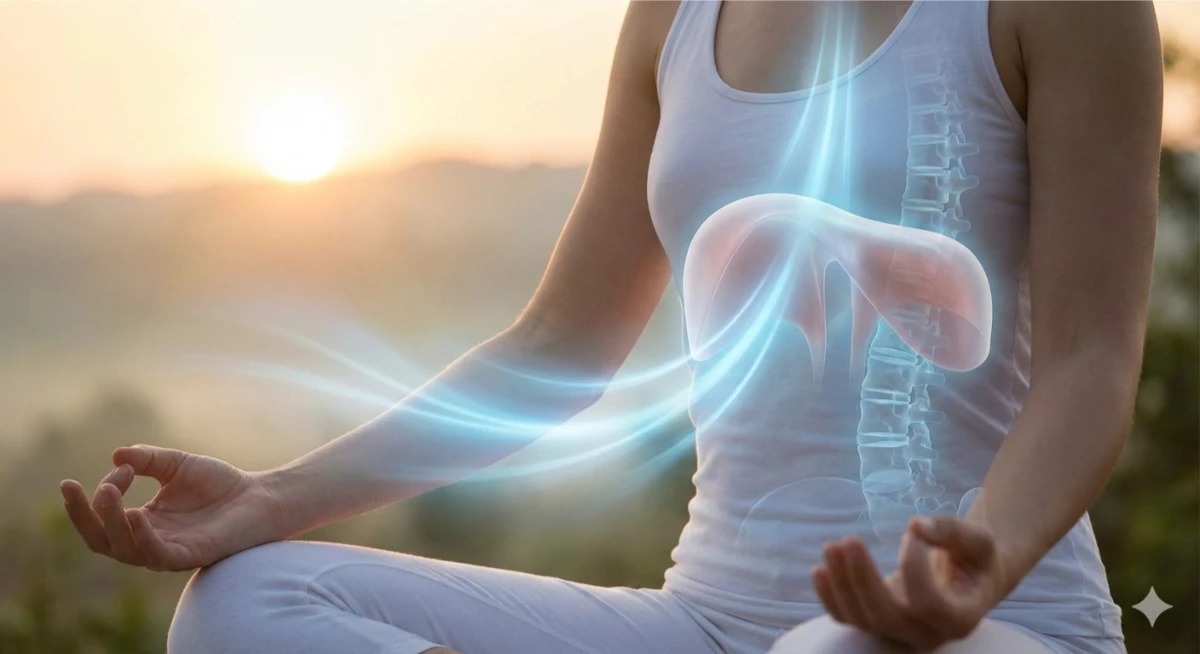
Your breath is more than air moving in and out. It's a powerful tool for spinal support.
Understanding this connection transforms how you approach back pain.
The Diaphragm-Spine Connection
Your diaphragm—the primary breathing muscle—attaches directly to your lumbar spine. Every breath you take affects these spinal connections.
When your diaphragm contracts during inhalation, it pulls slightly on your lower back attachments. When functioning properly, this creates gentle massage and stability.
But shallow breathing abandons this natural support system. Your spine loses its rhythmic stabilization.
The result? Compensatory tension in your back muscles as they work overtime to stabilize what breath should support.
Chest Breathing vs Belly Breathing
Chest breathing recruits accessory muscles—scalenes, sternocleidomastoids, upper trapezius. These neck and shoulder muscles weren't designed for constant breathing work.
When they breathe for you 20,000 times daily, they become chronically tight. This tension radiates down into your upper and mid-back.
Belly breathing (diaphragmatic breathing) uses your primary breathing muscle. Your accessory muscles rest. Tension dissolves.
You might be wondering how to tell which type you're doing.
Place one hand on your chest, one on your belly. Which hand moves more when you breathe? If your chest hand dominates, you're using the wrong muscles.
The Pressure System
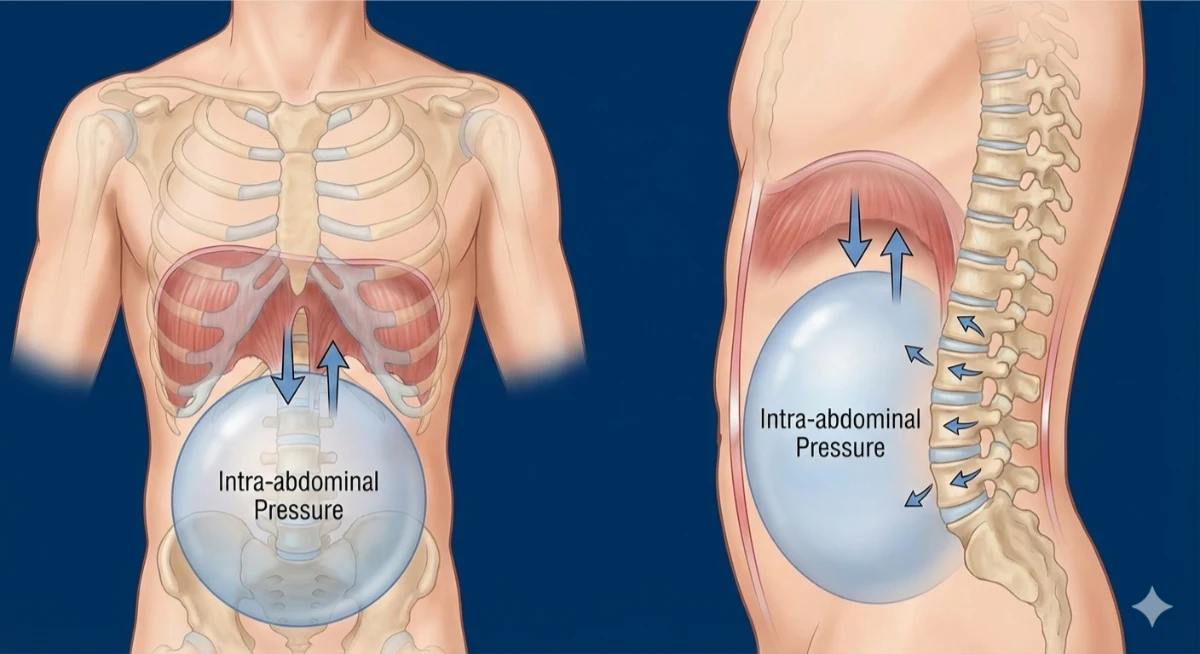
Your torso functions as a pressure system. Proper breathing creates intra-abdominal pressure that supports your spine like a natural weight belt.
The diaphragm forms the top of this cylinder. Your pelvic floor forms the bottom. Your core muscles create the walls.
When all components work together through proper breathing, your spine receives 360-degree support. This pressure distribution reduces strain on individual vertebrae.
According to Dr. Stuart McGill, spine biomechanics expert, "Intra-abdominal pressure generation through breathing is fundamental to spine protection." His research shows that proper breathing reduces spinal compression forces by up to 40%.
Nervous System Regulation
Your breath directly influences your autonomic nervous system. Shallow, rapid breathing activates your sympathetic (stress) response.
This stress response increases muscle tension throughout your body—especially in your back. Your muscles literally guard against perceived threat.
Slow, deep breathing activates your parasympathetic (relaxation) response. Muscle tension releases. Pain perception decreases.
The Yoga Sutras (Chapter 1, Verse 34) states: "Or by exhaling and retaining the breath, the mind becomes steady." This ancient wisdom recognized breath's power over the nervous system.
For those practicing morning meditation, understanding these breath-spine connections deepens both practices significantly.
Deep Breathing and Muscle Release
Deep breathing isn't just about getting more air. It's about creating systematic muscle release throughout your spine.
These techniques target different aspects of spinal tension.
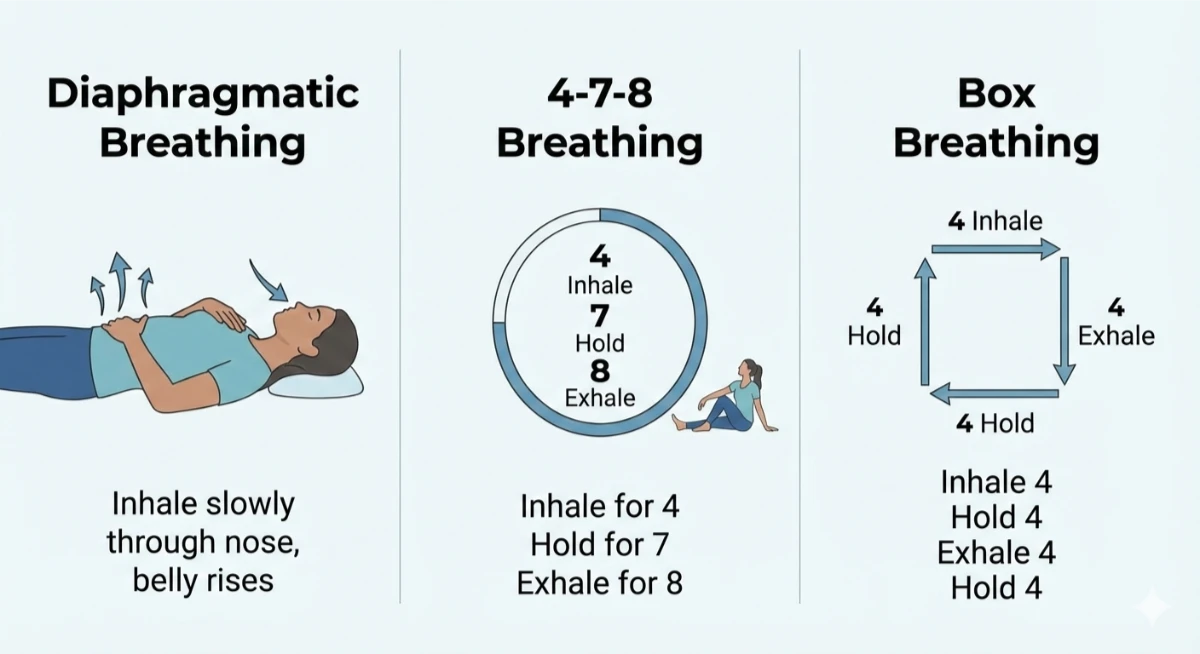
Diaphragmatic Breathing Basics
Lie on your back with knees bent. Place one hand on your chest, one on your belly.
Inhale slowly through your nose, directing breath into your belly. Your belly hand should rise while your chest hand stays relatively still.
Exhale slowly through your nose or mouth. Your belly naturally falls.
Practice this for 5-10 minutes daily. Your nervous system gradually relearns this natural pattern.
But here's what matters most: Don't force it. Let your belly expand naturally. Think of your torso as a balloon inflating in all directions.
4-7-8 Breathing Technique
This technique activates deep relaxation quickly. Developed by Dr. Andrew Weil, it's sometimes called "natural tranquilizer."
Inhale through your nose for 4 counts. Hold your breath for 7 counts. Exhale completely through your mouth for 8 counts.
Repeat for 4 cycles. The extended exhale activates your parasympathetic nervous system, releasing muscle tension.
Box Breathing for Stability
Box breathing creates balanced nervous system regulation. It's used by Navy SEALs for stress management.
Inhale for 4 counts. Hold for 4 counts. Exhale for 4 counts. Hold empty for 4 counts.
Repeat for 5-10 rounds. The equal timing creates equilibrium. Back muscles release their protective tension.
Extended Exhale Practice
Making your exhale longer than your inhale directly stimulates the vagus nerve—your body's main relaxation pathway.
Inhale for 4 counts. Exhale for 6-8 counts. Keep the exhale smooth and controlled, not forced.
This ratio signals safety to your nervous system. Your back muscles respond by softening.
Breathing into Tension
Identify where you feel tension in your back. Direct your breath toward that area.
This isn't literal—breath doesn't actually go to your back. But your awareness directs blood flow and nervous system attention.
Inhale, imagine breath flowing into the tight area. Exhale, imagine tension releasing and flowing out.
Studies in Pain Medicine show that directed breath awareness reduces pain intensity by 35%.
For those dealing with lower back pain, these breathing techniques provide drug-free relief that complements physical practices.
Supported Breathing Positions
Practice breathing techniques in positions that support your spine. Lying with knees bent works beautifully.
Supported child's pose with a bolster under your chest allows deep breathing without strain. Legs-up-the-wall position combines gentle inversion with breathing practice.
Breath Retention Myths
Breath retention carries mystique in yoga traditions. But for back pain relief, the truth differs from popular belief.
Let's separate helpful practices from potentially harmful ones.
Traditional Retention Practices
Classical pranayama includes kumbhaka—breath retention after inhaling or exhaling. Advanced practitioners hold breath for extended periods.
These practices serve specific purposes in traditional yoga. But they're not ideal for back pain management.
Retention and Muscle Tension
Holding your breath creates involuntary muscle tension throughout your body—especially in your core and back.
This protective response makes sense evolutionarily. But when you're trying to release back tension, creating additional tension defeats the purpose.
Blood Pressure Considerations
Breath retention, especially after inhalation, temporarily increases blood pressure. For most people, this isn't dangerous during brief holds.
However, people with back pain often have concurrent stress-related issues. Adding blood pressure spikes through retention practice isn't optimal.
The gentler approach of continuous breathing provides better results with lower risk.
When Brief Holds Help
Very short retention (2-3 seconds) at the top of your inhale can help you feel your diaphragm's position. This awareness helps refine breathing technique.
Similarly, a brief natural pause at the bottom of your exhale creates a moment of stillness. This isn't forced retention—it's natural rhythm.
Focus on Flow Instead
For spinal relaxation, continuous flowing breath works better than retention-based practices. Smooth transitions between inhale and exhale maintain relaxation response.
Think of your breath like gentle waves—rhythmic, continuous, soothing. No abrupt stops or holds.
The Hatha Yoga Pradipika (Chapter 2, Verses 71-72) describes advanced retention practices. But it also emphasizes that beginners should focus on smooth, comfortable breathing first.
For those exploring yoga for slip disc and sciatica, avoiding breath retention prevents additional spinal pressure during healing.

Coordinating Breath with Posture
Your breath and posture dance together. When synchronized properly, they create profound spinal support.
This coordination amplifies both practices' benefits.
Breath-Posture Fundamentals
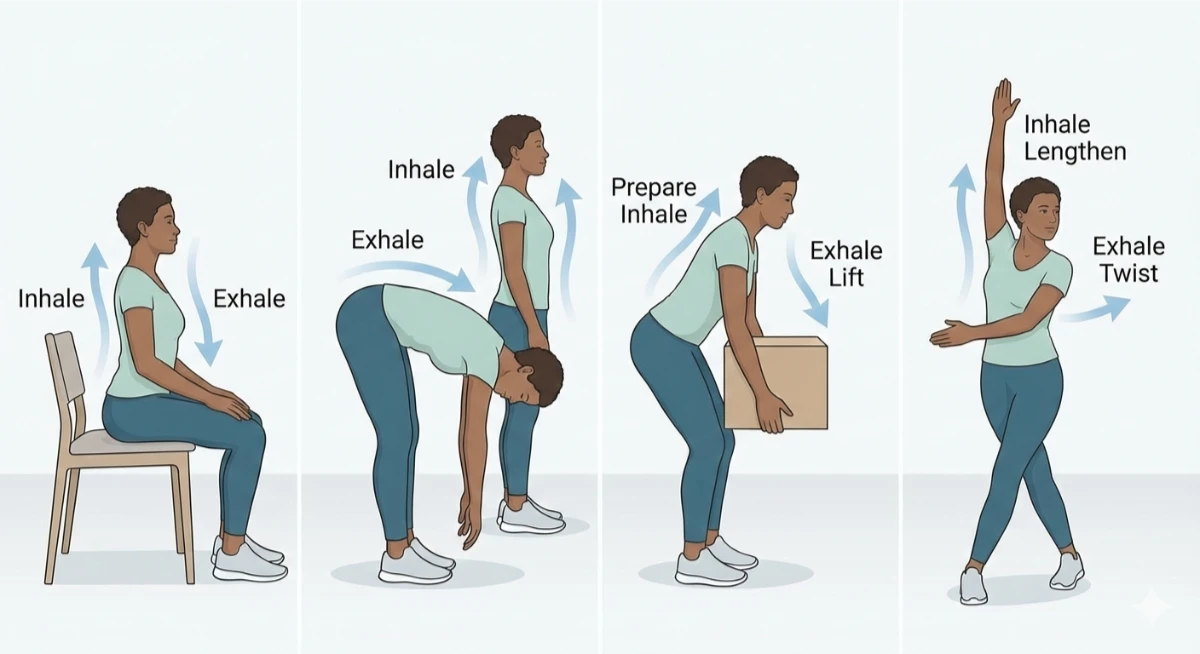
Inhale supports extension and expansion. Your rib cage naturally lifts and opens. Use this for lengthening your spine.
Exhale supports flexion and grounding. Your core naturally engages. Use this for forward bends or deepening stability.
This isn't arbitrary—it's how your body naturally moves.
Seated Posture and Breath
Sit tall. As you inhale, feel your spine lengthen naturally. Your head lifts slightly toward the ceiling.
As you exhale, maintain that length while softening any tension. Don't collapse—release unnecessary effort while keeping alignment.
This breath-synchronized sitting transforms desk work from back-straining to back-supporting.
Breath in Movement
When lifting objects, inhale to prepare. Exhale as you lift. The exhale naturally engages your core, protecting your spine.
When bending forward, inhale to lengthen your spine. Exhale as you hinge at the hips. The coordination keeps your back safe.
Walking becomes meditative when synchronized with breath. Inhale for 3-4 steps, exhale for 3-4 steps.
Breath During Yoga Poses
In cat-cow, inhale into cow (extension). Exhale into cat (flexion). The breath guides and enhances the movement.
In forward folds, inhale to lengthen. Exhale to fold deeper. Never fold during inhale—it compresses your spine.
In twists, inhale to lengthen upward. Exhale to rotate. The exhale's core engagement protects your back.
For those practicing morning yoga routine for back stiffness, this breath-movement coordination transforms simple stretches into powerful healing practices.
Restorative Poses with Breath
In supported bridge, breathe naturally while gravity works. Let each exhale release tension deeper into the support.
In supported child's pose, your belly naturally presses against your thighs during inhale. This gentle pressure massages your organs.
In legs-up-the-wall, coordinate breath with subtle pelvic tilts. Inhale, slight arch. Exhale, slight tuck.
Daily Breathing Habits for Back Health
Technique practice is valuable. But daily breath habits determine your long-term back health.
These habits integrate healing breath into your life seamlessly.
Morning Breath Routine
Start your day with 5 minutes of diaphragmatic breathing before getting out of bed. This sets your nervous system's tone for the entire day.
Your body is naturally more relaxed in the morning. Reinforcing healthy breathing patterns now makes them easier to maintain later.
Hourly Breath Checks
Set reminders to check your breathing every hour. Notice: Am I breathing shallowly? Are my shoulders tense?
Take 3-5 deep diaphragmatic breaths. Reset your pattern before tension accumulates.
These micro-practices prevent the buildup that creates end-of-day pain.
Breath During Stressful Moments
When stress hits—difficult email, traffic jam, challenging conversation—pause for breath. Three slow, deep breaths before reacting.
This prevents stress from translating into physical back tension.
Research from Harvard Medical School shows that brief breathing interventions during stress reduce muscle tension by 52%.
Evening Wind-Down Breathing
Practice extended exhale breathing for 10 minutes before bed. This transitions your nervous system from day's activity to rest.
The practice releases accumulated tension and prepares you for restorative sleep. Better sleep means better back recovery.
Combine with gentle stretches for lower back pain for comprehensive evening back care.
Breathing While Working
If you sit for work, coordinate breath with posture checks. Every 20-30 minutes: deep breath in to lengthen spine, breath out to reset shoulders.
If you stand for work, use breath to maintain energy. Every hour: three energizing breaths focusing on full inhales.
If you do physical labor, breathe consciously during lifting. Exhale during exertion.
Integration with Other Practices
Combine breathing with physiotherapy exercises for lower back pain. Coordinate breath with each rep for enhanced therapeutic effect.
Add breathing to yin yoga class long holds. The breath deepens your practice's effectiveness.
Include breath work before ashtanga open practice to prepare your body.
Building the Habit
Start with one daily practice. Morning breath work. Or hourly checks. Or evening wind-down.
Once that's consistent for 2-3 weeks, add another. Build gradually rather than overwhelming yourself.
Tiny, consistent practices outperform ambitious, sporadic efforts every time.
FAQs
-
How long should I practice breathing techniques for back pain relief?
Start with 5-10 minutes daily. You'll notice some relief within 2-3 weeks. For lasting change, maintain daily practice for 8-12 weeks as your nervous system relearns healthy patterns. Short sessions throughout the day work better than one long session.
-
Can breathing exercises alone fix my back pain?
Breathing techniques significantly reduce back pain, but they work best combined with movement and postural awareness. They're powerful for stress-related tension, less effective for acute injury. Combine with yoga poses and proper ergonomics for best results.
-
What's the best time of day to practice breathing for back relief?
Morning practice sets healthy patterns. Evening practice releases accumulated tension. Ideally, practice both—5 minutes morning and 10 minutes evening. Consistency matters more than specific timing.
-
Is it normal to feel dizzy when practicing deep breathing?
Mild lightheadedness during initial practice is common. If dizziness occurs, slow down your breathing rate and shorten the practice. Never force deep breaths. If dizziness persists, consult a healthcare provider.
-
How quickly do breathing techniques reduce back pain?
Some people feel relief within minutes, especially for stress-related tension. Chronic pain patterns typically improve within 2-4 weeks of daily practice. Immediate relief is possible; lasting change requires consistency.
-
Can I practice breathing techniques during severe back pain?
Yes, breathing techniques are safe during pain flares and require no physical movement. Focus on gentle diaphragmatic breathing in comfortable positions. Avoid forceful breathing. Breath work often reduces pain intensity.
-
Should I breathe through my nose or mouth?
Nasal breathing is generally better—it filters air and naturally slows breathing rate. However, during active pain or anxiety, breathing through your mouth is acceptable. Focus first on diaphragmatic breathing, then refine to nasal breathing.